







Question: please select from answers provided. 1. The decision-making process A graduate student believes that people consider faces with more contrast between eye color and skin
please select from answers provided.
![can make? Check all that apply. C] There is enough evidence to](https://s3.amazonaws.com/si.experts.images/answers/2024/06/66747036340a6_934667470361e61b.jpg)
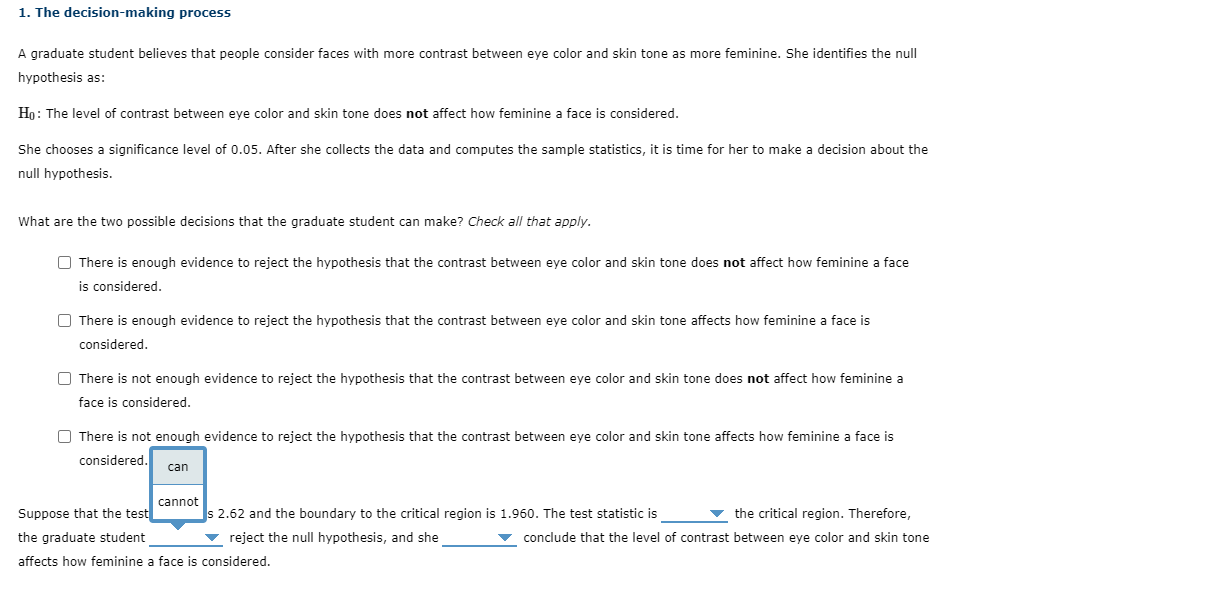
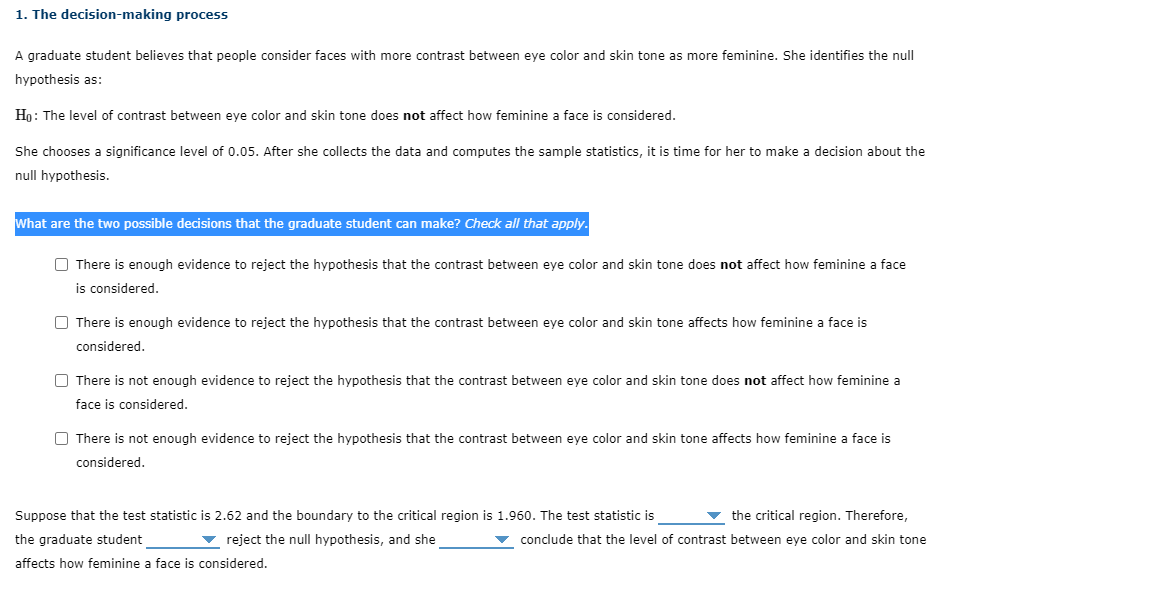
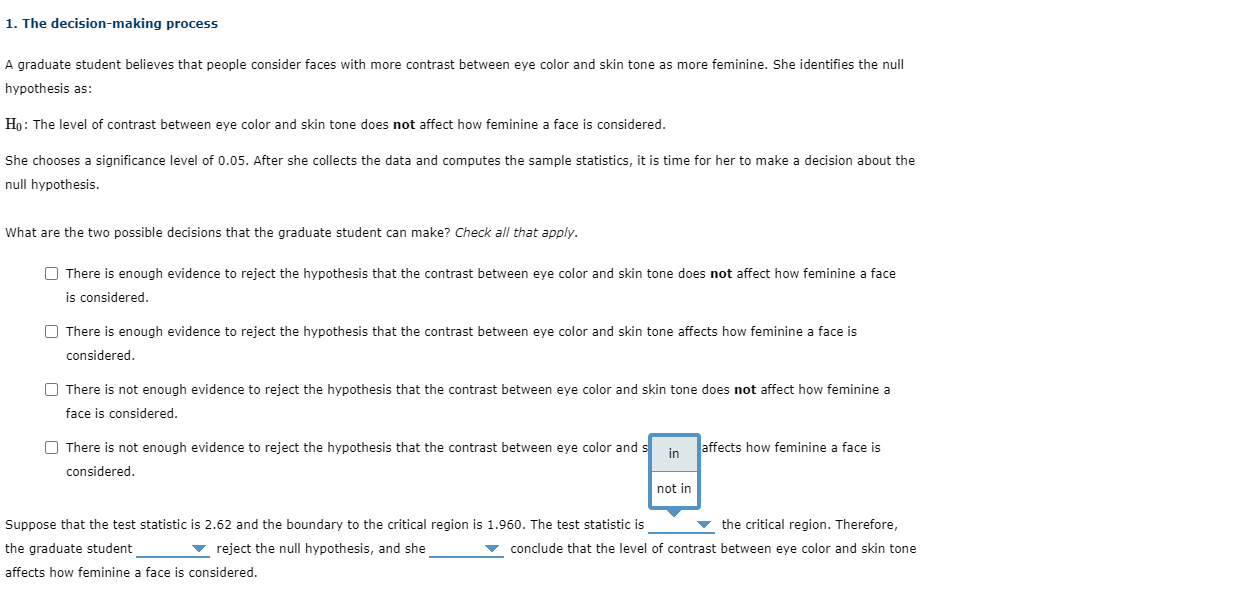
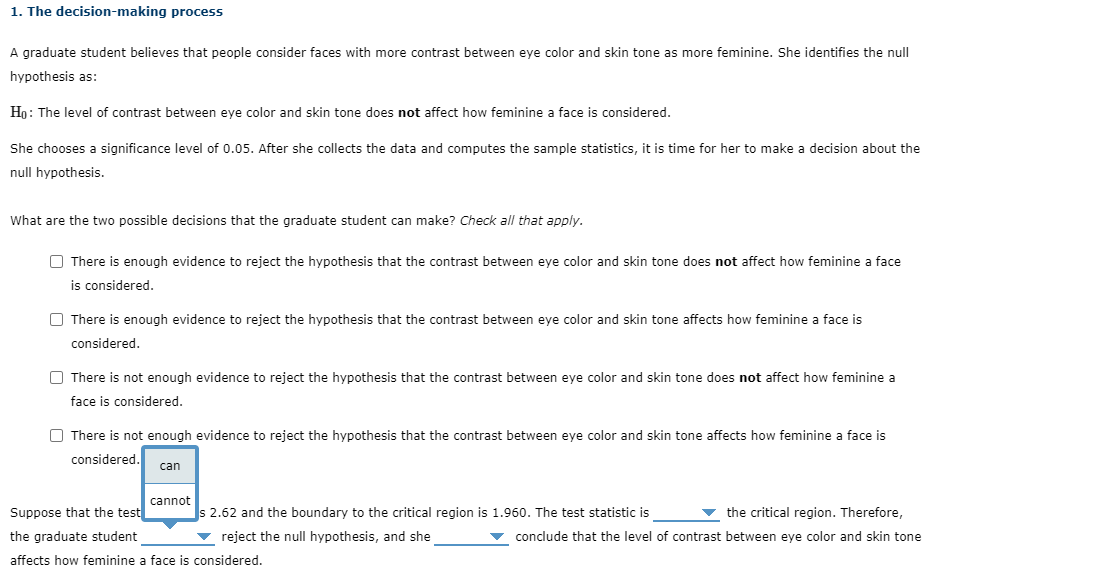
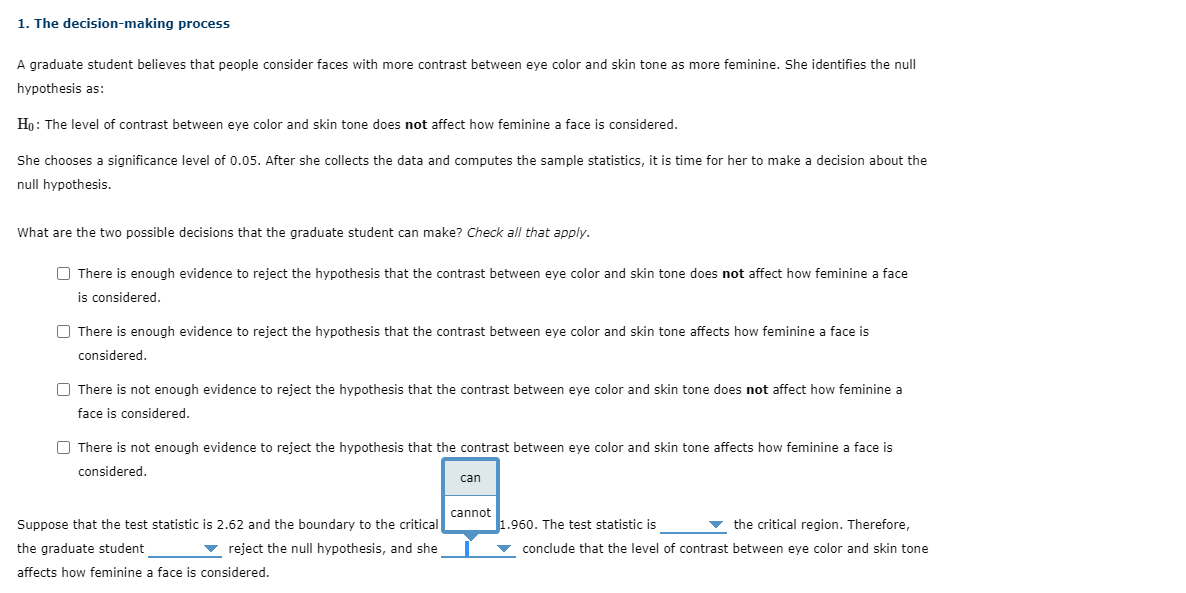
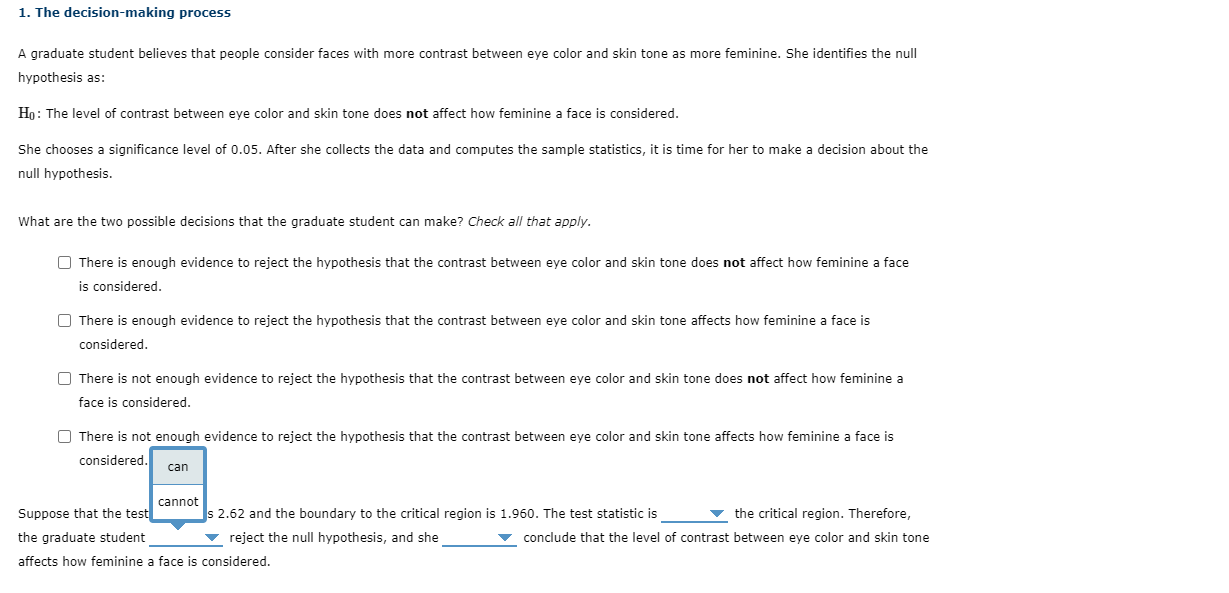
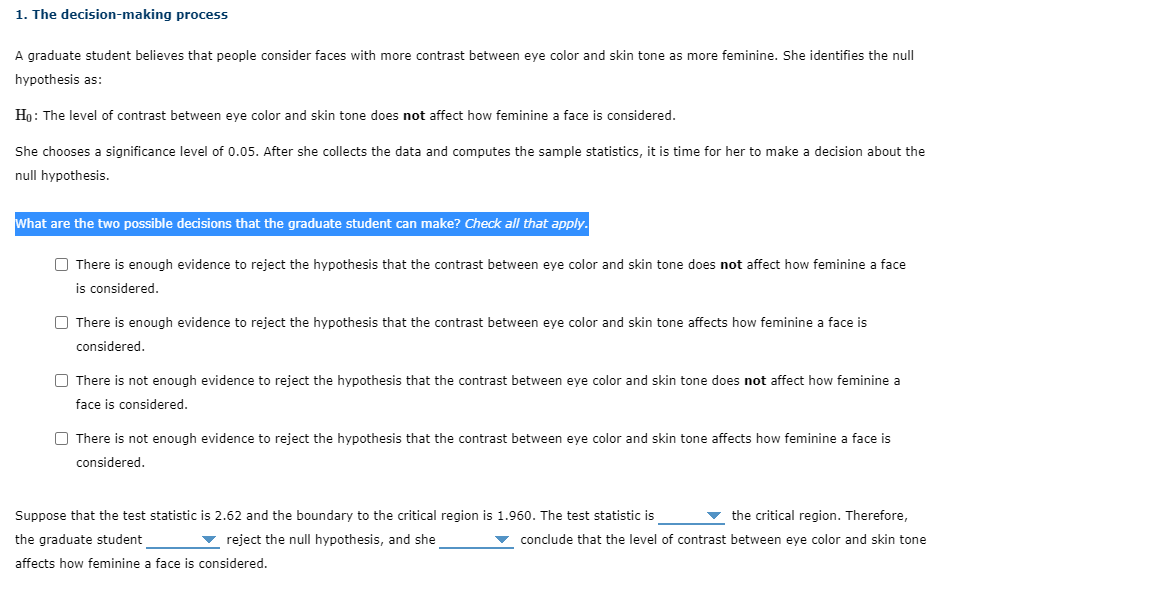
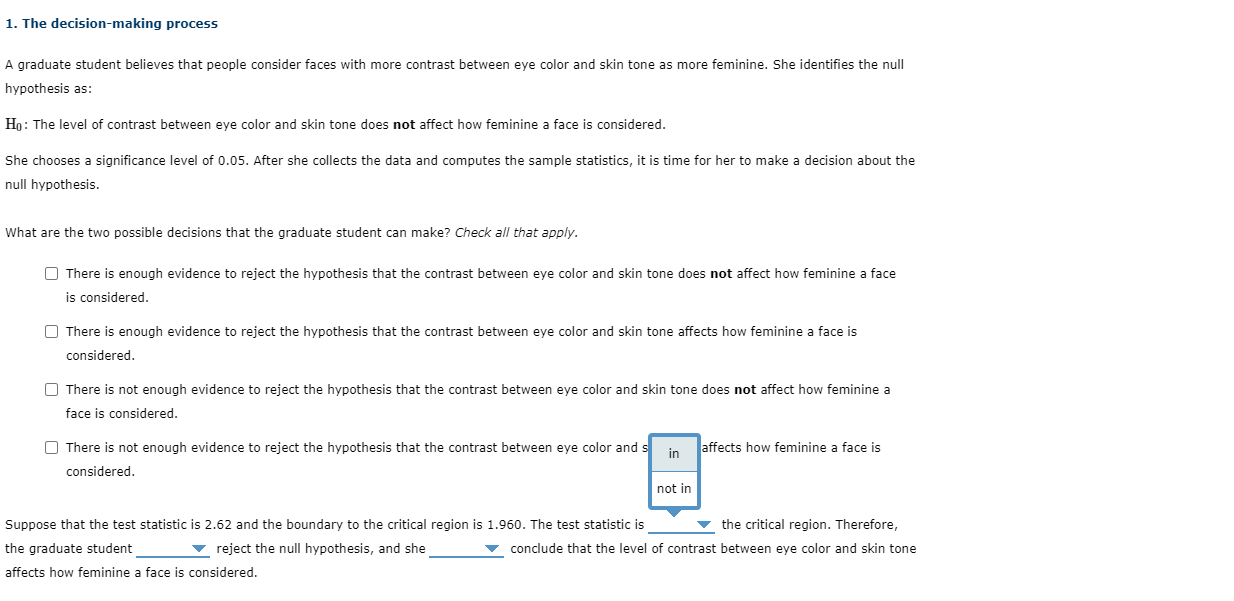
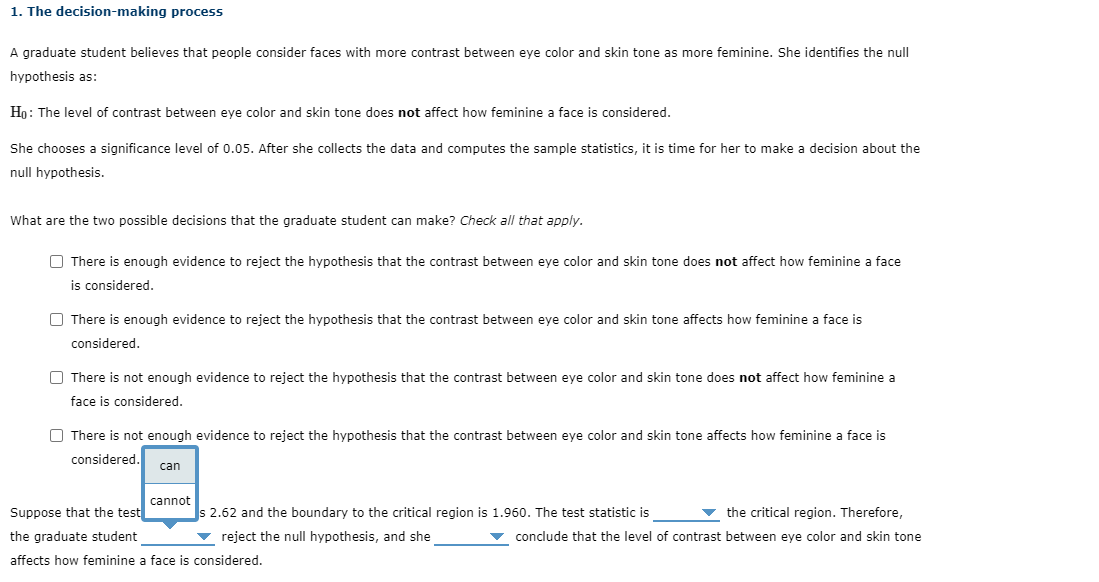
1. The decision-making process A graduate student believes that people consider faces with more contrast between eye color and skin tone as more feminine. She identies the null hypothesis as: Ho: The level of contrast between eye color and skin tone does not affect how feminine a face is considered. She chooses a signicance level of 0.05. After she collects the data and computes the sample statisticsr it is time for her to make a decision about the null hypothesis. hat are the two possible decisions that the graduate student can make? Check all that apply. C] There is enough evidence to reject the hypothesis that the contrast between eye color and skin tone does not affect how feminine a face is considered. C] There is enough evidence to reject the hypothesis that the contrast between eye color and skin tone affects how feminine a face is considered. C] There is not enough evidence to reject the hypothesis that the contrast between eye color and skin tone does not affect how feminine a face is considered. C] There is not enough evidence to reject the hypothesis that the contrast between eye color and skin tone affects how feminine a face is considered. Suppose that the test statistic is 2.62 and the boundary to the critical region is 1.960. The test statistic is V the critical region. Therefore, the graduate student V reject the null hypothesis, and she V conclude that the level of contrast between eye color and skin tone affects hovlI feminine a face is considered. 1. The decision-making process A graduate student believes that people consider faces with more contrast between eye color and skin tone as more feminine. She identifies the null hypothesis as: Ho: The level of contrast between eye color and skin tone does not affect how feminine a face is considered. She chooses a significance level of 0.05. After she collects the data and computes the sample statistics, it is time for her to make a decision about the null hypothesis. What are the two possible decisions that the graduate student can make? Check all that apply. O There is enough evidence to reject the hypothesis that the contrast between eye color and skin tone does not affect how feminine a face is considered. O There is enough evidence to reject the hypothesis that the contrast between eye color and skin tone affects how feminine a face is considered. O There is not enough evidence to reject the hypothesis that the contrast between eye color and skin tone does not affect how feminine a face is considered. O There is not enough evidence to reject the hypothesis that the contrast between eye color and s in affects how feminine a face is considered. not in Suppose that the test statistic is 2.62 and the boundary to the critical region is 1.960. The test statistic is the critical region. Therefore, the graduate student reject the null hypothesis, and she conclude that the level of contrast between eye color and skin tone affects how feminine a face is considered.1. The decision-making process A graduate student believes that people consider faces with more contrast between eye color and skin tone as more feminine. She identifies the null hypothesis as: Ho: The level of contrast between eye color and skin tone does not affect how feminine a face is considered. She chooses a significance level of 0.05. After she collects the data and computes the sample statistics, it is time for her to make a decision about the null hypothesis. What are the two possible decisions that the graduate student can make? Check all that apply. O There is enough evidence to reject the hypothesis that the contrast between eye color and skin tone does not affect how feminine a face is considered. O There is enough evidence to reject the hypothesis that the contrast between eye color and skin tone affects how feminine a face is considered. O There is not enough evidence to reject the hypothesis that the contrast between eye color and skin tone does not affect how feminine a face is considered. There is not enough evidence to reject the hypothesis that the contrast between eye color and skin tone affects how feminine a face is considered. can cannot Suppose that the test s 2.62 and the boundary to the critical region is 1.960. The test statistic is the critical region. Therefore, the graduate student reject the null hypothesis, and she conclude that the level of contrast between eye color and skin tone affects how feminine a face is considered.1. The decision-making process A graduate student believes that people consider faces with more contrast between eye color and skin tone as more feminine. She identifies the null hypothesis as: Ho: The level of contrast between eye color and skin tone does not affect how feminine a face is considered. She chooses a significance level of 0.05. After she collects the data and computes the sample statistics, it is time for her to make a decision about the null hypothesis. What are the two possible decisions that the graduate student can make? Check all that apply. O There is enough evidence to reject the hypothesis that the contrast between eye color and skin tone does not affect how feminine a face is considered. O There is enough evidence to reject the hypothesis that the contrast between eye color and skin tone affects how feminine a face is considered. There is not enough evidence to reject the hypothesis that the contrast between eye color and skin tone does not affect how feminine a face is considered. There is not enough evidence to reject the hypothesis that the contrast between eye color and skin tone affects how feminine a face is considered. can cannot Suppose that the test statistic is 2.62 and the boundary to the critical 1.960. The test statistic is the critical region. Therefore, the graduate student reject the null hypothesis, and she conclude that the level of contrast between eye color and skin tone affects how feminine a face is considered.1. The decision-making process A graduate student believes that people consider faces with more contrast between eye color and skin tone as more feminine. She identifies the null hypothesis as: Ho: The level of contrast between eye color and skin tone does not affect how feminine a face is considered. She chooses a significance level of 0.05. After she collects the data and computes the sample statistics, it is time for her to make a decision about the null hypothesis. What are the two possible decisions that the graduate student can make? Check all that apply. There is enough evidence to reject the hypothesis that the contrast between eye color and skin tone does not affect how feminine a face is considered. O There is enough evidence to reject the hypothesis that the contrast between eye color and skin tone affects how feminine a face is considered. O There is not enough evidence to reject the hypothesis that the contrast between eye color and skin tone does not affect how feminine a face is considered. O There is not enough evidence to reject the hypothesis that the contrast between eye color and skin tone affects how feminine a face is considered. can cannot Suppose that the test s 2.62 and the boundary to the critical region is 1.960. The test statistic is the critical region. Therefore, the graduate student reject the null hypothesis, and she conclude that the level of contrast between eye color and skin tone affects how feminine a face is considered
Step by Step Solution
There are 3 Steps involved in it

Get step-by-step solutions from verified subject matter experts
 Study Help