







Question: Please select the option that best analyzes the RETURN ON EQUITY for our example company. Group of answer choices A.Return on equity tells us how
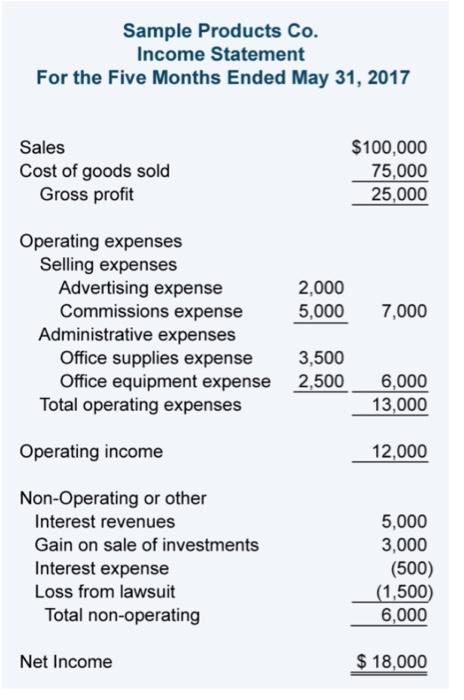
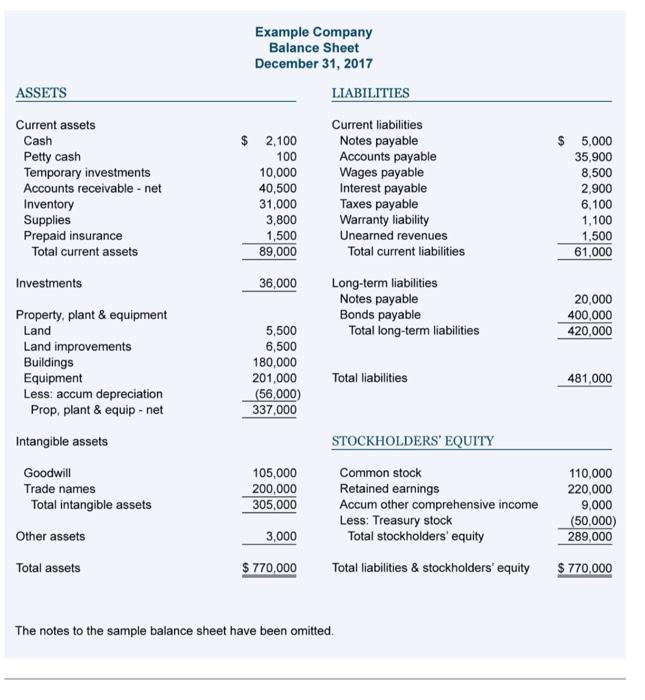
Sample Products Co. Income Statement For the Five Months Ended May 31, 2017 Sales Cost of goods sold Gross profit $100,000 75,000 25,000 7,000 Operating expenses Selling expenses Advertising expense 2,000 Commissions expense 5,000 Administrative expenses Office supplies expense 3,500 Office equipment expense 2,500 Total operating expenses 6,000 13,000 Operating income 12,000 Non-Operating or other Interest revenues Gain on sale of investments Interest expense Loss from lawsuit Total non-operating 5,000 3,000 (500) (1,500) 6,000 Net Income $ 18,000 Example Company Balance Sheet December 31, 2017 LIABILITIES ASSETS Current assets Cash Petty cash Temporary investments Accounts receivable - net Inventory Supplies Prepaid insurance Total current assets $ 2,100 100 10,000 40,500 31,000 3,800 1,500 89,000 Current liabilities Notes payable Accounts payable Wages payable Interest payable Taxes payable Warranty liability Unearned revenues Total current liabilities Long-term liabilities Notes payable Bonds payable Total long-term liabilities $ 5,000 35,900 8,500 2.900 6,100 1,100 1,500 61,000 Investments 36,000 20,000 400,000 420,000 Property, plant & equipment Land Land improvements Buildings Equipment Less: accum depreciation Prop, plant & equip - net 5,500 6,500 180,000 201,000 (56,000) 337,000 Total liabilities 481,000 Intangible assets Goodwill Trade names Total intangible assets 105,000 200,000 305,000 STOCKHOLDERS' EQUITY Common stock Retained earnings Accum other comprehensive income Less: Treasury stock Total stockholders' equity Total liabilities & stockholders' equity 110,000 220,000 9,000 (50,000) 289,000 Other assets 3,000 Total assets $ 770,000 $ 770.000 The notes to the sample balance sheet have been omitted
Step by Step Solution
There are 3 Steps involved in it

Get step-by-step solutions from verified subject matter experts
 Study Help