







Question: *Please show computations using excel formula.* A friend is celebrating her birthday and wants to start saving for her anticipated retirement. She has the following
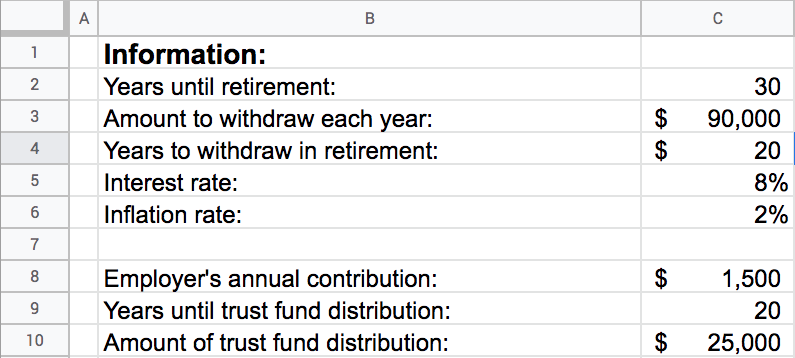
*Please show computations using excel formula.* A friend is celebrating her birthday and wants to start saving for her anticipated retirement. She has the following years to retirement and retirement spending goals. Years until retirement: 30 Amount to withdraw each year: $90,000 Years to withdraw in retirement: 20 Interest rate: 8% Because your friend is planning ahead, the first withdrawal will not take place until one year after she retires. She wants to make equal annual deposits into her account for her retirement fund.
 Required: 1) If she starts making these deposits in one year and makes her last deposit on the day she retires, what amount must she deposit annually to be able to make the desired withdrawals at retirement?
2) Suppose your friend just inherited a large sum of money. Rather than making equal annual payments, she decided to make one lump-sum deposit today to cover her retirement needs. What amount does she have to deposit today?
3) Suppose your friends employer will contribute to the account each year as part of the companys profit-sharing plan. In addition, your friend expects a distribution from a family trust several years from now. What amount must she deposit annually now to be able to make the desired withdrawals at retirement? (See 3-1, 3-2, and 3-3 below)
Employers annual contribution: $1,500 Years until trust fund distribution: 20 Amount of trust fund distribution: $25,000
To find the amount of the annual deposit now, it is easier to break down the components of the problem. Compute each of the following to find your friend's annual deposit:
3-1 Value of employer's contribution at retirement: 3-2 Value of trust fund at retirement: 3-3 Amount to save each year now:
4) Go back and assume the basic information from part 1 aboveno inheritance and no employer contributions. Now assume that the inflation rate is 2%. Consequently, when your friend retires she will want to withdraw $90,000 each year in todays dollars. What amount is she planning to receive in year 31 (the end of her first year of retirement)?
5) How much does she need to have in retirement at the end of year 30 in order to receive her retirement payments assuming that these retirement payments continue to increase at 2% per year throughout her retirement? (See 5-1, 5-2, and 5-3 below)
5-1 Growing annuity factor for retirement period (wo r-g): 5-2 Dividing by r-g: 5-3 Amount needed at retirement:
6) If she starts making deposit amounts in one year and makes equal deposit amounts each year and makes her last deposit on the day she retires, what amount must she deposit annually to be able to make the desired withdrawals at retirement? (See 6-1, 6-2, 6-3, and 6-4 below)
6-1 PV now of amount needed at retirement: 6-2 Growing annuity factor for the working period (wo r-g): 6-3 Dividing by r-g: 6-4 Amount to save each year:
7) If she starts making deposit amounts in one year and her deposits increase at the inflation rate of 2% each year until she makes her last deposit on the day she retires, what amount must she initially deposit to be able to make the desired withdrawals at retirement? *Please show computations using excel formula.*
A A B 1 2 3 Information: Years until retirement: Amount to withdraw each year: Years to withdraw in retirement: Interest rate: Inflation rate: $ $ 4 30 90,000 20 8% 2% 5 6 7 8 $ 9 Employer's annual contribution: Years until trust fund distribution: Amount of trust fund distribution: 1,500 20 25,000 10 $
Step by Step Solution
There are 3 Steps involved in it

Get step-by-step solutions from verified subject matter experts
 Study Help