







Question: Please show step by step with formula or calculator keys! 7. Suppose that a daytime non-resident MBA student will have to pay $17,000 per year
 Please show step by step with formula or calculator keys!
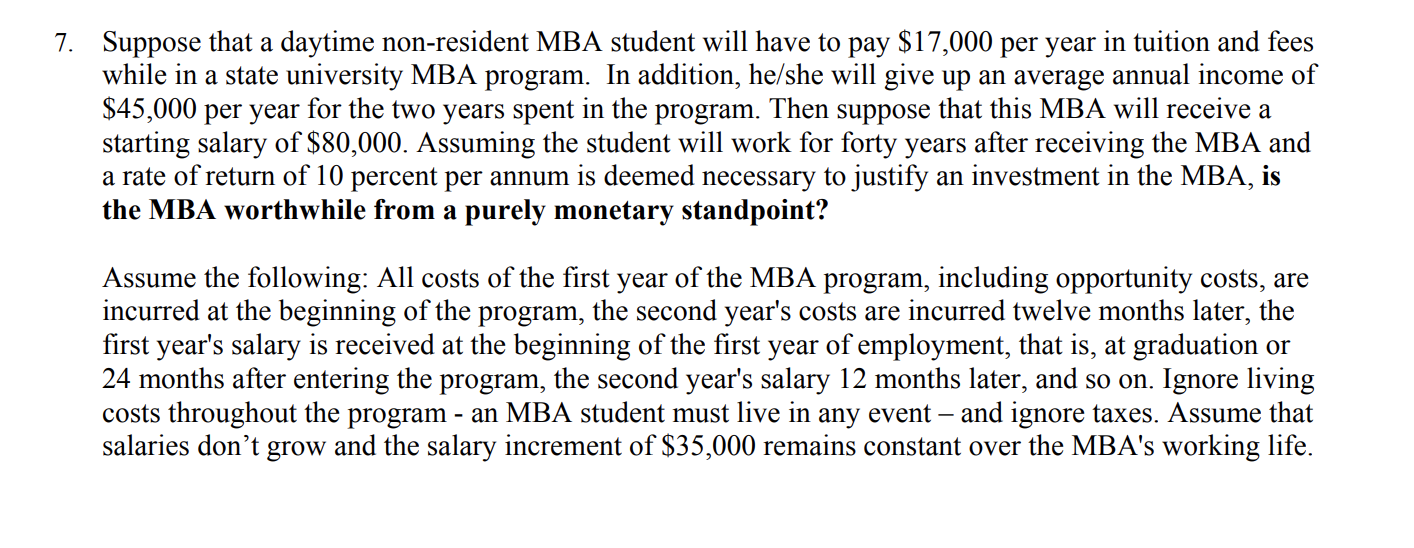
7. Suppose that a daytime non-resident MBA student will have to pay $17,000 per year in tuition and fees while in a state university MBA program. In addition, he/she will give up an average annual income of $45,000 per year for the two years spent in the program. Then suppose that this MBA will receive a starting salary of $80,000. Assuming the student will work for forty years after receiving the MBA and a rate of return of 10 percent per annum is deemed necessary to justify an investment in the MBA, is the MBA worthwhile from a purely monetary standpoint? Assume the following: All costs of the first year of the MBA program, including opportunity costs, are incurred at the beginning of the program, the second year's costs are incurred twelve months later, the first year's salary is received at the beginning of the first year of employment, that is, at graduation or 24 months after entering the program, the second year's salary 12 months later, and so on. Ignore living costs throughout the program - an MBA student must live in any event and ignore taxes. Assume that salaries don't grow and the salary increment of $35,000 remains constant over the MBA's working life. 7. Suppose that a daytime non-resident MBA student will have to pay $17,000 per year in tuition and fees while in a state university MBA program. In addition, he/she will give up an average annual income of $45,000 per year for the two years spent in the program. Then suppose that this MBA will receive a starting salary of $80,000. Assuming the student will work for forty years after receiving the MBA and a rate of return of 10 percent per annum is deemed necessary to justify an investment in the MBA, is the MBA worthwhile from a purely monetary standpoint? Assume the following: All costs of the first year of the MBA program, including opportunity costs, are incurred at the beginning of the program, the second year's costs are incurred twelve months later, the first year's salary is received at the beginning of the first year of employment, that is, at graduation or 24 months after entering the program, the second year's salary 12 months later, and so on. Ignore living costs throughout the program - an MBA student must live in any event and ignore taxes. Assume that salaries don't grow and the salary increment of $35,000 remains constant over the MBA's working life
Step by Step Solution
There are 3 Steps involved in it

Get step-by-step solutions from verified subject matter experts
 Study Help