







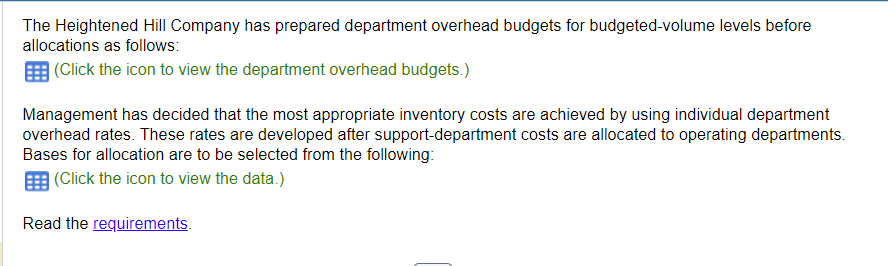
Question: Please show steps for how to do these calculations The Heightened Hill Company has prepared department overhead budgets for budgeted-volume levels before allocations as follows:

Please show steps for how to do these calculations
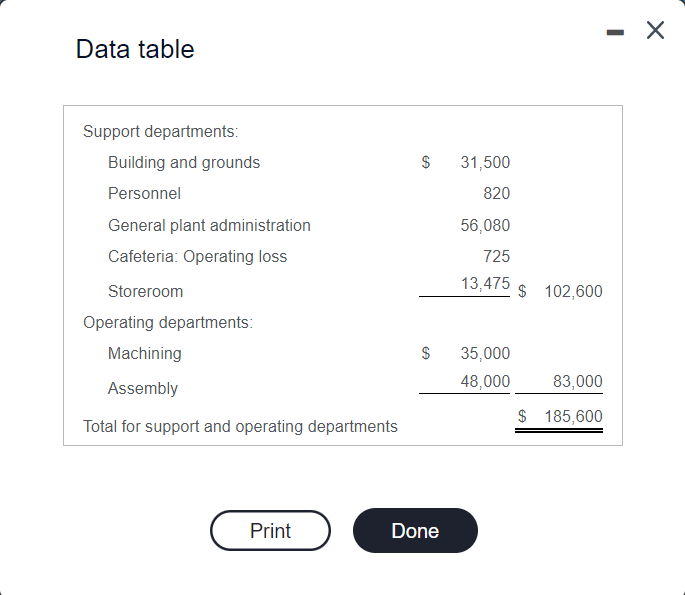
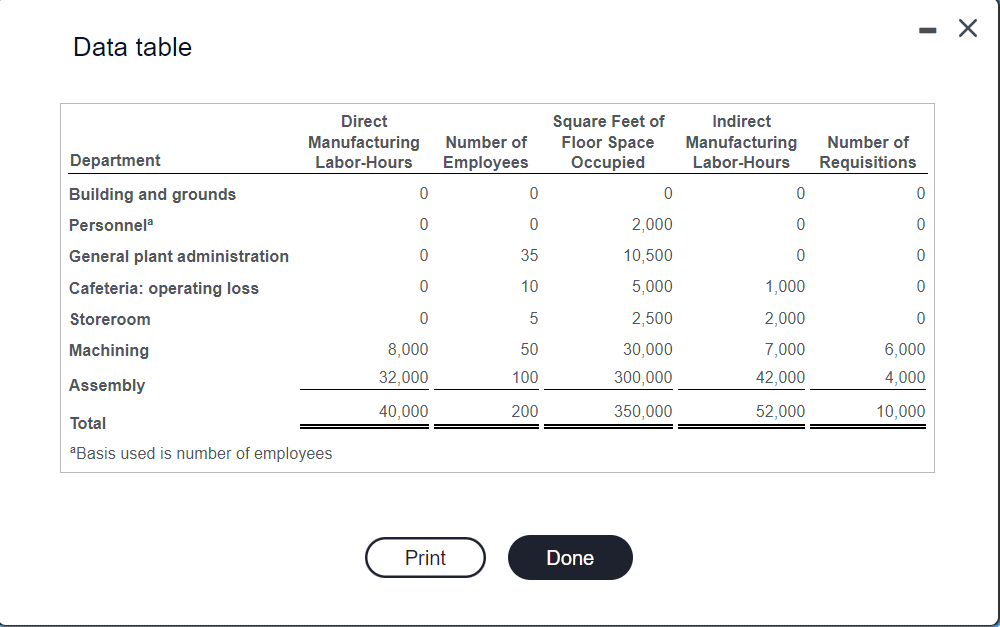
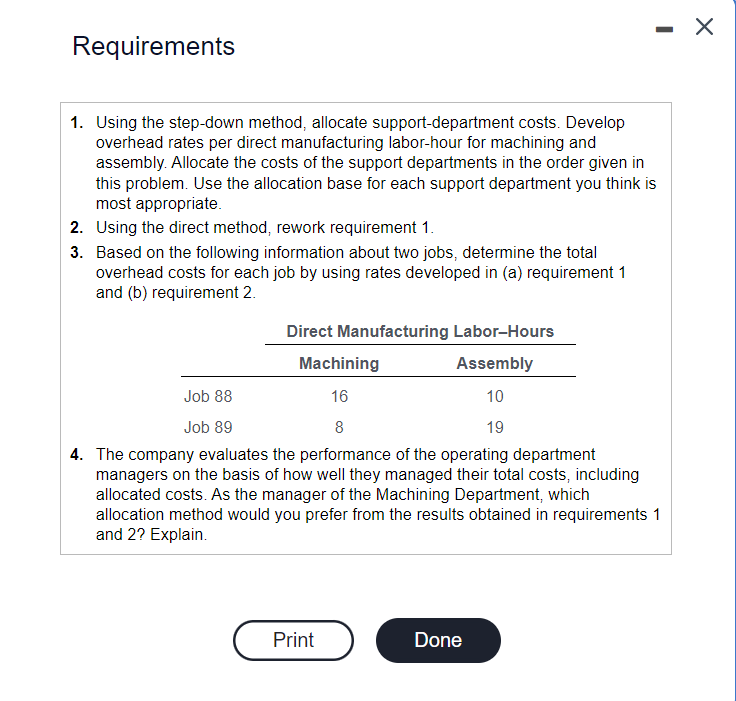
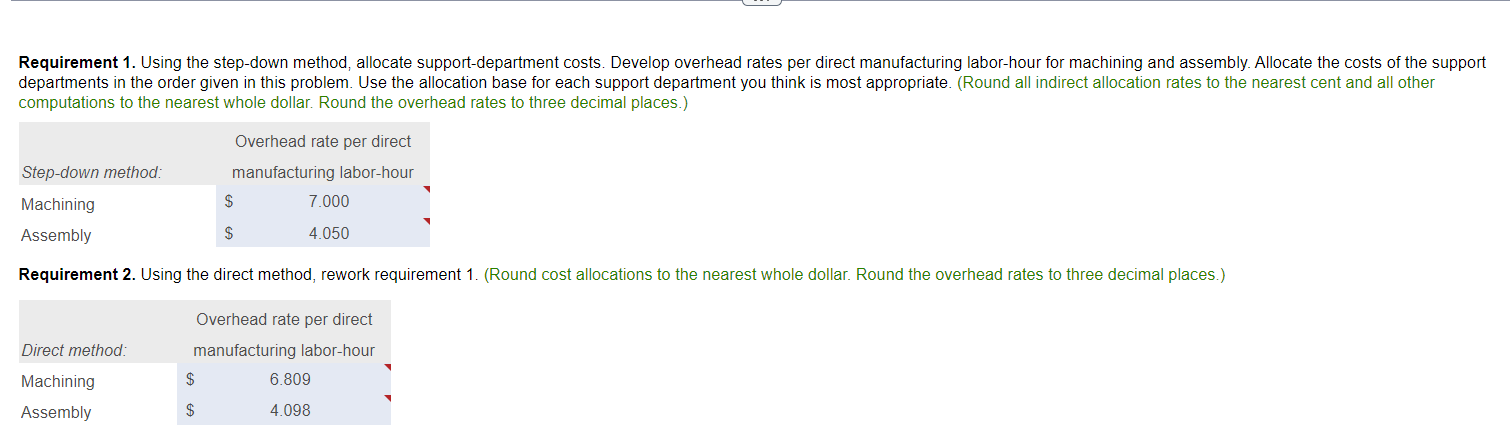
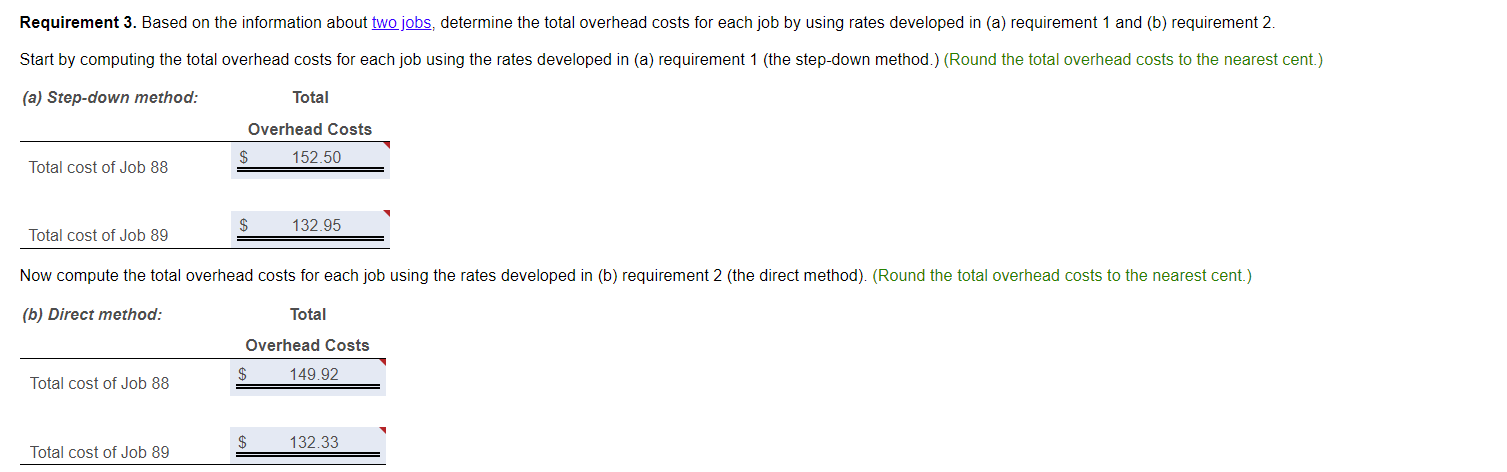
The Heightened Hill Company has prepared department overhead budgets for budgeted-volume levels before allocations as follows: (Click the icon to view the department overhead budgets.) Management has decided that the most appropriate inventory costs are achieved by using individual department overhead rates. These rates are developed after support-department costs are allocated to operating departments. Bases for allocation are to be selected from the following: (Click the icon to view the data.) Read the requirements. Data table Data table Requirements 1. Using the step-down method, allocate support-department costs. Develop overhead rates per direct manufacturing labor-hour for machining and assembly. Allocate the costs of the support departments in the order given in this problem. Use the allocation base for each support department you think is most appropriate. 2. Using the direct method, rework requirement 1. 3. Based on the following information about two jobs, determine the total overhead costs for each job by using rates developed in (a) requirement 1 and (b) requirement 2. 4. The company evaluates the performance of the operating department managers on the basis of how well they managed their total costs, including allocated costs. As the manager of the Machining Department, which allocation method would you prefer from the results obtained in requirements 1 and 2? Explain. Requirement 1. Using the step-down method, allocate support-department costs. Develop overhead rates per direct manufacturing labor-hour for machining and assembly Allocate the costs of the support departments in the order given in this problem. Use the allocation base for each support department you think is most appropriate. (Round all indirect allocation rates to the nearest cent and all other computations to the nearest whole dollar. Round the overhead rates to three decimal places.) Requirement 3 . Based on the information about two jjobs, determine the total overhead costs for each job by using rates developed in (a) requirement 1 and (b) requirement 2 . Start by computing the total overhead costs for each job using the rates developed in (a) requirement 1 (the step-down method.) (Round the total overhead costs to the nearest ce Requirement 3 . Based on the information about two jjobs, determine the total overhead costs for each job by using rates developed in (a) requirement 1 and (b) requirement 2 . Start by computing the total overhead costs for each job using the rates developed in (a) requirement 1 (the step-down method.) (Round the total overhead costs to the nearest ce Machining Department, which allocation method would you prefer from the results obtained in requirements 1 and 2 ? Explain. The manager of machining department would since amount of overhead costs being allocated to the machining department. The Heightened Hill Company has prepared department overhead budgets for budgeted-volume levels before allocations as follows: (Click the icon to view the department overhead budgets.) Management has decided that the most appropriate inventory costs are achieved by using individual department overhead rates. These rates are developed after support-department costs are allocated to operating departments. Bases for allocation are to be selected from the following: (Click the icon to view the data.) Read the requirements. Data table Data table Requirements 1. Using the step-down method, allocate support-department costs. Develop overhead rates per direct manufacturing labor-hour for machining and assembly. Allocate the costs of the support departments in the order given in this problem. Use the allocation base for each support department you think is most appropriate. 2. Using the direct method, rework requirement 1. 3. Based on the following information about two jobs, determine the total overhead costs for each job by using rates developed in (a) requirement 1 and (b) requirement 2. 4. The company evaluates the performance of the operating department managers on the basis of how well they managed their total costs, including allocated costs. As the manager of the Machining Department, which allocation method would you prefer from the results obtained in requirements 1 and 2? Explain. Requirement 1. Using the step-down method, allocate support-department costs. Develop overhead rates per direct manufacturing labor-hour for machining and assembly Allocate the costs of the support departments in the order given in this problem. Use the allocation base for each support department you think is most appropriate. (Round all indirect allocation rates to the nearest cent and all other computations to the nearest whole dollar. Round the overhead rates to three decimal places.) Requirement 3 . Based on the information about two jjobs, determine the total overhead costs for each job by using rates developed in (a) requirement 1 and (b) requirement 2 . Start by computing the total overhead costs for each job using the rates developed in (a) requirement 1 (the step-down method.) (Round the total overhead costs to the nearest ce Requirement 3 . Based on the information about two jjobs, determine the total overhead costs for each job by using rates developed in (a) requirement 1 and (b) requirement 2 . Start by computing the total overhead costs for each job using the rates developed in (a) requirement 1 (the step-down method.) (Round the total overhead costs to the nearest ce Machining Department, which allocation method would you prefer from the results obtained in requirements 1 and 2 ? Explain. The manager of machining department would since amount of overhead costs being allocated to the machining department
Step by Step Solution
There are 3 Steps involved in it

Get step-by-step solutions from verified subject matter experts
 Study Help