







Question: please show work to help me understand. will thunbs up! David is contemplating adding a new 20-oz product for the coming year and discintinuing sales
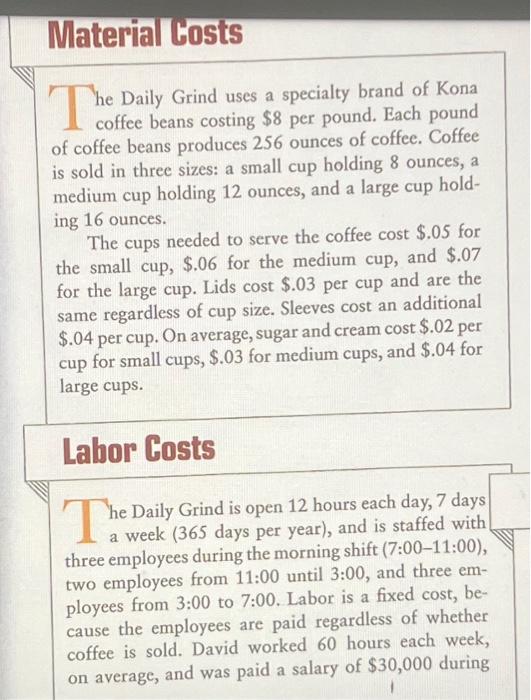
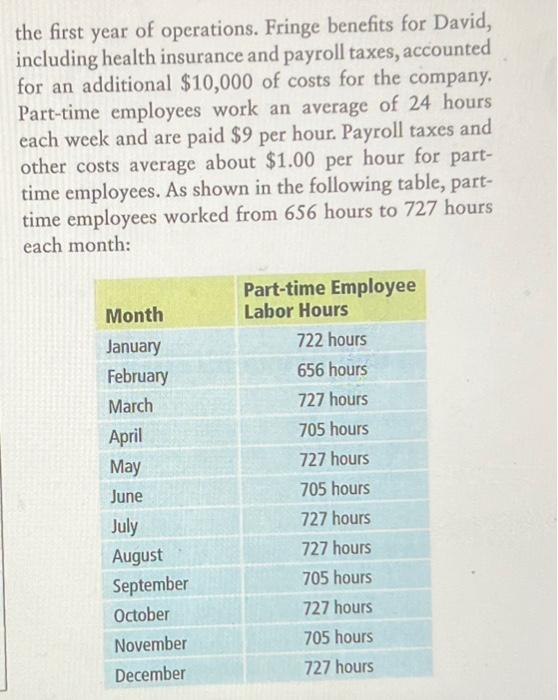
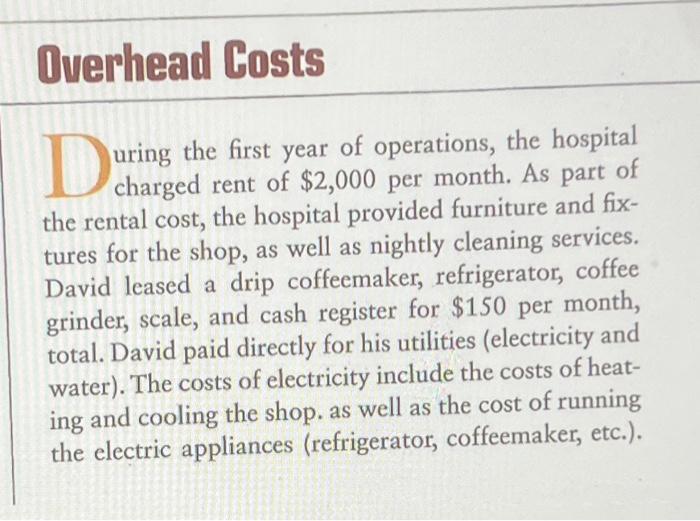
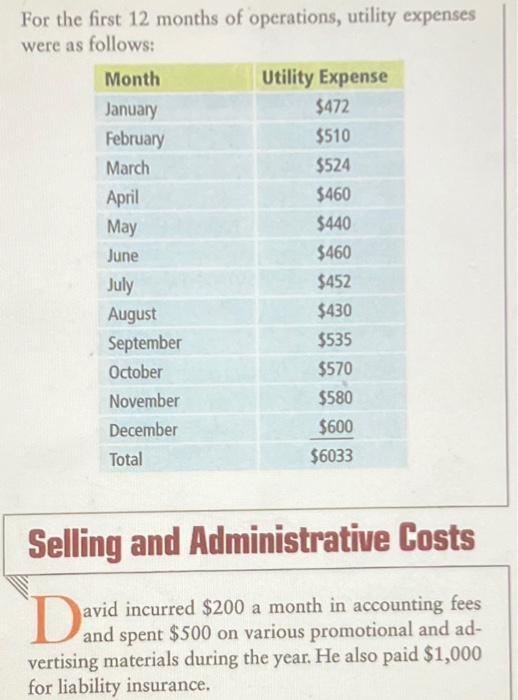
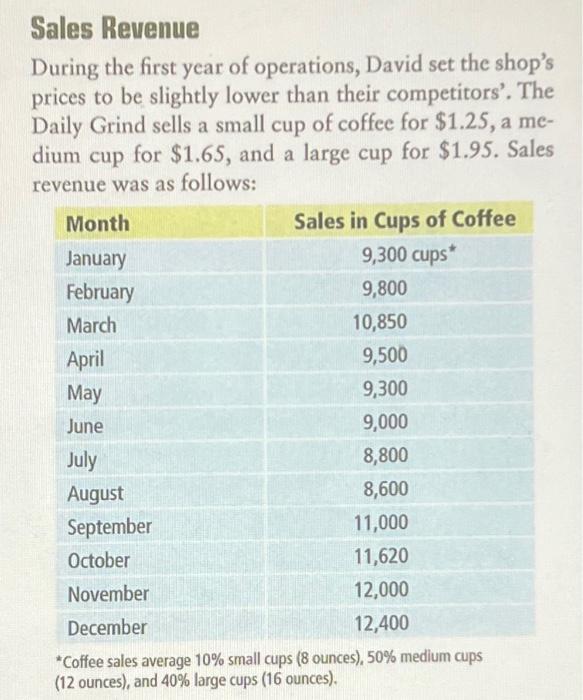
7 he Daily Grind uses a specialty brand of Kona coffee beans costing $8 per pound. Each pound of coffee beans produces 256 ounces of coffee. Coffee is sold in three sizes: a small cup holding 8 ounces, a medium cup holding 12 ounces, and a large cup holding 16 ounces. The cups needed to serve the coffee cost $.05 for the small cup, $.06 for the medium cup, and $.07 for the large cup. Lids cost $.03 per cup and are the same regardless of cup size. Sleeves cost an additional $.04 per cup. On average, sugar and cream cost $.02 per cup for small cups, $.03 for medium cups, and $.04 for large cups. Labor Costs he Daily Grind is open 12 hours each day, 7 days 1 a week (365 days per year), and is staffed with three employees during the morning shift (7:00-11:00), two employees from 11:00 until 3:00, and three employees from 3:00 to 7:00. Labor is a fixed cost, because the employees are paid regardless of whether coffee is sold. David worked 60 hours each week, on average, and was paid a salary of $30,000 during the first year of operations. Fringe benefits for David, including health insurance and payroll taxes, accounted for an additional $10,000 of costs for the company. Part-time employees work an average of 24 hours each week and are paid \$9 per hour. Payroll taxes and other costs average about $1.00 per hour for parttime employees. As shown in the following table, parttime employees worked from 656 hours to 727 hours each month: uring the first year of operations, the hospital charged rent of $2,000 per month. As part of the rental cost, the hospital provided furniture and fixtures for the shop, as well as nightly cleaning services. David leased a drip coffeemaker, refrigerator, coffee grinder, scale, and cash register for $150 per month, total. David paid directly for his utilities (electricity and water). The costs of electricity include the costs of heating and cooling the shop. as well as the cost of running the electric appliances (refrigerator, coffeemaker, etc.). For the first 12 months of operations, utility expenses were as followe: Selling and Administrative Costs avid incurred $200 a month in accounting fees and spent $500 on various promotional and advertising materials during the year. He also paid $1,000 for liability insurance. Sales Revenue During the first year of operations, David set the shop's prices to be slightly lower than their competitors'. The Daily Grind sells a small cup of coffee for $1.25, a medium cup for $1.65, and a large cup for $1.95. Sales revenue was as follows: (12 ounces), and 40% large cups ( 16 ounces). 7 he Daily Grind uses a specialty brand of Kona coffee beans costing $8 per pound. Each pound of coffee beans produces 256 ounces of coffee. Coffee is sold in three sizes: a small cup holding 8 ounces, a medium cup holding 12 ounces, and a large cup holding 16 ounces. The cups needed to serve the coffee cost $.05 for the small cup, $.06 for the medium cup, and $.07 for the large cup. Lids cost $.03 per cup and are the same regardless of cup size. Sleeves cost an additional $.04 per cup. On average, sugar and cream cost $.02 per cup for small cups, $.03 for medium cups, and $.04 for large cups. Labor Costs he Daily Grind is open 12 hours each day, 7 days 1 a week (365 days per year), and is staffed with three employees during the morning shift (7:00-11:00), two employees from 11:00 until 3:00, and three employees from 3:00 to 7:00. Labor is a fixed cost, because the employees are paid regardless of whether coffee is sold. David worked 60 hours each week, on average, and was paid a salary of $30,000 during the first year of operations. Fringe benefits for David, including health insurance and payroll taxes, accounted for an additional $10,000 of costs for the company. Part-time employees work an average of 24 hours each week and are paid \$9 per hour. Payroll taxes and other costs average about $1.00 per hour for parttime employees. As shown in the following table, parttime employees worked from 656 hours to 727 hours each month: uring the first year of operations, the hospital charged rent of $2,000 per month. As part of the rental cost, the hospital provided furniture and fixtures for the shop, as well as nightly cleaning services. David leased a drip coffeemaker, refrigerator, coffee grinder, scale, and cash register for $150 per month, total. David paid directly for his utilities (electricity and water). The costs of electricity include the costs of heating and cooling the shop. as well as the cost of running the electric appliances (refrigerator, coffeemaker, etc.). For the first 12 months of operations, utility expenses were as followe: Selling and Administrative Costs avid incurred $200 a month in accounting fees and spent $500 on various promotional and advertising materials during the year. He also paid $1,000 for liability insurance. Sales Revenue During the first year of operations, David set the shop's prices to be slightly lower than their competitors'. The Daily Grind sells a small cup of coffee for $1.25, a medium cup for $1.65, and a large cup for $1.95. Sales revenue was as follows: (12 ounces), and 40% large cups ( 16 ounces)
Step by Step Solution
There are 3 Steps involved in it

Get step-by-step solutions from verified subject matter experts
 Study Help