







Question: please solve in excell please solve in excell please solve in excell EXERCISE 8-13 Schedules of Expected Cash Collections and Disbursements; Income Statement; Balance Sheet
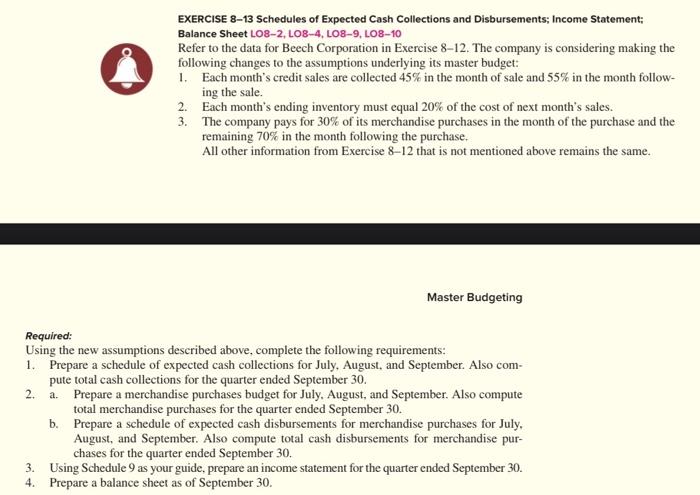
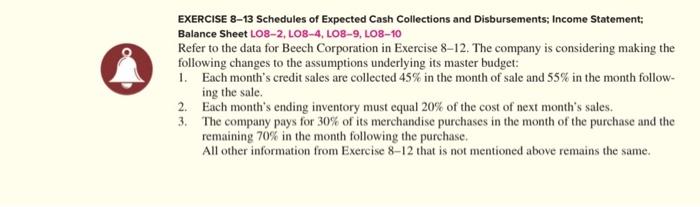
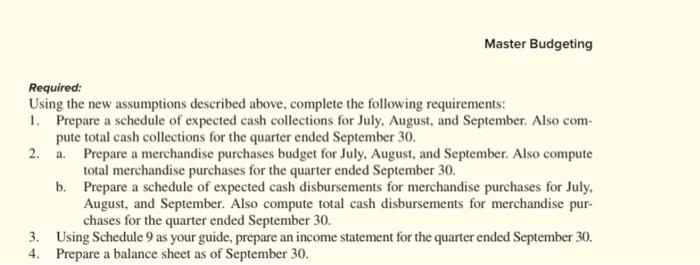
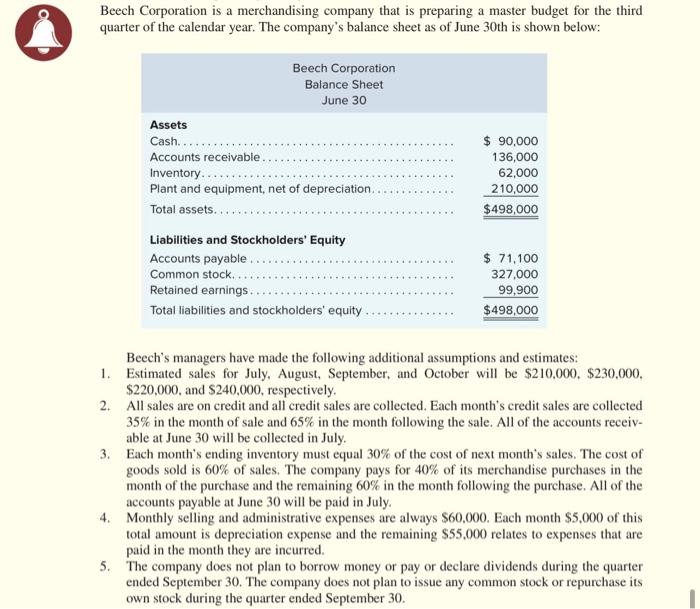
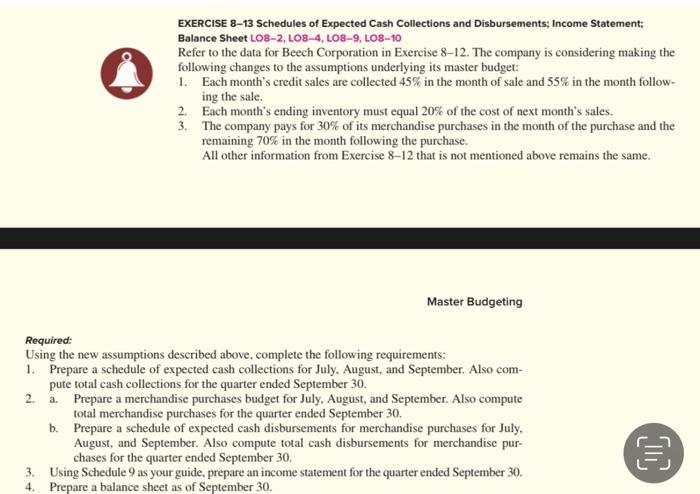
EXERCISE 8-13 Schedules of Expected Cash Collections and Disbursements; Income Statement; Balance Sheet LO8-2, LO8-4, LO8-9, LO8-10 Refer to the data for Beech Corporation in Exercise 8-12. The company is considering making the following changes to the assumptions underlying its master budget: 1. Each month's credit sales are collected 45% in the month of sale and 55% in the month follow- ing the sale. Each month's ending inventory must equal 20% of the cost of next month's sales. The company pays for 30% of its merchandise purchases in the month of the purchase and the remaining 70% in the month following the purchase. All other information from Exercise 8-12 that is not mentioned above remains the same. 2. 3. Master Budgeting Required: Using the new assumptions described above, complete the following requirements: 1. Prepare a schedule of expected cash collections for July, August, and September. Also com- pute total cash collections for the quarter ended September 30. 2. a. Prepare a merchandise purchases budget for July, August, and September. Also compute total merchandise purchases for the quarter ended September 30. b. Prepare a schedule of expected cash disbursements for merchandise purchases for July, August, and September. Also compute total cash disbursements for merchandise pur- chases for the quarter ended September 30. 3. Using Schedule 9 as your guide, prepare an income statement for the quarter ended September 30. 4. Prepare a balance sheet as of September 30. EXERCISE 8-13 Schedules of Expected Cash Collections and Disbursements; Income Statement; Balance Sheet LO8-2, LOB-4, LO8-9, LO8-10 Refer to the data for Beech Corporation in Exercise 8-12. The company is considering making the following changes to the assumptions underlying its master budget: 1. Each month's credit sales are collected 45% in the month of sale and 55% in the month follow- ing the sale. 2. 3. Each month's ending inventory must equal 20% of the cost of next month's sales. The company pays for 30% of its merchandise purchases in the month of the purchase and the remaining 70% in the month following the purchase. All other information from Exercise 8-12 that is not mentioned above remains the same. Master Budgeting Required: Using the new assumptions described above, complete the following requirements: 1. Prepare a schedule of expected cash collections for July, August, and September. Also com- pute total cash collections for the quarter ended September 30. 2. a. Prepare a merchandise purchases budget for July, August, and September. Also compute total merchandise purchases for the quarter ended September 30. b. Prepare a schedule of expected cash disbursements for merchandise purchases for July, August, and September. Also compute total cash disbursements for merchandise pur- chases for the quarter ended September 30. 3. Using Schedule 9 as your guide, prepare an income statement for the quarter ended September 30. 4. Prepare a balance sheet as of September 30. Beech Corporation is a merchandising company that is preparing a master budget for the third quarter of the calendar year. The company's balance sheet as of June 30th is shown below: Assets Cash...... Accounts receivable. Beech Corporation Balance Sheet June 30 Inventory... Plant and equipment, net of depreciation... Total assets..... Liabilities and Stockholders' Equity Accounts payable.. Common stock.. Retained earnings.. Total liabilities and stockholders' equity. $ 90,000 136,000 62,000 210,000 $498,000 $ 71,100 327,000 99,900 $498,000 Beech's managers have made the following additional assumptions and estimates: 1. Estimated sales for July, August, September, and October will be $210,000, $230,000. $220,000, and $240,000, respectively. 2. All sales are on credit and all credit sales are collected. Each month's credit sales are collected 35% in the month of sale and 65% in the month following the sale. All of the accounts receiv- able at June 30 will be collected in July. 3. Each month's ending inventory must equal 30% of the cost of next month's sales. The cost of goods sold is 60% of sales. The company pays for 40% of its merchandise purchases in the month of the purchase and the remaining 60% in the month following the purchase. All of the accounts payable at June 30 will be paid in July. 4. Monthly selling and administrative expenses are always $60,000. Each month $5,000 of this total amount is depreciation expense and the remaining $55,000 relates to expenses that are paid in the month they are incurred. 5. The company does not plan to borrow money or pay or declare dividends during the quarter ended September 30. The company does not plan to issue any common stock or repurchase its own stock during the quarter ended September 30. EXERCISE 8-13 Schedules of Expected Cash Collections and Disbursements; Income Statement; Balance Sheet LO8-2, LO8-4, LO8-9, LO8-10 Refer to the data for Beech Corporation in Exercise 8-12. The company is considering making the following changes to the assumptions underlying its master budget: 1. Each month's credit sales are collected 45% in the month of sale and 55% in the month follow- ing the sale. Each month's ending inventory must equal 20% of the cost of next month's sales. The company pays for 30% of its merchandise purchases in the month of the purchase and the remaining 70% in the month following the purchase. All other information from Exercise 8-12 that is not mentioned above remains the same. 2. 3. Master Budgeting Required: Using the new assumptions described above, complete the following requirements: 1. Prepare a schedule of expected cash collections for July. August, and September. Also com- pute total cash collections for the quarter ended September 30. 2. a. Prepare a merchandise purchases budget for July, August, and September. Also compute total merchandise purchases for the quarter ended September 30. b. Prepare a schedule of expected cash disbursements for merchandise purchases for July. August, and September. Also compute total cash disbursements for merchandise pur- chases for the quarter ended September 30. 3. Using Schedule 9 as your guide, prepare an income statement for the quarter ended September 30. 4. Prepare a balance sheet as of September 30. OC EXERCISE 8-13 Schedules of Expected Cash Collections and Disbursements; Income Statement; Balance Sheet LO8-2, LO8-4, LO8-9, LO8-10 Refer to the data for Beech Corporation in Exercise 8-12. The company is considering making the following changes to the assumptions underlying its master budget: 1. Each month's credit sales are collected 45% in the month of sale and 55% in the month follow- ing the sale. Each month's ending inventory must equal 20% of the cost of next month's sales. The company pays for 30% of its merchandise purchases in the month of the purchase and the remaining 70% in the month following the purchase. All other information from Exercise 8-12 that is not mentioned above remains the same. 2. 3. Master Budgeting Required: Using the new assumptions described above, complete the following requirements: 1. Prepare a schedule of expected cash collections for July, August, and September. Also com- pute total cash collections for the quarter ended September 30. 2. a. Prepare a merchandise purchases budget for July, August, and September. Also compute total merchandise purchases for the quarter ended September 30. b. Prepare a schedule of expected cash disbursements for merchandise purchases for July, August, and September. Also compute total cash disbursements for merchandise pur- chases for the quarter ended September 30. 3. Using Schedule 9 as your guide, prepare an income statement for the quarter ended September 30. 4. Prepare a balance sheet as of September 30. EXERCISE 8-13 Schedules of Expected Cash Collections and Disbursements; Income Statement; Balance Sheet LO8-2, LOB-4, LO8-9, LO8-10 Refer to the data for Beech Corporation in Exercise 8-12. The company is considering making the following changes to the assumptions underlying its master budget: 1. Each month's credit sales are collected 45% in the month of sale and 55% in the month follow- ing the sale. 2. 3. Each month's ending inventory must equal 20% of the cost of next month's sales. The company pays for 30% of its merchandise purchases in the month of the purchase and the remaining 70% in the month following the purchase. All other information from Exercise 8-12 that is not mentioned above remains the same. Master Budgeting Required: Using the new assumptions described above, complete the following requirements: 1. Prepare a schedule of expected cash collections for July, August, and September. Also com- pute total cash collections for the quarter ended September 30. 2. a. Prepare a merchandise purchases budget for July, August, and September. Also compute total merchandise purchases for the quarter ended September 30. b. Prepare a schedule of expected cash disbursements for merchandise purchases for July, August, and September. Also compute total cash disbursements for merchandise pur- chases for the quarter ended September 30. 3. Using Schedule 9 as your guide, prepare an income statement for the quarter ended September 30. 4. Prepare a balance sheet as of September 30. Beech Corporation is a merchandising company that is preparing a master budget for the third quarter of the calendar year. The company's balance sheet as of June 30th is shown below: Assets Cash...... Accounts receivable. Beech Corporation Balance Sheet June 30 Inventory... Plant and equipment, net of depreciation... Total assets..... Liabilities and Stockholders' Equity Accounts payable.. Common stock.. Retained earnings.. Total liabilities and stockholders' equity. $ 90,000 136,000 62,000 210,000 $498,000 $ 71,100 327,000 99,900 $498,000 Beech's managers have made the following additional assumptions and estimates: 1. Estimated sales for July, August, September, and October will be $210,000, $230,000. $220,000, and $240,000, respectively. 2. All sales are on credit and all credit sales are collected. Each month's credit sales are collected 35% in the month of sale and 65% in the month following the sale. All of the accounts receiv- able at June 30 will be collected in July. 3. Each month's ending inventory must equal 30% of the cost of next month's sales. The cost of goods sold is 60% of sales. The company pays for 40% of its merchandise purchases in the month of the purchase and the remaining 60% in the month following the purchase. All of the accounts payable at June 30 will be paid in July. 4. Monthly selling and administrative expenses are always $60,000. Each month $5,000 of this total amount is depreciation expense and the remaining $55,000 relates to expenses that are paid in the month they are incurred. 5. The company does not plan to borrow money or pay or declare dividends during the quarter ended September 30. The company does not plan to issue any common stock or repurchase its own stock during the quarter ended September 30. EXERCISE 8-13 Schedules of Expected Cash Collections and Disbursements; Income Statement; Balance Sheet LO8-2, LO8-4, LO8-9, LO8-10 Refer to the data for Beech Corporation in Exercise 8-12. The company is considering making the following changes to the assumptions underlying its master budget: 1. Each month's credit sales are collected 45% in the month of sale and 55% in the month follow- ing the sale. Each month's ending inventory must equal 20% of the cost of next month's sales. The company pays for 30% of its merchandise purchases in the month of the purchase and the remaining 70% in the month following the purchase. All other information from Exercise 8-12 that is not mentioned above remains the same. 2. 3. Master Budgeting Required: Using the new assumptions described above, complete the following requirements: 1. Prepare a schedule of expected cash collections for July. August, and September. Also com- pute total cash collections for the quarter ended September 30. 2. a. Prepare a merchandise purchases budget for July, August, and September. Also compute total merchandise purchases for the quarter ended September 30. b. Prepare a schedule of expected cash disbursements for merchandise purchases for July. August, and September. Also compute total cash disbursements for merchandise pur- chases for the quarter ended September 30. 3. Using Schedule 9 as your guide, prepare an income statement for the quarter ended September 30. 4. Prepare a balance sheet as of September 30. OC
Step by Step Solution
There are 3 Steps involved in it

Get step-by-step solutions from verified subject matter experts
 Study Help