







Question: please solve question 2 not question 1.... Consider a UCSD course that you are taking - like the current MGT 172. Suppose you have to
please solve question 2 not question 1....
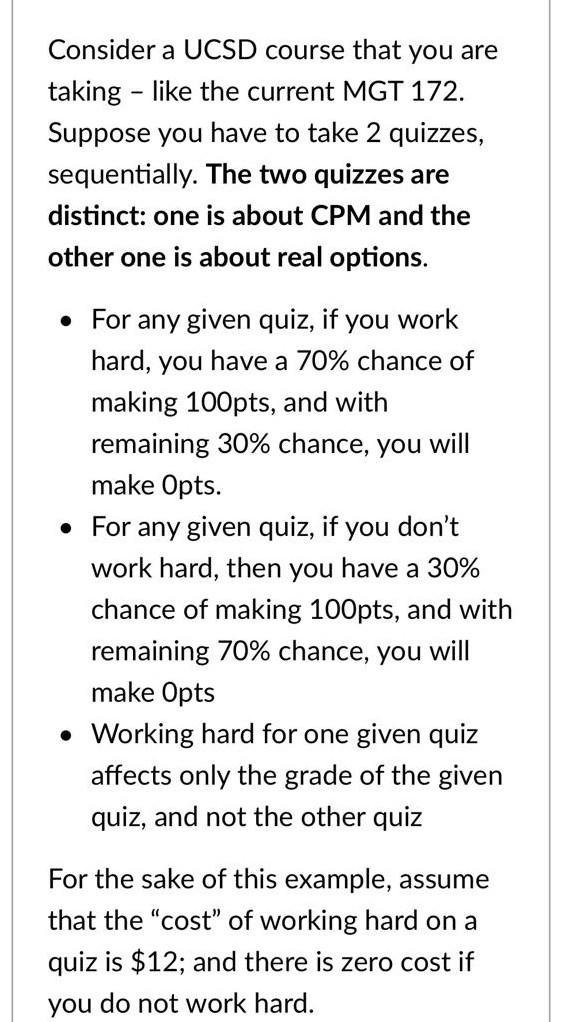
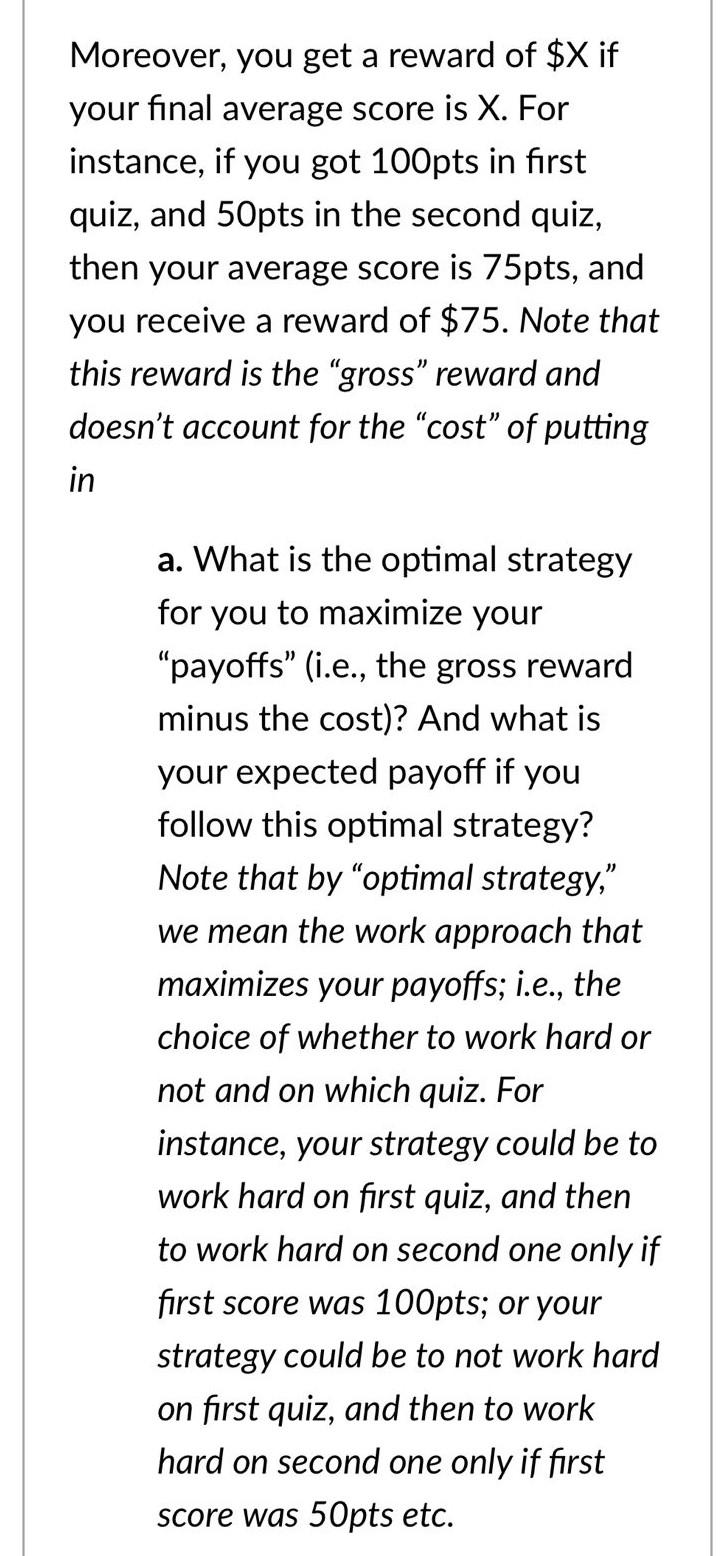
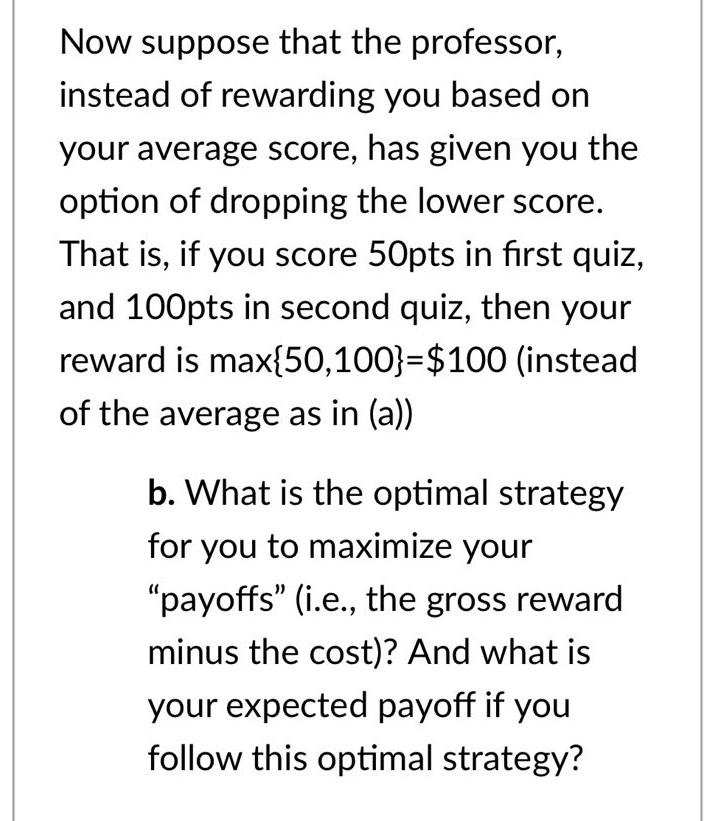
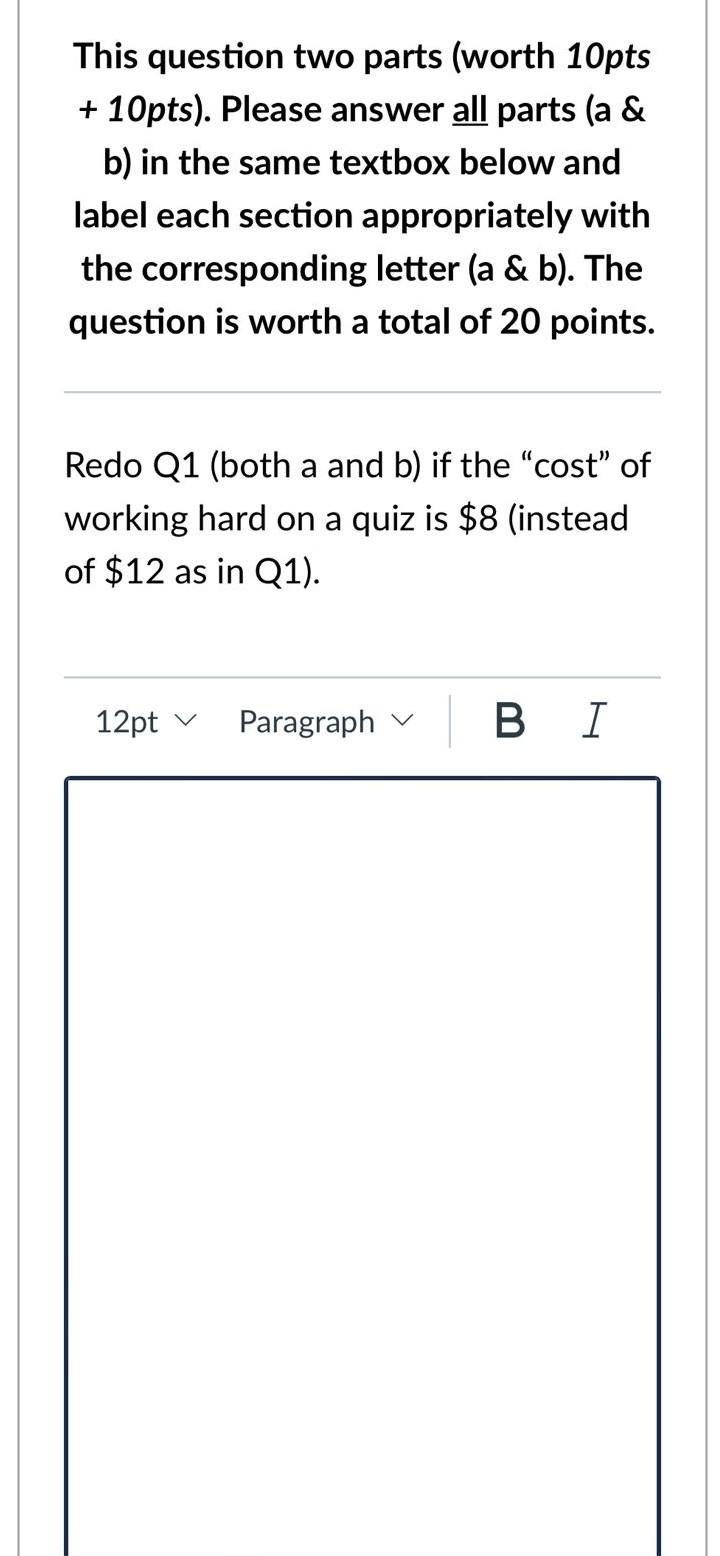
Consider a UCSD course that you are taking - like the current MGT 172. Suppose you have to take 2 quizzes, sequentially. The two quizzes are distinct: one is about CPM and the other one is about real options. - For any given quiz, if you work hard, you have a 70% chance of making 100pts, and with remaining 30% chance, you will make Opts. - For any given quiz, if you don't work hard, then you have a 30% chance of making 100pts, and with remaining 70% chance, you will make Opts - Working hard for one given quiz affects only the grade of the given quiz, and not the other quiz For the sake of this example, assume that the "cost" of working hard on a quiz is $12; and there is zero cost if you do not work hard. Moreover, you get a reward of $X if your final average score is X. For instance, if you got 100pts in first quiz, and 50pts in the second quiz, then your average score is 75pts, and you receive a reward of $75. Note that this reward is the "gross" reward and doesn't account for the "cost" of putting in a. What is the optimal strategy for you to maximize your "payoffs" (i.e., the gross reward minus the cost)? And what is your expected payoff if you follow this optimal strategy? Note that by "optimal strategy," we mean the work approach that maximizes your payoffs; i.e., the choice of whether to work hard or not and on which quiz. For instance, your strategy could be to work hard on first quiz, and then to work hard on second one only if first score was 100pts; or your strategy could be to not work hard on first quiz, and then to work hard on second one only if first Now suppose that the professor, instead of rewarding you based on your average score, has given you the option of dropping the lower score. That is, if you score 50pts in first quiz, and 100pts in second quiz, then your reward is max{50,100}=$100 (instead of the average as in (a)) b. What is the optimal strategy for you to maximize your "payoffs" (i.e., the gross reward minus the cost)? And what is your expected payoff if you follow this optimal strategy? This question two parts (worth 10pts +10pts ). Please answer all parts (a \& b) in the same textbox below and label each section appropriately with the corresponding letter (a&b). The question is worth a total of 20 points. Redo Q1 (both a and b) if the "cost" of working hard on a quiz is $8 (instead of $12 as in Q1)Step by Step Solution
There are 3 Steps involved in it
1 Expert Approved Answer
Step: 1 Unlock

Question Has Been Solved by an Expert!
Get step-by-step solutions from verified subject matter experts
Step: 2 Unlock
Step: 3 Unlock
 Study Help