







Question: Please solve the question number 7 also E Homework: HW2-Cap Budgeting CF Estimation Question 2, P11-2 (similar to) Part 1 of 3 HW Score: 10%,
Please solve the question number 7 also
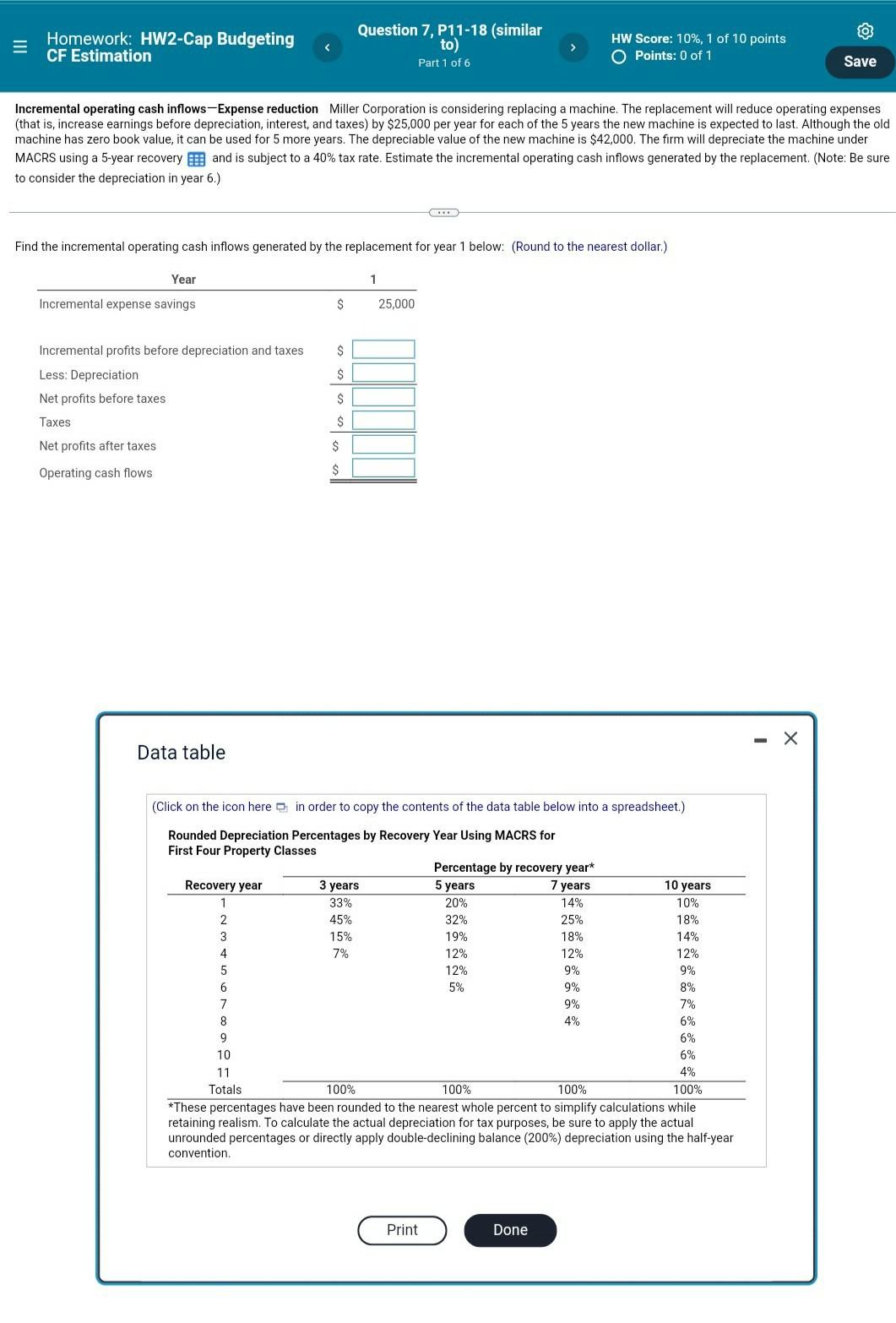
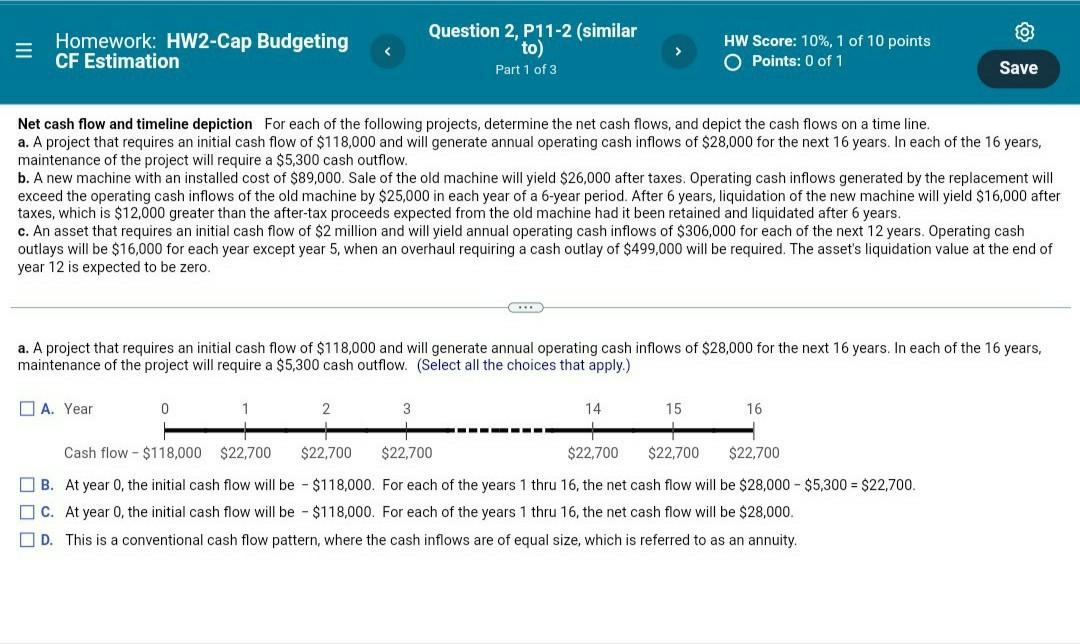
E Homework: HW2-Cap Budgeting CF Estimation Question 2, P11-2 (similar to) Part 1 of 3 HW Score: 10%, 1 of 10 points O Points: 0 of 1 Save Net cash flow and timeline depiction For each of the following projects, determine the net cash flows, and depict the cash flows on a time line. a. A project that requires an initial cash flow of $118,000 and will generate annual operating cash inflows of $28,000 for the next 16 years. In each of the 16 years, maintenance of the project will require a $5,300 cash outflow. b. A new machine with an installed cost of $89,000. Sale of the old machine will yield $26,000 after taxes. Operating cash inflows generated by the replacement will exceed the operating cash inflows of the old machine by $25,000 in each year of a 6-year period. After 6 years, liquidation of the new machine will yield $16,000 after taxes, which is $12,000 greater than the after-tax proceeds expected from the old machine had it been retained and liquidated after 6 years. c. An asset that requires an initial cash flow of $2 million and will yield annual operating cash inflows of $306,000 for each of the next 12 years. Operating cash outlays will be $16,000 for each year except year 5, when an overhaul requiring a cash outlay of $499,000 will be required. The asset's liquidation value at the end of year 12 is expected to be zero. a. A project that requires an initial cash flow of $118,000 and will generate annual operating cash inflows of $28,000 for the next 16 years. In each of the 16 years, maintenance of the project will require a $5,300 cash outflow. (Select all the choices that apply.) A. Year 0 1 2 3 14 15 16 LO Cash flow - $118,000 $22,700 $22,700 $22,700 $22,700 $22,700 $22,700 B. At year 0, the initial cash flow will be - $118,000. For each of the years 1 thru 16, the net cash flow will be $28,000 - $5,300 = $22,700. C. At year, the initial cash flow will be - $118,000. For each of the years 1 thru 16, the net cash flow will be $28,000. D. This is a conventional cash flow pattern, where the cash inflows are of equal size, which is referred to as an annuity. = Homework: HW2-Cap Budgeting CF Estimation Question 7, P11-18 (similar to) Part 1 of 6 HW Score: 10%, 1 of 10 points O Points: 0 of 1 Save Incremental operating cash inflows-Expense reduction Miller Corporation is considering replacing a machine. The replacement will reduce operating expenses (that is, increase earnings before depreciation, interest, and taxes) by $25,000 per year for each of the 5 years the new machine is expected to last. Although the old machine has zero book value, it can be used for 5 more years. The depreciable value of the new machine is $42,000. The firm will depreciate the machine under MACRS using a 5-year recovery and is subject to a 40% tax rate. Estimate the incremental operating cash inflows generated by the replacement. (Note: Be sure to consider the depreciation in year 6.) Find the incremental operating cash inflows generated by the replacement for year 1 below: (Round to the nearest dollar.) Year 1 Incremental expense savings $ 25,000 $ $ Incremental profits before depreciation and taxes Less: Depreciation Net profits before taxes Taxes $ $ Net profits after taxes $ Operating cash flows $ - X Data table (Click on the icon here in order to copy the contents of the data table below into a spreadsheet.) Rounded Depreciation Percentages by Recovery Year Using MACRS for First Four Property Classes Percentage by recovery year* Recovery year 3 years 5 years 7 years 10 years 33% 20% 14% 10% 45% 32% 25% 18% 3 15% 19% 18% 14% 4 7% 12% 12% 12% 5 12% 9% 9% 6 5% 9% 8% 7 9% 7% 8 4% 6% 9 6% 10 6% 11 4% Totals 100% 100% 100% 100% *These percentages have been rounded to the nearest whole percent to simplify calculations while retaining realism. To calculate the actual depreciation for tax purposes, be sure to apply the actual unrounded percentages or directly apply double-declining balance (200%) depreciation using the half-year convention Print Done
Step by Step Solution
There are 3 Steps involved in it

Get step-by-step solutions from verified subject matter experts
 Study Help