Question: Please summarize the readings, present a question, a criticism, and a comment for further discussion for the chapter. A prudent path forward for genomic engineering
Please summarize the readings, present a question, a criticism, and a comment for further discussion for the chapter.
A prudent path forward for genomic engineering and Germline gene modification
- A framework for open discourse on the use of CRISPR-Cas9 technology to manipulate
the human genome is urgently needed
I provided the pictures of the chapter below, so it's easier.
Please read the complete chapter. DO NOT use any form of AI or Chatgbt; I'll know. I'll make sure to leave a positive review. Thank you in advance for your work!
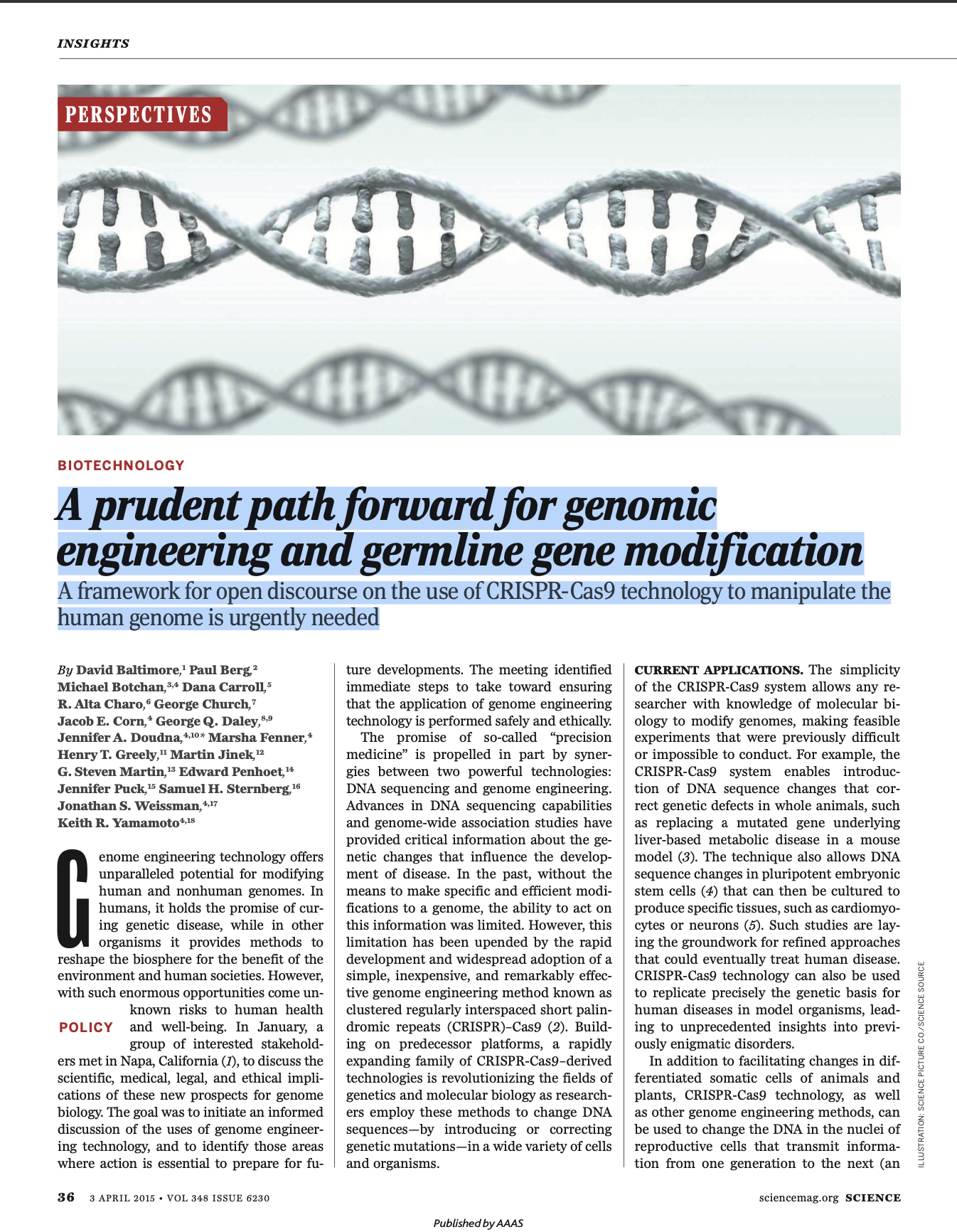
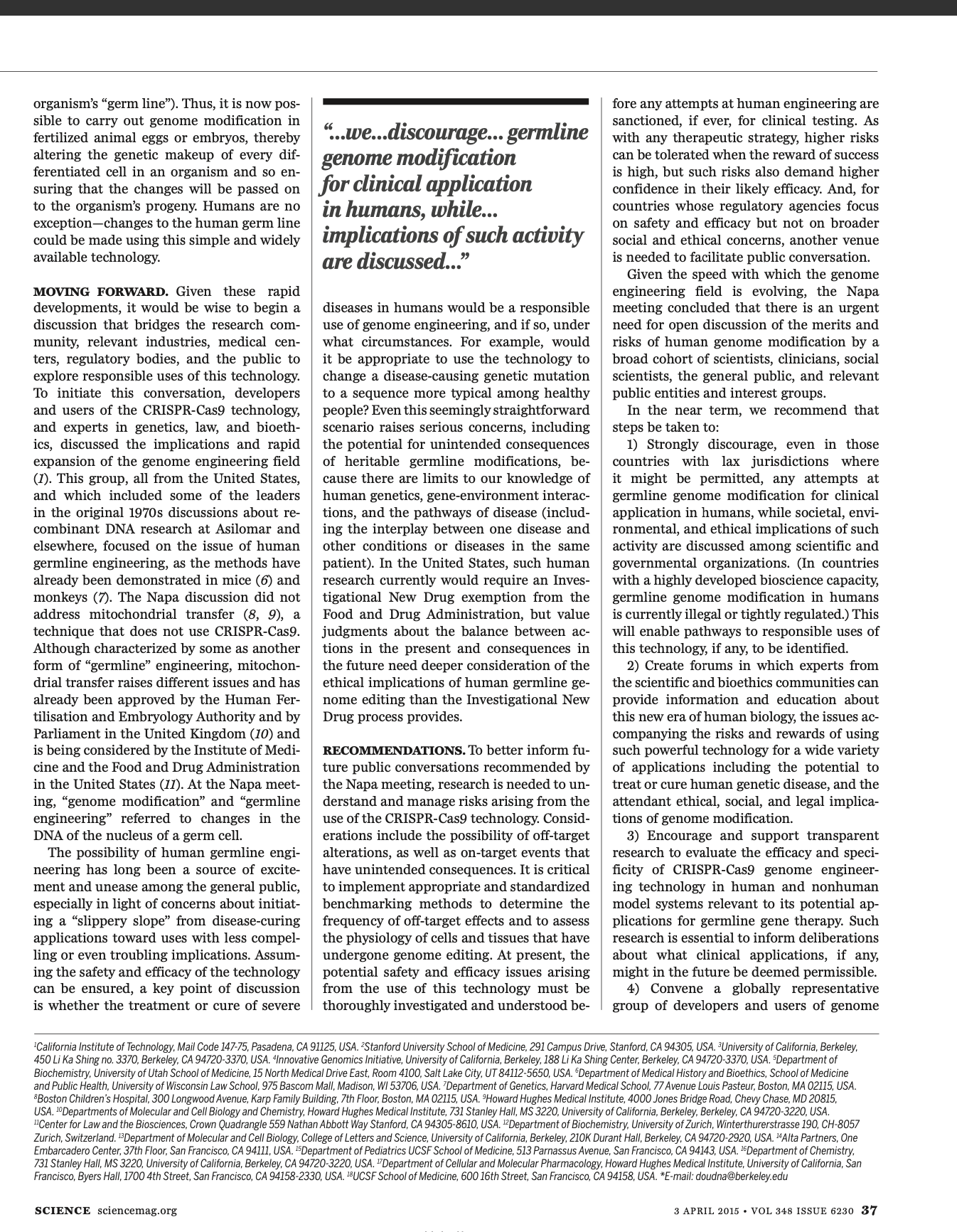
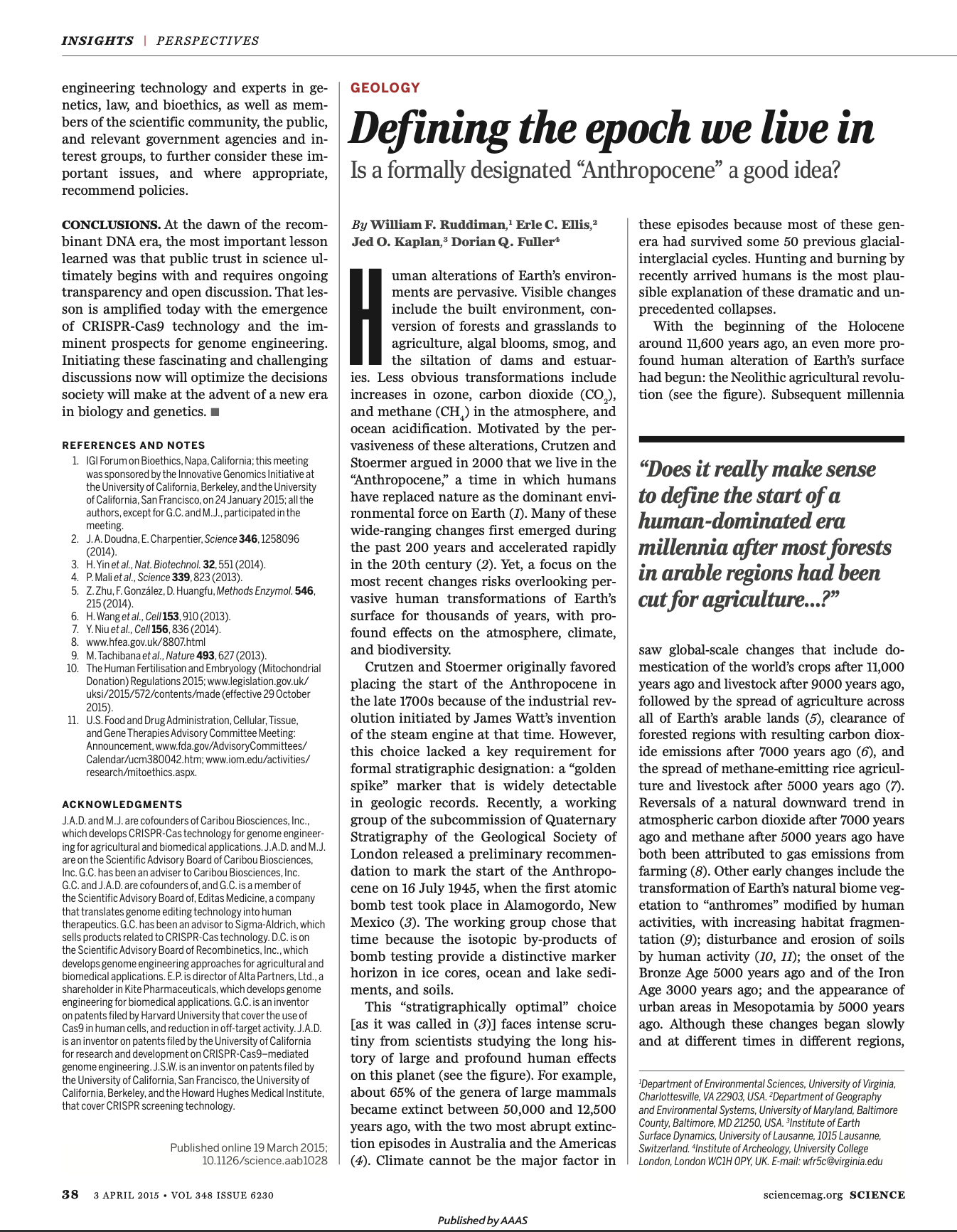
INSIGHTS PERSPECTIVES BIOTECHNOLOGY A prudent path forward for genomic engineering and germline gene modification A framework for open discourse on the use of CRISPR-Cas9 technology to manipulate the human genome is urgently needed By David Baltimore,' Paul Berg ture developments. The meeting identified CURRENT APPLICATIONS. The simplicity Michael Botchan, 3,* Dana Carroll, 5 immediate steps to take toward ensuring of the CRISPR-Cas9 system allows any re- R. Alta Charo, George Church,7 that the application of genome engineering searcher with knowledge of molecular bi- Jacob E. Corn,* George Q. Daley, 8, technology is performed safely and ethically. ology to modify genomes, making feasible Jennifer A. Doudna, 4,10* Marsha Fenner,* The promise of so-called "precision experiments that were previously difficult Henry T. Greely," Martin Jinek, 12 medicine" is propelled in part by syner- or impossible to conduct. For example, the G. Steven Martin, 13 Edward Penhoet, " gies between two powerful technologies: CRISPR-Cas9 system enables introduc- Jennifer Puck, 15 Samuel H. Sternberg, 16 DNA sequencing and genome engineering. tion of DNA sequence changes that cor- Jonathan S. Weissman, $,17 Advances in DNA sequencing capabilities rect genetic defects in whole animals, such Keith R. Yamamoto,18 and genome-wide association studies have as replacing a mutated gene underlying provided critical information about the ge- liver-based metabolic disease in a mouse enome engineering technology offers netic changes that influence the develop- model (3). The technique also allows DNA unparalleled potential for modifying ment of disease. In the past, without the sequence changes in pluripotent embryonic human and nonhuman genomes. In means to make specific and efficient modi- stem cells (4) that can then be cultured to humans, it holds the promise of cur- fications to a genome, the ability to act on produce specific tissues, such as cardiomyo- ng genetic disease, while in other this information was limited. However, this cytes or neurons (5). Such studies are lay- organisms it provides methods to limitation has been upended by the rapid ing the groundwork for refined approaches reshape the biosphere for the benefit of the development and widespread adoption of a that could eventually treat human disease. environment and human societies. However, simple, inexpensive, and remarkably effect CRISPR-Cas9 technology can also be used with such enormous opportunities come un- tive genome engineering method known as to replicate precisely the genetic basis for known risks to human health clustered regularly interspaced short palin- human diseases in model model organisms, lead- POLICY and well-being. In January, a dromic repeats (CRISPR)-Cas9 (2). Build- ing to unprecedented insights into previ- group of interested stakehold- ing on predecessor platforms, a rapidly ously enigmatic disorders. ers met in Napa, California (1), to discuss the expanding family of CRISPR-Cas9-derived In addition to facilitating changes in dif- scientific, medical, legal, and ethical impli- technologies is revolutionizing the fields of ferentiated somatic cells of animals and cations of these new prospects for genome genetics and molecular biology as research- plants, CRISPR-Cas9 technology, as well biology. The goal was to initiate an informed ers employ these methods to change DNA as other genome engineering methods, can discussion of the uses of genome engineer- sequences-by introducing or correcting be used to change the DNA in the nuclei of ing technology, and to identify those areas genetic mutations-in a wide variety of cells reproductive cells that transmit informa- where action is essential to prepare for fu- and organisms. tion from one generation to the next (an 36 3 APRIL 2015 . VOL 348 ISSUE 6230 sciencemag.org SCIENCE Published by AAASorganism's "germ line"). Thus, it is now pos- fore any attempts at human engineering are sible to carry out genome modification in "..we...discourage... germline sanctioned, if ever, for clinical testing. As fertilized animal eggs or embryos, thereby with any therapeutic strategy, higher risks altering the genetic makeup of every dif- genome modification can be tolerated when the reward of success ferentiated cell in an organism and so en- for clinical application is high, but such risks also demand higher suring that the changes will be passed on confidence in their likely efficacy. And, for to the organism's progeny. Humans are no in humans, while... countries whose regulatory agencies focus exception-changes to the human germ line implications of such activity on safety and efficacy but not on broader could be made using this simple and widely social and ethical concerns, another venue available technology are discussed..." is needed to facilitate public conversation. Given the speed with which the genome MOVING FORWARD. Given these rapid field is evolving, the Napa developments, it would be wise to begin a diseases in humans would be a responsible meeting concluded that there is an urgent discussion that bridges the research com- use of genome engineering, and if so, under need for open discussion of the merits and munity, relevant industries, medical cen- what circumstances. For example, would human genome modification by a ters, regulatory bodies, and the public to it be appropriate to use the technology to broad cohort of scientists, clinicians, social explore responsible uses of this technology. change a disease-causing genetic mutation scientists, the general public, and relevant To initiate this conversation, developers to a sequence more typical among healthy public entities and interest groups. and users of the CRISPR-Cas9 technology, people? Even this seemingly straightforward In the near term, we recommend that and experts in genetics, law, and bioeth- scenario raises serious concerns, including steps be taken to: ics, discussed the implications and rapid the potential for unintended consequences 1) Strongly discourage, even in those expansion of the genome engineering field of heritable germline modifications, be- countries with lax jurisdictions where (1). This group, all from the United States, cause there are limits to our knowledge of it might be permitted, any attempts at and which included some of the leaders human genetics, gene-environment interac- germline genome modification for clinical in the original 1970s discussions about re- tions, and the pathways of disease (include application in humans, while societal, envi- combinant DNA research at Asilomar and ing the interplay between one disease and ronmental, and ethical implications of such elsewhere, focused on the issue of human other conditions or diseases in the same activity are discussed among scientific and germline engineering, as the methods have patient). In the United States, such human governmental organizations. (In countries already been demonstrated in mice (6) and research currently would require an Inves- with a highly developed bioscience capacity, monkeys (7). The Napa discussion did not tigational New Drug exemption from the germline genome modification in humans address mitochondrial transfer (8, 9), a Food and Drug Administration, but value is currently illegal or tightly regulated.) This technique that does not use CRISPR-Cas9. judgments about the balance between ac- will enable pathways to responsible uses of Although characterized by some as another tions in the present and consequences in this technology, if any, to be identified. form of "germline" engineering, mitochon- the future need deeper consideration of the 2) Create forums in which experts from drial transfer raises different issues and has ethical implications of human germline ge- the scientific and bioethics communities can already been approved by the Human Fer- nome editing than the Investigational New provide information and education about tilisation and Embryology Authority and by Drug process provides. this new era of human biology, the issues ac- Parliament in the United Kingdom (10) and companying the risks and rewards of using is being considered by the Institute of Medi- RECOMMENDATIONS. To better inform fu- such powerful technology for a wide variety cine and the Food and Drug Administration ture public conversations recommended by of applications including the potential to nited States (11). A the Napa meeting, research is needed to un- treat or cure human genetic disease, and the ing, "genome modification" and "germline derstand and manage risks arising from the attendant ethical, social, and legal implica- engineering" referred to changes in the use of the CRISPR-Cas9 technology. Consid tions of genome modification. DNA of the nucleus of a germ cell. erations include the possibility of off-target 3) Encourage and support transparent The possibility of human germline engi- alterations, as well as on-target events that research to evaluate the efficacy and speci- neering has long been a source of excite- have unintended consequences. It is critical ficity of CRISPR-Cas9 genome engineer- ment and unease among the general public, to implement appropriate and standardized ing technology in human and nonhuman especially in light of concerns about initiat- benchmarking methods to determine the model systems relevant to its potential ap- ing a "slippery slope" from disease-curing frequency of off-target effects and to assess plications for germline gene therapy. Such applications toward uses with less compel- the physiology of cells and tissues that have research is essential to inform deliberations ling or even troubling implications. Assum- undergone genome editing. At present, the about what clinical applications, if any, ing the safety and efficacy of the technology potential safety and efficacy issues arising might in the future be deemed permissible. can be ensured, a key point of discussion from the use of this technology must be nvene a lobally representative is whether the treatment or cure of severe thoroughly investigated and understood be- group of developers and users of genome California Institute of Technology, Mail Code 147-75, Pasadena, CA 91125, USA. ?Stanford University School of Medicine, 291 Campus Drive, Stanford, CA 94305, USA. 'University of California, Berkeley, 450 Li Ka Shing no. 3370, Berkeley, CA 94720-3370, USA. "Innovative Genomics Initiative, University of California, Berkeley, 188 Li Ka Shing Center, Berkeley, CA 94720-3370, USA. $Department of Biochemistry, University of Utah School of Medicine, 15 North Medical Drive East, Room 4100, Salt Lake City, UT 84112-5650, USA. Department of Medical History and Bioethics, School of Medicine and Public Health, University of Wisconsin Law School, 975 Bascom Mall, Madison, WI 53706, USA. 'Department of Genetics, Harvard Medical School, 77 Avenue Louis Pasteur, Boston, MA 02115, USA. Boston Children's Hospital, 300 Longwood Avenue, Karp Family Building, 7th Floor, Boston, MA 02115, USA. 'Howard Hughes Medical Institute, 4000 Jones Bridge Road, Chevy Chase, MD 20815, USA. "Departments of Molecular and Cell Biology and Chemistry, Howard Hughes Medical Institute, 731 Stanley Hall, MS 3220, University of California, Berkeley, Berkeley, CA 94720-3220, USA. "Center for Law and the Biosciences, Crown Quadrangle 559 Nathan Abbott Way Stanford, CA 94305-8610, USA. 'Department of Biochemistry, University of Zurich, Winterthurerstrasse 190, CH-8057 Zurich, Switzerland. Department of Molecular and Cell Biology, College of Letters and Science, University of California, Berkeley, 210K Durant Hall, Berkeley, CA 94720-2920, USA. Alta Partners, One Embarcadero Center, 37th Floor, San Francisco, CA 94111, USA. 15Department of Pediatrics UCSF School of Medicine, 513 Parnassus Avenue, San Francisco, CA 94143, USA. "Department of Chemistry, 731 Stanley Hall, MS 3220, University of California, Berkeley, CA 94720-3220, USA. Department of Cellular and Molecular Pharmacology, Howard Hughes Medical Institute, University of California, Sar Francisco, Byers Hall, 1700 4th Street, San Francisco, CA 94158-2330, USA. "8UCSF School of Medicine, 600 16th Street, San Francisco, CA 94158, USA. *E-mail: doudna@berkeley.edu SCIENCE sciencemag.org 3 APRIL 2015 . VOL 348 ISSUE 6230 37INSIGHTS | PERSPECTIVES engineering technology and experts in ge- | GEOLOGY netics, law, and bioethics, as well as mem- bers of the scientific community, the public, and relevant government agencies and in- Defining the epoch we live in terest groups, to further consider these im- portant issues, and where appropriate, Is a formally designated "Anthropocene" a good idea? recommend policies CONCLUSIONS. At the dawn of the recom- By William F. Ruddiman,' Erle C. Ellis, these episodes because most of these gen- binant DNA era, the most important lesson Jed O. Kaplan, Dorian Q. Fuller* era had survived some 50 previous glacial- learned was that public trust in science ul- interglacial cycles. Hunting and burning by timately begins with and requires ongoing uman alterations of Earth's environ- recently arrived humans is the most plau- transparency and open discussion. That les- ments are pervasive. Visible changes sible explanation of these dramatic and un- son is amplified today with the emergence nclude the built environment, con- precedented collapses. of CRISPR-Cas9 technology and the im- version of forests and grasslands to With the beginning of the Holocene minent prospects for genome engineering agriculture, algal blooms, smog, and around 11,600 years ago, an even more pro- Initiating these fascinating and challenging the siltation of dams and estuar- found human alteration of Earth's surface discussions now will optimize the decisions ies. Less obvious transformations include had begun: the Neolithic agricultural revolu- society will make at the advent of a new era increases in ozone, carbon dioxide (CO,), tion (see the figure). Subsequent millennia in biology and genetics. and methane (CH ) in the atmosphere, and ocean acidification. Motivated by the per- REFERENCES AND NOTES vasiveness of these alterations, Crutzen and 1. IGI Forum on Bioethics, Napa, California; this meeting Stoermer argued in 2000 that we live in the was sponsored by the Innovative Genomics Initiative a the University of California, Berkeley, and the University "Anthropocene," a time in which humans "Does it really make sense of California, San Francisco, on 24 January 2015; all the have replaced nature as the dominant envi- to define the start of a authors, except for G.C. and M.J., participated in the ronmental force on Earth (1). Many of these meeting. 2. J.A. Doudna, E. Charpentier, Science 346, 1258096 wide-ranging changes first emerged during human-dominated era (2014). the past 200 years and accelerated rapidly millennia after most forests H. Yin et al., Nat. Biotechnoll (2014). in the 20th century (2). Yet, a focus on the 4. P. Mali et al., Science 339, 823 (2013). most recent changes risks overlooking per- in arable regions had been 5. Z. Zhu, F. Gonzalez, D. Huangfu, Methods Enzymol. 546, 215 (2014). vasive human transformations of Earth's cut for agriculture...?" 6. H. Wangetal., Cell 153, 910 (2013). surface for thousands of years, with pro- 7. Y. Niu etal., Cell 156, 836 (2014). 8. www.hfea.gov.uk/8807.html found effects on the atmosphere, climate, 9. M. Tachibana et al., Nature 493, 627 (2013). and biodiversity. saw global-scale changes that include do- 10. The Human Fertilisation and Embryology (Mitochondrial Crutzen and Stoermer originally favored mestication of the world's crops after 11,000 Donation) Regulations 2015; www.legislation.gov.uk/ uksi/2015/572/contents/made (effective 29 October placing the start of the Anthropocene in years ago and livestock after 9000 years ago, 2015) the late 1700s because of the industrial rev- followed by the spread of agriculture across 11. U.S. Food and Drug Administration, Cellular, Tissue olution initiated by James Watt's invention all of Earth's arable lands (5), clearance of and Gene Therapies Advisory Committee Meeting: of the steam engine at that time. However, forested regions with resulting carbon diox Announcement, www.fda.gov/AdvisoryCommittees/ Calendar/ucm380042.htm; www.iom.edu/activities/ this choice lacked a key requirement for ide emissions after 7000 years ago (6), and research/mitoethics.aspx. formal stratigraphic designation: a "golden the spread of methane-emitting rice agricul- spike" marker that is widely detectable ture and livestock after 5000 years ago (7). ACKNOWLEDGMENTS in geologic records. Recently, a working Reversals of a natural downward trend in J.A.D. and M.J. are cofounders of Caribou Biosciences, Inc., group of the subcommission of Quaternary atmospheric carbon dioxide after 7000 years which develops CRISPR-Cas technology for genome engineer ing for agricultural and biomedical applications. J.A.D. and M.J Stratigraphy of the Geological Society of ago and methane after 5000 years ago have are on the Scientific Advisory Board of Caribou Biosciences, London released a preliminary recommen both been attributed to gas emissions from Inc. G.C. has been an adviser to Caribou Biosciences, Inc. dation to mark the start of the Anthropo- farming (8). Other early changes include the G.C. and J.A.D. are cofounders of, and G.C. is a member of the Scientific Advisory Board of, Editas Medicine, a company cene on 16 July 1945, when the first atomic transformation of Earth's natural biome veg- that translates genome editing technology into human bomb test took place in Alamogordo, New etation to "anthromes" modified by human therapeutics. G.C. has been an advisor to Sigma-Aldrich, which Mexico (3). The working group chose that activities, with increasing habitat fragment sells products related to CRISPR-Cas technology. D.C. is on time because the isotopic by-products of tation (9); disturbance and erosion of soils the Scientific Advisory Board of Recombinetics, Inc., which develops genome engineering approaches for agricultural and bomb testing provide a distinctive marker by human activity (10, 11); the onset of the biomedical applications. E.P. is director of Alta Partners, Ltd., a horizon in ice cores, ocean and lake sedi- Bronze Age 5000 years ago and of the Iron shareholder in Kite Pharmaceuticals, which develops genome ments, and soils Age 3000 years ago; and the appearance of engineering for biomedical applications. G.C. is an inventor on patents filed by Harvard University that cover the use of This "stratigraphically optimal" choice urban areas in Mesopotamia by 5000 years Cas9 in human cells, and reduction in off-target activity. J.A.D. [as it was called in (3)] faces intense scru- ago. Although these changes began slowly is an inventor on patents filed by the University of California tiny from scientists studying the long his- and at different times in different regions, or research and development on CRISPR-Cas9-mediated genome engineering. J.S.W. is an inventor on patents filed by tory of large and profound human effects the University of California, San Francisco, the University of on this planet (see the figure). For example, California, Berkeley, and the Howard Hughes Medical Institute, about 65% of the genera of large mammals Department of Environmental Sciences, University of Virginia Charlottesville, VA 22903, USA. 2Department of Geography that cover CRISPR screening technology. became extinct between 50,000 and 12,500 and Environmental Systems, University of Maryland, Baltimore years ago, with the two most abrupt extinc- County, Baltimore, MD 21250, USA. 'Institute of Earth Surface Dynamics, University of Lausanne, 1015 Lausanne Published online 19 March 2015; tion episodes in Australia and the Americas Switzerland. "Institute of Archeology, University College 10.1126/science.aab1028 (4). Climate cannot be the major factor in London, London WCIH OPY, UK. E-mail: wfr5c@virginia.edu 38 3 APRIL 2015 . VOL 348 ISSUE 6230 sciencemag.org SCIENCE Published by AAAS
Step by Step Solution
There are 3 Steps involved in it
1 Expert Approved Answer
Step: 1 Unlock
Question Has Been Solved by an Expert!
Get step-by-step solutions from verified subject matter experts
Step: 2 Unlock
Step: 3 Unlock
Students Have Also Explored These Related Accounting Questions!









 Study Help