







Question: Please summarize the report in a presentation mode. MODULE NAME: 355506 Introduction: ABC (PTY) Limited (hereunder referred to as ABC) is a large pharmaceutical company
Please summarize the report in a presentation mode.
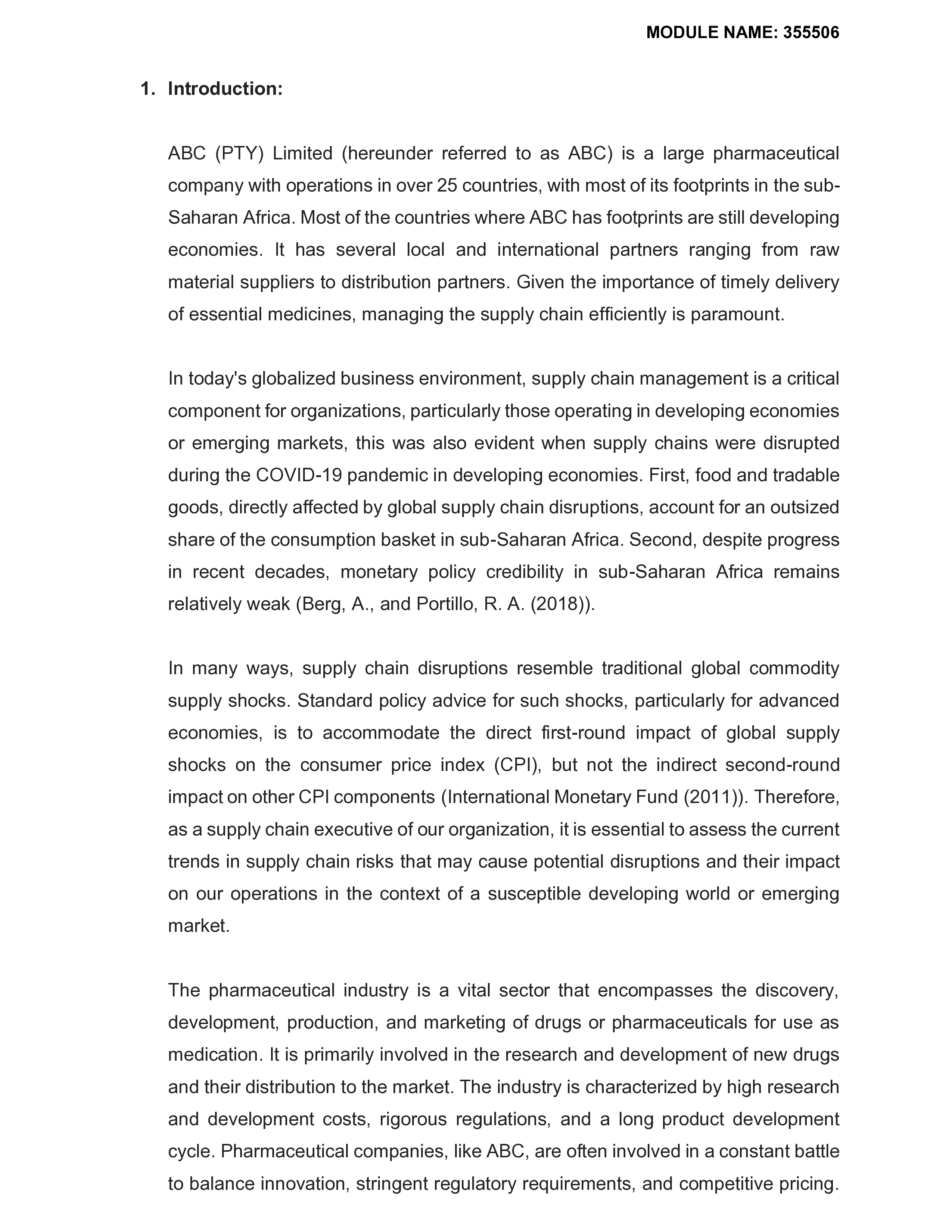
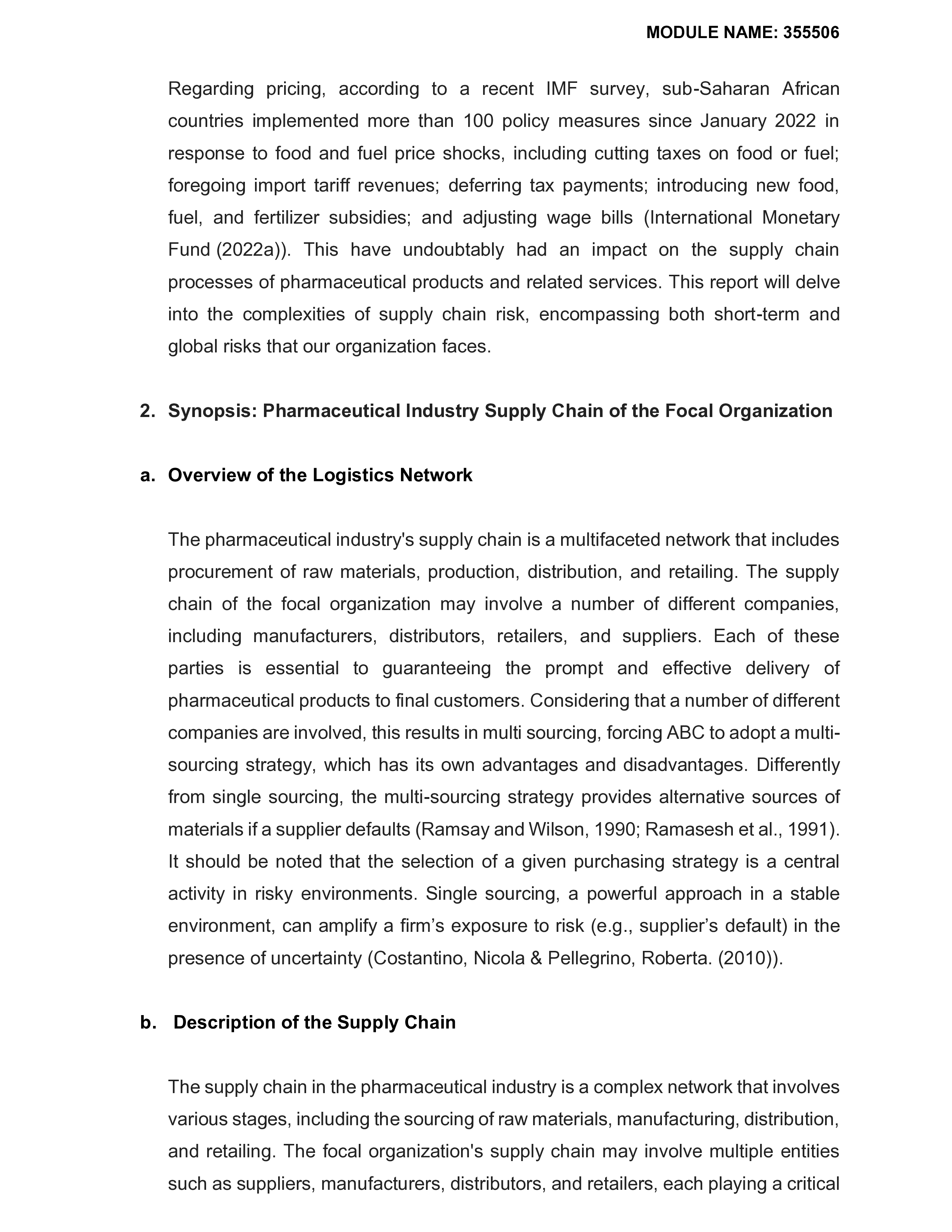
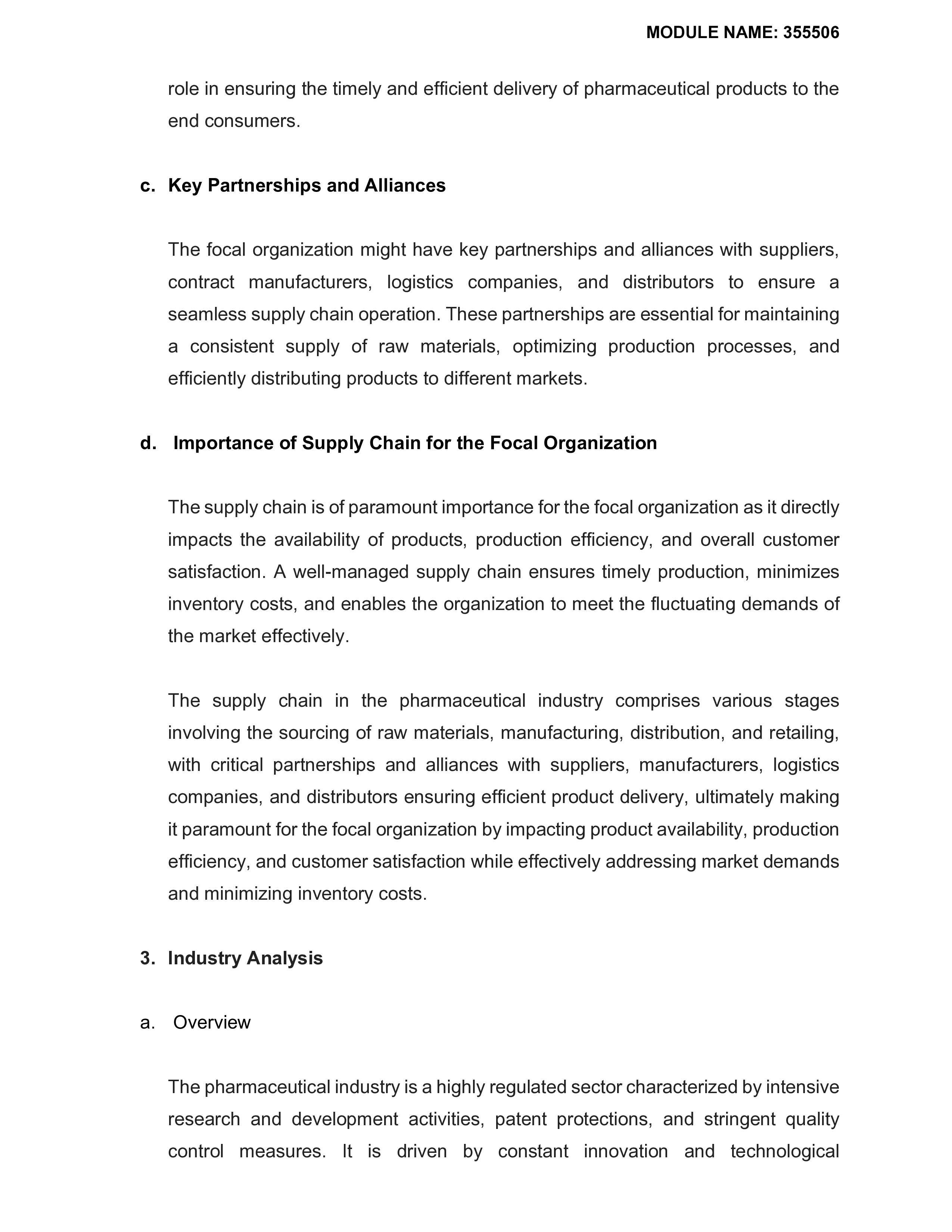
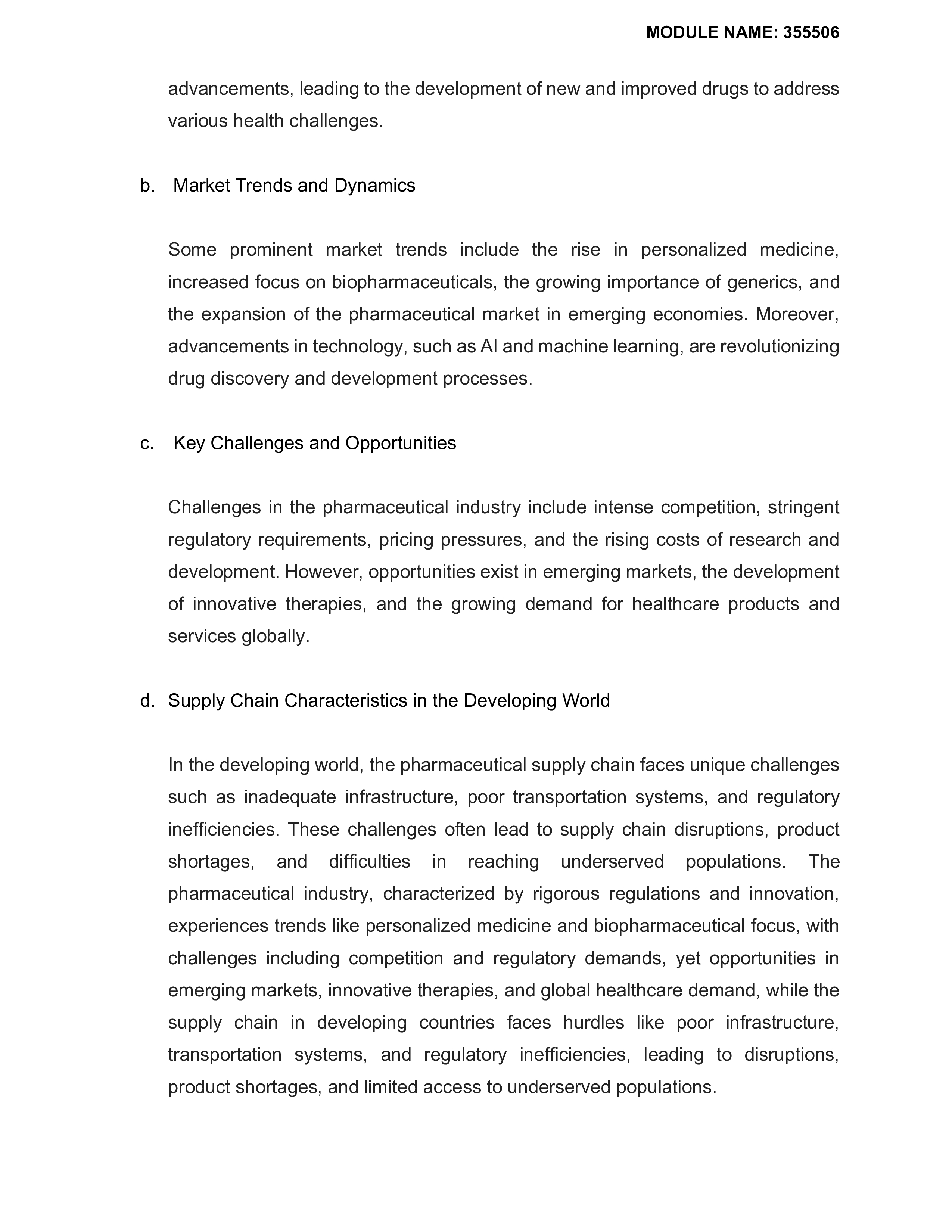
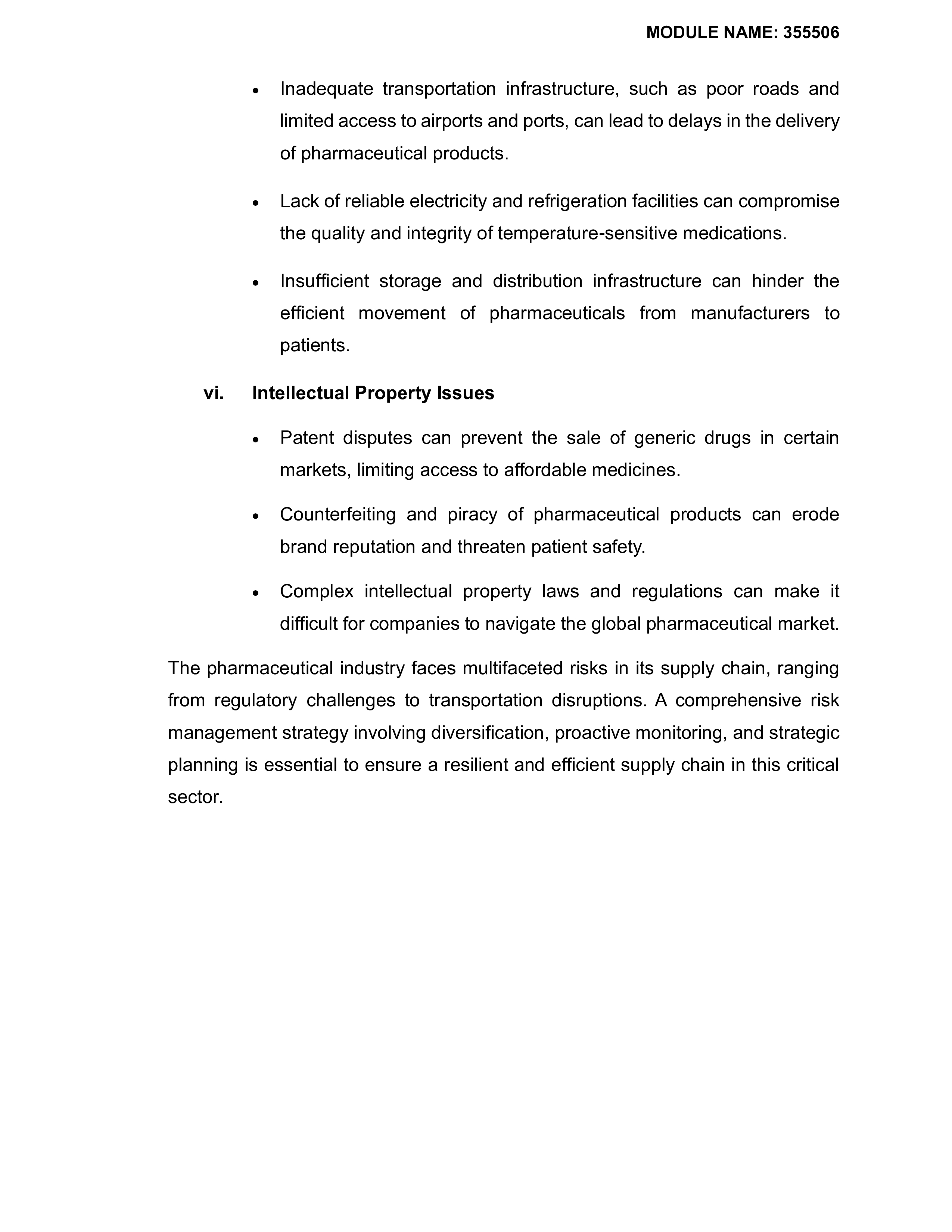
MODULE NAME: 355506 Introduction: ABC (PTY) Limited (hereunder referred to as ABC) is a large pharmaceutical company with operations in over 25 countries, with most of its footprints in the subSaharan Africa. Most of the countries where ABC has footprints are still developing economies. It has several local and international partners ranging from raw material suppliers to distribution partners. Given the importance of timely delivery of essential medicines, managing the supply chain efficiently is paramount. In today's globalized business environment, supply chain management is a critical component for organizations, particularly those operating in developing economies or emerging markets, this was also evident when supply chains were disrupted during the COVID-19 pandemic in developing economies. First, food and tradable goods, directly affected by global supply chain disruptions, account for an outsized share of the consumption basket in sub-Saharan Africa. Second, despite progress in recent decades, monetary policy credibility in sub-Saharan Africa remains relatively weak (Berg, A., and Portillo, R. A. (2018)). In many ways, supply chain disruptions resemble traditional global commodity supply shocks. Standard policy advice for such shocks, particularly for advanced economies, is to accommodate the direct first-round impact of global supply shocks on the consumer price index (CPI), but not the indirect second-round impact on other CPI components (International Monetary Fund (2011)). Therefore, as a supply chain executive of our organization, it is essential to assess the current trends in supply chain risks that may cause potential disruptions and their impact on our operations in the context of a susceptible developing world or emerging market. The pharmaceutical industry is a vital sector that encompasses the discovery, development, production, and marketing of drugs or pharmaceuticals for use as medication. It is primarily involved in the research and development of new drugs and their distribution to the market. The industry is characterized by high research and development costs, rigorous regulations, and a long product development cycle. Pharmaceutical companies, like ABC, are often involved in a constant battle to balance innovation, stringent regulatory requirements, and competitive pricing. MODULE NAME: 355506 Regarding pricing, according to a recent IMF survey, sub-Saharan African countries implemented more than 100 policy measures since January 2022 in response to food and fuel price shocks, including cutting taxes on food or fuel; foregoing import tariff revenues; deferring tax payments; introducing new food, fuel, and fertilizer subsidies; and adjusting wage bills (International Monetary Fund (2022a)). This have undoubtably had an impact on the supply chain processes of pharmaceutical products and related services. This report will delve into the complexities of supply chain risk, encompassing both short-term and global risks that our organization faces. 2. Synopsis: Pharmaceutical Industry Supply Chain of the Focal Organization a. Overview of the Logistics Network The pharmaceutical industry's supply chain is a multifaceted network that includes procurement of raw materials, production, distribution, and retailing. The supply chain of the focal organization may involve a number of different companies, including manufacturers, distributors, retailers, and suppliers. Each of these parties is essential to guaranteeing the prompt and effective delivery of pharmaceutical products to final customers. Considering that a number of different companies are involved, this results in multi sourcing, forcing ABC to adopt a multisourcing strategy, which has its own advantages and disadvantages. Differently from single sourcing, the multi-sourcing strategy provides alternative sources of materials if a supplier defaults (Ramsay and Wilson, 1990; Ramasesh et al., 1991). It should be noted that the selection of a given purchasing strategy is a central activity in risky environments. Single sourcing, a powerful approach in a stable environment, can amplify a firm's exposure to risk (e.g., supplier's default) in the presence of uncertainty (Costantino, Nicola \& Pellegrino, Roberta. (2010)). b. Description of the Supply Chain The supply chain in the pharmaceutical industry is a complex network that involves various stages, including the sourcing of raw materials, manufacturing, distribution, and retailing. The focal organization's supply chain may involve multiple entities such as suppliers, manufacturers, distributors, and retailers, each playing a critical role in ensuring the timely and efficient delivery of pharmaceutical products to the end consumers. c. Key Partnerships and Alliances The focal organization might have key partnerships and alliances with suppliers, contract manufacturers, logistics companies, and distributors to ensure a seamless supply chain operation. These partnerships are essential for maintaining a consistent supply of raw materials, optimizing production processes, and efficiently distributing products to different markets. d. Importance of Supply Chain for the Focal Organization The supply chain is of paramount importance for the focal organization as it directly impacts the availability of products, production efficiency, and overall customer satisfaction. A well-managed supply chain ensures timely production, minimizes inventory costs, and enables the organization to meet the fluctuating demands of the market effectively. The supply chain in the pharmaceutical industry comprises various stages involving the sourcing of raw materials, manufacturing, distribution, and retailing, with critical partnerships and alliances with suppliers, manufacturers, logistics companies, and distributors ensuring efficient product delivery, ultimately making it paramount for the focal organization by impacting product availability, production efficiency, and customer satisfaction while effectively addressing market demands and minimizing inventory costs. 3. Industry Analysis a. Overview The pharmaceutical industry is a highly regulated sector characterized by intensive research and development activities, patent protections, and stringent quality control measures. It is driven by constant innovation and technological advancements, leading to the development of new and improved drugs to address various health challenges. b. Market Trends and Dynamics Some prominent market trends include the rise in personalized medicine, increased focus on biopharmaceuticals, the growing importance of generics, and the expansion of the pharmaceutical market in emerging economies. Moreover, advancements in technology, such as Al and machine learning, are revolutionizing drug discovery and development processes. c. Key Challenges and Opportunities Challenges in the pharmaceutical industry include intense competition, stringent regulatory requirements, pricing pressures, and the rising costs of research and development. However, opportunities exist in emerging markets, the development of innovative therapies, and the growing demand for healthcare products and services globally. d. Supply Chain Characteristics in the Developing World In the developing world, the pharmaceutical supply chain faces unique challenges such as inadequate infrastructure, poor transportation systems, and regulatory inefficiencies. These challenges often lead to supply chain disruptions, product shortages, and difficulties in reaching underserved populations. The pharmaceutical industry, characterized by rigorous regulations and innovation, experiences trends like personalized medicine and biopharmaceutical focus, with challenges including competition and regulatory demands, yet opportunities in emerging markets, innovative therapies, and global healthcare demand, while the supply chain in developing countries faces hurdles like poor infrastructure, MODULE NAME: 355506 4. Understanding Supply Chain Risks a. Definition of Supply Chain Risks Supply Chain Risk can be defined as any risk that might adversely impact a Physical Supply Chain (disrupt its function). Such risk events are typically not new risk types but rather the subset of risk categories that have particularly disruptive impact in the supply chain context. ABC, being an international renowned pharmaceutical company, it is exposed to supply chain risks. International trade leads to global supply chains, and risks are inherent in supply chain management (Gurtu A, Johny J. 2011). Globalization and trade openness have amplified the vulnerability in SCM and increased the risks. The monetary value of supply chain expenses is the highest in manufacturing organizations (Dey, Asoke, Paul LaGuardia, and Mahesh Srinivasan. 2011). Supply Chain Risk can thus be thought of as type of Contagion Risk. Furthermore, Supply chain risks can be referred to as the potential disruptions or challenges that can impact the flow of goods and services within the supply chain. These risks can arise from various factors such as natural disasters, geopolitical issues, regulatory changes, and supplier-related issues. b. Types of Supply Chain Risks Common types of supply chain risks in the pharmaceutical industry include raw material shortages, quality control issues, regulatory non-compliance, transportation disruptions, and geopolitical uncertainties. These risks can significantly impact the production and distribution of pharmaceutical products, leading to delays, increased costs, and reputational damage. c. Impact of Supply Chain Risks on the Focal Organization Supply chain risks can have a profound impact on the focal organization, including production delays, increased operational costs, loss of market share, and damage to the organization's reputation. Moreover, disruptions in the supply chain can lead to product shortages, affecting patient access to critical medications and healthcare products. 5. Current Trends in Supply Chain Risks Current trends in supply chain risks in the pharmaceutical industry include the increased focus on cybersecurity threats, the impact of global pandemics on supply chain resilience, and the growing importance of sustainability and ethical sourcing practices. Additionally, geopolitical tensions and trade disputes can pose significant challenges to the global pharmaceutical supply chain. Current trends in supply chain risks in the pharmaceutical industry involve heightened concerns about cybersecurity threats, heightened awareness of supply chain vulnerabilities exposed by global pandemics, a growing emphasis on sustainability and ethical sourcing, and the impact of geopolitical tensions and trade disputes on the global pharmaceutical supply chain. 6. Risks Associated with the Pharmaceutical Supply Chain. a. Short Term Risks: Active Pharmaceutical Ingredients (API) are critical components in drug manufacturing. Any disruption in their supply can halt production, leading to shortages. Causes of Supply Shortages: Global events (pandemics, geopolitical tensions), manufacturing issues, regulatory challenges, and reliance on a few suppliers. i. Impact: Reduced production, increased costs, potential patient harm, and reputational damage. Delayed approvals, increased compliance costs, and potential market entry barriers. ii. Mitigation Strategies: Diversifying suppliers, strategic stockpiling, and continuous monitoring of supplier stability. Regular engagement with regulatory authorities, staying updated on policy changes, and building flexibility into manufacturing processes. iii. Regulatory Changes: Regulatory environments in the pharmaceutical industry are stringent. Sudden changes can impact drug approval, manufacturing processes, and quality standards. iv. Causes of Regulatory Changes: Government policy shifts, new health regulations, and unexpected quality control updates. b. Product Recalls: i. Quality issues leading to product recalls can severely disrupt the pharmaceutical supply chain and damage a company's reputation. ii. Causes of Recalls: Contamination, formulation errors, packaging issues, and non-compliance with quality standards. iii. Impact: Financial losses, reputation damage, legal consequences, and patient safety concerns. iv. Mitigation Strategies: Stringent quality control measures, robust testing protocols, and immediate corrective actions in case of identified issues. c. Transportation Delays: i. Transportation delays, whether due to strikes, natural disasters, or geopolitical events, can impact the timely delivery of pharmaceutical products. ii. Causes of Delays: Labor strikes, natural calamities (storms, earthquakes), geopolitical tensions affecting trade routes, and global events impacting logistics. iii. Impact: Disrupted supply chains, increased costs, potential product spoilage, and delayed patient access to medications. iv. Mitigation Strategies: Diversifying transportation routes, contingency planning, and real-time monitoring of global events affecting logistics. d. Global Risks i. Geopolitical Tensions: - Trade wars and diplomatic tensions can disrupt the flow of essential raw materials and intermediate products, leading to shortages and price increases. - Trade barriers, such as tariffs and quotas, can make it more expensive to import or export pharmaceutical products, affecting both manufacturers and consumers. MODULE NAME: 355506 - Political instability in key regions can lead to disruptions in transportation networks, manufacturing facilities, and distribution channels. ii. Pandemics: - Emerging markets often have evolving regulatory requirements and approval processes, which can be difficult to keep up with for pharmaceutical companies. - Inconsistent or unclear regulatory frameworks can create uncertainty and increase the risk of non-compliance. - Bureaucratic processes and delays in regulatory approvals can slow down the introduction of new medications to these markets. iii. Currency Fluctuation: - Currency volatility in emerging markets can make it difficult for pharmaceutical companies to predict their costs and revenues accurately. - Devaluations of local currencies can increase the cost of importing raw materials and equipment, affecting profit margins. - Fluctuations in exchange rates can make it challenging to price products competitively in local markets. iv. Regulatory Uncertainty - Emerging markets often have evolving regulatory requirements and approval processes, which can be difficult to keep up with for pharmaceutical companies. - Inconsistent or unclear regulatory frameworks can create uncertainty and increase the risk of non-compliance. - Bureaucratic processes and delays in regulatory approvals can slow MODULE NAME: 355506 - Inadequate transportation infrastructure, such as poor roads and limited access to airports and ports, can lead to delays in the delivery of pharmaceutical products. - Lack of reliable electricity and refrigeration facilities can compromise the quality and integrity of temperature-sensitive medications. - Insufficient storage and distribution infrastructure can hinder the efficient movement of pharmaceuticals from manufacturers to patients. vi. Intellectual Property Issues - Patent disputes can prevent the sale of generic drugs in certain markets, limiting access to affordable medicines. - Counterfeiting and piracy of pharmaceutical products can erode brand reputation and threaten patient safety. - Complex intellectual property laws and regulations can make it difficult for companies to navigate the global pharmaceutical market. The pharmaceutical industry faces multifaceted risks in its supply chain, ranging from regulatory challenges to transportation disruptions. A comprehensive risk management strategy involving diversification, proactive monitoring, and strategic planning is essential to ensure a resilient and efficient supply chain in this critical sector
Step by Step Solution
There are 3 Steps involved in it

Get step-by-step solutions from verified subject matter experts
 Study Help