







Question: please summmry and write key points to write in my conclusion slide for presentation :) INTRODUCTION Gender diversity, inclusion, and equity are essential for a
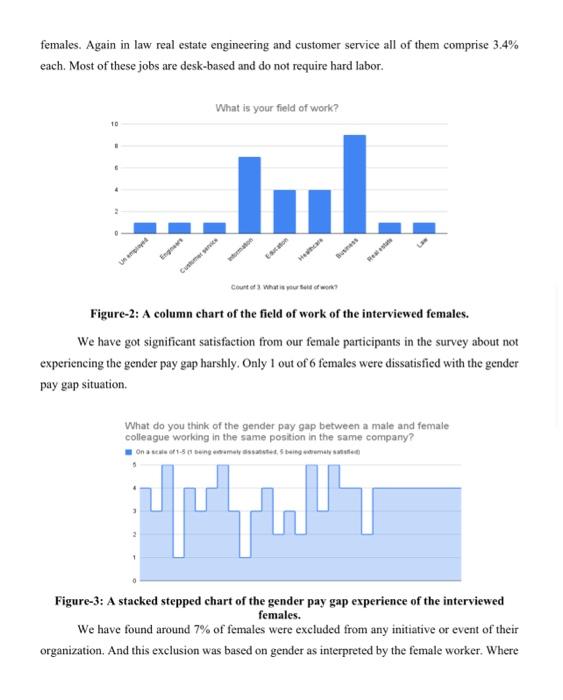

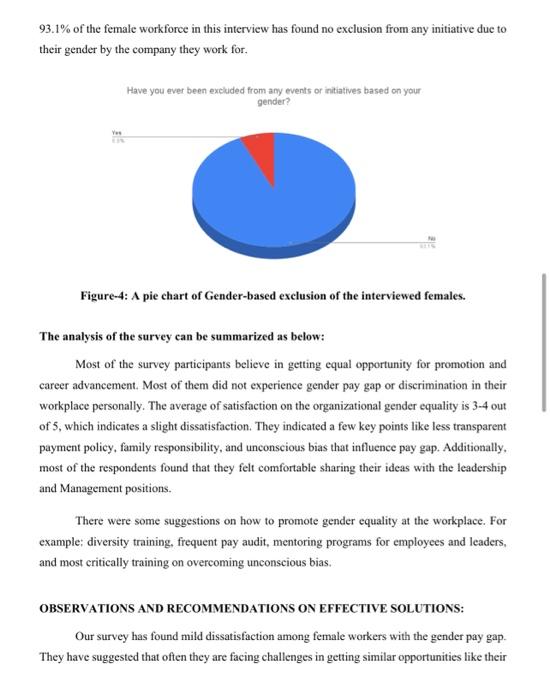
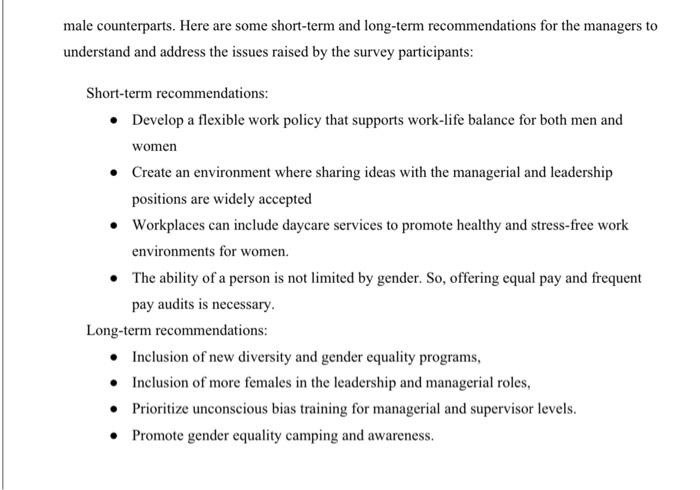

INTRODUCTION Gender diversity, inclusion, and equity are essential for a fair and inclusive workplace environment. There are an abundance of issues on DEI especially when the worker is a female. We want to highlight some of the current DEI concerning female workers are gender stereotypes, micro-aggregation, undervaluing DIE works/ lack of recognition, and unequal career outcomes. The workplace of the present day is a lot different from the traditional workspaces. People are facing many contemporary issues at the workplace like stress and bumout, work-life balance, communication barriers, interpersonal conflict, diversity and inclusivity, and faster change in technology adoption. (Minkin, 2023) These issues are more prominent when it comes to the female workforce. Some of these issues are observed directly and some of them go unnoticed for a long time. Women workforce leaders are becoming concemed about the issues faced by females. Undoubtedly, DEI and other contemporary issues faced by female workers need to be addressed to provide an equal playing field for career, personal, and social growth for the women workforce. According to the report of McKinsey's Women in the Workplace 2023, it is clearly highlighted that women leaders are investing additional time and energy in DIE work that does not fall inside their formal job responsibilities. The study also suggests that focusing on increasing the number of female representation in leadership will help in reducing gender stereotypes. (Field, Krivkovich, Kgele, Robinson, \& Yee, 2023) THEORETICAL BACKGROUND The situation and the challenges of Gender and DEI at the workplace can be understood via several theories. One of the theories on gender in the workplace is social cognitive theory. The social cognitive theory states that people simplify a person's ability according to visible characteristics like race, sex, and age. This simplification does not always consider invisible factors like intelligence, hard-working mentality, and many more. This in turn causes inconsistent evaluation of one's ability, unequal pay, and gender stereotyping. (Chan, 2022) females. Again in law real estate engineering and customer service all of them comprise 3.4% each. Most of these jobs are desk-based and do not require hard labor. Figure-2: A column chart of the field of work of the interviewed females. We have got significant satisfaction from our female participants in the survey about not experiencing the gender pay gap harshly. Only 1 out of 6 females were dissatisfied with the gender pay gap situation. What do you think of the gender pay gap between a male and female colleague working in the same position in the same company? Figure-3: A stacked stepped chart of the gender pay gap experience of the interviewed females. We have found around 7% of females were excluded from any initiative or event of their organization. And this exclusion was based on gender as interpreted by the female worker. Where 93.1% of the female workforce in this interview has found no exclusion from any initiative due to their gender by the company they work for. Have you ever been excluded from amy events or initiatives based on your gender? Figure-4: A pie chart of Gender-based exclusion of the interviewed females. The analysis of the survey can be summarized as below: Most of the survey participants believe in getting equal opportunity for promotion and career advancement. Most of them did not experience gender pay gap or diserimination in their workplace personally. The average of satisfaction on the organizational gender equality is 3-4 out of 5 , which indicates a slight dissatisfaction. They indicated a few key points like less transparent payment policy, family responsibility, and unconscious bias that influence pay gap. Additionally, most of the respondents found that they felt comfortable sharing their ideas with the leadership and Management positions. There were some suggestions on how to promote gender equality at the workplace. For example; diversity training, frequent pay audit, mentoring programs for employees and leaders, and most critically training on overcoming unconscious bias. OBSERVATIONS AND RECOMMENDATIONS ON EFFECTIVE SOLUTIONS: Our survey has found mild dissatisfaction among female workers with the gender pay gap. They have suggested that often they are facing challenges in getting similar opportunities like their CONCLUSION Gender equality and DEI are significant issues that are affecting the women's workforce all around the world. There has been a lot of research and theories developed to mitigate or minimize gender inequality. We have identified several problems that women are facing and now recommending possible solutions for those problems: 1. Companies need to focus on diversity and inclusion during the recruitment process. This is also the same for the promotion of managerial and leadership opportunities. Insurance of diversity equity and inclusion in leadership positions will eventually help in minimizing gender inequality. (Walters, 2020) 2. Ensure transparency and frequent pay audits. Transparency in the salaries of employees will ensure there is no unfair gap between males and females working in similar positions. Timely audits will also ensure that there is no intentional or unintentional gap created between employees of different genders regardless of male or female. (Rowland, 2023) 3. Invest in training programs for diversity, gender equality, and DEI. It will develop a more acceptable and supportive work environment for females to attain career advancement opportunities. (Bucholtz, 2023) 4. Unconscious gender bias creates a significant impact on recruitment, promotion, and even exclusion from opportunities. As this bias is not noticeable easily, human resources, leadership positions, and all other employees need critical training on unconscious gender bias. (Dewar, 2023) The journey of achieving suecessful gender equality and DEI has a long way to go. Support from companies, governments, and international organizations can speed up the process of promoting equal rights for the female workforce. More research and investment in ensuring gender equality is a matter of utmost importance. A large number of female roles in leadership is necessary for developing a level playing field for females entering the workforce. Gender equality is not just ensuring similar pay; it will ensure there is no sexual harassment, obstacles in career growth, and many more. male counterparts. Here are some short-term and long-term recommendations for the managers to understand and address the issues raised by the survey participants: Short-term recommendations: - Develop a flexible work policy that supports work-life balance for both men and women - Create an environment where sharing ideas with the managerial and leadership positions are widely accepted - Workplaces can include daycare services to promote healthy and stress-free work environments for women. - The ability of a person is not limited by gender. So, offering equal pay and frequent pay audits is necessary. Long-term recommendations: - Inclusion of new diversity and gender equality programs, - Inclusion of more females in the leadership and managerial roles, - Prioritize unconscious bias training for managerial and supervisor levels. - Promote gender equality camping and awareness. Here are some of the main issues for females regarding gender inequality and DEI in the workplace: - Traditional views of women are less capable of doing the same job as men. (Field, Krivkovich, Kgele, Robinson, \& Yee, 2023) - Mothers face additional challenges in career growth due to the additional responsibilities of care giving. - Sexual harassment and a low number of females in leadership positions. - Fear of pay negotiation. - Females are more likely to experience burnout and stress due to inconsistent work-life balance - Social Mindset of female inferiority ANALYSIS \& FINDINGS We have conducted interviews of 30 females as a survey questionnaire. The employment statuses of 48.3% of females were full-time workers, 20.7% were part-time workers and 17.2% were unemployed during the survey. Surprisingly, among them, 6.9% of females are working on a contract basis. Figure-1: A pie chart of the employment status of the interviewed females. The fields of work of the females in our survey are 31% and 24.1% respectively in business and information technology. Additionally, in healthcare and education, we found 27.4% of
Step by Step Solution
There are 3 Steps involved in it

Get step-by-step solutions from verified subject matter experts
 Study Help