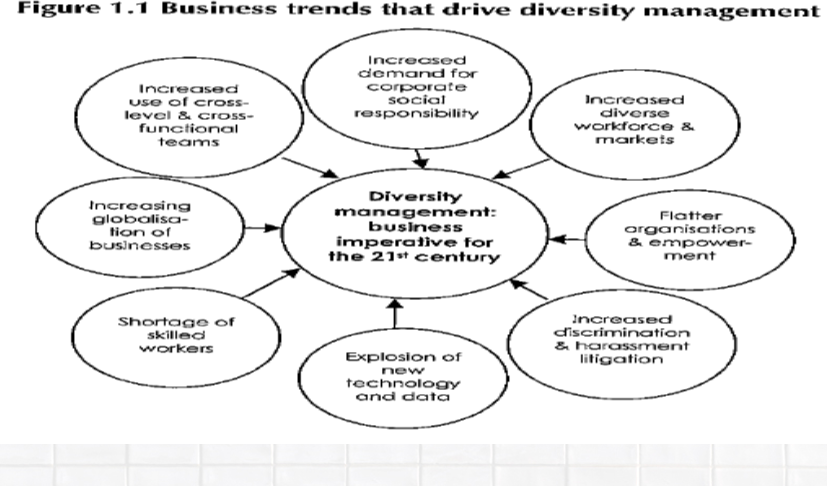
Question: Please to answer number 3 & 4 This is the key drive provides This is the case and questions Figure 1.1 Business trends that drive
Please to answer number 3 & 4
This is the key drive provides
This is the case and questions
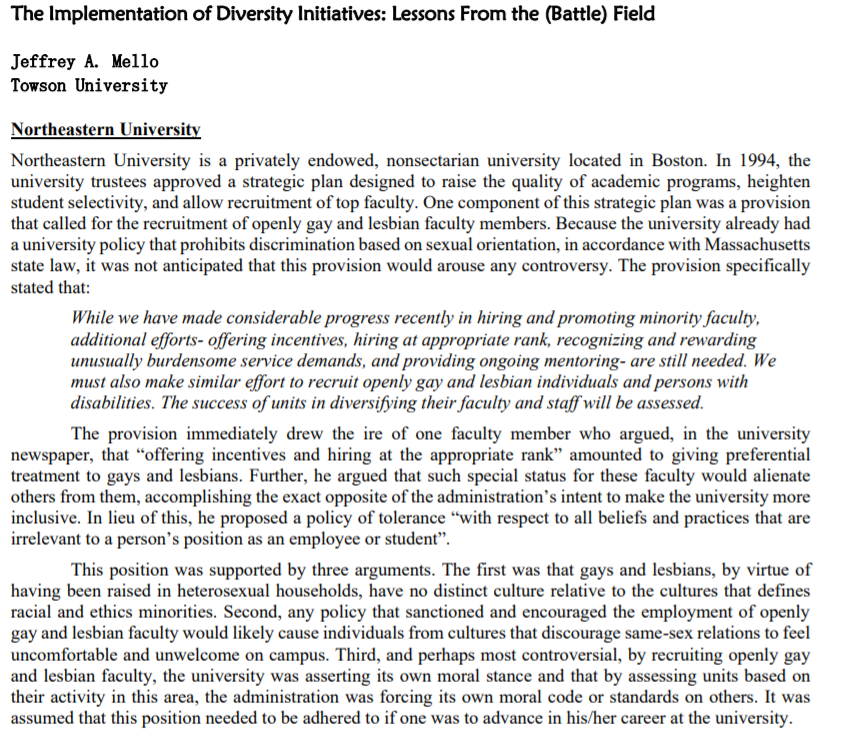
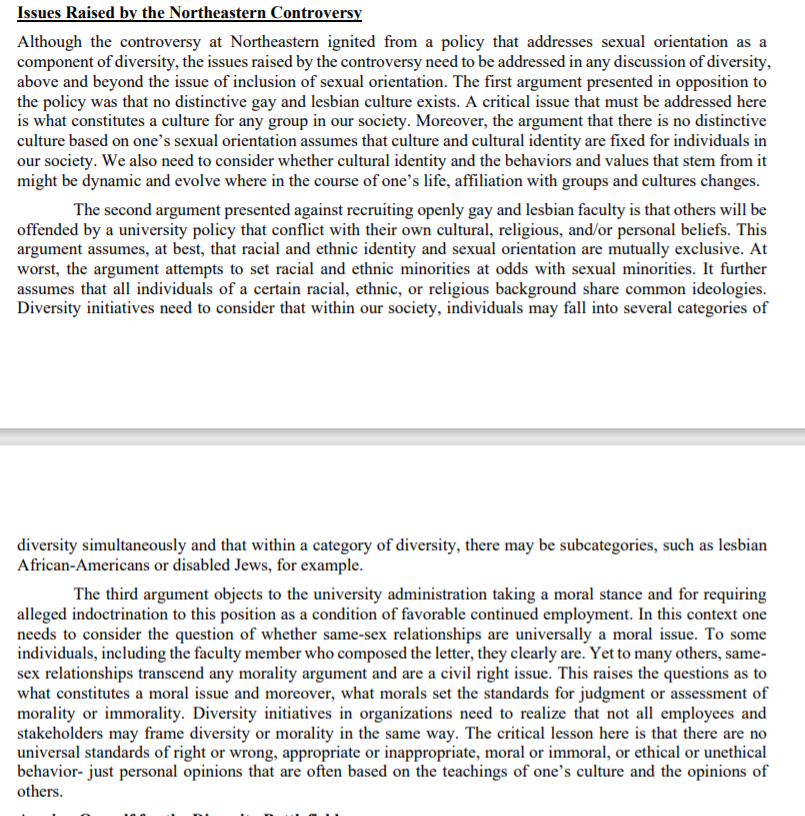
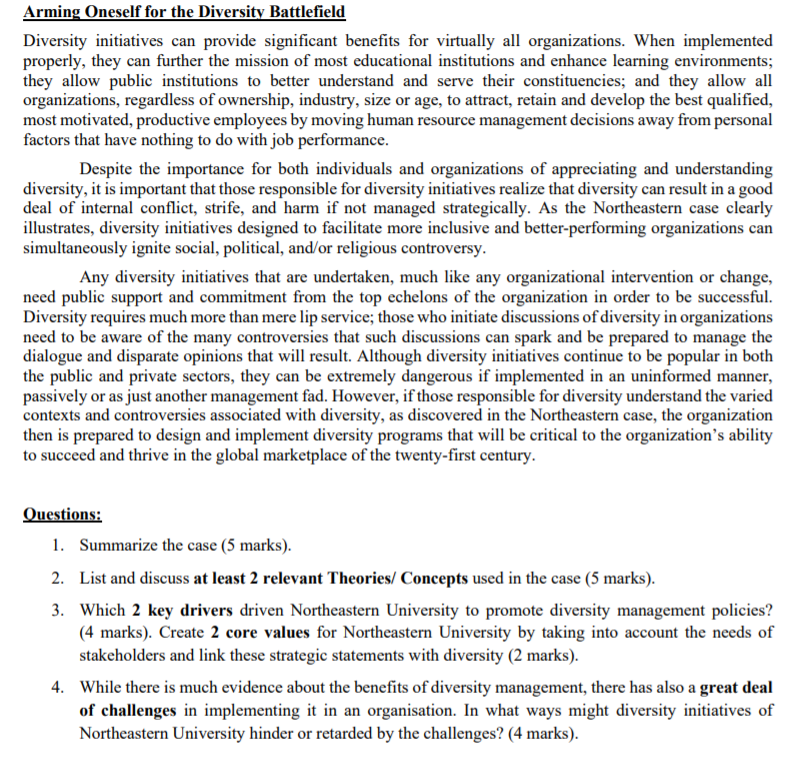
Figure 1.1 Business trends that drive diversity management Increased use of cross- level & cross- functional teams Increased demand for corporate social responsibility Increased diverse workforce & markets Increasing globalisa- tion of businesses Diversity management: business imperative for the 21st century Flatter organisations & empower- ment Shortage of skilled workers Increased discrimination & harassment litigation Explosion of new technology and data The Implementation of Diversity Initiatives: Lessons From the (Battle) Field Jeffrey A. Mello Towson University Northeastern University Northeastern University is a privately endowed, nonsectarian university located in Boston. In 1994, the university trustees approved a strategic plan designed to raise the quality of academic programs, heighten student selectivity, and allow recruitment of top faculty. One component of this strategic plan was a provision that called for the recruitment of openly gay and lesbian faculty members. Because the university already had a university policy that prohibits discrimination based on sexual orientation, in accordance with Massachusetts state law, it was not anticipated that this provision would arouse any controversy. The provision specifically stated that: While we have made considerable progress recently in hiring and promoting minority faculty, additional efforts- offering incentives, hiring at appropriate rank, recognizing and rewarding unusually burdensome service demands, and providing ongoing mentoring- are still needed. We must also make similar effort to recruit openly gay and lesbian individuals and persons with disabilities. The success of units in diversifying their faculty and staff will be assessed. The provision immediately drew the ire of one faculty member who argued, in the university newspaper, that "offering incentives and hiring at the appropriate rank amounted to giving preferential treatment to gays and lesbians. Further, he argued that such special status for these faculty would alienate others from them, accomplishing the exact opposite of the administration's intent to make the university more inclusive. In lieu of this, he proposed a policy of tolerance with respect to all beliefs and practices that are irrelevant to a person's position as an employee or student. This position was supported by three arguments. The first was that gays and lesbians, by virtue of having been raised in heterosexual households, have no distinct culture relative to the cultures that defines racial and ethics minorities. Second, any policy that sanctioned and encouraged the employment of openly gay and lesbian faculty would likely cause individuals from cultures that discourage same-sex relations to feel uncomfortable and unwelcome on campus. Third, and perhaps most controversial, by recruiting openly gay and lesbian faculty, the university was asserting its own moral stance and that by assessing units based on their activity in this area, the administration was forcing its own moral code or standards on others. It was assumed that this position needed to be adhered to if one was to advance in his/her career at the university. Issues Raised by the Northeastern Controversy Although the controversy at Northeastern ignited from a policy that addresses sexual orientation as a component of diversity, the issues raised by the controversy need to be addressed in any discussion of diversity, above and beyond the issue of inclusion of sexual orientation. The first argument presented in opposition to the policy was that no distinctive gay and lesbian culture exists. A critical issue that must be addressed here is what constitutes a culture for any group in our society. Moreover, the argument that there is no distinctive culture based on one's sexual orientation assumes that culture and cultural identity are fixed for individuals in our society. We also need to consider whether cultural identity and the behaviors and values that stem from it might be dynamic and evolve where in the course of one's life, affiliation with groups and cultures changes. The second argument presented against recruiting openly gay and lesbian faculty is that others will be offended by a university policy that conflict with their own cultural, religious, and/or personal beliefs. This argument assumes, at best, that racial and ethnic identity and sexual orientation are mutually exclusive. At worst, the argument attempts to set racial and ethnic minorities at odds with sexual minorities. It further assumes that all individuals of a certain racial, ethnic, or religious background share common ideologies. Diversity initiatives need to consider that within our society, individuals may fall into several categories of diversity simultaneously and that within a category of diversity, there may be subcategories, such as lesbian African-Americans or disabled Jews, for example. The third argument objects to the university administration taking a moral stance and for requiring alleged indoctrination to this position as a condition of favorable continued employment. In this context one needs to consider the question of whether same-sex relationships are universally a moral issue. To some individuals, including the faculty member who composed the letter, they clearly are. Yet to many others, same- sex relationships transcend any morality argument and are a civil right issue. This raises the questions as to what constitutes a moral issue and moreover, what morals set the standards for judgment or assessment of morality or immorality. Diversity initiatives in organizations need to realize that not all employees and stakeholders may frame diversity or morality in the same way. The critical lesson here is that there are no universal standards of right or wrong, appropriate or inappropriate, moral or immoral, or ethical or unethical behavior- just personal opinions that are often based on the teachings of one's culture and the opinions of others. Arming oneself for the Diversity Battlefield Diversity initiatives can provide significant benefits for virtually all organizations. When implemented properly, they can further the mission of most educational institutions and enhance learning environments; they allow public institutions to better understand and serve their constituencies; and they allow all organizations, regardless of ownership, industry, size or age, to attract, retain and develop the best qualified, most motivated, productive employees by moving human resource management decisions away from personal factors that have nothing to do with job performance. Despite the importance for both individuals and organizations of appreciating and understanding diversity, it is important that those responsible for diversity initiatives realize that diversity can result in a good deal of internal conflict, strife, and harm if not managed strategically. As the Northeastern case clearly illustrates, diversity initiatives designed to facilitate more inclusive and better-performing organizations can simultaneously ignite social, political, and/or religious controversy. Any diversity initiatives that are undertaken, much like any organizational intervention or change, need public support and commitment from the top echelons of the organization in order to be successful. Diversity requires much more than mere lip service; those who initiate discussions of diversity in organizations need to be aware of the many controversies that such discussions can spark and be prepared to manage the dialogue and disparate opinions that will result. Although diversity initiatives continue to be popular in both the public and private sectors, they can be extremely dangerous if implemented in an uninformed manner, passively or as just another management fad. However, if those responsible for diversity understand the varied contexts and controversies associated with diversity, as discovered in the Northeastern case, the organization then is prepared to design and implement diversity programs that will be critical to the organization's ability to succeed and thrive in the global marketplace of the twenty-first century. Questions: 1. Summarize the case (5 marks). 2. List and discuss at least 2 relevant Theories/ Concepts used in the case (5 marks). 3. Which 2 key drivers driven Northeastern University to promote diversity management policies? (4 marks). Create 2 core values for Northeastern University by taking into account the needs of stakeholders and link these strategic statements with diversity (2 marks). 4. While there is much evidence about the benefits of diversity management, there has also a great deal of challenges in implementing it in an organisation. In what ways might diversity initiatives of Northeastern University hinder or retarded by the challenges? (4 marks)









 Study Help