







Question: Please update this general outline for a client class. You will to use the four classes I will provide to produce the ASCII table and
Please update this general outline for a client class. You will to use the four classes I will provide to produce the ASCII table and the output. This is just the outline and make sure to use the ArrayBag and LinkedBag classes provided below. I will paste as much as I can but the rest of the code with have to be a screenshot for you to copy. In the end you should have a total of 5 classes than can run and produce an output. Thank you
public class Client {
public static void main(String[] args) { long answer, start, stop, elapse;
long limit = 8192 + 1;
long results[][] = new long[15][3]; int row = 0;
for (long n = 2; n
start = System.nanoTime(); answer = facRecursive(n); stop = System.nanoTime(); elapse = stop - start; System.out.printf("facRecursive(%d) = %d took %d (nsec) ", n, answer, elapse); results[row][2] = elapse; row++; } System.out.printf(" ============================================== "); print2dArray( results ); System.out.printf(" ============================================== "); print2dAsciiTable( results ); }
/** * an iterative algorithm for factorial * * @param n * @return */ public static long facIterative(long n) { long ans = 1; for (long i = n; i > 0; i--) { ans = i * ans; } return ans; }
/** * a recursive algorithm for factorial * * @param n * @return */ public static long facRecursive(long n) { if (n
/** * prints a 2-dimensional array of long * @param data */ public static void print2dArray( long[][] data ) { for (int row = 0; row
=========
ArrayBag.java:
public class ArrayBag
private E[] list;
private int numberOfEntries;
private static final int DEFAULT_CAPACITY = 25;
public ArrayBag() {
this(DEFAULT_CAPACITY);
}
@SuppressWarnings("unchecked")
public ArrayBag(int initialCapacity) {
numberOfEntries = 0;
list = (E[]) new Object[initialCapacity];
}
public int getCurrentSize() {
return numberOfEntries;
}
@Override
public boolean isEmpty() {
return numberOfEntries == 0;
}
@Override
public void add(E newEntry) {
if (numberOfEntries == list.length) {
list = Arrays.copyOf(list, 2 * list.length);
}
list[numberOfEntries++] = newEntry;
}
public void addTest(E newEntry) {
if (numberOfEntries == list.length) {
list = Arrays.copyOf(list, 2 * list.length);
}
list[numberOfEntries] = newEntry;
numberOfEntries++;
}
public E removeTest() {
if (isEmpty()) {
return null;
} else {
E removedEntry = list[numberOfEntries - 1];
list[numberOfEntries - 1] = null;
numberOfEntries--;
return removedEntry;
}
}
@Override
public E remove() {
return removeTest();
}
}
============
LinkedBag.java
public class LinkedBag
private Node
private int numberOfEntries;
public LinkedBag() {
firstNode = null;
numberOfEntries = 0;
}
public int getCurrentSize() {
return numberOfEntries;
}
@Override
public boolean isEmpty() {
return numberOfEntries == 0;
}
@Override
public void add(E newEntry) {
Node
newNode.next = firstNode;
firstNode = newNode;
numberOfEntries++;
}
public void addTest(E newEntry) {
Node
newNode.next = firstNode;
firstNode = newNode;
numberOfEntries++;
}
public E removeTest() {
if (isEmpty()) {
return null;
} else {
E removedEntry = firstNode.data;
firstNode = firstNode.next;
numberOfEntries--;
return removedEntry;
}
}
@Override
public E remove() {
return removeTest();
}
private class Node
private T data;
private Node
private Node(T dataPortion) {
this(dataPortion, null);
}
private Node(T dataPortion, Node
data = dataPortion;
next = nextNode;
}
}
}
==============
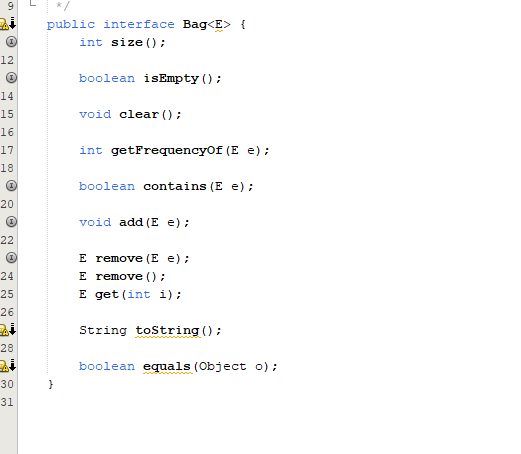
Bag.java interface
========
SinglyLinkedList.java
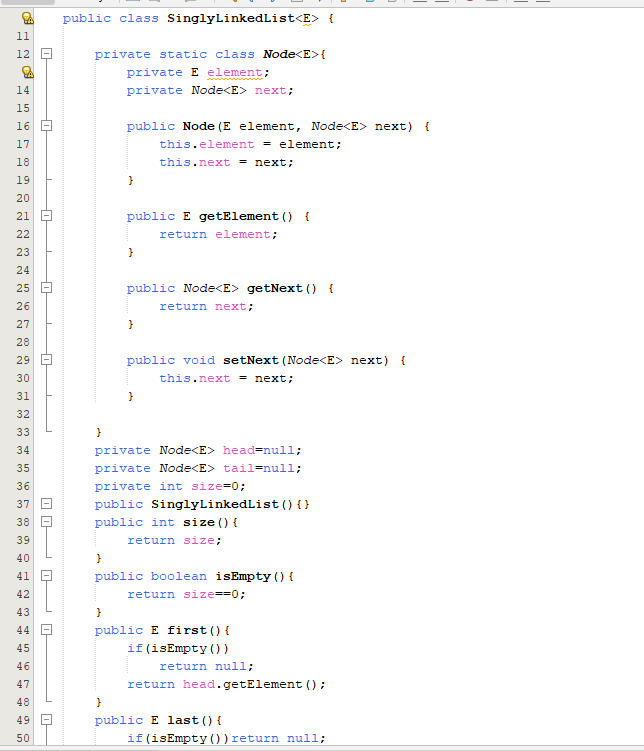
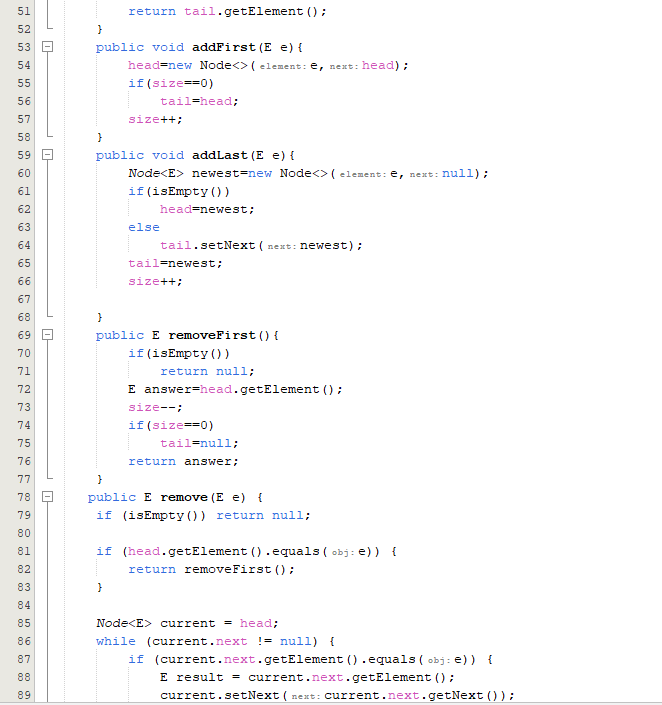
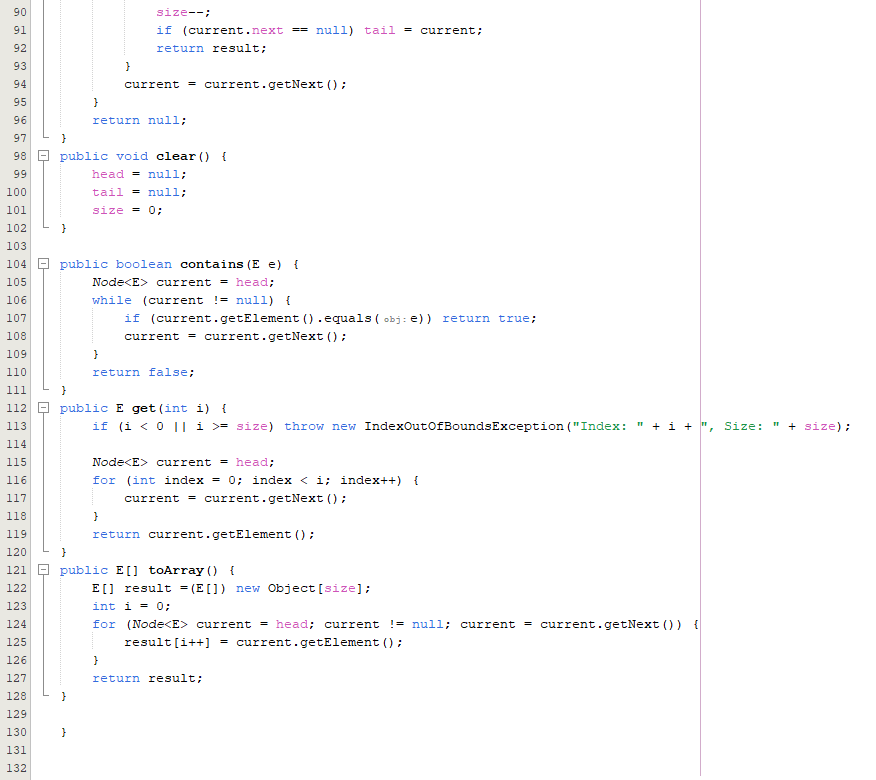
Again all you need to do is change the client outline to use ArrayBag and LinkedBag to produce an output.
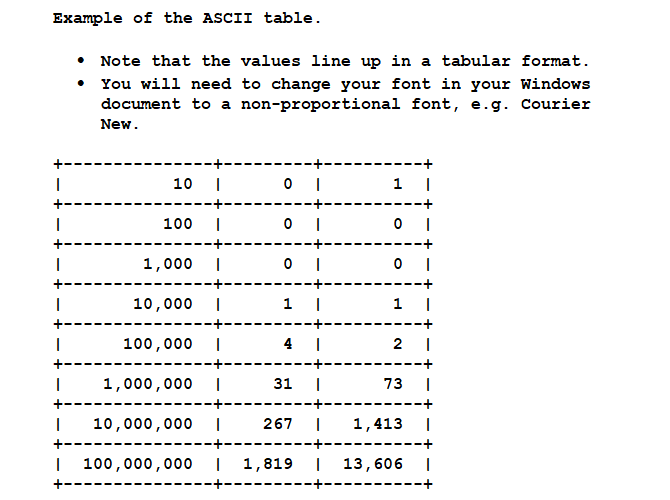
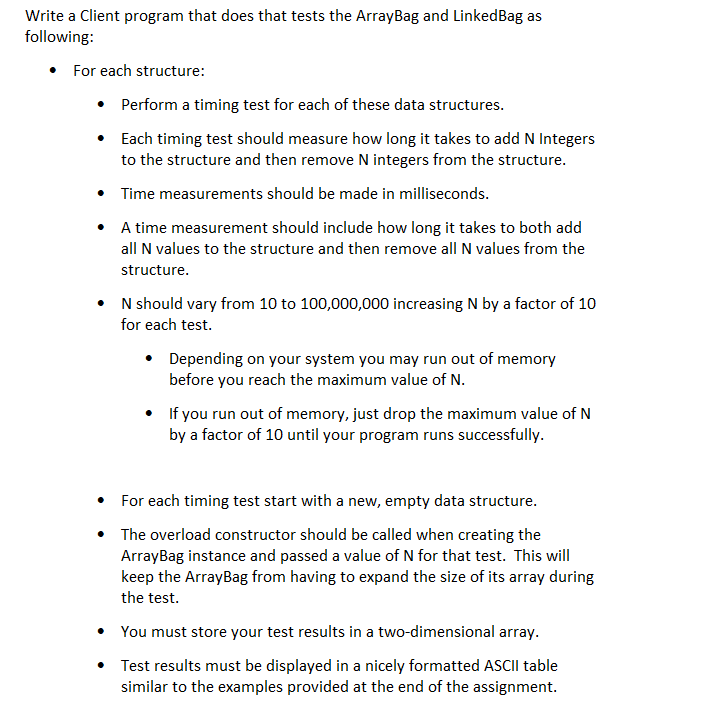
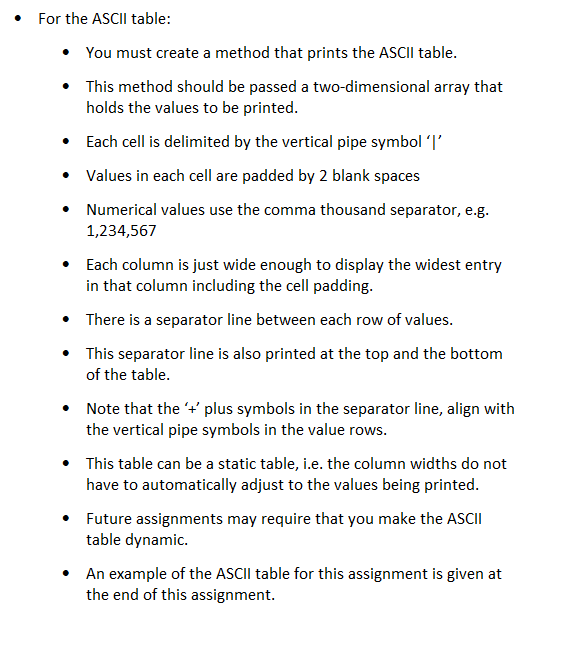
Example of the ASCII table. - Note that the values line up in a tabular format. - You will need to change your font in your windows document to a non-proportional font, e.g. Courier New. Client program that does that tests the ArrayBag and LinkedBag as ing: For each structure: - Perform a timing test for each of these data structures. - Each timing test should measure how long it takes to add N Integers to the structure and then remove N integers from the structure. - Time measurements should be made in milliseconds. - A time measurement should include how long it takes to both add all N values to the structure and then remove all N values from the structure. - N should vary from 10 to 100,000,000 increasing N by a factor of 10 for each test. - Depending on your system you may run out of memory before you reach the maximum value of N. - If you run out of memory, just drop the maximum value of N by a factor of 10 until your program runs successfully. - For each timing test start with a new, empty data structure. - The overload constructor should be called when creating the ArrayBag instance and passed a value of N for that test. This will keep the ArrayBag from having to expand the size of its array during the test. - You must store your test results in a two-dimensional array. - Test results must be displayed in a nicely formatted ASCII table similar to the examples provided at the end of the assignment. For the ASCII table: - You must create a method that prints the ASCII table. - This method should be passed a two-dimensional array that holds the values to be printed. - Each cell is delimited by the vertical pipe symbol ' ' - Values in each cell are padded by 2 blank spaces - Numerical values use the comma thousand separator, e.g. 1,234,567 - Each column is just wide enough to display the widest entry in that column including the cell padding. - There is a separator line between each row of values. - This separator line is also printed at the top and the bottom of the table. - Note that the ' + ' plus symbols in the separator line, align with the vertical pipe symbols in the value rows. - This table can be a static table, i.e. the column widths do not have to automatically adjust to the values being printed. - Future assignments may require that you make the ASCII table dynamic. - An example of the ASCIl table for this assignment is given at the end of this assignment. bublic interface Bag int size (); boolean isEmpty (); void clear(); int getFrequencyof (E e); boolean contains (E e); void add (E e); E remove (E e); E remove (); E get (int i); String tostring (); boolean equals (object o)
Step by Step Solution
There are 3 Steps involved in it

Get step-by-step solutions from verified subject matter experts
 Study Help