







Question: ### Please use the Ruths Chris case (attached here) to answer the following questions. Please assume: *that you are a senior member of John Hannahs
### Please use the Ruths Chris case (attached here) to answer the following questions.
Please assume:
*that you are a senior member of John Hannahs business development staff at Ruths Chris,
* that, contrary to what is stated on page 4 of the case, all restaurant growth paths (penetration, product development, market development, diversification) are open for discussion.
Answer the questions DIRECTLY, using evidence derived from course concepts/materials, not personal opinion.
Question 5.
a) Describe the market type (slow, medium, or fast-cycle) that you believe Ruths Chris is operating in and why you believe this.
b) Given the market type, briefly discuss three reasons for Ruths Chris to pursue an international strategic alliance.
c) Given Ruths Chriss objective of international growth, what type of cooperative strategy do you recommend and why? Finally, discuss two major risks to your recommendation and two problems that Ruths Chris might encounter in attempting to end the alliance.
Question 6.
a. Briefly present international corporate level and business level strategies that apply real options reasoning to the Ruths Chris international expansion decision.
b. What type of real option(s) would be used and why?
Course: Business policy and strategy
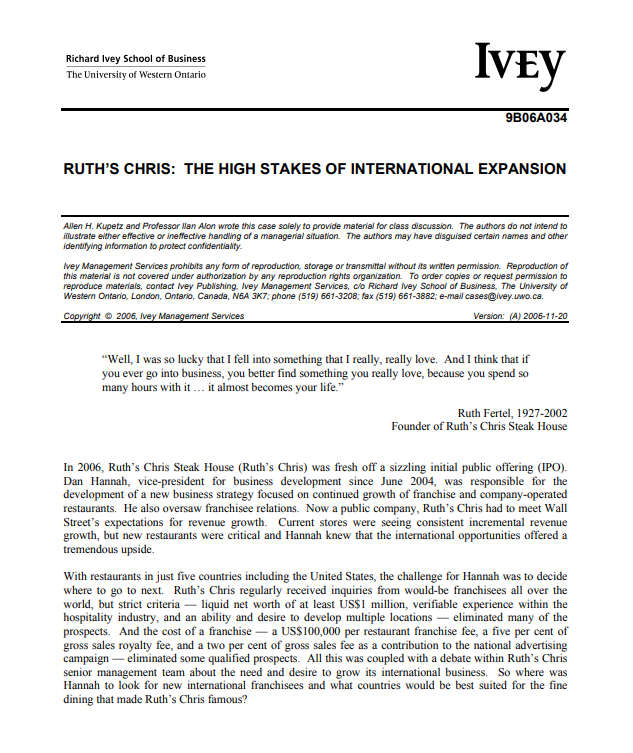
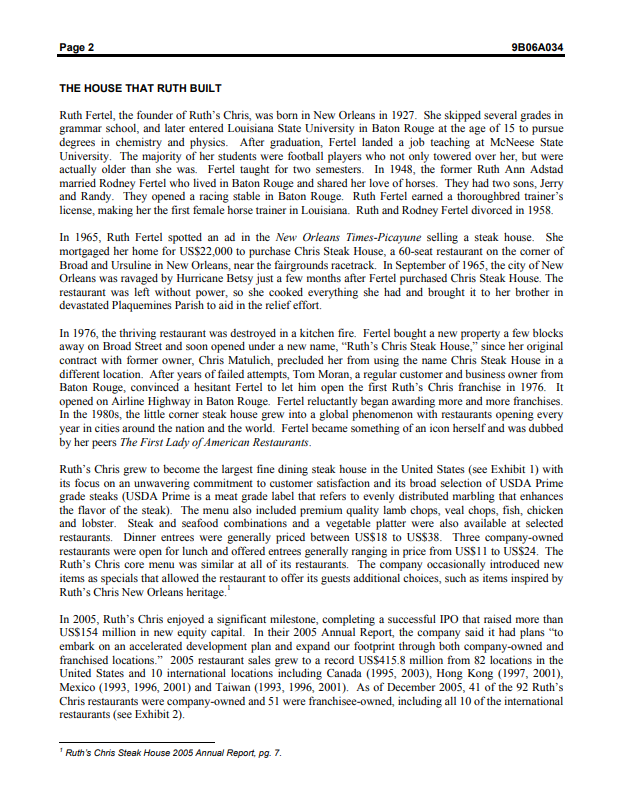
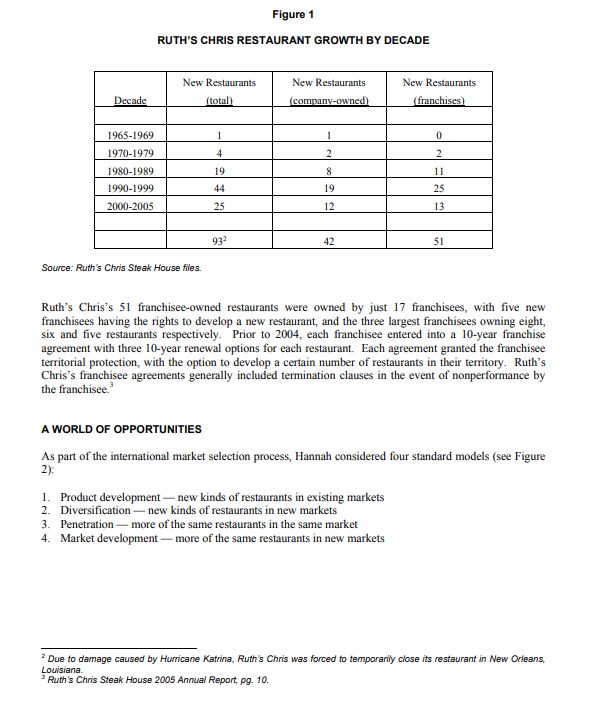
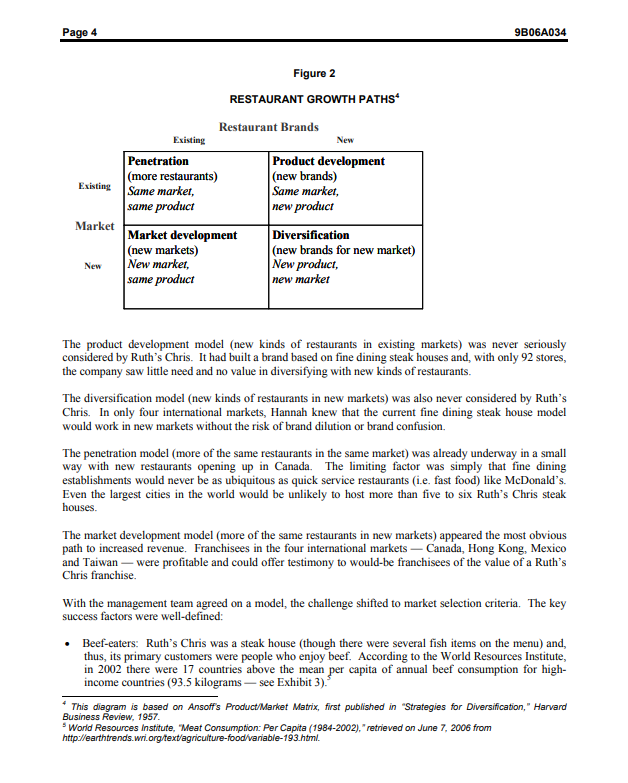
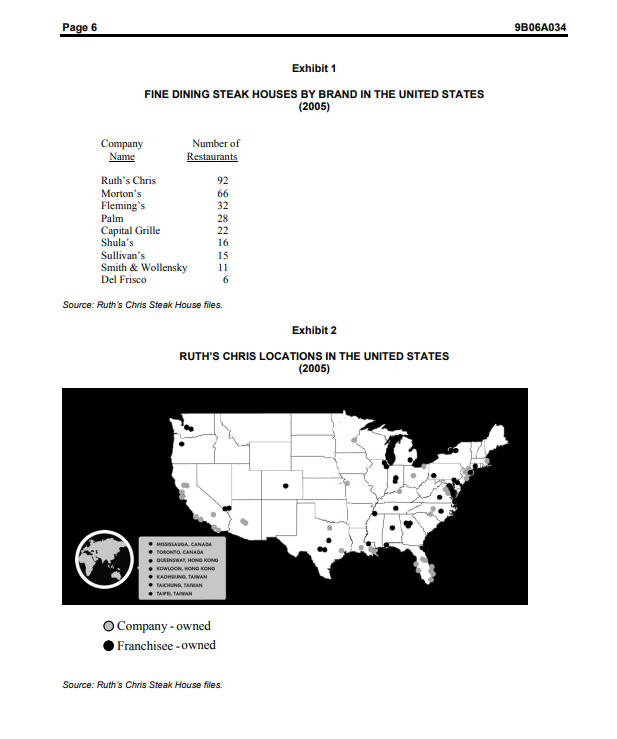
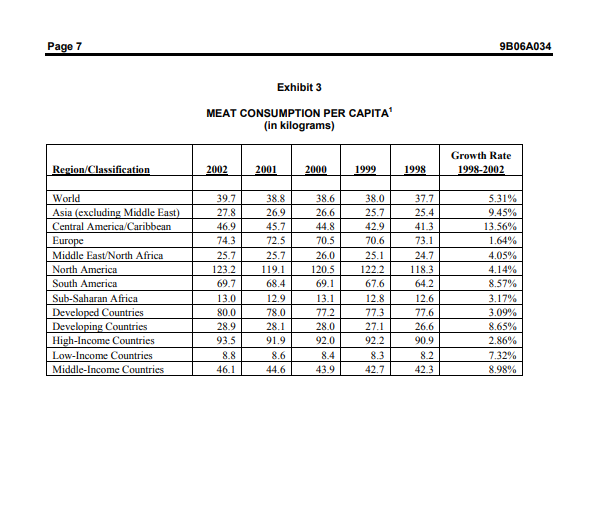
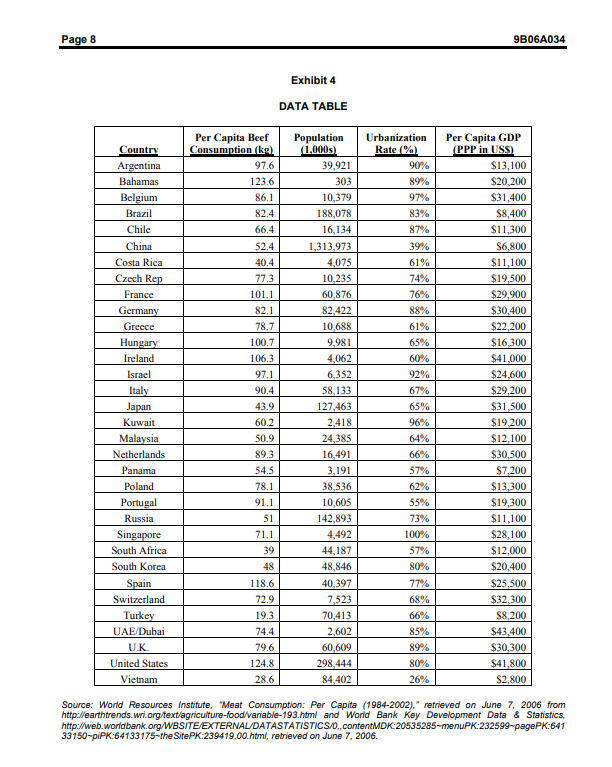
Richard Ivey School of Business The University of Western Ontario IVEV 9B06A034 RUTH'S CHRIS: THE HIGH STAKES OF INTERNATIONAL EXPANSION Alen H. Kupetz and Professor Man Alon wrote thw case solely to provide material for class discussion. The authors do not intend to imustrate either effective or ineffective hanoling of a managerlal situation. The authors may have disguised certain names and other identifying information to protect confidentiaily. Ney Manegement Services prohibits any form of reproduction, storage or transmittal without its written pemission. Reproduction of this material is not covered under authorization by any reproduction rights organization. To order coples or request permission to reproduce matenials, contact Avey Publishing. Ivey Management Services, clo Richard Ivey School of Business, The Unversity of Westem Ontanio, London, Ontario, Canada, N6A 3K7; phone (519) 661-3208; fax (519) 661-3882; e-mail casestgivey.umo. ca. Copynight 2006, Ivey Management Services Version: (A) 2006-11-20 "Well, I was so lucky that I fell into something that I really, really love. And I think that if you ever go into business, you better find something you really love, because you spend so many hours with it ... it almost becomes your life." Ruth Fertel, 1927-2002 Founder of Ruth's Chris Steak House In 2006, Ruth's Chris Steak House (Ruth's Chris) was fresh off a sizzling initial public offering (IPO). Dan Hannah, vice-president for business development since June 2004, was responsible for the development of a new business strategy focused on continued growth of franchise and company-operated restaurants. He also oversaw franchisee relations. Now a public company, Ruth's Chris had to meet Wall Street's expectations for revenue growth. Current stores were seeing consistent incremental revenue growth, but new restaurants were critical and Hannah knew that the international opportunities offered a tremendous upside. With restaurants in just five countries including the United States, the challenge for Hannah was to decide where to go to next. Ruth's Chris regularly received inquiries from would-be franchisees all over the world, but strict criteria - liquid net worth of at least US $1 million, verifiable experience within the hospitality industry, and an ability and desire to develop multiple locations - eliminated many of the prospects. And the cost of a franchise - a US $100,000 per restaurant franchise fee, a five per cent of gross sales royalty fee, and a two per cent of gross sales fee as a contribution to the national advertising campaign - eliminated some qualified prospects. All this was coupled with a debate within Ruth's Chris senior management team about the need and desire to grow its international business. So where was Hannah to look for new international franchisees and what countries would be best suited for the fine dining that made Ruth's Chris famous? Ruth Fertel, the founder of Ruth's Chris, was born in New Orleans in 1927. She skipped several grades in grammar school, and later entered Louisiana State University in Baton Rouge at the age of 15 to pursue degrees in chemistry and physics. After graduation, Fertel landed a job teaching at McNeese State University. The majority of her students were football players who not only towered over her, but were actually older than she was. Fertel taught for two semesters. In 1948, the former Ruth Ann Adstad married Rodney Fertel who lived in Baton Rouge and shared her love of horses. They had two sons, Jerry and Randy. They opened a racing stable in Baton Rouge. Ruth Fertel earned a thoroughbred trainer's license, making her the first female horse trainer in Louisiana. Ruth and Rodney Fertel divorced in 1958. In 1965, Ruth Fertel spotted an ad in the New Orleans Times-Picayune selling a steak house. She mortgaged her home for US $22,000 to purchase Chris Steak House, a 60-seat restaurant on the comer of Broad and Ursuline in New Orleans, near the fairgrounds racetrack. In September of 1965, the city of New Orleans was ravaged by Hurricane Betsy just a few months after Fertel purchased Chris Steak House. The restaurant was left without power, so she cooked everything she had and brought it to her brother in devastated Plaquemines Parish to aid in the relief effort. In 1976, the thriving restaurant was destroyed in a kitchen fire. Fertel bought a new property a few blocks away on Broad Street and soon opened under a new name, "Ruth's Chris Steak House," since her original contract with former owner, Chris Matulich, precluded her from using the name Chris Steak House in a different location. After years of failed attempts, Tom Moran, a regular customer and business owner from Baton Rouge, convinced a hesitant Fertel to let him open the first Ruth's Chris franchise in 1976. It opened on Airline Highway in Baton Rouge. Fertel reluctantly began awarding more and more franchises. In the 1980 s, the little comer steak house grew into a global phenomenon with restaurants opening every year in cities around the nation and the world. Fertel became something of an icon herself and was dubbed by her peers The First Lady of American Restaurants. Ruth's Chris grew to become the largest fine dining steak house in the United States (see Exhibit 1) with its focus on an unwavering commitment to customer satisfaction and its broad selection of USDA Prime grade steaks (USDA Prime is a meat grade label that refers to evenly distributed marbling that enhances the flavor of the steak). The menu also included premium quality lamb chops, veal chops, fish, chicken and lobster. Steak and seafood combinations and a vegetable platter were also available at selected restaurants. Dinner entrees were generally priced between US\$18 to US\$38. Three company-owned restaurants were open for lunch and offered entrees generally ranging in price from US\$11 to US $24. The Ruth's Chris core menu was similar at all of its restaurants. The company occasionally introduced new items as specials that allowed the restaurant to offer its guests additional choices, such as items inspired by Ruth's Chris New Orleans heritage. In 2005, Ruth's Chris enjoyed a significant milestone, completing a successful IPO that raised more than US\$154 million in new equity capital. In their 2005 Annual Report, the company said it had plans "to embark on an accelerated development plan and expand our footprint through both company-owned and franchised locations." 2005 restaurant sales grew to a record US $415.8 million from 82 locations in the United States and 10 international locations including Canada (1995, 2003), Hong Kong (1997, 2001), Mexico (1993,1996,2001) and Taiwan (1993, 1996, 2001). As of December 2005, 41 of the 92 Ruth's Chris restaurants were company-owned and 51 were franchisee-owned, including all 10 of the intemational restaurants (see Exhibit 2). Figure 1 RUTH'S CHRIS RESTAURANT GROWTH BY DECADE Source: Ruth's Chris Steak House files. Ruth's Chris's 51 franchisee-owned restaurants were owned by just 17 franchisees, with five new franchisees having the rights to develop a new restaurant, and the three largest franchisees owning eight, six and five restaurants respectively. Prior to 2004 , each franchisee entered into a 10-year franchise agreement with three 10-year renewal options for each restaurant. Each agreement granted the franchisee territorial protection, with the option to develop a certain number of restaurants in their territory. Ruth's Chris's franchisee agreements generally included termination clauses in the event of nonperformance by the franchisee. 3 A WORLD OF OPPORTUNITIES As part of the international market selection process, Hannah considered four standard models (see Figure 2): 1. Product development - new kinds of restaurants in existing markets 2. Diversification - new kinds of restaurants in new markets 3. Penetration - more of the same restaurants in the same market 4. Market development - more of the same restaurants in new markets 2 Due to damage caused by Hurricane Katrina, Ruth's Chris was forced to temporanily close its restaurant in New Orleans, Lowisiana. 3 Ruth's Chris Steak House 2005 Annual Report, pg. 10. Page 4 9B06A034 Figure 2 RESTAURANT GROWTH PATHS 4 Restaurant Brands Existine Nive The product development model (new kinds of restaurants in existing markets) was never seriously considered by Ruth's Chris. It had built a brand based on fine dining steak houses and, with only 92 stores, the company saw little need and no value in diversifying with new kinds of restaurants. The diversification model (new kinds of restaurants in new markets) was also never considered by Ruth's Chris. In only four international markets, Hannah knew that the current fine dining steak house model would work in new markets without the risk of brand dilution or brand confusion. The penetration model (more of the same restaurants in the same market) was already underway in a small way with new restaurants opening up in Canada. The limiting factor was simply that fine dining establishments would never be as ubiquitous as quick service restaurants (i.e. fast food) like McDonald's. Even the largest cities in the world would be unlikely to host more than five to six Ruth's Chris steak houses. The market development model (more of the same restaurants in new markets) appeared the most obvious path to increased revenue. Franchisees in the four international markets - Canada, Hong Kong, Mexico and Taiwan - were profitable and could offer testimony to would-be franchisees of the value of a Ruth's Chris franchise. With the management team agreed on a model, the challenge shifted to market selection criteria. The key success factors were well-defined: - Beef-eaters: Ruth's Chris was a steak house (though there were several fish items on the menu) and, thus, its primary customers were people who enjoy beef. According to the World Resources Institute, in 2002 there were 17 countries above the mean per capita of annual beef consumption for highincome countries (93.5 kilograms - see Exhibit 3)5 "This diagram is based on Ansoff's Product/Market Matrix, first published in "Strategies for Diversification," Harvard Business Review, 1957. http://earthtrends.wri.org/ext/agriculture-food/vaniable-193.htm. - Legal to import U.S. beef: The current Ruth's Chris model used only USDA Prime beef, thus it had to be exportable to the target country. In some cases, Australian beef was able to meet the same high U.S. standard. - Population/high urbanization rates: With the target customer being a well-to-do beef-eater, restaurants needed to be in densely populated areas to have a large enough pool. Most large centers probably met this requirement. - High disposable income: Ruth's Chris is a fine dining experience and the average cost of a meal for a customer ordering an entree was over US 770 at a Ruth's Chris in the United States. While this might seem to eliminate many countries quickly, there are countries (e.g. China) that have such large populations that even a very small percentage of high disposable income people could create an appropriate pool of potential customers. - Do people go out to eat? This was a critical factor. If well-to-do beef-eaters did not go out to eat, these countries had to be removed from the target list. - Affinity for U.S. brands: The name "Ruth's Chris" was uniquely American as was the Ruth Fertel story. Countries that were overtly anti-United States would be eliminated from - or at least pushed down - the target list. One measure of affinity could be the presence of existing U.S. restaurants and successful franchises. WHAT SHOULD RUTH'S CHRIS DO NEXT? Hannah had many years of experience in the restaurant franchising business, and thus had both personal preferences and good instincts about where Ruth's Chris should be looking for new markets. "Which markets should we enter first?" he thought to himself. Market entry was critical, but there were other issues too. Should franchising continue to be Ruth's Chris exclusive international mode of entry? Were there opportunities for joint ventures or company-owned stores in certain markets? How could he identify and evaluate new potential franchisees? Was there an opportunity to find a global partner/brand with which to partner? Hannah gathered information from several reliable U.S. government and related websites and created the table in Exhibit 4. He noted that many of his top prospects currently did not allow the importation of U.S. beef, but he felt that this was a political (rather than a cultural) variable and thus could change quickly under the right circumstances and with what he felt was the trend toward ever more free trade. He could not find any data on how often people went out to eat or a measure of their affinity toward U.S. brands. Maybe the success of U.S. casual dining restaurants in a country might be a good indicator of how its citizens felt toward U.S. restaurants. With his spreadsheet open, he went to work on the numbers and began contemplating the future global expansion of the company. "If you've ever had a filet this good, welcome back." Source: Ruth's Chris Steak House files. Exhibit 2 RUTH'S CHRIS LOCATIONS IN THE UNITED STATES (2005) Page 7 9B06A034 Exhibit 3 MEAT CONSUMPTION PER CAPITA 1 (in kilograms) \begin{tabular}{|l|r|r|r|r|r|r|} \hline Region/Classification & & & & & & \multicolumn{1}{|c|}{GrowthRate19982002} \\ \hline & & 2002 & 2001 & 1999 & 1998 \\ \hline World & 39.7 & 38.8 & 38.6 & 38.0 & 37.7 & 5.31% \\ \hline Asia (excluding Middle East) & 27.8 & 26.9 & 26.6 & 25.7 & 25.4 & 9.45% \\ \hline Central America/Caribbean & 46.9 & 45.7 & 44.8 & 42.9 & 41.3 & 13.56% \\ \hline Europe & 74.3 & 72.5 & 70.5 & 70.6 & 73.1 & 1.64% \\ \hline Middle East/North Africa & 25.7 & 25.7 & 26.0 & 25.1 & 24.7 & 4.05% \\ \hline North America & 123.2 & 119.1 & 120.5 & 122.2 & 118.3 & 4.14% \\ \hline South America & 69.7 & 68.4 & 69.1 & 67.6 & 64.2 & 8.57% \\ \hline Sub-Saharan Africa & 13.0 & 12.9 & 13.1 & 12.8 & 12.6 & 3.17% \\ \hline Developed Countries & 80.0 & 78.0 & 77.2 & 77.3 & 77.6 & 3.09% \\ \hline Developing Countries & 28.9 & 28.1 & 28.0 & 27.1 & 26.6 & 8.65% \\ \hline High-Income Countries & 93.5 & 91.9 & 92.0 & 92.2 & 90.9 & 2.86% \\ \hline Low-Income Countries & 8.8 & 8.6 & 8.4 & 8.3 & 8.2 & 7.32% \\ \hline Middle-Income Countries & 46.1 & 44.6 & 43.9 & 42.7 & 42.3 & 8.98% \\ \hline \end{tabular} Exhibit 4 DATA TABLE Sourc. from http:Wearthtrends. wri.org/text/agriculture-food/variable-193.htm and World Bank Key Development Data \& Statistics, http:/web. worldbank.org/WBSITE/EXTERNAL/DATASTATISTICS/O, contentMDK:20535285-menuPK:232599 pagePK:641 33150 - piPK:64133175-the SitePK:-239419,00.html, retrieved on June 7, 2006
Step by Step Solution
There are 3 Steps involved in it

Get step-by-step solutions from verified subject matter experts
 Study Help