







Question: Plz answer 6-7 Use the best-fit algorithm to indicate which memory blocks are allocated to a. each of the arriving jobs. b. Use the first-fit
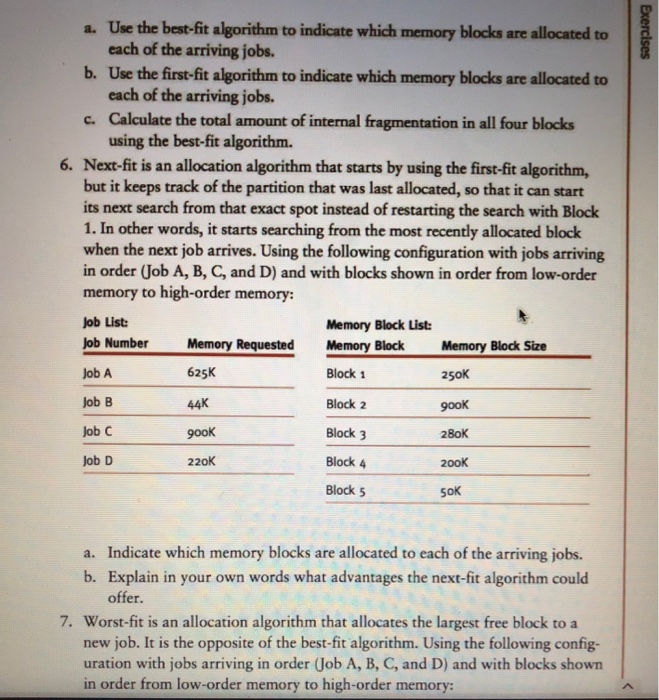
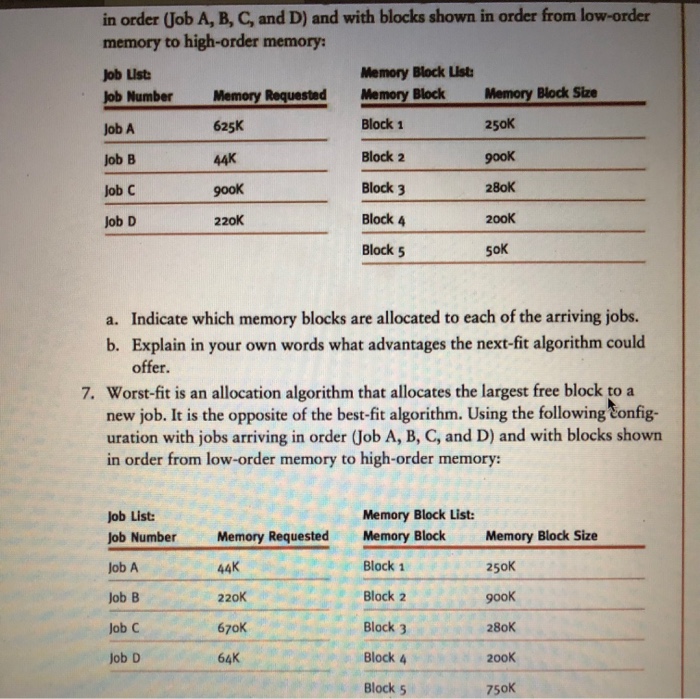
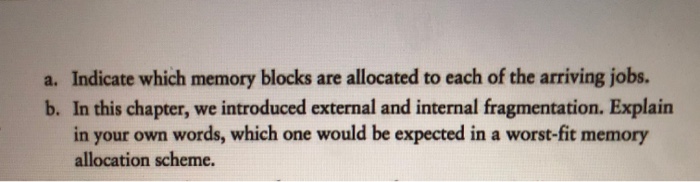
Use the best-fit algorithm to indicate which memory blocks are allocated to a. each of the arriving jobs. b. Use the first-fit algorithm to indicate which memory blocks are allocated to each of the arriving jobs. Calculate the total amount of internal fragmentation in all four blocks c. using the best-fit algorithm. 6. Next-fit is an allocation algorithm that starts by using the first-fit algorithm, but it keeps track of the partition that was last allocated, so that it can start its next search from that exact spot instead of restarting the search with Block 1. In other words, it starts searching from the most recently allocated block when the next job arrives. Using the following configuration with jobs arriving in order Job A, B, C, and D) and with blocks shown in order from low-order memory to high-order memory: Job List: Job Number Memory Requested Memory Block Memory Block Size Job A Job B Job C Job D Memory Block List: 625K 44K 900K 220K Block 1 Block 2 Block 3 Block 4 Block 5 250K 900k 28oK 200K 5ok a. Indicate which memory blocks are allocated to each of the arriving jobs. b. Explain in your own words what advantages the next-fit algorithm could offer. 7. Worst-fit is an allocation algorithm that allocates the largest free block to a new job. It is the opposite of the best-fit algorithm. Using the following config- uration with jobs arriving in order Job A, B, C, and D) and with blocks shown in order from low-order memory to high-order memory
Step by Step Solution
There are 3 Steps involved in it

Get step-by-step solutions from verified subject matter experts
 Study Help