



Question: plzz solve mee this plz !!! plz!! plz!!! MB-A SINGLE PLAYER ASSIGNMENT: Achieve a stock price > $45, Develop and launch a product in a
plzz solve mee this plz !!! plz!! plz!!!
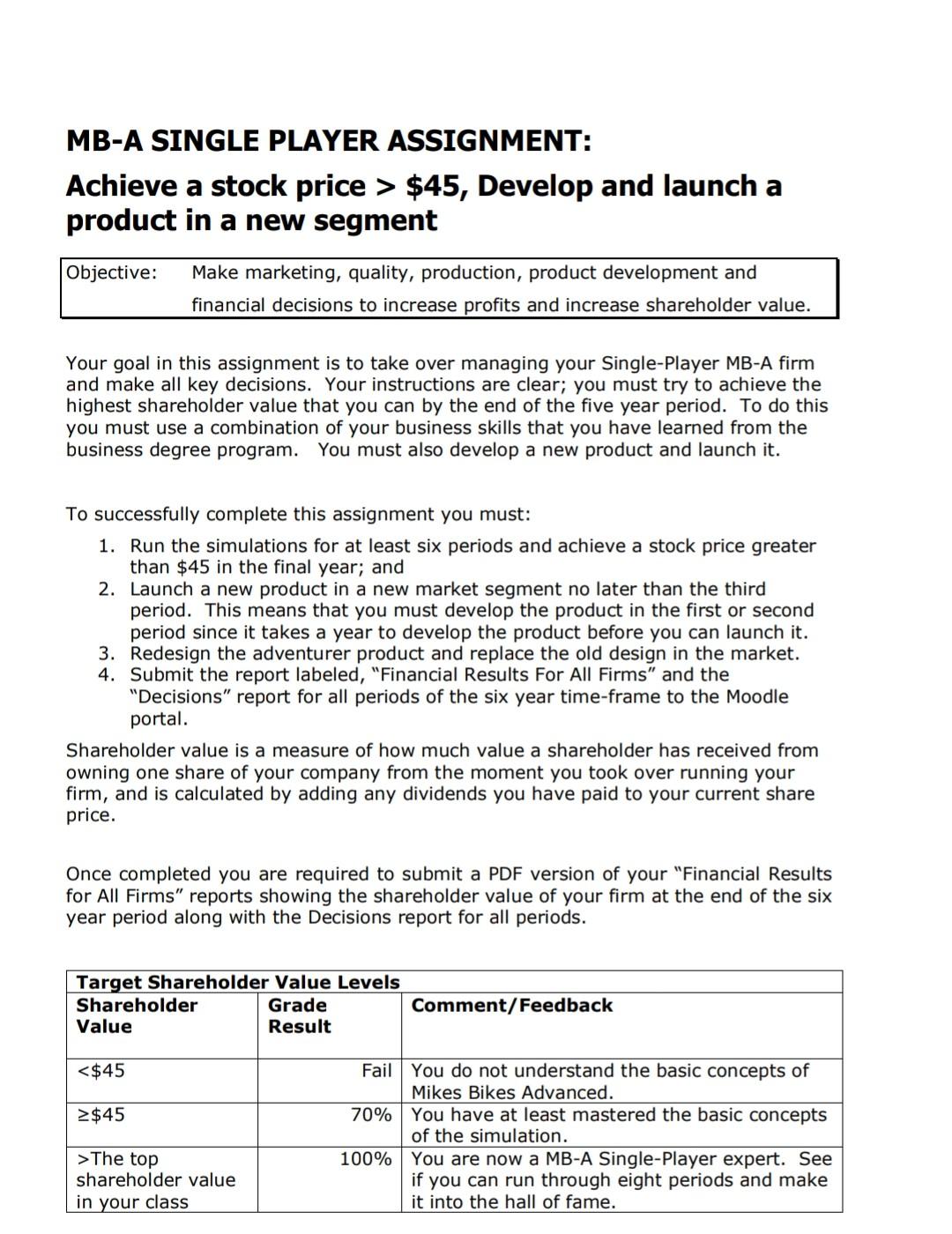
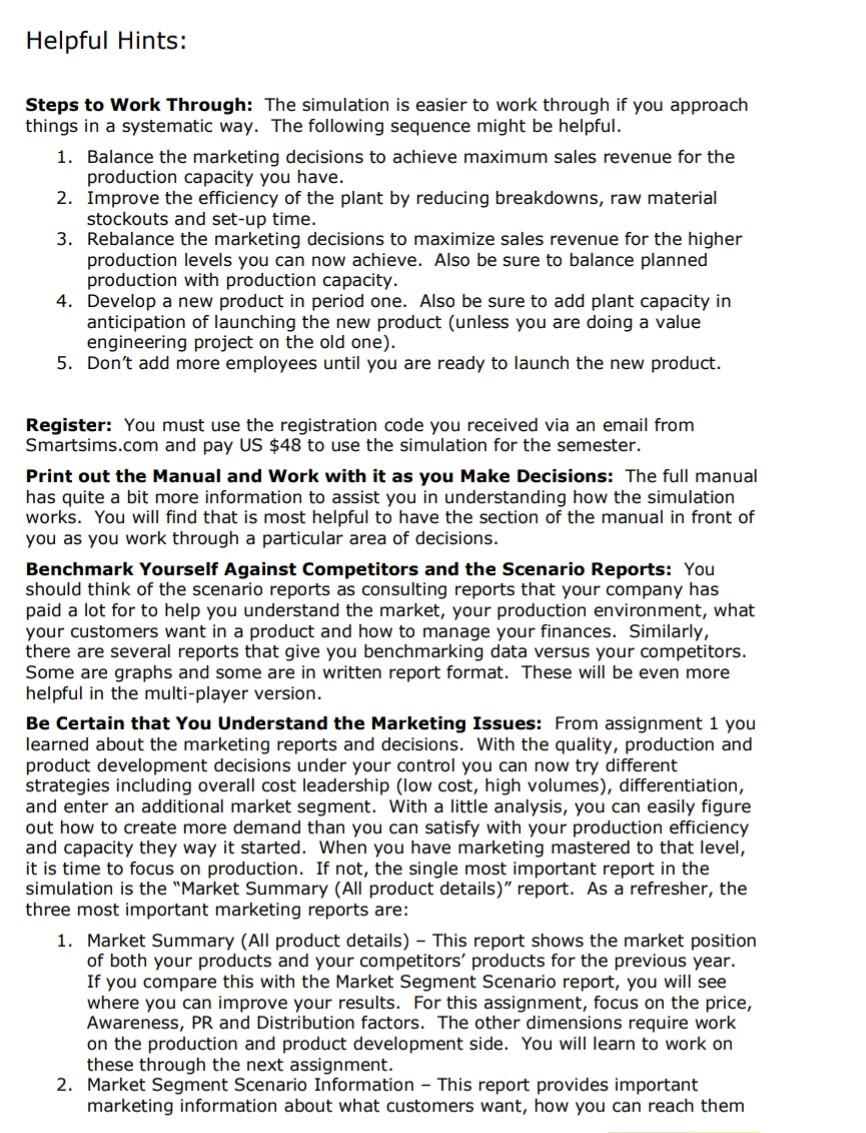
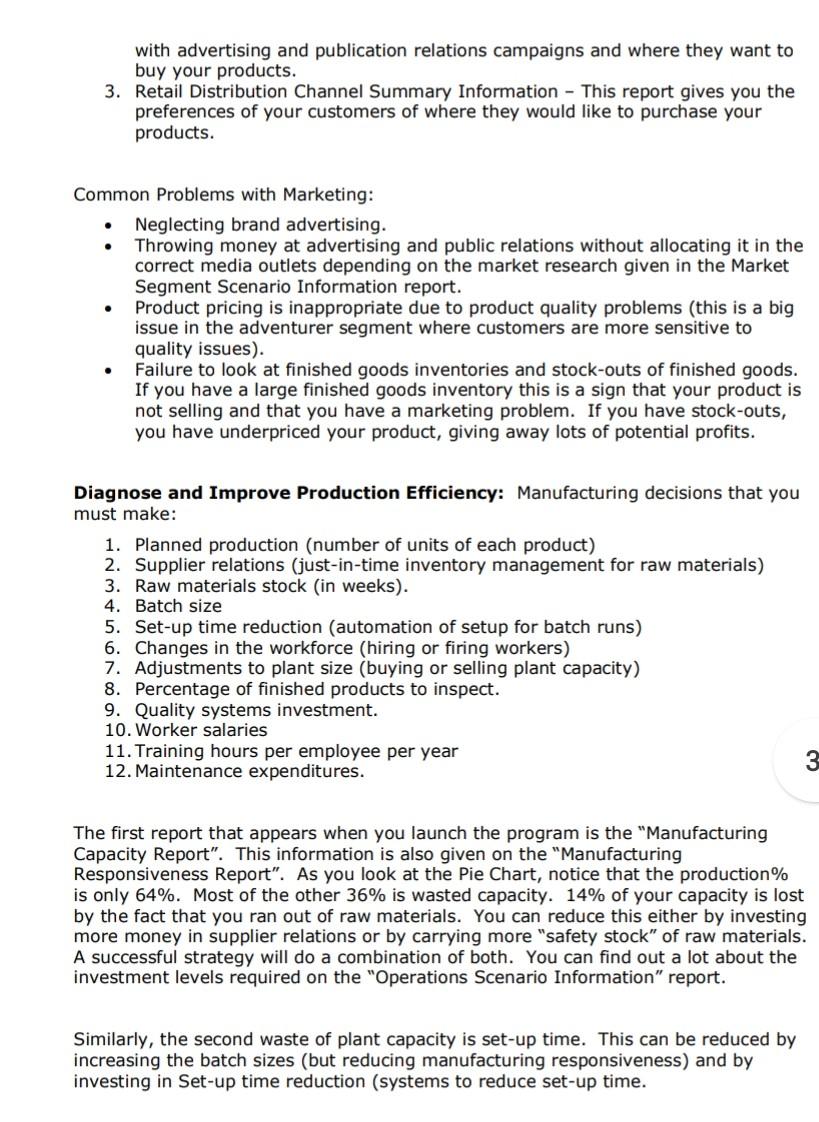
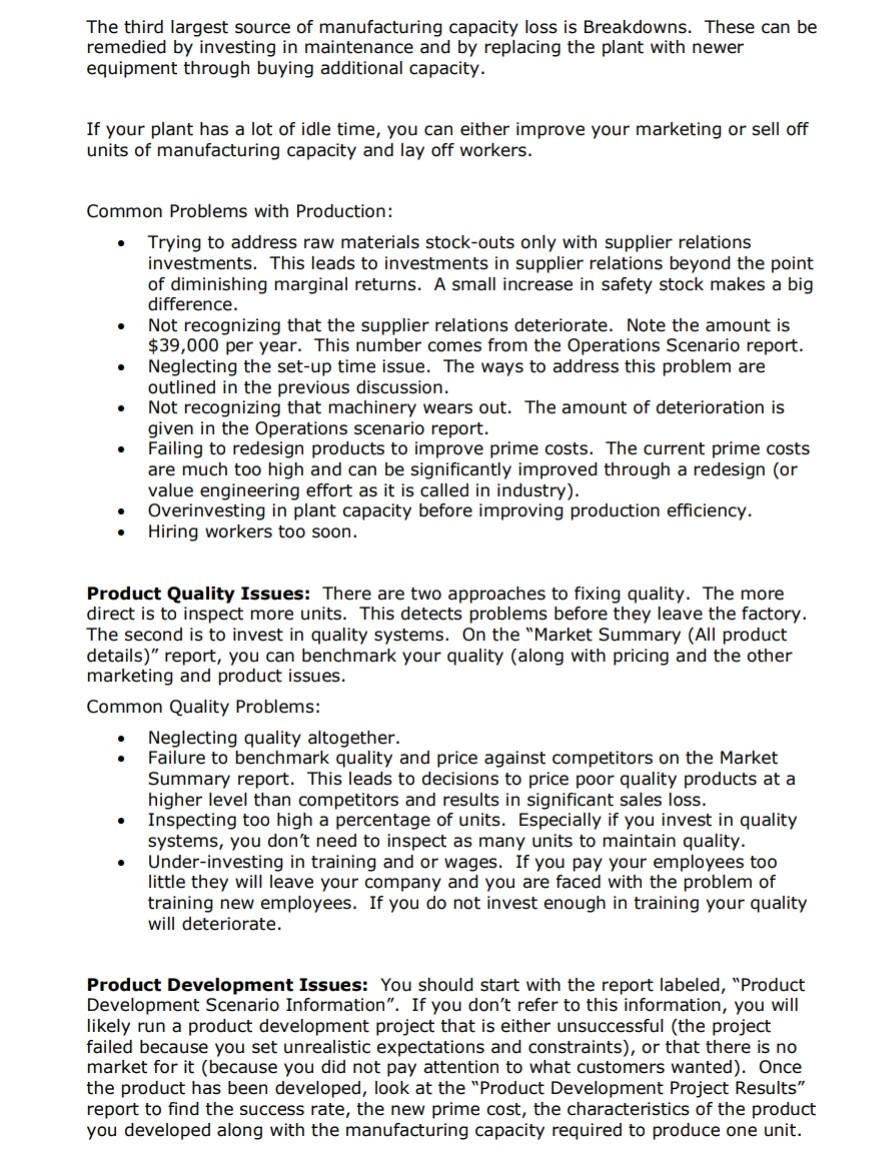
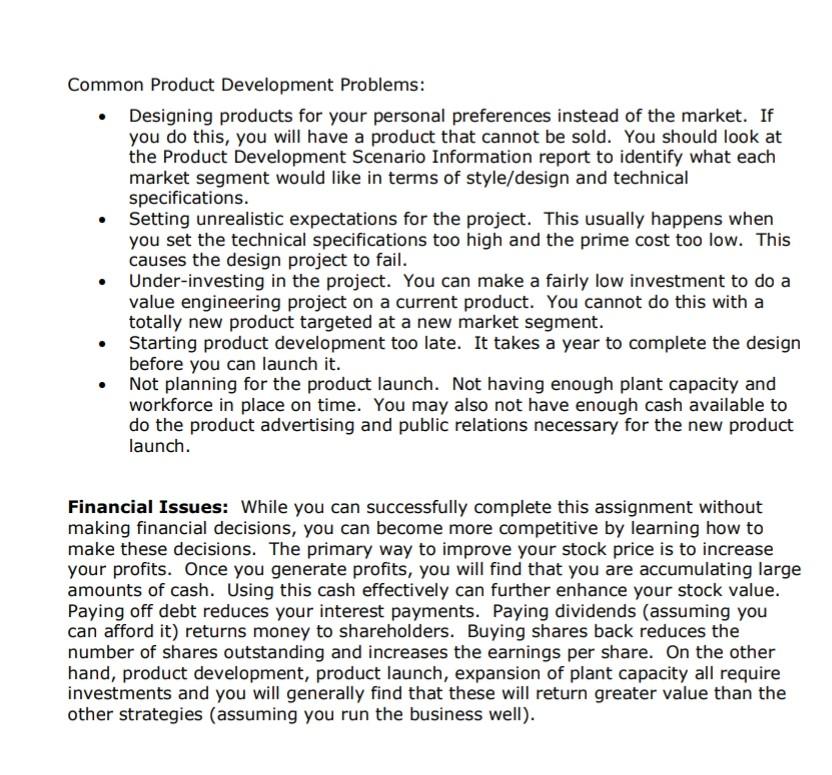
MB-A SINGLE PLAYER ASSIGNMENT: Achieve a stock price > $45, Develop and launch a product in a new segment Objective: Make marketing, quality, production, product development and financial decisions to increase profits and increase shareholder value. Your goal in this assignment is to take over managing your Single-Player MB-A firm and make all key decisions. Your instructions are clear; you must try to achieve the highest shareholder value that you can by the end of the five year period. To do this you must use a combination of your business skills that you have learned from the business degree program. You must also develop a new product and launch it. To successfully complete this assignment you must: 1. Run the simulations for at least six periods and achieve a stock price greater than $45 in the final year; and 2. Launch a new product in a new market segment no later than the third period. This means that you must develop the product in the first or second period since it takes a year to develop the product before you can launch it. 3. Redesign the adventurer product and replace the old design in the market. 4. Submit the report labeled, "Financial Results For All Firms" and the "Decisions" report for all periods of the six year time-frame to the Moodle portal. Shareholder value is a measure of how much value a shareholder has received from owning one share of your company from the moment you took over running your firm, and is calculated by adding any dividends you have paid to your current share price. Once completed you are required to submit a PDF version of your "Financial Results for All Firms" reports showing the shareholder value of your firm at the end of the six year period along with the Decisions report for all periods. Target Shareholder Value Levels Shareholder Grade Comment/Feedback Value Result The top shareholder value in your class with advertising and publication relations campaigns and where they want to buy your products. 3. Retail Distribution Channel Summary Information - This report gives you the preferences of your customers of where they would like to purchase your products. . . Common Problems with Marketing: Neglecting brand advertising. Throwing money at advertising and public relations without allocating it in the correct media outlets depending on the market research given in the Market Segment Scenario Information report. Product pricing is inappropriate due to product quality problems (this is a big issue in the adventurer segment where customers are more sensitive to quality issues). Failure to look at finished goods inventories and stock-outs of finished goods. If you have a large finished goods inventory this is a sign that your product is not selling and that you have a marketing problem. If you have stock-outs, you have underpriced your product, giving away lots of potential profits. . Diagnose and Improve Production Efficiency: Manufacturing decisions that you must make: 1. Planned production (number of units of each product) 2. Supplier relations (just-in-time inventory management for raw materials) 3. Raw materials stock (in weeks). 4. Batch size 5. Set-up time reduction (automation of setup for batch runs) 6. Changes in the workforce (hiring or firing workers) 7. Adjustments to plant size (buying or selling plant capacity) 8. Percentage of finished products to inspect. 9. Quality systems investment. 10. Worker salaries 11. Training hours per employee per year 12. Maintenance expenditures. The first report that appears when you launch the program is the "Manufacturing Capacity Report". This information is also given on the "Manufacturing Responsiveness Report". As you look at the Pie Chart, notice production% is only 64%. Most of the other 36% is wasted capacity. 14% of your capacity is lost by the fact that you ran out of raw materials. You can reduce this either by investing more money in supplier relations or by carrying more "safety stock" of raw materials. A successful strategy will do a combination of both. You can find out a lot about the investment levels required on the "Operations Scenario Information" report. Similarly, the second waste of plant capacity is set-up time. This can be reduced by increasing the batch sizes (but reducing manufacturing responsiveness) and by investing in Set-up time reduction (systems to reduce set-up time. Common Product Development Problems: Designing products for your personal preferences instead of the market. If you do this, you will have a product that cannot be sold. You should look at the Product Development Scenario Information report to identify what each market segment would like in terms of style/design and technical specifications. Setting unrealistic expectations for the project. This usually happens when you set the technical specifications too high and the prime cost too low. This causes the design project to fail. Under-investing in the project. You can make a fairly low investment to do a value engineering project on a current product. You cannot do this with a totally new product targeted at a new market segment. Starting product development too late. It takes a year to complete the design before you can launch it. Not planning for the product launch. Not having enough plant capacity and workforce in place on time. You may also not have enough cash available to do the product advertising and public relations necessary for the new product launch. Financial Issues: While you can successfully complete this assignment without making financial decisions, you can become more competitive by learning how to make these decisions. The primary way to improve your stock price is to increase your profits. Once you generate profits, you will find that you are accumulating large amounts of cash. Using this cash effectively can further enhance your stock value. Paying off debt reduces your interest payments. Paying dividends (assuming you can afford it) returns money to shareholders. Buying shares back reduces the number of shares outstanding and increases the earnings per share. On the other hand, product development, product launch, expansion of plant capacity all require investments and you will generally find that these will return greater value than the other strategies (assuming you run the business well). MB-A SINGLE PLAYER ASSIGNMENT: Achieve a stock price > $45, Develop and launch a product in a new segment Objective: Make marketing, quality, production, product development and financial decisions to increase profits and increase shareholder value. Your goal in this assignment is to take over managing your Single-Player MB-A firm and make all key decisions. Your instructions are clear; you must try to achieve the highest shareholder value that you can by the end of the five year period. To do this you must use a combination of your business skills that you have learned from the business degree program. You must also develop a new product and launch it. To successfully complete this assignment you must: 1. Run the simulations for at least six periods and achieve a stock price greater than $45 in the final year; and 2. Launch a new product in a new market segment no later than the third period. This means that you must develop the product in the first or second period since it takes a year to develop the product before you can launch it. 3. Redesign the adventurer product and replace the old design in the market. 4. Submit the report labeled, "Financial Results For All Firms" and the "Decisions" report for all periods of the six year time-frame to the Moodle portal. Shareholder value is a measure of how much value a shareholder has received from owning one share of your company from the moment you took over running your firm, and is calculated by adding any dividends you have paid to your current share price. Once completed you are required to submit a PDF version of your "Financial Results for All Firms" reports showing the shareholder value of your firm at the end of the six year period along with the Decisions report for all periods. Target Shareholder Value Levels Shareholder Grade Comment/Feedback Value Result The top shareholder value in your class with advertising and publication relations campaigns and where they want to buy your products. 3. Retail Distribution Channel Summary Information - This report gives you the preferences of your customers of where they would like to purchase your products. . . Common Problems with Marketing: Neglecting brand advertising. Throwing money at advertising and public relations without allocating it in the correct media outlets depending on the market research given in the Market Segment Scenario Information report. Product pricing is inappropriate due to product quality problems (this is a big issue in the adventurer segment where customers are more sensitive to quality issues). Failure to look at finished goods inventories and stock-outs of finished goods. If you have a large finished goods inventory this is a sign that your product is not selling and that you have a marketing problem. If you have stock-outs, you have underpriced your product, giving away lots of potential profits. . Diagnose and Improve Production Efficiency: Manufacturing decisions that you must make: 1. Planned production (number of units of each product) 2. Supplier relations (just-in-time inventory management for raw materials) 3. Raw materials stock (in weeks). 4. Batch size 5. Set-up time reduction (automation of setup for batch runs) 6. Changes in the workforce (hiring or firing workers) 7. Adjustments to plant size (buying or selling plant capacity) 8. Percentage of finished products to inspect. 9. Quality systems investment. 10. Worker salaries 11. Training hours per employee per year 12. Maintenance expenditures. The first report that appears when you launch the program is the "Manufacturing Capacity Report". This information is also given on the "Manufacturing Responsiveness Report". As you look at the Pie Chart, notice production% is only 64%. Most of the other 36% is wasted capacity. 14% of your capacity is lost by the fact that you ran out of raw materials. You can reduce this either by investing more money in supplier relations or by carrying more "safety stock" of raw materials. A successful strategy will do a combination of both. You can find out a lot about the investment levels required on the "Operations Scenario Information" report. Similarly, the second waste of plant capacity is set-up time. This can be reduced by increasing the batch sizes (but reducing manufacturing responsiveness) and by investing in Set-up time reduction (systems to reduce set-up time. Common Product Development Problems: Designing products for your personal preferences instead of the market. If you do this, you will have a product that cannot be sold. You should look at the Product Development Scenario Information report to identify what each market segment would like in terms of style/design and technical specifications. Setting unrealistic expectations for the project. This usually happens when you set the technical specifications too high and the prime cost too low. This causes the design project to fail. Under-investing in the project. You can make a fairly low investment to do a value engineering project on a current product. You cannot do this with a totally new product targeted at a new market segment. Starting product development too late. It takes a year to complete the design before you can launch it. Not planning for the product launch. Not having enough plant capacity and workforce in place on time. You may also not have enough cash available to do the product advertising and public relations necessary for the new product launch. Financial Issues: While you can successfully complete this assignment without making financial decisions, you can become more competitive by learning how to make these decisions. The primary way to improve your stock price is to increase your profits. Once you generate profits, you will find that you are accumulating large amounts of cash. Using this cash effectively can further enhance your stock value. Paying off debt reduces your interest payments. Paying dividends (assuming you can afford it) returns money to shareholders. Buying shares back reduces the number of shares outstanding and increases the earnings per share. On the other hand, product development, product launch, expansion of plant capacity all require investments and you will generally find that these will return greater value than the other strategies (assuming you run the business well)Step by Step Solution
There are 3 Steps involved in it
1 Expert Approved Answer
Step: 1 Unlock

Question Has Been Solved by an Expert!
Get step-by-step solutions from verified subject matter experts
Step: 2 Unlock
Step: 3 Unlock