







Question: PR 5 - 5 6 ( Algo ) Activity - Based C osting ( LO 5 - 1 , 5 - Req 1 A Determine
PR Algo ActivityBased C
osting LO Req
Determine the full product costs and selling prices of one pound of
Kona coffee and one pound of Malaysian coffee.
Note: Round your intermediate calculations and final answers to decimal placesPR Algo ActivityBased Costing LO
Global Gourmet Coffee Company GGCC is a distributor and processor of different blends of coffee. The company buys coffee beans
from around the world and roasts, blends, and packages them for resale. GGCC currently has different coffees that it offers to
gourmet shops in onepound bags. The major cost is raw materials; however, there is a substantial amount of manufacturing overhead
in the predominantly automated roasting and packing process. The company uses relatively little direct labor.
Some of the coffees are very popular and sell in large volumes, while a few of the newer blends have very low volumes. GGCC prices
its coffee at full product cost, including allocated overhead, plus a markup of percent. If prices for certain coffees are significantly
higher than market, adjustments are made. The company competes primarily on the quality of its products, but customers are price
conscious as well.
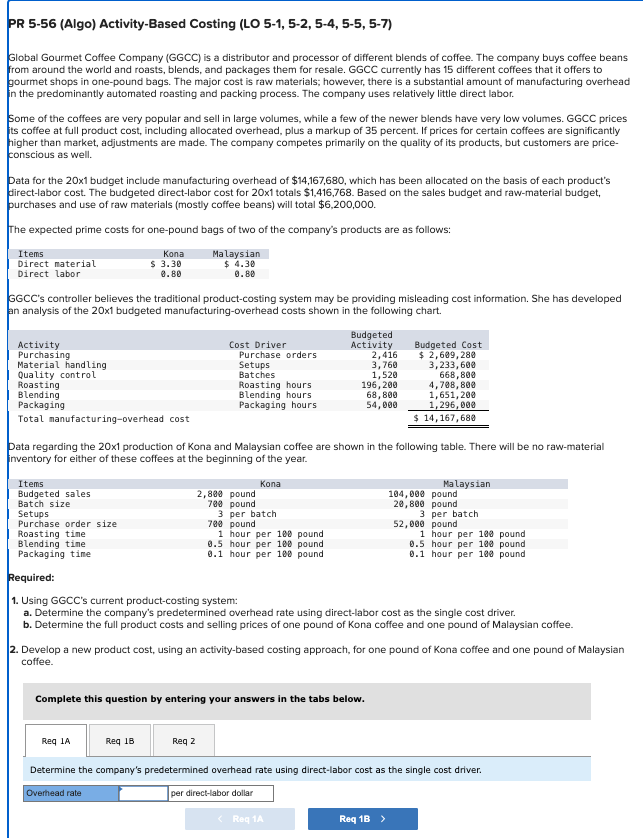
Data for the budget include manufacturing overhead of $ which has been allocated on the basis of each product's
directlabor cost. The budgeted directlabor cost for totals $ Based on the sales budget and rawmaterial budget,
purchases and use of raw materials mostly coffee beans will total $
The expected prime costs for onepound bags of two of the company's products are as follows:
GGCCs controller believes the traditional productcosting system may be providing misleading cost information. She has developed
an analysis of the budgeted manufacturingoverhead costs shown in the following chart.
Pata regarding the production of Kona and Malaysian coffee are shown in the following table. There will be no rawmaterial
inventory for either of these coffees at the beginning of the year.
Required:
Using GGCCs current
Global Gourmet Coffee Company GGCC is a distributor and processor of different blends of coffee. The company buys coffee beans
from around the world and roasts, blends, and packages them for resale. GGCC currently has different coffees that it offers to
gourmet shops in onepound bags. The major cost is raw materials; however, there is a substantial amount of manufacturing overhead
in the predominantly automated roasting and packing process. The company uses relatively little direct labor.
Some of the coffees are very popular and sell in large volumes, while a few of the newer blends have very low volumes. GGCC prices
its coffee at full product cost, including allocated overhead, plus a markup of percent. If prices for certain coffees are significantly
higher than market, adjustments are made. The company competes primarily on the quality of its products, but customers are price
conscious as well.
Data for the budget include manufacturing overhead of $ which has been allocated on the basis of each product's
directlabor cost. The budgeted directlabor cost for totals $ Based on the sales budget and rawmaterial budget,
purchases and use of raw materials mostly coffee beans will total $
The expected prime costs for onepound bags of two of the company's products are as follows:
GGCCs controller believes the traditional productcosting system may be providing misleading cost information. She has developed
an analysis of the budgeted manufacturingoverhead costs shown in the following chart.
Pata regarding the production of Kona and Malaysian coffee are shown in the following table. There will be no rawmaterial
inventory for either of these coffees at the beginning of the year.
Required:
Using GGCCs current productcosting system:
a Determine the company's predetermined overhead rate using directlabor cost as the single cost driver.
b Determine the full product costs and selling prices of one pound of Kona coffee and one pound of Malaysian coffee.
Develop a new product cost, using an activitybased costing approach, for one pound of Kona coffee and one pound of Malaysian
coffee.
Complete this question by entering your answers in the tabs below.
Determine the company's predetermined overhead rate using directlabor cost as the single cost driver.
Step by Step Solution
There are 3 Steps involved in it
1 Expert Approved Answer
Step: 1 Unlock

Question Has Been Solved by an Expert!
Get step-by-step solutions from verified subject matter experts
Step: 2 Unlock
Step: 3 Unlock
 Study Help