







Question: Practice Imagine that a case-control study was performed to assess whether there is an association between cancer and a diet with inadequate vegetable intake. The
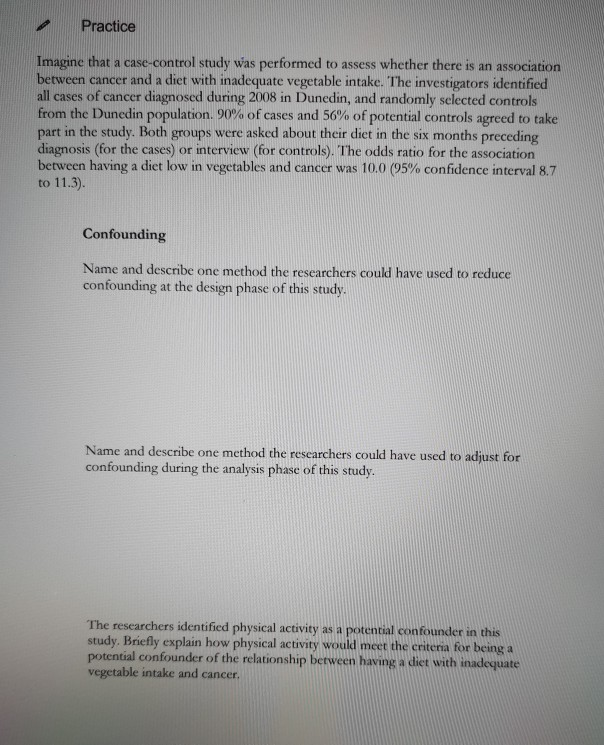
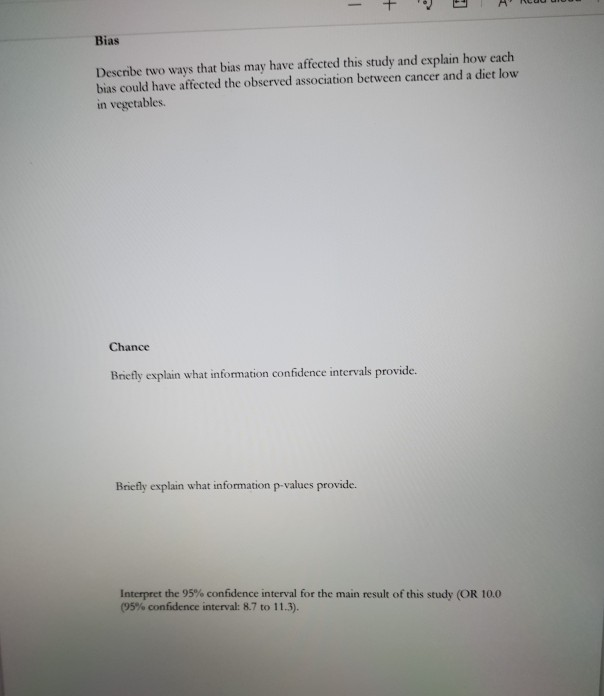
Practice Imagine that a case-control study was performed to assess whether there is an association between cancer and a diet with inadequate vegetable intake. The investigators identified all cases of cancer diagnosed during 2008 in Dunedin, and randomly selected controls from the Dunedin population. 90% of cases and 56% of potential controls agreed to take part in the study. Both groups were asked about their diet in the six months preceding diagnosis (for the cases) or interview (for controls). The odds ratio for the association between having a diet low in vegetables and cancer was 10.0 (95% confidence interval 8.7 to 11.3). Confounding Name and describe one method the researchers could have used to reduce confounding at the design phase of this study. Name and describe one method the researchers could have used to adjust for confounding during the analysis phase of this study. The researchers identified physical activity as a potential confounder in this study. Briefly explain how physical activity would meet the criteria for being a potential confounder of the relationship between having a diet with inadequate vegetable intake and cancer. + A - Bias Describe two ways that bias may have affected this study and explain how each bias could have affected the observed association between cancer and a diet low in vegetables Chance Briefly explain what information confidence intervals provide. Briefly explain what information p-values provide Interpret the 95% confidence interval for the main result of this study (OR 10.0 (95% confidence interval: 8.7 to 11.3). Practice Imagine that a case-control study was performed to assess whether there is an association between cancer and a diet with inadequate vegetable intake. The investigators identified all cases of cancer diagnosed during 2008 in Dunedin, and randomly selected controls from the Dunedin population. 90% of cases and 56% of potential controls agreed to take part in the study. Both groups were asked about their diet in the six months preceding diagnosis (for the cases) or interview (for controls). The odds ratio for the association between having a diet low in vegetables and cancer was 10.0 (95% confidence interval 8.7 to 11.3). Confounding Name and describe one method the researchers could have used to reduce confounding at the design phase of this study. Name and describe one method the researchers could have used to adjust for confounding during the analysis phase of this study. The researchers identified physical activity as a potential confounder in this study. Briefly explain how physical activity would meet the criteria for being a potential confounder of the relationship between having a diet with inadequate vegetable intake and cancer. + A - Bias Describe two ways that bias may have affected this study and explain how each bias could have affected the observed association between cancer and a diet low in vegetables Chance Briefly explain what information confidence intervals provide. Briefly explain what information p-values provide Interpret the 95% confidence interval for the main result of this study (OR 10.0 (95% confidence interval: 8.7 to 11.3)
Step by Step Solution
There are 3 Steps involved in it
1 Expert Approved Answer
Step: 1 Unlock

Question Has Been Solved by an Expert!
Get step-by-step solutions from verified subject matter experts
Step: 2 Unlock
Step: 3 Unlock
 Study Help