







Question: Practice tab 3 0 7 ause physician c reccptionist terson on the atically noti - tions for the the patient ith the spe - tration
Practice tab
ause physician
c reccptionist
terson on the
atically noti
tions for the
the patient
ith the spe
tration area
before the
lience the
he recep
sks in the
chasing
ays run
othem.
makes
sched
Idcare
nts
ning
m
a
n
a
Respect for patients' values, preferences, and expressed needs
Coordination and integration of care
Information and education
physical comfort
Emotional support and alleviation of fear and anxicty
Involvement of family and friends
Transition and continuity
Access to care
performance Data
The last quarter's worth of performance data for Clinic are the following:
overall satisfaction with visit rated as very good or excellent
Staff courtesy and helpfulness rated as very good or excellent Waiting room time for patients is less than minutes
Examination room waiting time is less than minutes
patient noshow rate
patient appointment cancellation rate
Provider appointment cancellation rate
Rate of initial insurance claim rejections because of inaccurate or incomplete patient record documentation
patient preregistration rate
Average number of patient visits per day
Range of patient visits per day
Instructions continued
Before continuing, completely read all of the remaining instructions,
Decide which problem you want to focus on as your first priority for Clinic X
Describe the problem and why you chose this problem.
State the goal for the improvement effort.
Identify the fundamental knowledge required by the improvement project team to solve this problem. Identify the people professional group or service area that should be represented on the team and the fundamental knowledge they bring to the team.
Document the current process as it is described in the case narrative using a process flowchart.
Identify the customers of the process to be improved and their expectations.
Explore and prioritize root causes of the problem by doing the following:
a Brainstorm root causes and document the causes on a fishbone diagram.
b Describe how you would collect data about how frequently the root
Practice tab
Eliminate waste eg things that are not through unnecessary duplication not used, intermediaries,
b Improve workflow eg minimize handoffs, move steps in the process closer together, find and remove bottlenecks, do tasks in parallel, adjust to high and low volumes
c Manage time eg reduce setup time and waiting time
d Manage variation create standard processes where appropriate
e Design systems to avoid mistakes use reminders
Incorporating what you learned in steps through describe the changed process using a process flowchart or workflow diagram.causes contribute to the problem.
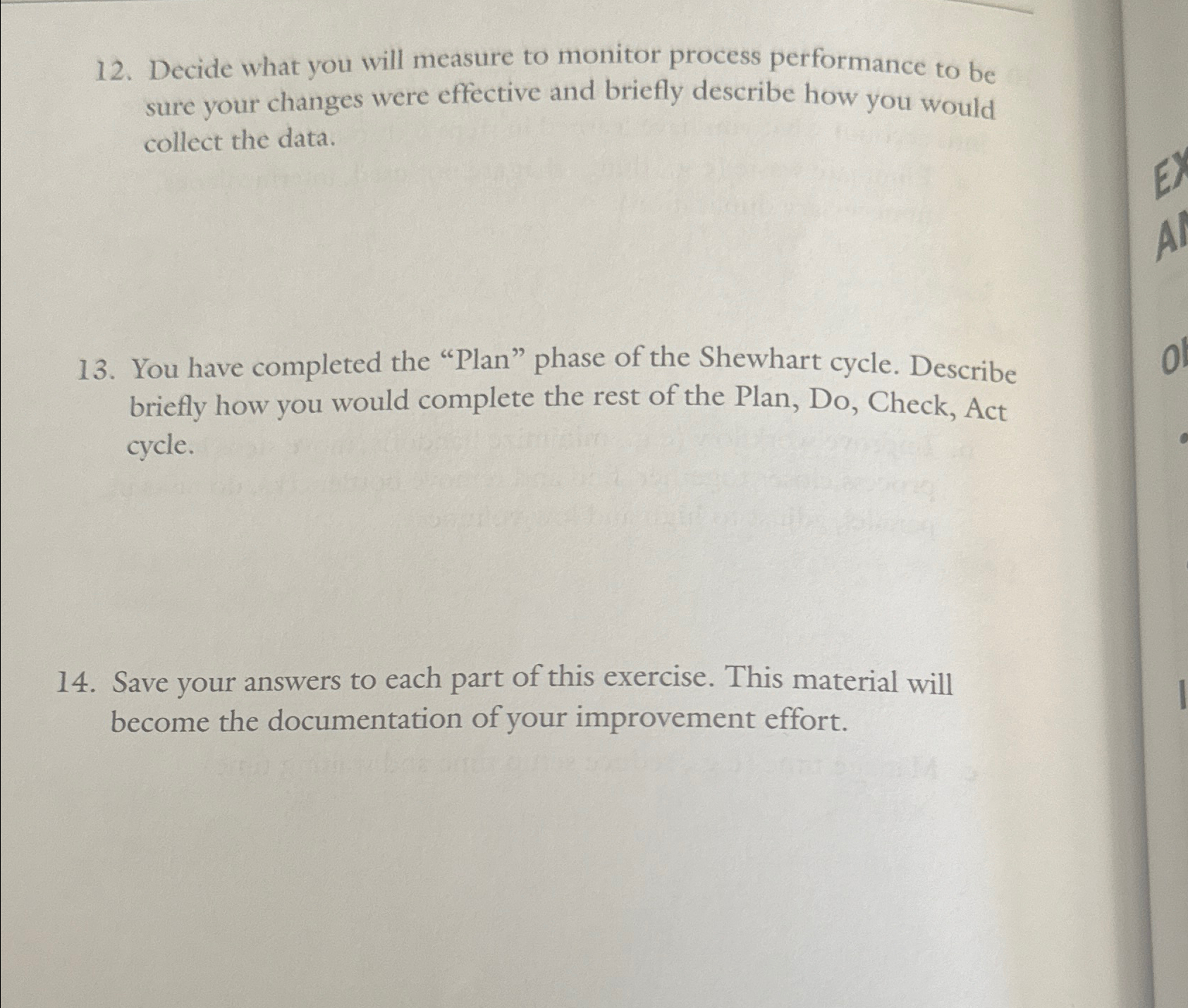
Decide what you will measure to monitor process performance to be sure your changes were effective and briefly describe how you would collect the data.
You have completed the "Plan" phase of the Shewhart cycle. Describe briefly how you would complete the rest of the Plan, Do Check, Act cycle.
Save your answers to each part of this exercise. This material will become the documentation of your improvement effort.
Step by Step Solution
There are 3 Steps involved in it
1 Expert Approved Answer
Step: 1 Unlock

Question Has Been Solved by an Expert!
Get step-by-step solutions from verified subject matter experts
Step: 2 Unlock
Step: 3 Unlock
 Study Help