



Question: Prepare a perpetual inventory record, using the LIFO inventory costing method, and determine the company's cost of goods sold, ending merchandise inventory, and gross
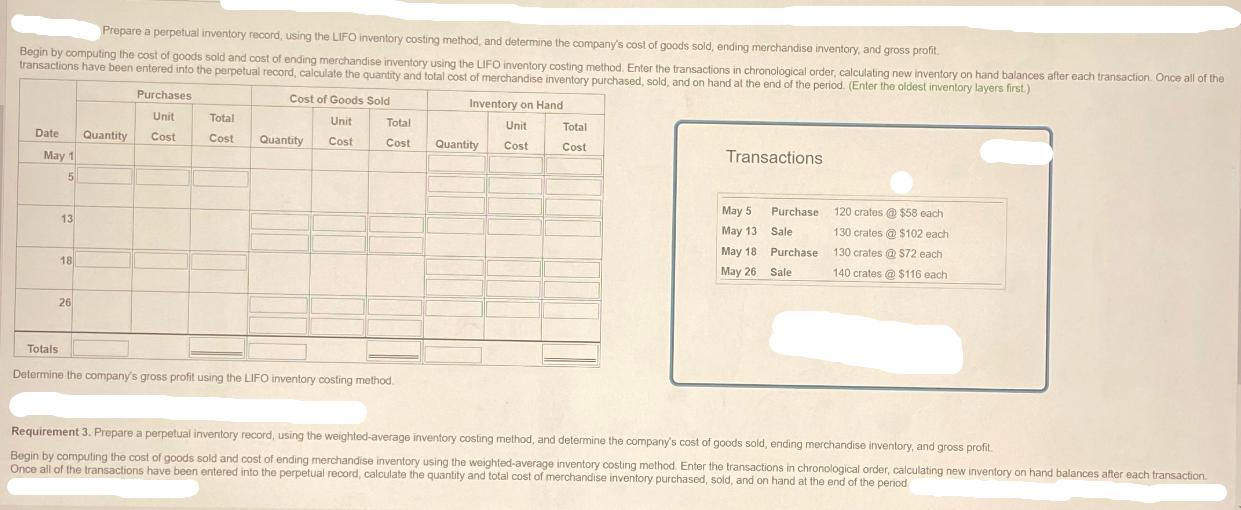
Prepare a perpetual inventory record, using the LIFO inventory costing method, and determine the company's cost of goods sold, ending merchandise inventory, and gross profit. Begin by computing the cost of goods sold and cost of ending merchandise inventory using the LIFO inventory costing method. Enter the transactions in chronological order, calculating new inventory on hand balances after each transaction. Once all of the transactions have been entered into the perpetual record, calculate the quantity and total cost of merchandise inventory purchased, sold, and on hand at the end of the period. (Enter the oldest inventory layers first.) Purchases Unit Cost of Goods Sold Total Unit Total Date Quantity Cost Cost Quantity Cost Cost Quantity Inventory on Hand Unit Cost Total Cost May 1 5 Transactions 13 18 26 Totals Determine the company's gross profit using the LIFO inventory costing method. May 5 May 13 Purchase Sale May 18 Purchase May 26 Sale 120 crates @$58 each 130 crates @$102 each 130 crates @$72 each 140 crates @ $116 each Requirement 3. Prepare a perpetual inventory record, using the weighted-average inventory costing method, and determine the company's cost of goods sold, ending merchandise inventory, and gross profit. Begin by computing the cost of goods sold and cost of ending merchandise inventory using the weighted-average inventory costing method. Enter the transactions in chronological order, calculating new inventory on hand balances after each transaction. Once all of the transactions have been entered into the perpetual record, calculate the quantity and total cost of merchandise inventory purchased, sold, and on hand at the end of the period
Step by Step Solution
There are 3 Steps involved in it

Get step-by-step solutions from verified subject matter experts