Question: Probability Ratios: Between 0 and 1 Name Date PROBABILITY RATIOS: BETWEEN 0 AND 1 It is important to point out that in determining the probability
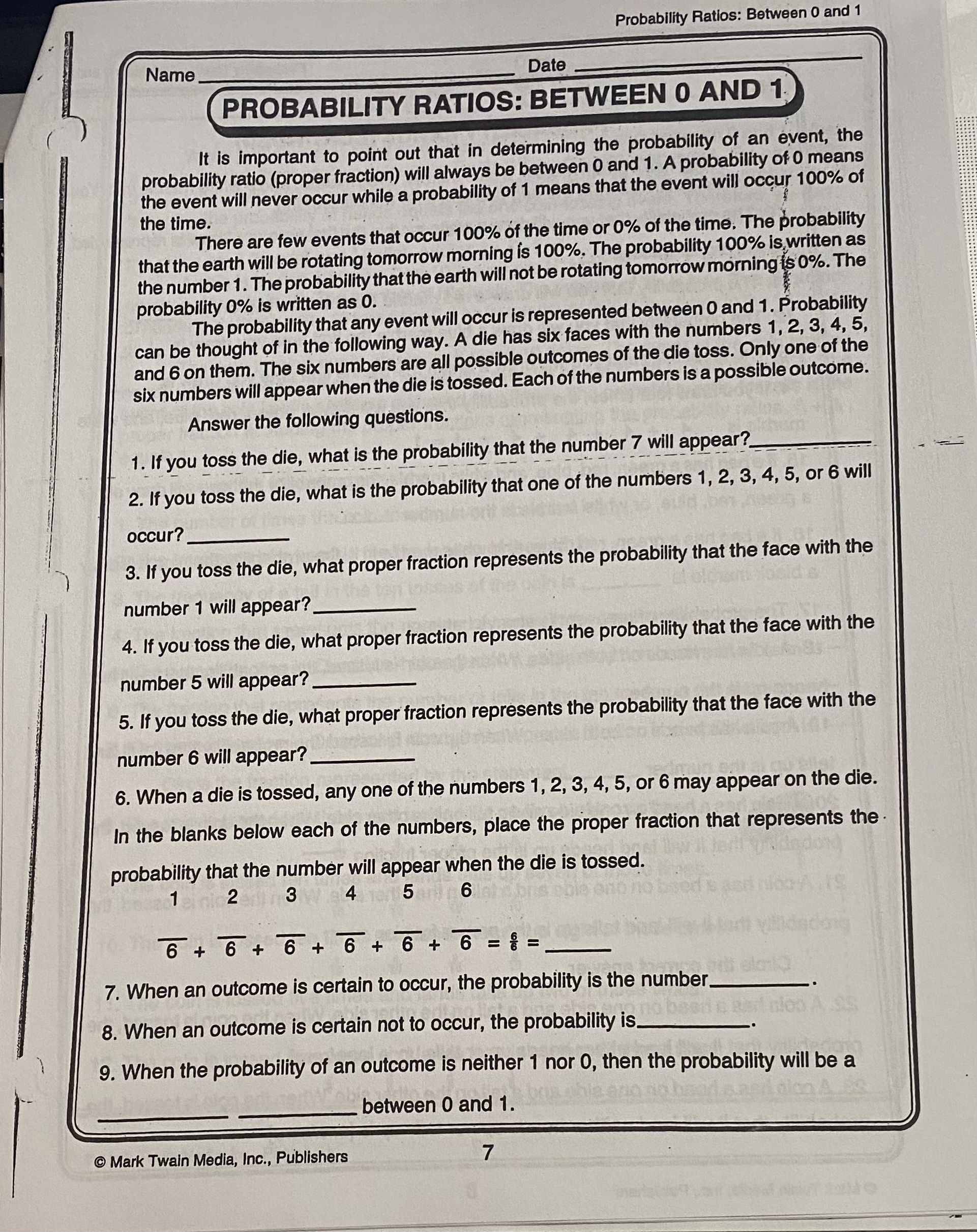
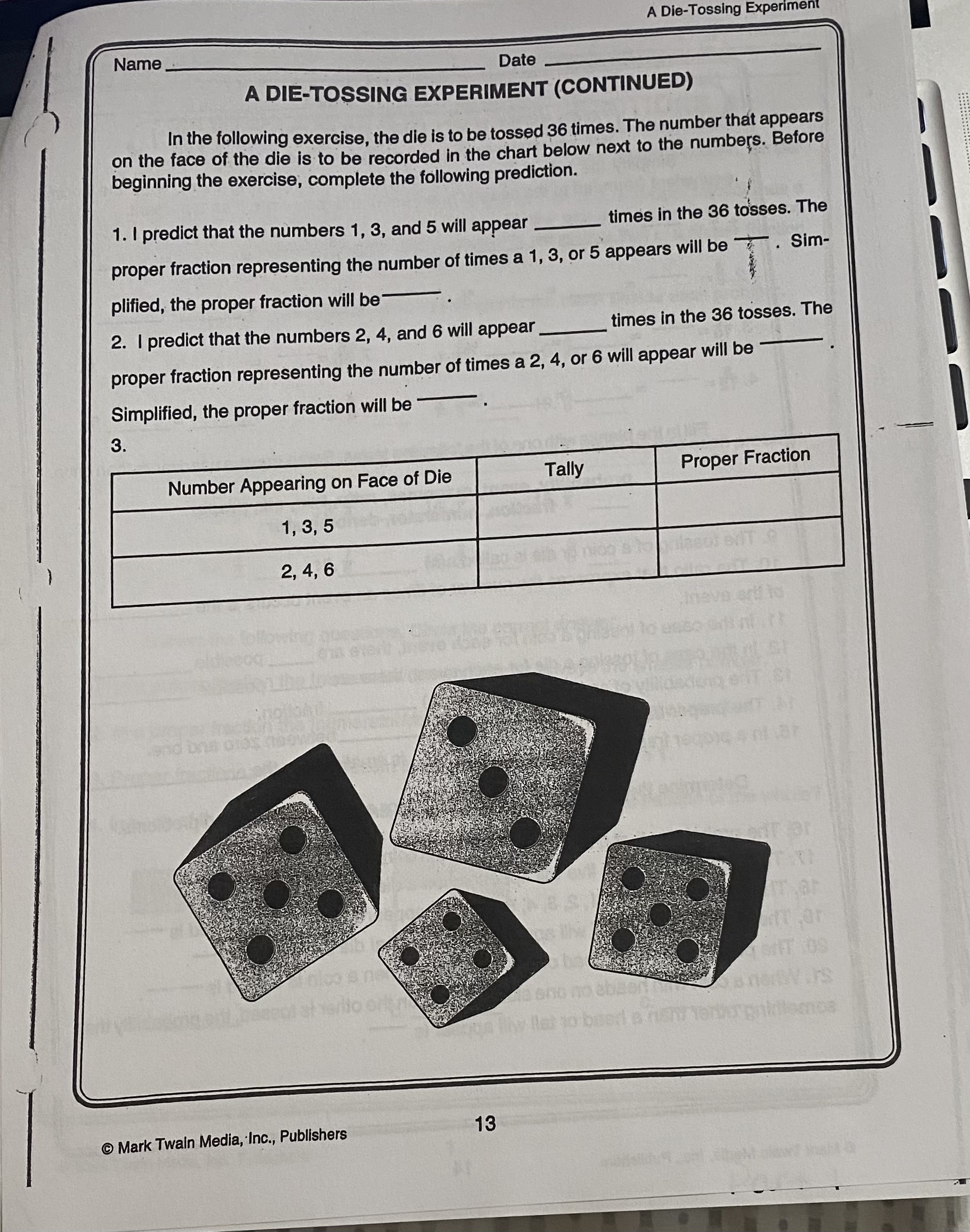
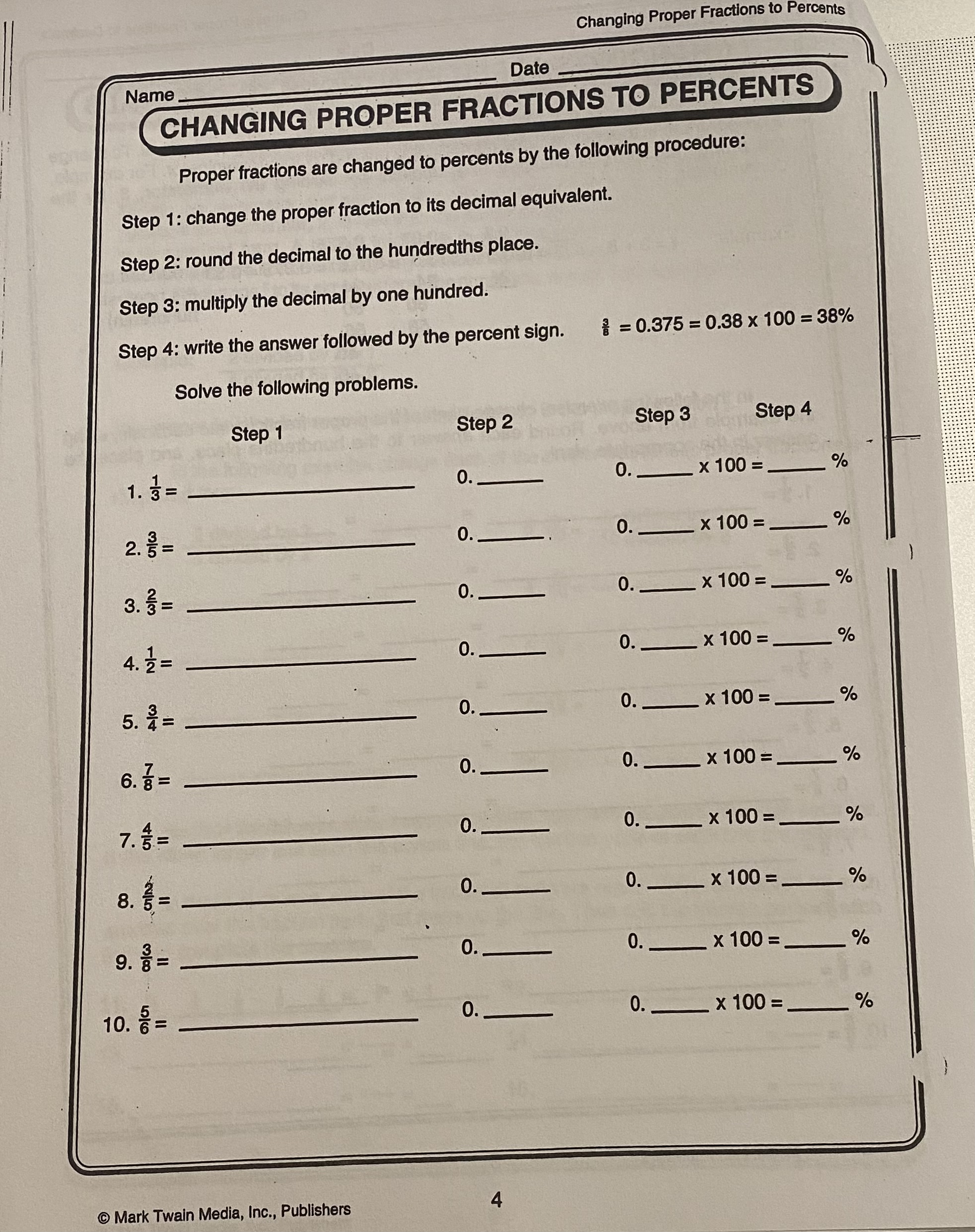
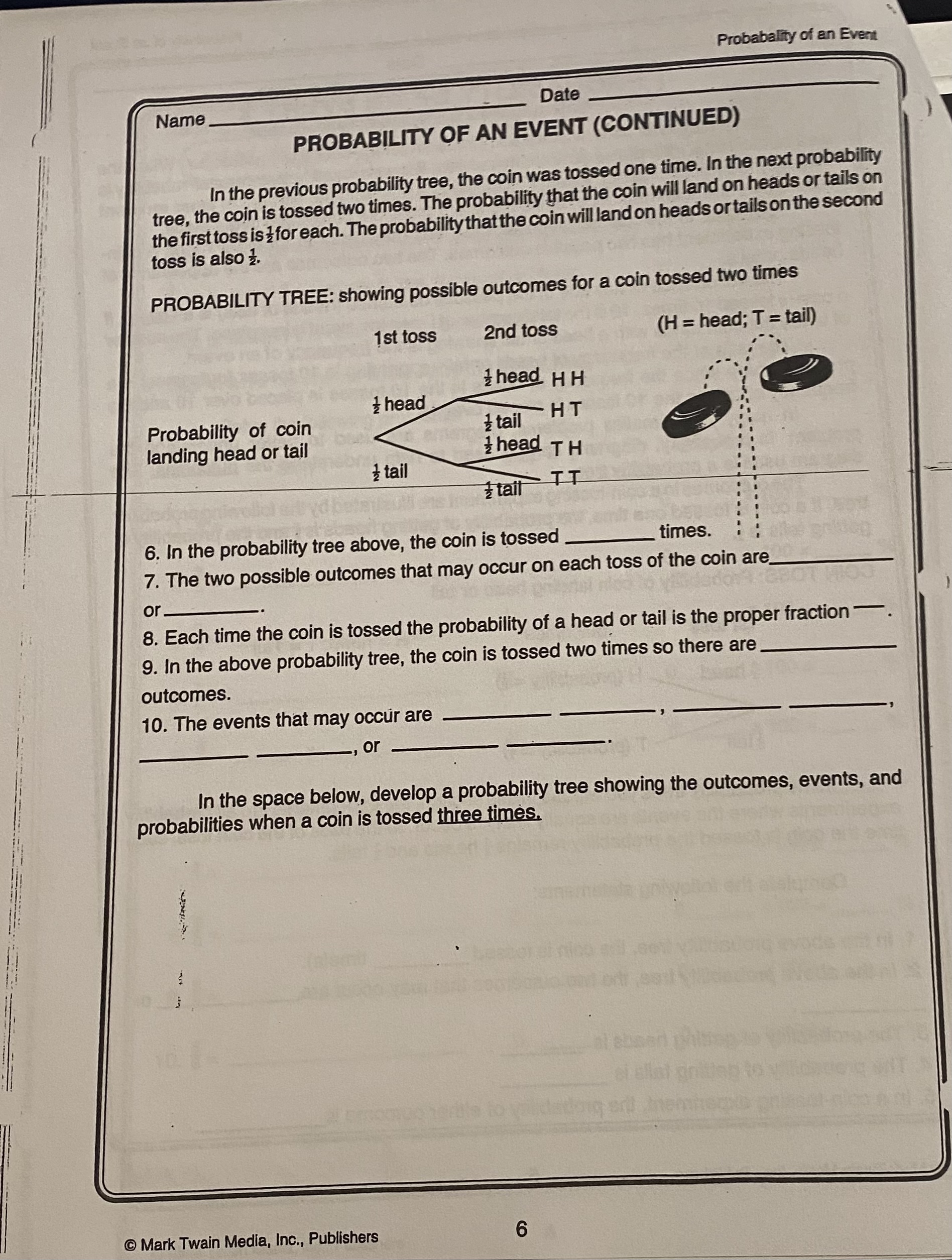
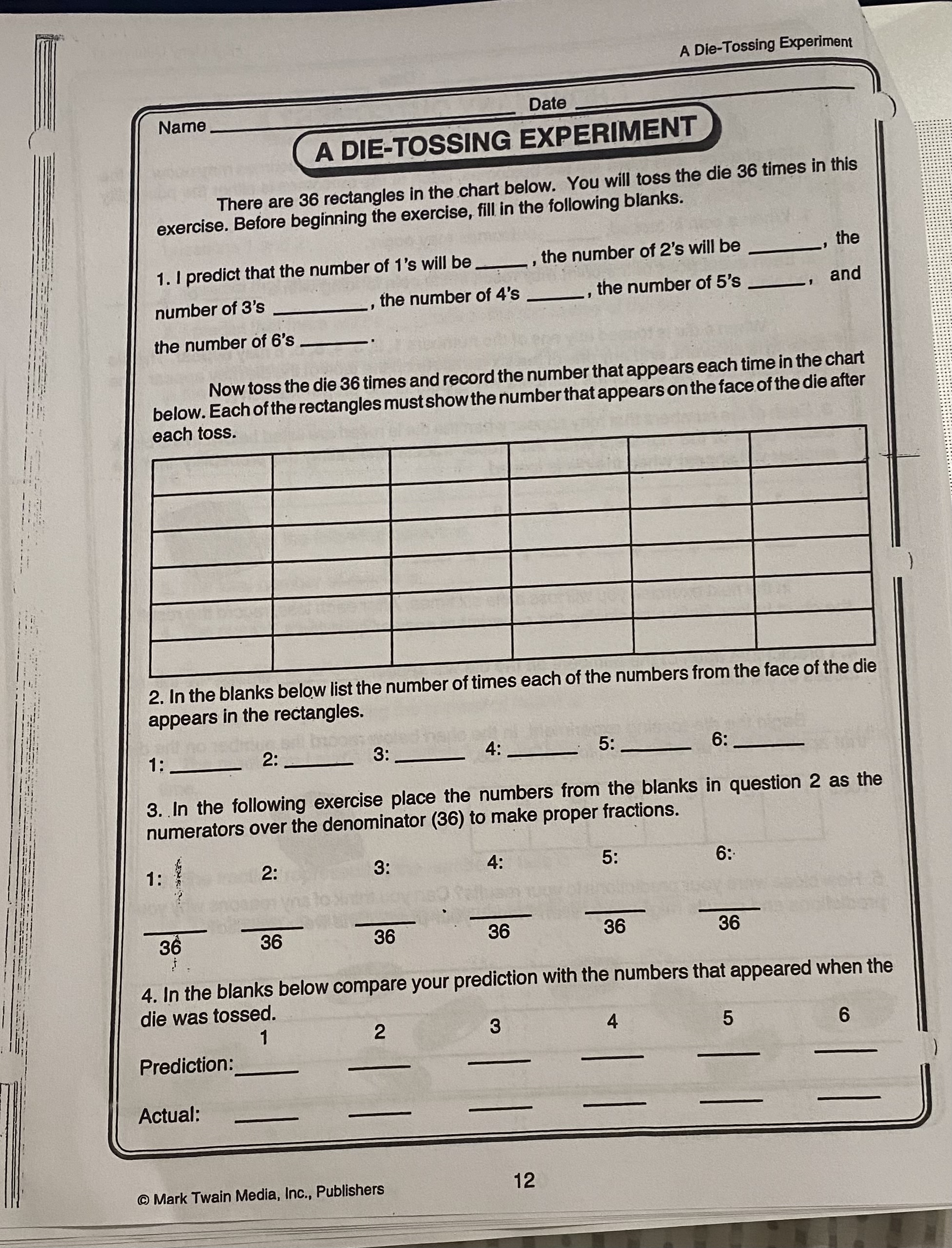
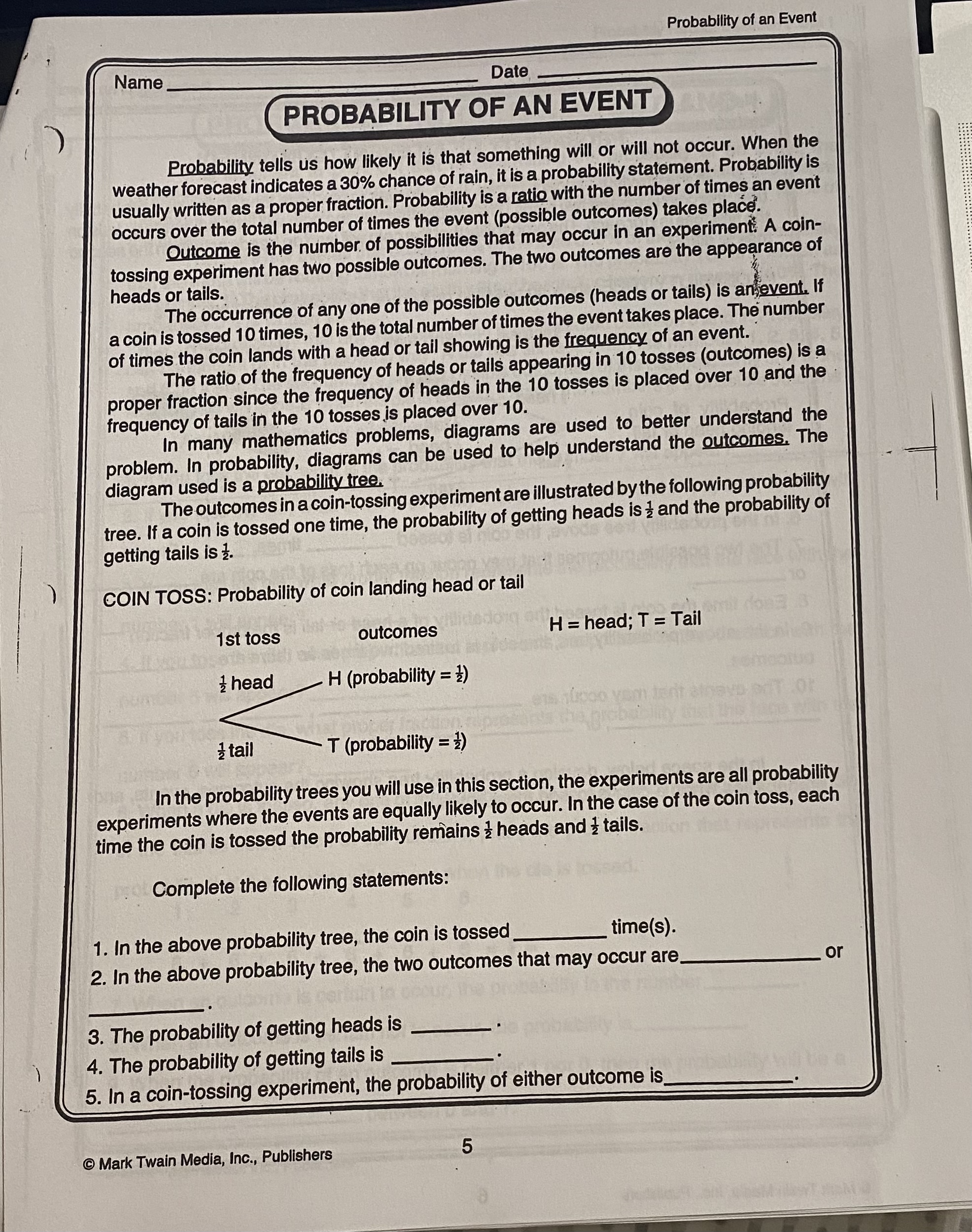
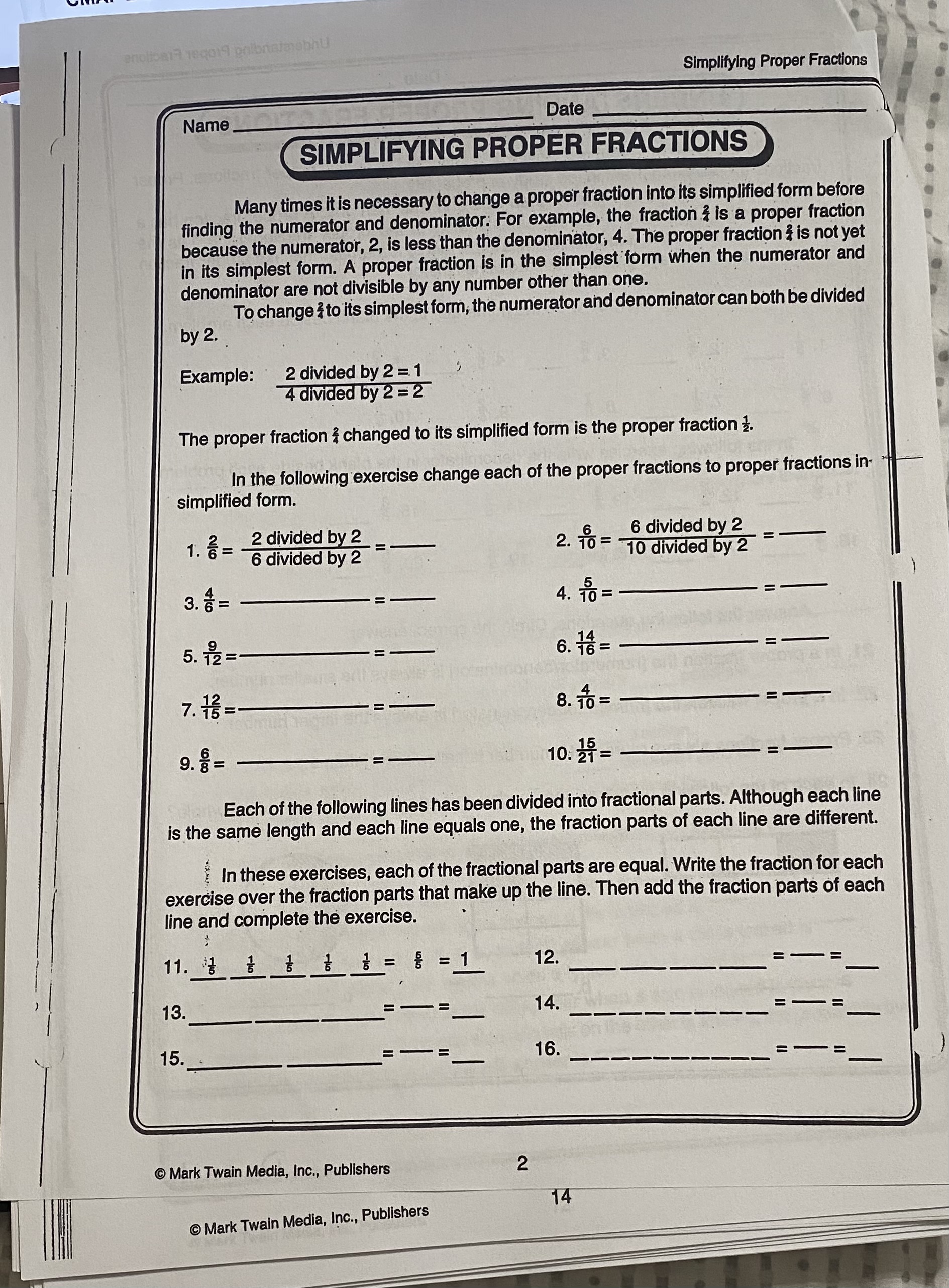
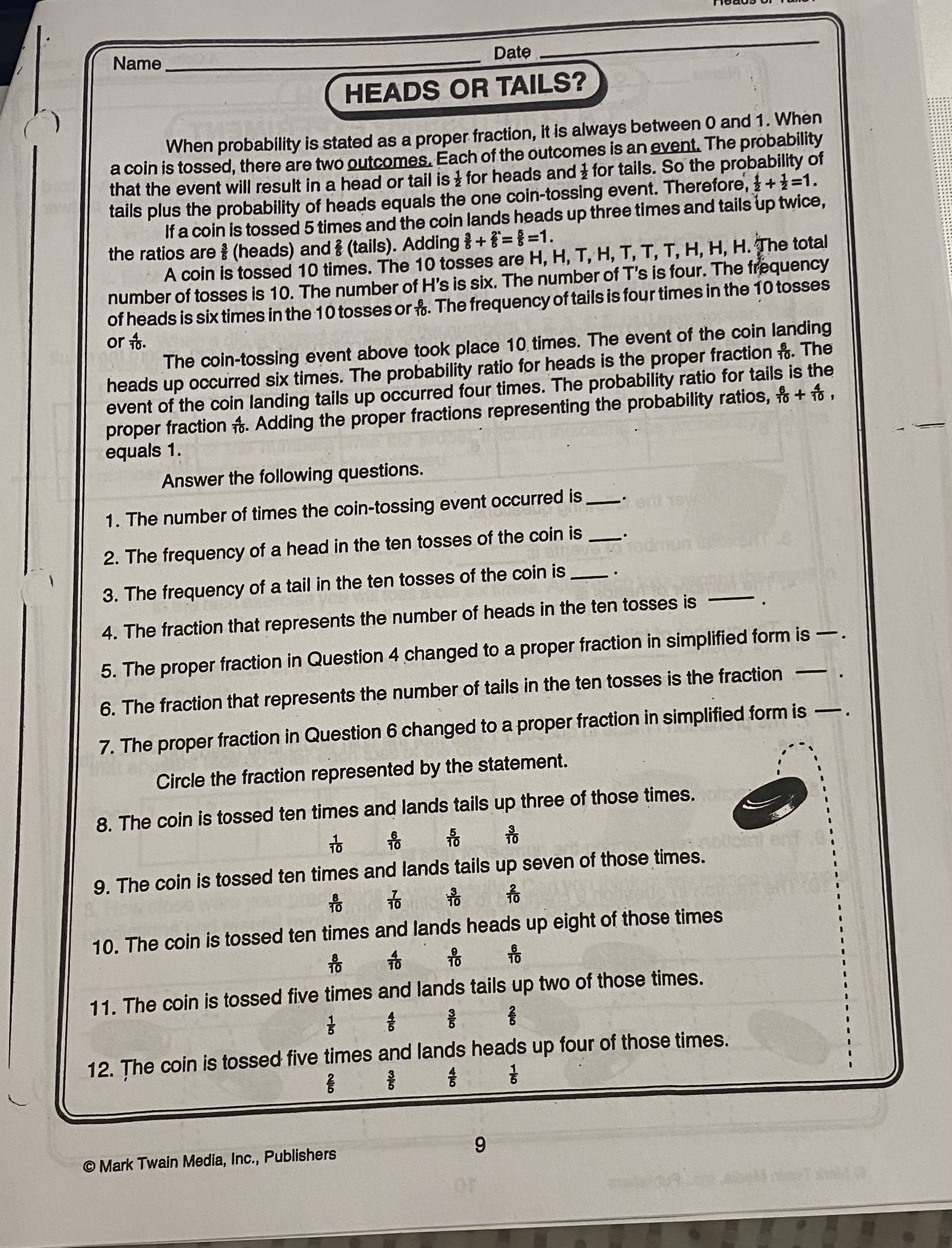
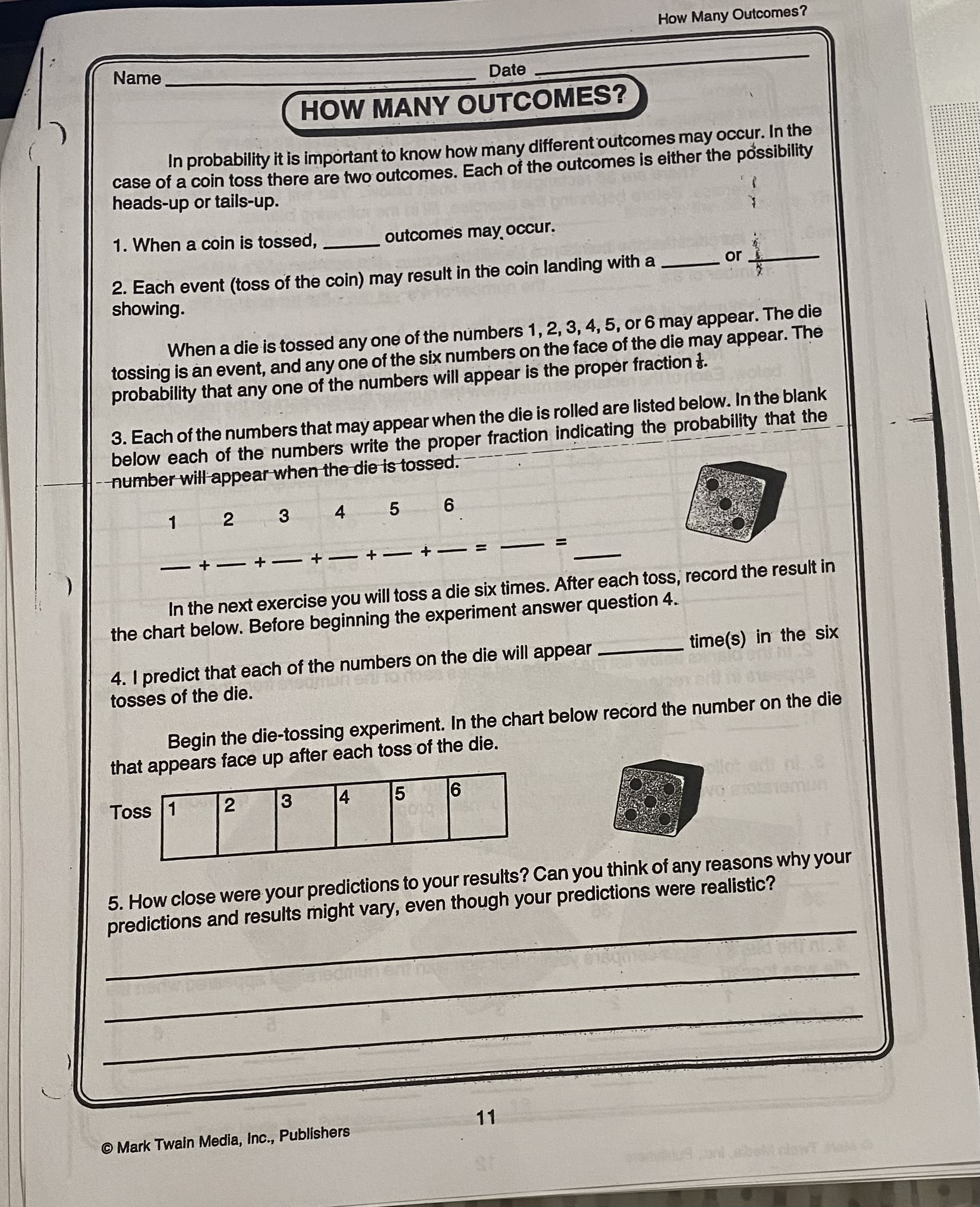
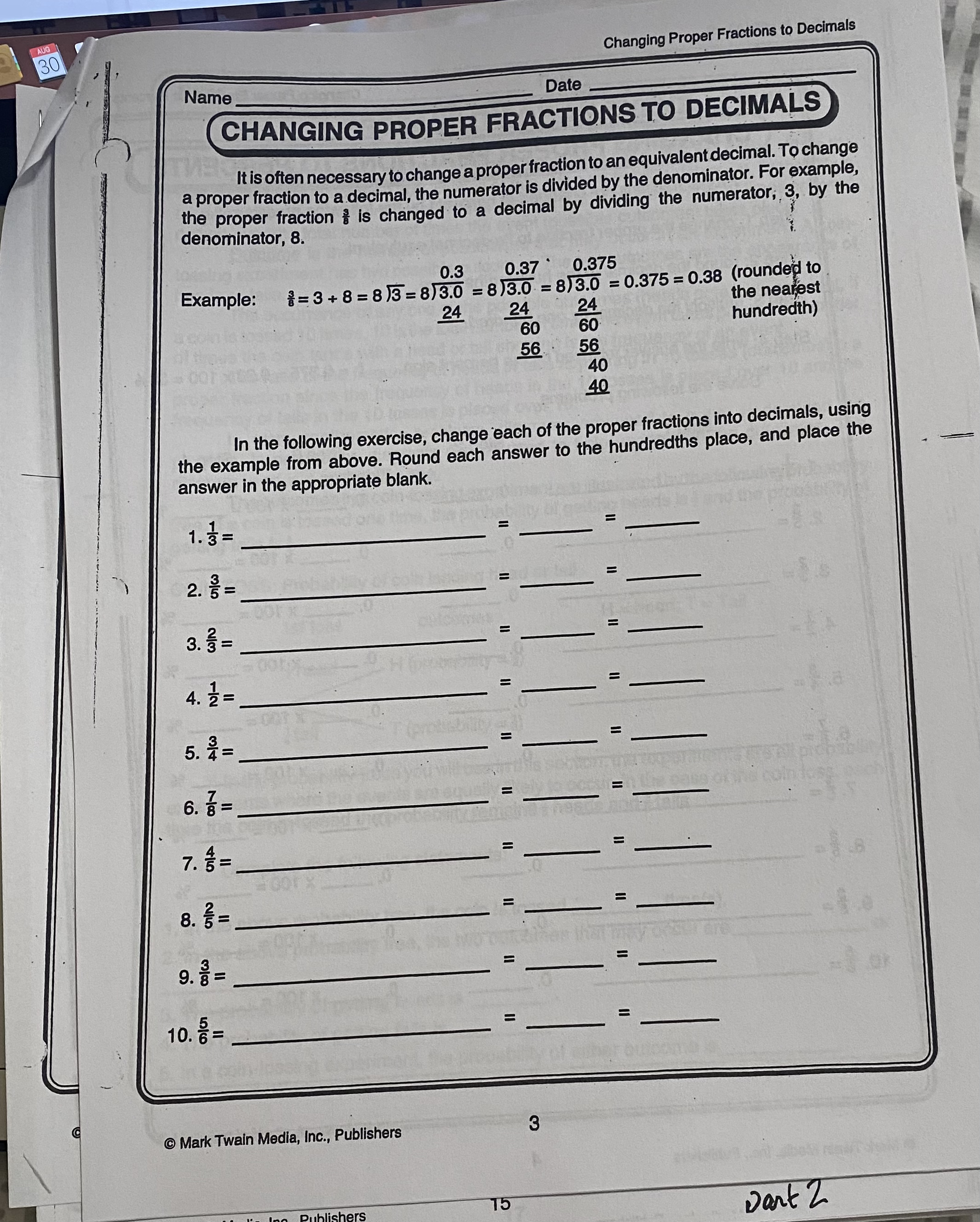
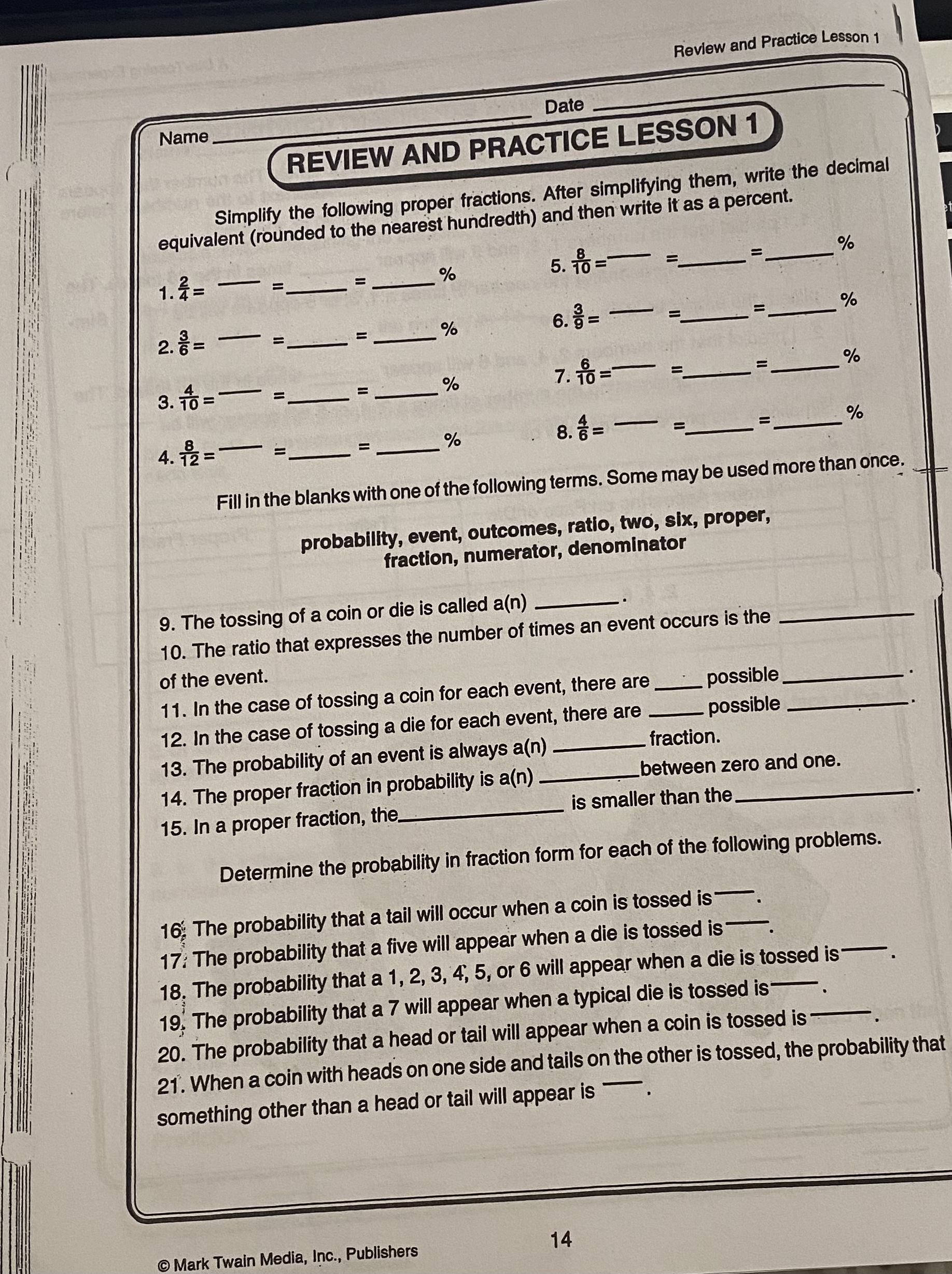
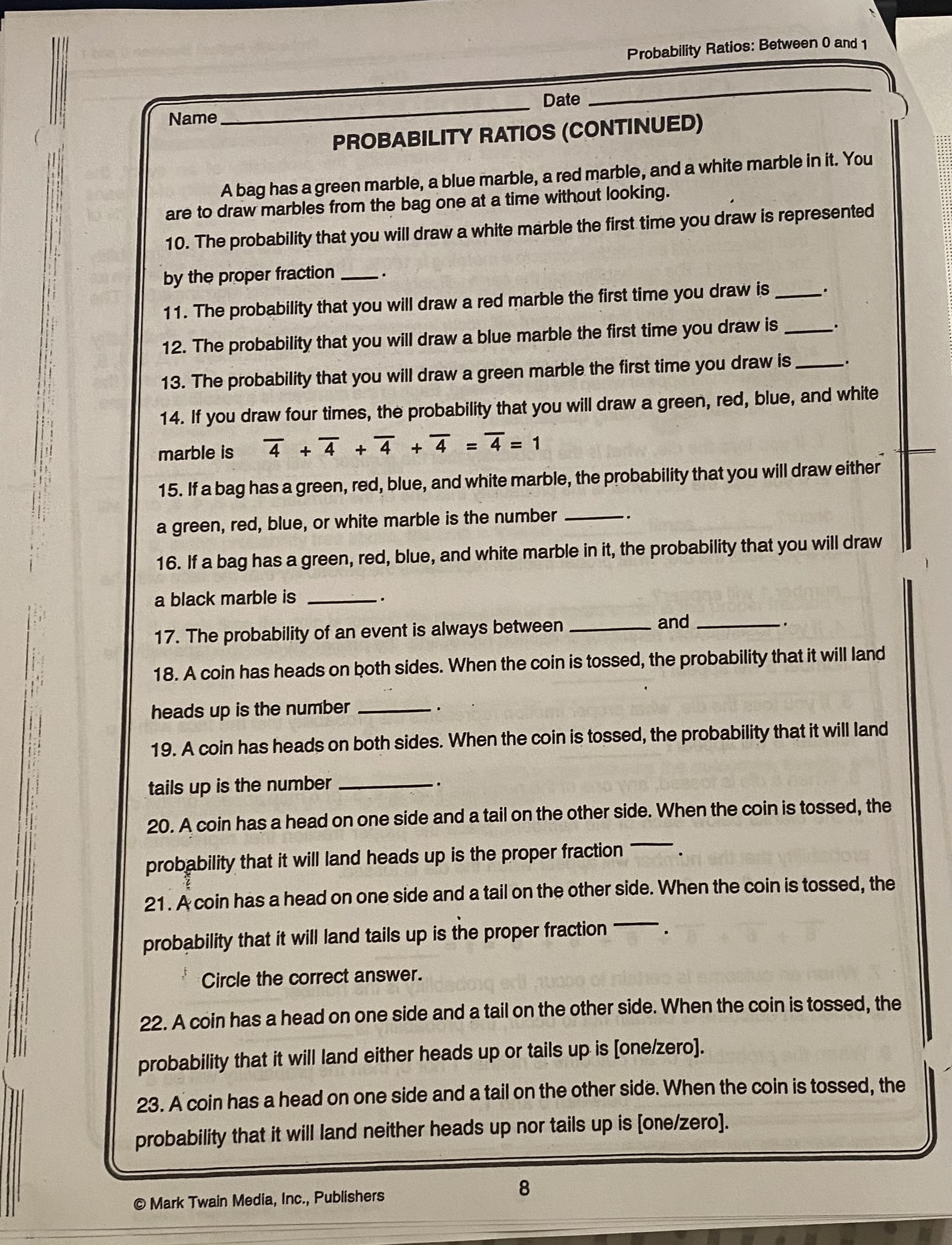
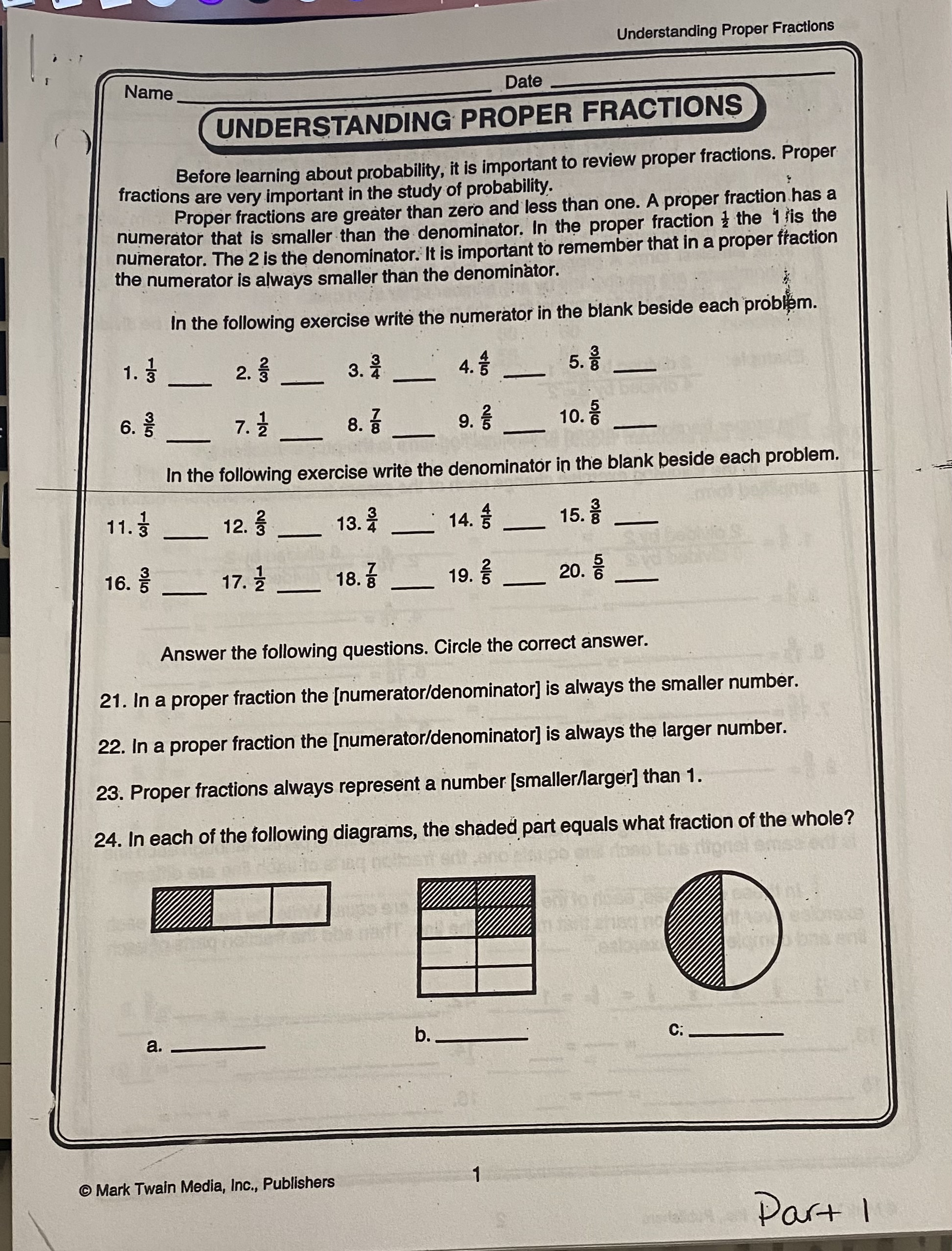
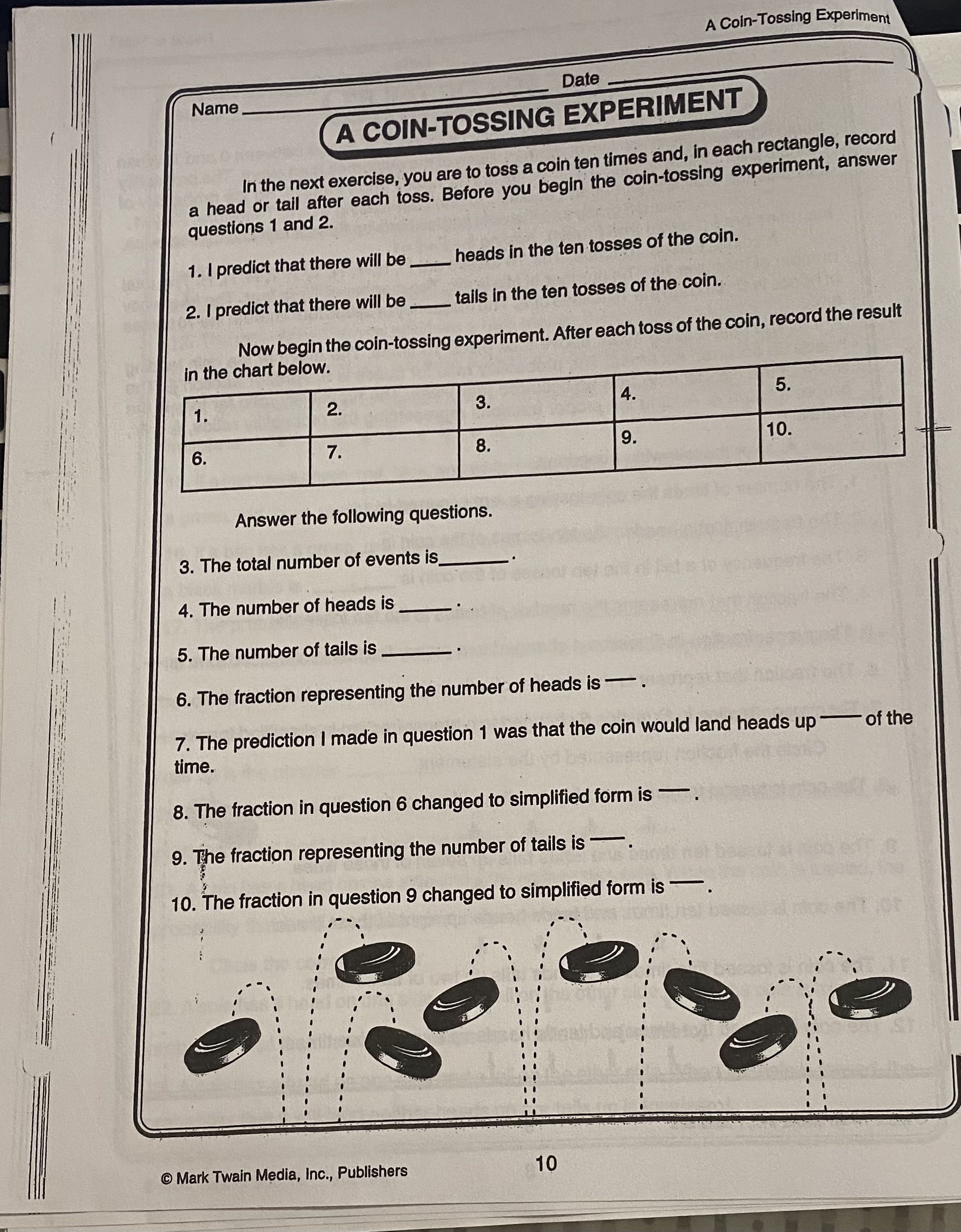
Probability Ratios: Between 0 and 1 Name Date PROBABILITY RATIOS: BETWEEN 0 AND 1 It is important to point out that in determining the probability of an event, the probability ratio (proper fraction) will always be between 0 and 1. A probability of 0 means the event will never occur while a probability of 1 means that the event will occur 100% of the time. There are few events that occur 100% of the time or 0% of the time. The probability that the earth will be rotating tomorrow morning is 100%. The probability 100% is written as the number 1. The probability that the earth will not be rotating tomorrow morning is 0%. The probability 0% is written as 0. The probability that any event will occur is represented between 0 and 1. Probability can be thought of in the following way. A die has six faces with the numbers 1, 2, 3, 4, 5, and 6 on them. The six numbers are all possible outcomes of the die toss. Only one of the six numbers will appear when the die is tossed. Each of the numbers is a possible outcome. Answer the following questions. 1. If you toss the die, what is the probability that the number 7 will appear? 2. If you toss the die, what is the probability that one of the numbers 1, 2, 3, 4, 5, or 6 will occur? 3. If you toss the die, what proper fraction represents the probability that the face with the number 1 will appear? 4. If you toss the die, what proper fraction represents the probability that the face with the number 5 will appear? 5. If you toss the die, what proper fraction represents the probability that the face with the number 6 will appear? 6. When a die is tossed, any one of the numbers 1, 2, 3, 4, 5, or 6 may appear on the die. In the blanks below each of the numbers, place the proper fraction that represents the probability that the number will appear when the die is tossed. 2 3 4 5 6 6 +6 +6+6 +6+ 6 =1= 7. When an outcome is certain to occur, the probability is the number 8. When an outcome is certain not to occur, the probability is. 9. When the probability of an outcome is neither 1 nor 0, then the probability will be a between 0 and 1. Mark Twain Media, Inc., Publishers 7A Die-Tossing Experiment Name Date A DIE-TOSSING EXPERIMENT (CONTINUED) In the following exercise, the die is to be tossed 36 times. The number that appears on the face of the die is to be recorded in the chart below next to the numbers. Before beginning the exercise, complete the following prediction. 1. I predict that the numbers 1, 3, and 5 will appear times in the 36 tosses. The proper fraction representing the number of times a 1, 3, or 5 appears will be . Sim- plified, the proper fraction will be 2. I predict that the numbers 2, 4, and 6 will appear times in the 36 tosses. The proper fraction representing the number of times a 2, 4, or 6 will appear will be Simplified, the proper fraction will be 3. Number Appearing on Face of Die Tally Proper Fraction 1, 3, 5 2, 4, 6 Mark Twain Media, Inc., Publishers 13Changing Proper Fractions to Percents Date Name CHANGING PROPER FRACTIONS TO PERCENTS Proper fractions are changed to percents by the following procedure: Step 1: change the proper fraction to its decimal equivalent. Step 2: round the decimal to the hundredths place. Step 3: multiply the decimal by one hundred. Step 4: write the answer followed by the percent sign. : = 0.375 = 0.38 x 100 = 38% Solve the following problems. Step 1 Step 2 Step 3 Step 4 1 . 3 = 0. 0. x 100 = 0. 0. x 100 = 2. 5= 3. 3 = 0. 0. x 100 = % 4. 0. x 100 = N / - A/W 0. x 100 = 6. 8 = O. 0. x 100 = 0. OilA x 100 = 8. 0. = x 100 = 9. 0. coles x 100 = 0 . 0 . x 100 = % Mark Twain Media, Inc., Publishers 4Probabality of an Event Name Date PROBABILITY OF AN EVENT (CONTINUED) In the previous probability tree, the coin was tossed one time. In the next probability tree, the coin is tossed two times. The probability that the coin will land on heads or tails on the first toss is ? for each. The probability that the coin will land on heads or tails on the second toss is also z. PROBABILITY TREE: showing possible outcomes for a coin tossed two times 1st toss 2nd toss (H = head; T = tail) Z head HH head Probability of coin tail -HT landing head or tail head TH tail 2 tail TT 6. In the probability tree above, the coin is tossed times. 7. The two possible outcomes that may occur on each toss of the coin are. or 8. Each time the coin is tossed the probability of a head or tail is the proper fraction 9. In the above probability tree, the coin is tossed two times so there are outcomes. 10. The events that may occur are or In the space below, develop a probability tree showing the outcomes, events, and probabilities when a coin is tossed three times. Mark Twain Media, Inc., Publishers 6A Die-Tossing Experiment Name Date A DIE-TOSSING EXPERIMENT There are 36 rectangles in the chart below. You will toss the die 36 times in this exercise. Before beginning the exercise, fill in the following blanks. 1. I predict that the number of 1's will be -, the number of 2's will be the number of 3's the number of 4's , the number of 5's and the number of 6's Now toss the die 36 times and record the number that appears each time in the chart below. Each of the rectangles must show the number that appears on the face of the die after each toss. 2. In the blanks below list the number of times each of the numbers from the face of the die appears in the rectangles. 1: 2: 3: 4: 5: 6: 3. .In the following exercise place the numbers from the blanks in question 2 as the numerators over the denominator (36) to make proper fractions. 1: 2: 3: 4: 5: 6: 36 36 36 36 36 36 4. In the blanks below compare your prediction with the numbers that appeared when the die was tossed. 2 3 5 6 Prediction: Actual: @ Mark Twain Media, Inc., Publishers 12Probability of an Event Name Date PROBABILITY OF AN EVENT Probability tells us how likely it is that something will or will not occur. When the weather forecast indicates a 30% chance of rain, it is a probability statement. Probability is usually written as a proper fraction. Probability is a ratio with the number of times an event occurs over the total number of times the event (possible outcomes) takes place. Outcome is the number of possibilities that may occur in an experiment: A coin- tossing experiment has two possible outcomes. The two outcomes are the appearance of heads or tails. The occurrence of any one of the possible outcomes (heads or tails) is an event. If a coin is tossed 10 times, 10 is the total number of times the event takes place. The number of times the coin lands with a head or tail showing is the frequency of an event. The ratio of the frequency of heads or tails appearing in 10 tosses (outcomes) is a proper fraction since the frequency of heads in the 10 tosses is placed over 10 and the frequency of tails in the 10 tosses is placed over 10. In many mathematics problems, diagrams are used to better understand the problem. In probability, diagrams can be used to help understand the outcomes. The diagram used is a probability tree. The outcomes in a coin-tossing experiment are illustrated by the following probability tree. If a coin is tossed one time, the probability of getting heads is 2 and the probability of getting tails is z. COIN TOSS: Probability of coin landing head or tail 1st toss outcomes H = head; T = Tail head H (probability = ) tail ~ T (probability = 2) In the probability trees you will use in this section, the experiments are all probability experiments where the events are equally likely to occur. In the case of the coin toss, each time the coin is tossed the probability remains ? heads and ? tails. Complete the following statements: 1. In the above probability tree, the coin is tossed time (s). 2. In the above probability tree, the two outcomes that may occur are. or 3. The probability of getting heads is 4. The probability of getting tails is 5. In a coin-tossing experiment, the probability of either outcome is @ Mark Twain Media, Inc., PublishersSimplifying Proper Fractions Name Date SIMPLIFYING PROPER FRACTIONS Many times it is necessary to change a proper fraction into its simplified form before finding the numerator and denominator. For example, the fraction ? is a proper fraction because the numerator, 2, is less than the denominator, 4. The proper fraction ? is not yet in its simplest form. A proper fraction is in the simplest form when the numerator and denominator are not divisible by any number other than one. To change ? to its simplest form, the numerator and denominator can both be divided by 2. Example: 2 divided by 2 = 1 4 divided by 2 = 2 The proper fraction ? changed to its simplified form is the proper fraction . In the following exercise change each of the proper fractions to proper fractions in- simplified form. 1. 6= . 2 divided by 2 2. 70 = 6 divided by 2 10 divided by 2 - = 6 divided by 2 3. 6 = 4. 10 = 5. 12 = 6. 16 = 7. 15 = 8. 10 = 9. 8 = 10. 27= Each of the following lines has been divided into fractional parts. Although each line is the same length and each line equals one, the fraction parts of each line are different. In these exercises, each of the fractional parts are equal. Write the fraction for each exercise over the fraction parts that make up the line. Then add the fraction parts of each line and complete the exercise. 11. 8 8 8 8 = 8 =1 12. 13 14. 15 16. Mark Twain Media, Inc., Publishers 2 14 Mark Twain Media, Inc., PublishersName Date HEADS OR TAILS? When probability is stated as a proper fraction, it is always between 0 and 1. When a coin is tossed, there are two outcomes. Each of the outcomes is an event. The probability that the event will result in a head or tail is & for heads and > for tails. So the probability of tails plus the probability of heads equals the one coin-tossing event. Therefore, $ + 1=1. If a coin is tossed 5 times and the coin lands heads up three times and tails up twice, the ratios are : (heads) and ? (tails). Adding 8 + 1 = $ =1. A coin is tossed 10 times. The 10 tosses are H, H, T, H, T, T, T, H, H, H. The total number of tosses is 10. The number of H's is six. The number of T's is four. The frequency of heads is six times in the 10 tosses or %%. The frequency of tails is four times in the 10 tosses or 76. The coin-tossing event above took place 10 times. The event of the coin landing heads up occurred six times. The probability ratio for heads is the proper fraction %. The event of the coin landing tails up occurred four times. The probability ratio for tails is the proper fraction 7%. Adding the proper fractions representing the probability ratios, fo + fo , equals 1. Answer the following questions. 1. The number of times the coin-tossing event occurred is . 2. The frequency of a head in the ten tosses of the coin is 3. The frequency of a tail in the ten tosses of the coin is 4. The fraction that represents the number of heads in the ten tosses is 5. The proper fraction in Question 4 changed to a proper fraction in simplified form is 6. The fraction that represents the number of tails in the ten tosses is the fraction 7. The proper fraction in Question 6 changed to a proper fraction in simplified form is Circle the fraction represented by the statement. 8. The coin is tossed ten times and lands tails up three of those times. To To To 9. The coin is tossed ten times and lands tails up seven of those times. To To to 10. The coin is tossed ten times and lands heads up eight of those times To To 11. The coin is tossed five times and lands tails up two of those times. 12. The coin is tossed five times and lands heads up four of those times. Mark Twain Media, Inc., Publishers 9How Many Outcomes? Name Date HOW MANY OUTCOMES? In probability it is important to know how many different outcomes may occur. In the case of a coin toss there are two outcomes. Each of the outcomes is either the possibility heads-up or tails-up. 1. When a coin is tossed, outcomes may occur. 2. Each event (toss of the coin) may result in the coin landing with a or _ showing. When a die is tossed any one of the numbers 1, 2, 3, 4, 5, or 6 may appear. The die tossing is an event, and any one of the six numbers on the face of the die may appear. The probability that any one of the numbers will appear is the proper fraction . 3. Each of the numbers that may appear when the die is rolled are listed below. In the blank below each of the numbers write the proper fraction indicating the probability that the number will appear when the die is tossed. 2 3 In the next exercise you will toss a die six times. After each toss, record the result in the chart below. Before beginning the experiment answer question 4. 4. I predict that each of the numbers on the die will appear time(s) in the six tosses of the die. Begin the die-tossing experiment. In the chart below record the number on the die that appears face up after each toss of the die. Toss 5. How close were your predictions to your results? Can you think of any reasons why your predictions and results might vary, even though your predictions were realistic? Mark Twain Media, Inc., Publishers 11AUG 30 Changing Proper Fractions to Decimals Name _ Date CHANGING PROPER FRACTIONS TO DECIMALS It is often necessary to change a proper fraction to an equivalent decimal. To change a proper fraction to a decimal, the numerator is divided by the denominator. For example, the proper fraction : is changed to a decimal by dividing the numerator, 3, by the denominator, 8. 0.3 0.37 ' 0.375 Example: {= 3 + 8 = 8 )3 = 8)3.0 = 8)3.0 = 8)3.0 = 0.375 = 0.38 (rounded to 24 24 24 the nearest 60 60 hundredth) 56 56 40 40 In the following exercise, change each of the proper fractions into decimals, using the example from above. Round each answer to the hundredths place, and place the answer in the appropriate blank. 1. 3 = 2. 5= WIN 4. 2= 6. 8 = 7. 6 = 8. 5= 9. 8 = 10. 6 = Mark Twain Media, Inc., Publishers 3 75 want 2Review and Practice Lesson 1 Name Date REVIEW AND PRACTICE LESSON 1 Simplify the following proper fractions. After simplifying them, write the decimal equivalent (rounded to the nearest hundredth) and then write it as a percent. 1. 4 = % 5. 70 = % 2. 6= 6. 0= 3. 10 = % 7. TO = % 4. 72 = % 8. 6= % Fill in the blanks with one of the following terms. Some may be used more than once. probability, event, outcomes, ratio, two, six, proper, fraction, numerator, denominator 9. The tossing of a coin or die is called a(n) 10. The ratio that expresses the number of times an event occurs is the of the event 11. In the case of tossing a coin for each event, there are possible 12. In the case of tossing a die for each event, there are possible 13. The probability of an event is always a(n) . fraction. 14. The proper fraction in probability is a(n) between zero and one. 15. In a proper fraction, the. is smaller than the Determine the probability in fraction form for each of the following problems. 16: The probability that a tail will occur when a coin is tossed is 17: The probability that a five will appear when a die is tossed is 18. The probability that a 1, 2, 3, 4, 5, or 6 will appear when a die is tossed is 19. The probability that a 7 will appear when a typical die is tossed is 20. The probability that a head or tail will appear when a coin is tossed is 21. When a coin with heads on one side and tails on the other is tossed, the probability that something other than a head or tail will appear is . Mark Twain Media, Inc., Publishers 14Probability Ratios: Between 0 and 1 Name Date PROBABILITY RATIOS (CONTINUED) A bag has a green marble, a blue marble, a red marble, and a white marble in it. You are to draw marbles from the bag one at a time without looking. 10. The probability that you will draw a white marble the first time you draw is represented by the proper fraction 11. The probability that you will draw a red marble the first time you draw is 12. The probability that you will draw a blue marble the first time you draw is 13. The probability that you will draw a green marble the first time you draw is 14. If you draw four times, the probability that you will draw a green, red, blue, and white marble is 4 + 4 + 4 + 4 = 4 =1 15. If a bag has a green, red, blue, and white marble, the probability that you will draw either a green, red, blue, or white marble is the number 16. If a bag has a green, red, blue, and white marble in it, the probability that you will draw a black marble is 17. The probability of an event is always between and 18. A coin has heads on both sides. When the coin is tossed, the probability that it will land heads up is the number 19. A coin has heads on both sides. When the coin is tossed, the probability that it will land tails up is the number 20. A coin has a head on one side and a tail on the other side. When the coin is tossed, the probability that it will land heads up is the proper fraction 21. A coin has a head on one side and a tail on the other side. When the coin is tossed, the probability that it will land tails up is the proper fraction - Circle the correct answer. 22. A coin has a head on one side and a tail on the other side. When the coin is tossed, the probability that it will land either heads up or tails up is [one/zero]. 23. A coin has a head on one side and a tail on the other side. When the coin is tossed, the probability that it will land neither heads up nor tails up is [one/zero]. Mark Twain Media, Inc., PublishersUnderstanding Proper Fractions Name Date UNDERSTANDING PROPER FRACTIONS Before learning about probability, it is important to review proper fractions. Proper fractions are very important in the study of probability. Proper fractions are greater than zero and less than one. A proper fraction has a numerator that is smaller than the denominator. In the proper fraction ? the 1 is the numerator. The 2 is the denominator. It is important to remember that in a proper fraction the numerator is always smaller than the denominator. In the following exercise write the numerator in the blank beside each problem. 1 . 3 2. 5 6. 7 . 2 8. 8 9 . 5 10 . 6 In the following exercise write the denominator in the blank beside each problem. 11 . 3 12. 13 . S 14. 5 15 . 8 16. 17. 2 18 . 8 19. 5 20. 6 Answer the following questions. Circle the correct answer. 21. In a proper fraction the [numerator/denominator] is always the smaller number. 22. In a proper fraction the [numerator/denominator] is always the larger number. 23. Proper fractions always represent a number [smaller/larger] than 1. 24. In each of the following diagrams, the shaded part equals what fraction of the whole? a. b. C: _ Mark Twain Media, Inc., Publishers Part 1A Coin-Tossing Experiment Date Name A COIN-TOSSING EXPERIMENT In the next exercise, you are to toss a coin ten times and, in each rectangle, record a head or tail after each toss. Before you begin the coin-tossing experiment, answer questions 1 and 2. 1. I predict that there will be heads in the ten tosses of the coin. 2. I predict that there will be tails in the ten tosses of the coin. Now begin the coin-tossing experiment. After each toss of the coin, record the result in the chart below. 1. 2. 3. 4. 5 6. 7. 8. 9. 10. Answer the following questions. 3. The total number of events is. 4. The number of heads is 5. The number of tails is 6. The fraction representing the number of heads is 7. The prediction I made in question 1 was that the coin would land heads up of the time. 8. The fraction in question 6 changed to simplified form is 9. The fraction representing the number of tails is 10. The fraction in question 9 changed to simplified form is -. Mark Twain Media, Inc., Publishers 10









 Study Help