







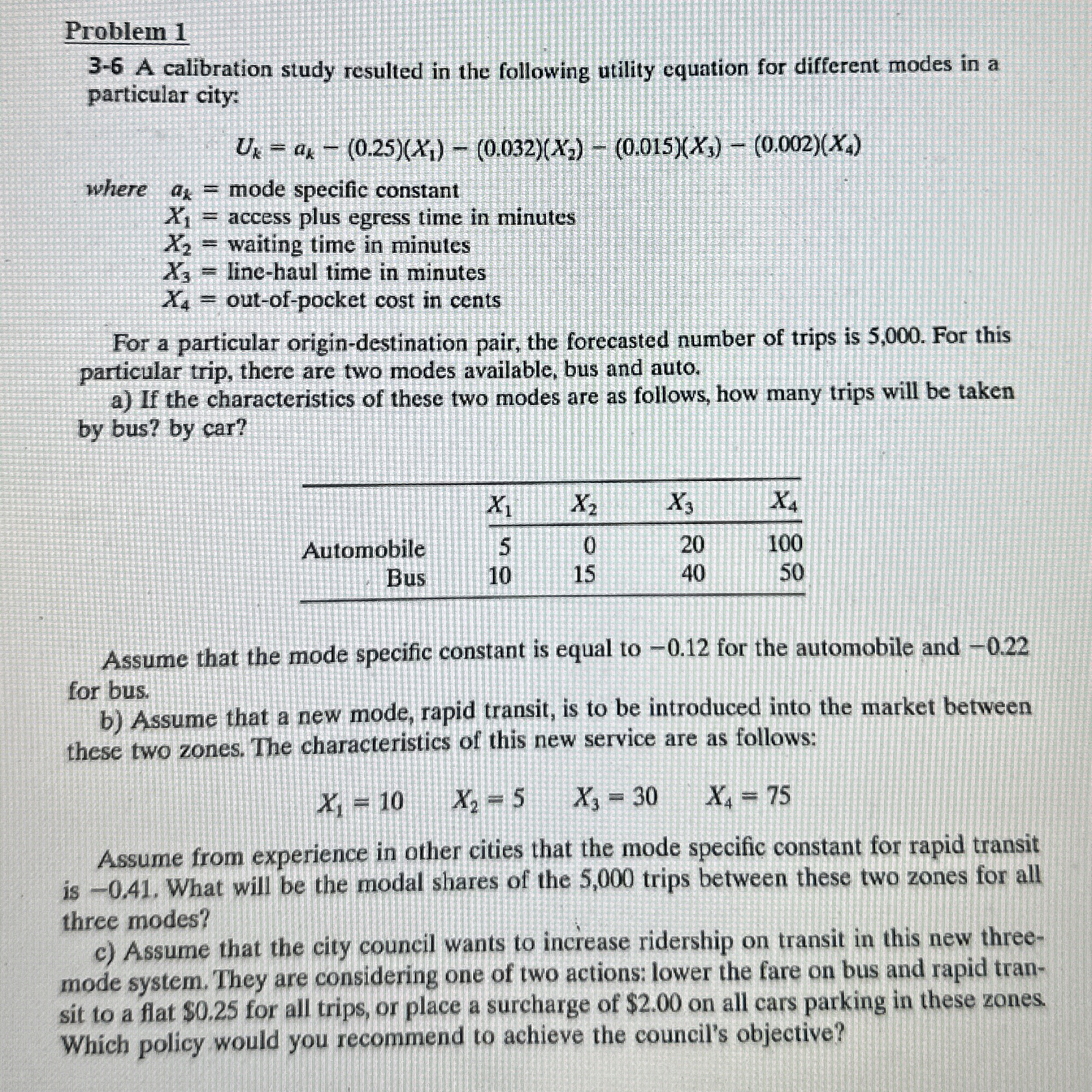
Question: Problem 1 3 - 6 A calibration study resulted in the following utility equation for different modes in a particular city: U k = a
Problem
A calibration study resulted in the following utility equation for different modes in a
particular city:
where mode specific constant
access plus egress time in minutes
waiting time in minutes
linehaul time in minutes
outofpocket cost in cents
For a particular origindestination pair, the forecasted number of trips is For this
particular trip, there are two modes available, bus and auto.
a If the characteristics of these two modes are as follows, how many trips will be taken
by bus? by car?
Assume that the mode specific constant is equal to for the automobile and
for bus.
b Assume that a new mode, rapid transit, is to be introduced into the market between
these two zones. The characteristics of this new service are as follows:
Assume from experience in other cities that the mode specific constant for rapid transit
is What will be the modal shares of the trips between these two zones for all
three modes?
c Assume that the city council wants to increase ridership on transit in this new three
mode system. They are considering one of two actions: lower the fare on bus and rapid tran
sit to a flat $ for all trips, or place a surcharge of $ on all cars parking in these zones.
Which policy would you recommend to achieve the council's objective?
Step by Step Solution
There are 3 Steps involved in it
1 Expert Approved Answer
Step: 1 Unlock

Question Has Been Solved by an Expert!
Get step-by-step solutions from verified subject matter experts
Step: 2 Unlock
Step: 3 Unlock
 Study Help