







Question: Problem 1 (30 points, 10 points each) Convert the following decimal numbers into (a) 8-bit, (b) 16-bit, and (c) 32-bit binary numbers. For negative numbers,
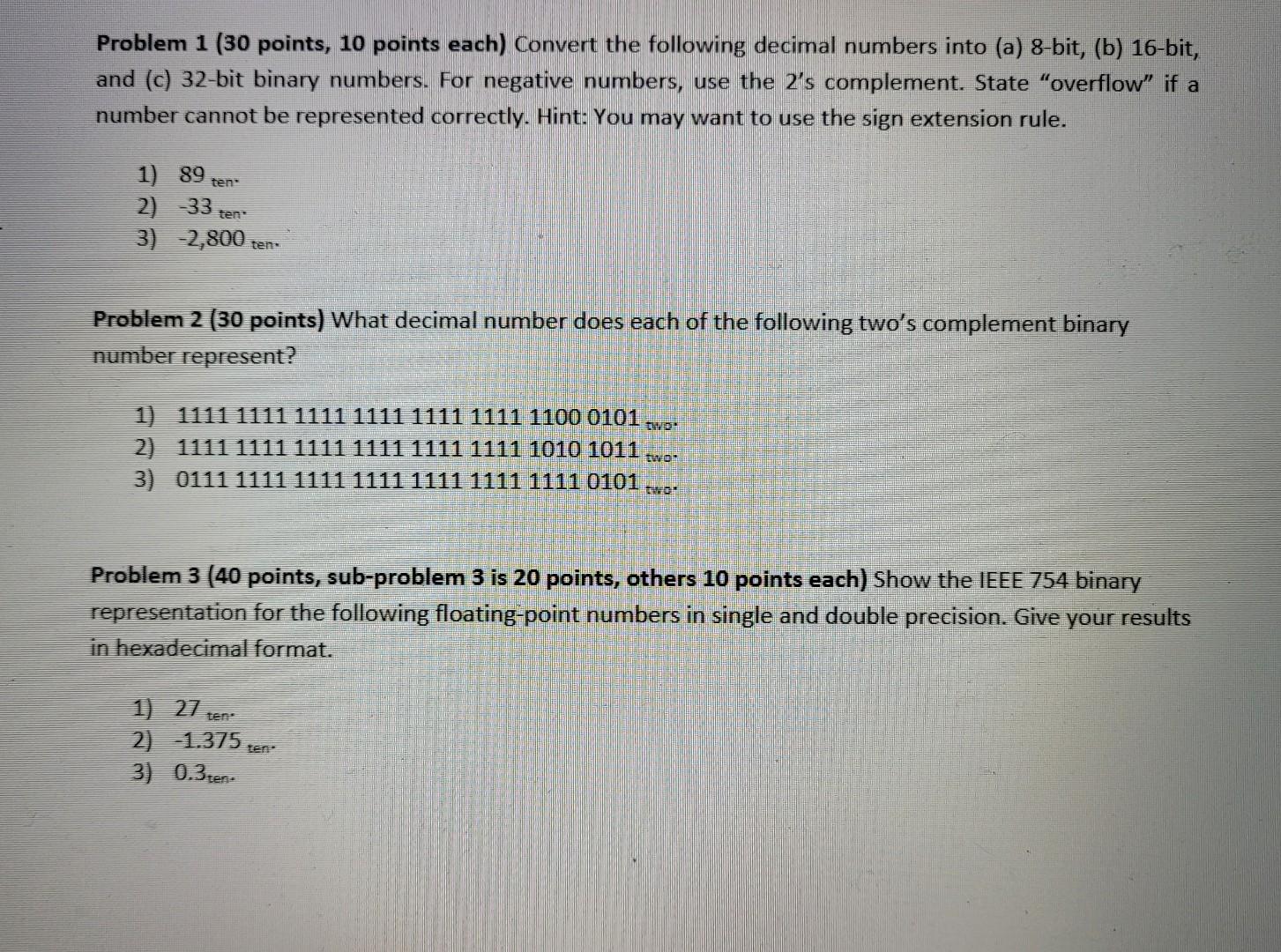
Problem 1 (30 points, 10 points each) Convert the following decimal numbers into (a) 8-bit, (b) 16-bit, and (c) 32-bit binary numbers. For negative numbers, use the 2's complement. State "overflow if a number cannot be represented correctly. Hint: You may want to use the sign extension rule. ten 189 2) -33 ten: 3) 2,800 ten Problem 2 (30 points) What decimal number does each of the following two's complement binary number represent? 13 1) 1111 1111 1111 1111 1111 1111 1100 0101 2) 1111 1111 1111 1111 1111 1111 1010 1011 3) 0111 1111 1111 1111 1111 1111 1111 0101 OM os Problem 3 (40 points, sub-problem 3 is 20 points, others 10 points each) Show the IEEE 754 binary representation for the following floating-point numbers in single and double precision. Give your results in hexadecimal format. 1) 27 ten 2) 1.375 3) 0.3ter
Step by Step Solution
There are 3 Steps involved in it

Get step-by-step solutions from verified subject matter experts
 Study Help