







Question: Problem 1: A hospital is evaluating a rapid test for detecting a viral infection. The following table summarizes test results from 885 patients, some of
Problem 1:A hospital is evaluating a rapid test for detecting a viral infection. The following table summarizes test results from 885 patients, some of whom actually have the infection.
| Positive Test | Negative Test | Total | |
| Infected | 162 | 18 | 180 |
| Not Infected | 96 | 609 | 705 |
| Total | 258 | 627 | 885 |
a. Given the information in the table above, constructa tree diagram for this viral infection diagnostic test showing the probabilities associated with each.
b. What is the probability that a randomly selected patient tests positive? Show your work and round the answer to 4 decimal places.
c. What is the probability that a randomly selected patient tests negative given that they are not infected with the virus? Show your work and round the answer to 4 decimal places.
d. Calculate the negative predictive value. Show your work and round the answer to 4 decimal places. Explain what this means in the context of this problem.Be specific!
e. Calculate the sensitivity of this test. Show your work and round the answer to 4 decimal places. Explain what this means in the context of this problem.Be specific!
Problem 2:The following pregnancy-related statistics were provided by the National Center for Health Statistics as part of their 2022 final report. (https://www.cdc.govchsvss/births.htm). These sample statistics are estimates for thepopulation parameters.
- Mean age of mothers at time of first birth: 27.4 years old; standard deviation: 4.8 years
- Proportion of mothers who smoked cigarettes at any time during pregnancy : 0.0370
a. Given the mean age of mothers at time of first birth above, representing an estimate for the population mean, describe the sampling distribution of the sample mean age of mothers at time of first birth if n = 75 in the long run (as more and more samples of 75 women are taken and the process is repeated). As a response to this problem, address the following questions:
- What would the shape of the sampling distribution of the sample mean look like in the long run?
- What would the mean of the distribution of sample means be?
- What would the standard deviation of the sample means be? (Calculate this using the formula provided in the module). Round to four decimal places (ex: 0.5647)
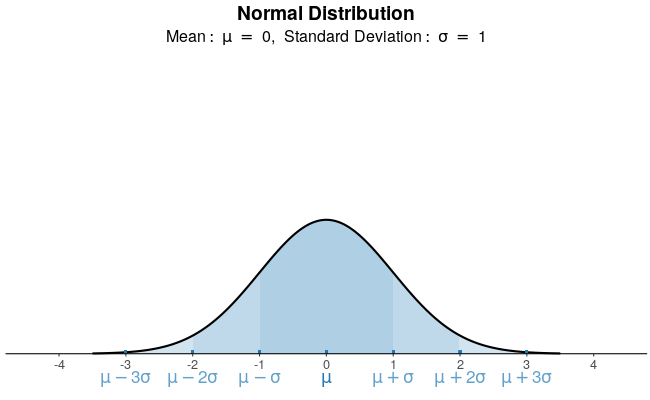
b. Given the mean and standard deviation you calculated for the sampling distribution in part a (mean age of mothers at time of first birth), draw a bell curve and label +/- 3 standard deviations of the sample mean. (2 points)
c. Given the proportion of mothers who smoked cigarettes at any time during pregnancyabove representing an estimate for the populationproportion, describe the resulting sampling distribution of the sample proportion for the variable if we were to take repeated samples of 75 women who gave birth in the last year. As a response to this problem, address the following questions:
- What would the shape of the sampling distribution of the sample proportion look like in the long run?
- What would the mean (i.e. the grand mean) of the distribution of sample proportions be?
- What would the standard deviation of the sample proportions be? (Calculate this using the formula provided in the module).Round to four decimal places (ex: 0.5647
d. Given the mean and standard deviation you calculated for the sampling distribution in part c (proportion of mothers who smoked cigarettes at any time during pregnancy), draw a bell curve and label +/- 3 standard deviations of the sample proportion. In order to receive full credit for this problem your response must also be clear and accurate.
e. Use the DCMP Normal Distribution WebApp (https://dcmpdatatools.utdanacenter.orgormaldist/) to calculate the probabilities/percentages and address the questions below. Please include a screenshot of your results or show your calculations, as well as state the answer.
- If we were to sample 75 women who gave birth in the last year, what is the probability that they would be over the age of 28?
Step by Step Solution
There are 3 Steps involved in it

Get step-by-step solutions from verified subject matter experts
 Study Help