







Question: Problem 1 . ABC is a retailer that carries Easter eggs. The entire demand for Easter eggs occurs within a few days of Easter. ABC
Problem ABC is a retailer that carries Easter eggs. The entire demand for Easter eggs
occurs within a few days of Easter. ABC buys the eggs from a supplier at $ per egg and
sells them at $ per egg. After Easter, the supplier buys back a fraction of unsold eggs
at $ per egg. For example, if and ends up with unsold eggs, then the
supplier will pay ABC The remaining fraction, of unsold eggs goes to waste.
Assume that ;;;;
What the unit underage cost for Easter eggs How about the unit overage cost
What the critical fractile? answer should terms ;;; and
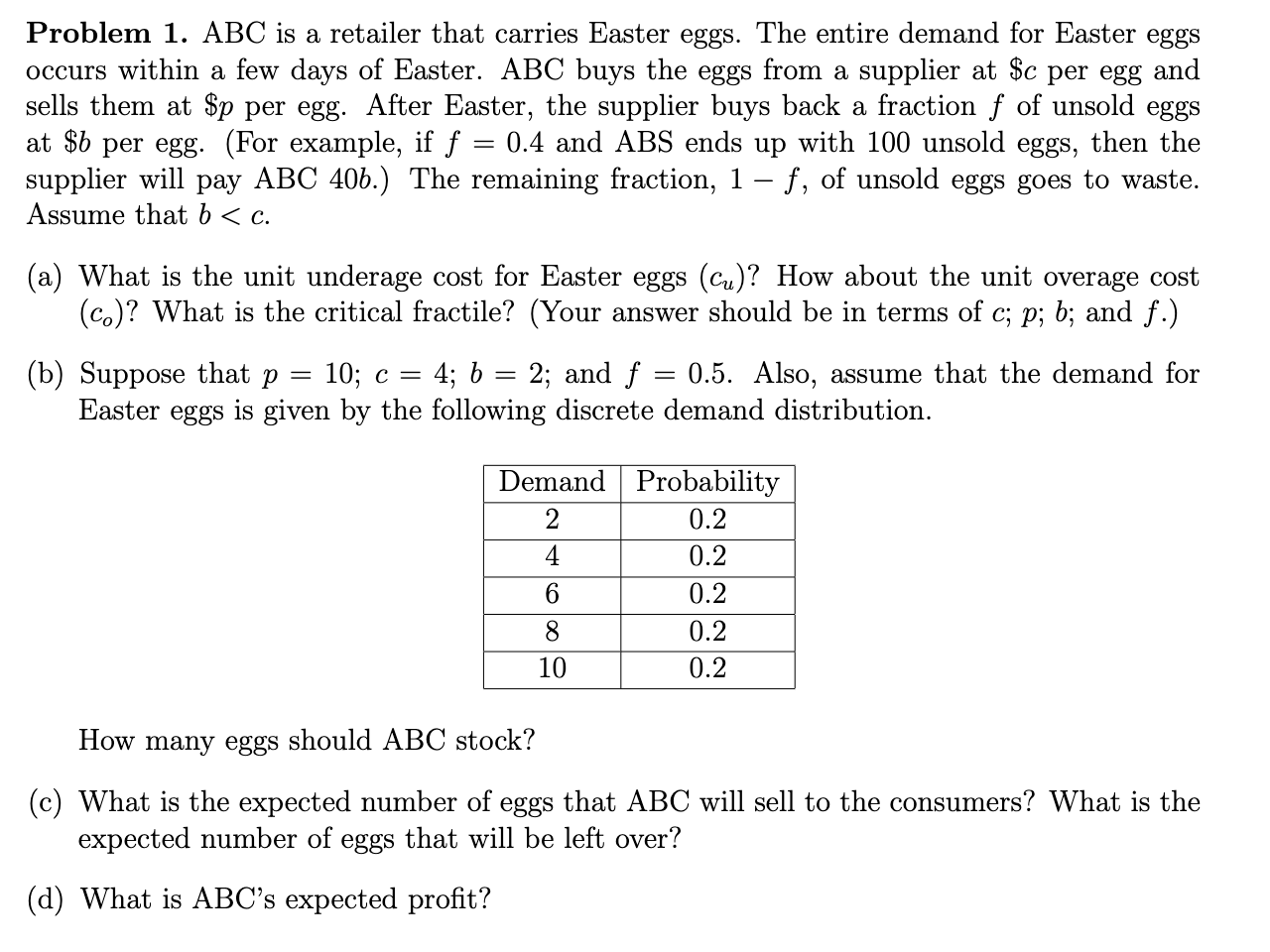
Suppose that ;;; and Also, assume that the demand for
Easter eggs given the following discrete demand distribution.
How many eggs should ABC stock?
What the expected number eggs that ABC will sell the consumers? What the
expected number eggs that will left over?
What ABC's expected profit?
Step by Step Solution
There are 3 Steps involved in it
1 Expert Approved Answer
Step: 1 Unlock

Question Has Been Solved by an Expert!
Get step-by-step solutions from verified subject matter experts
Step: 2 Unlock
Step: 3 Unlock
 Study Help