







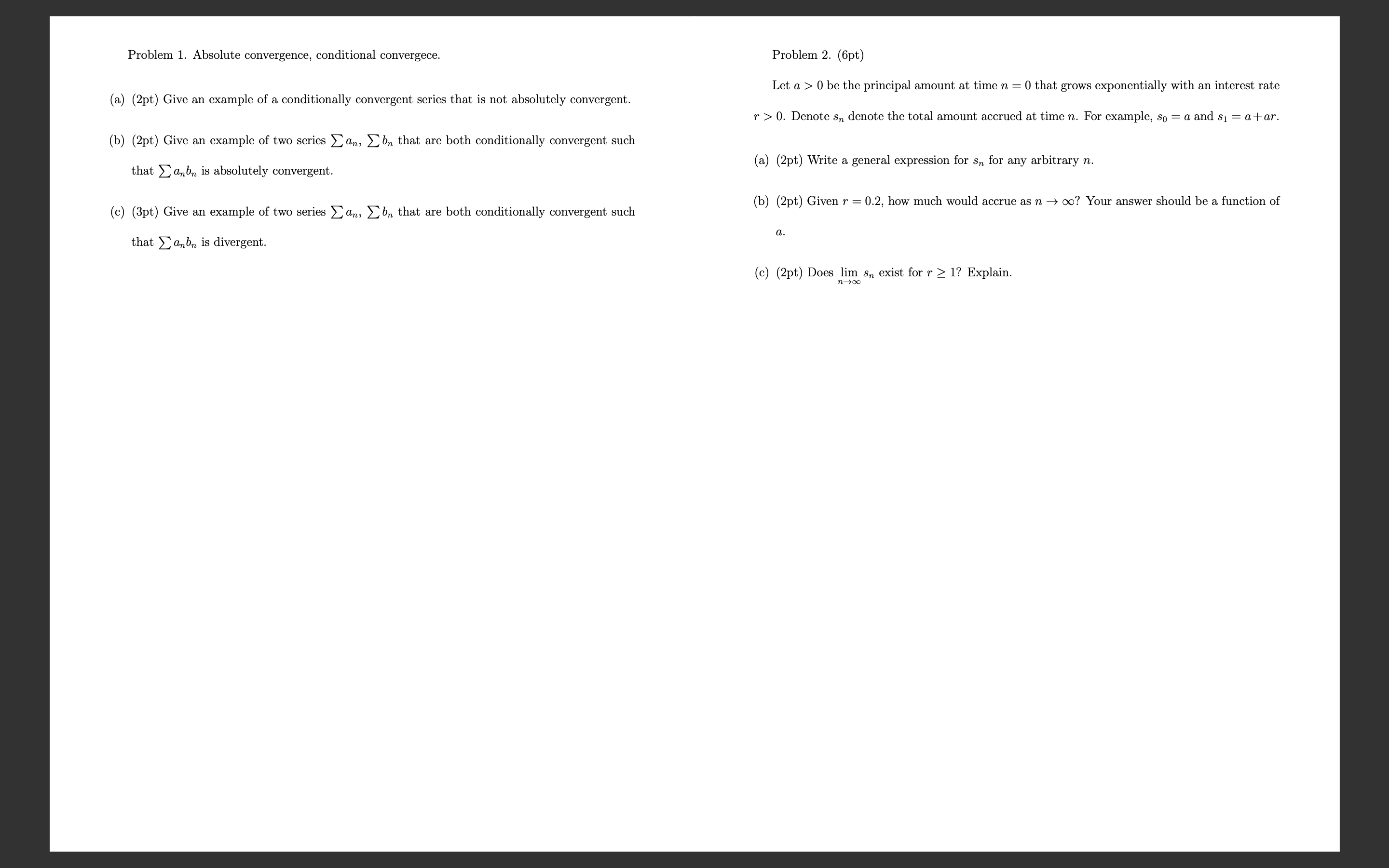
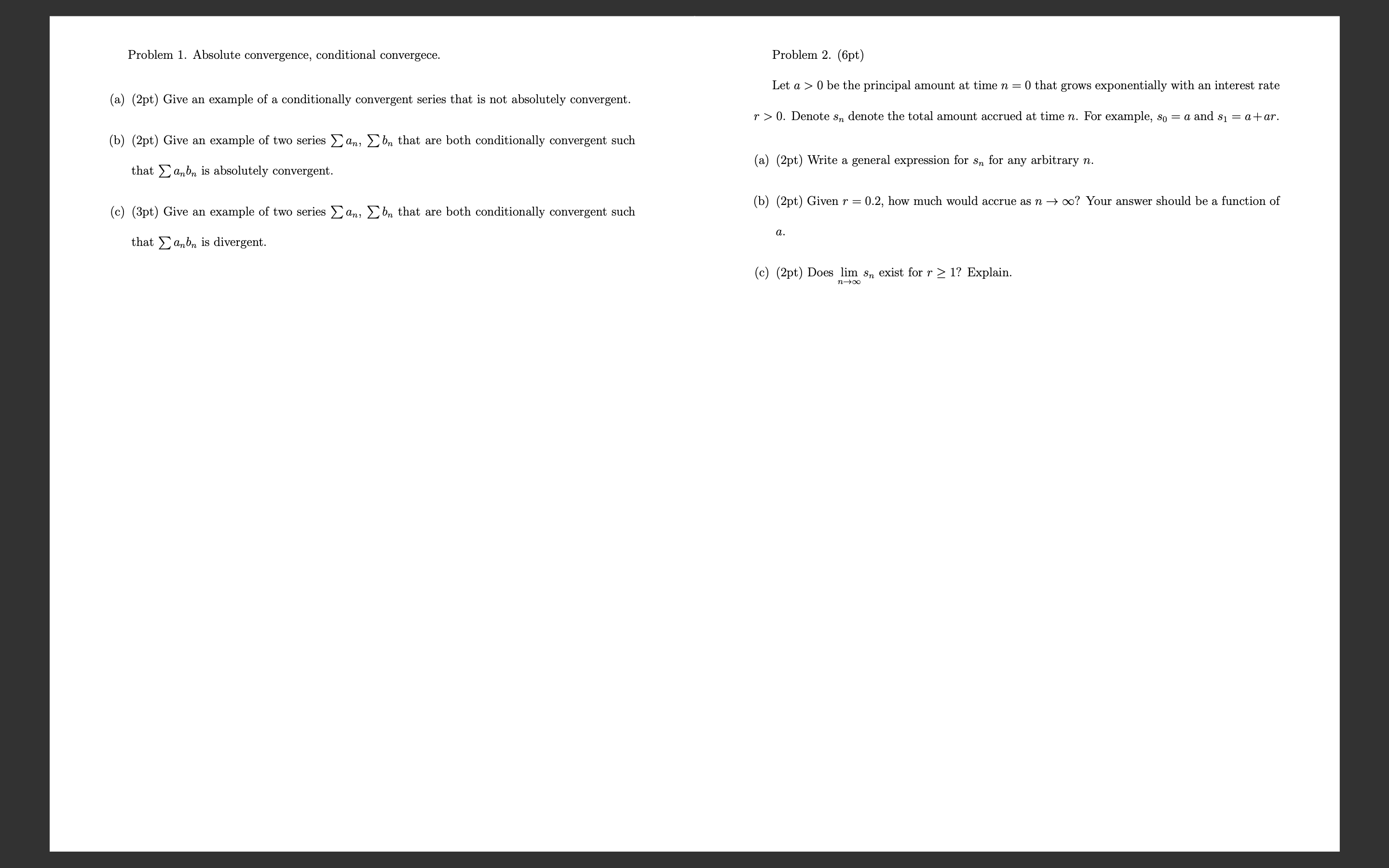
Question: Problem 1. Absolute convergence, conditional convergece. Problem 2. (6pt) Let a > 0 be the principal amount at time n = 0 that grows exponentially
![so = a and s] = a+ar. (b) (2pt) Give an example](https://s3.amazonaws.com/si.experts.images/answers/2024/06/66764f31cc721_55366764f319e2f9.jpg)
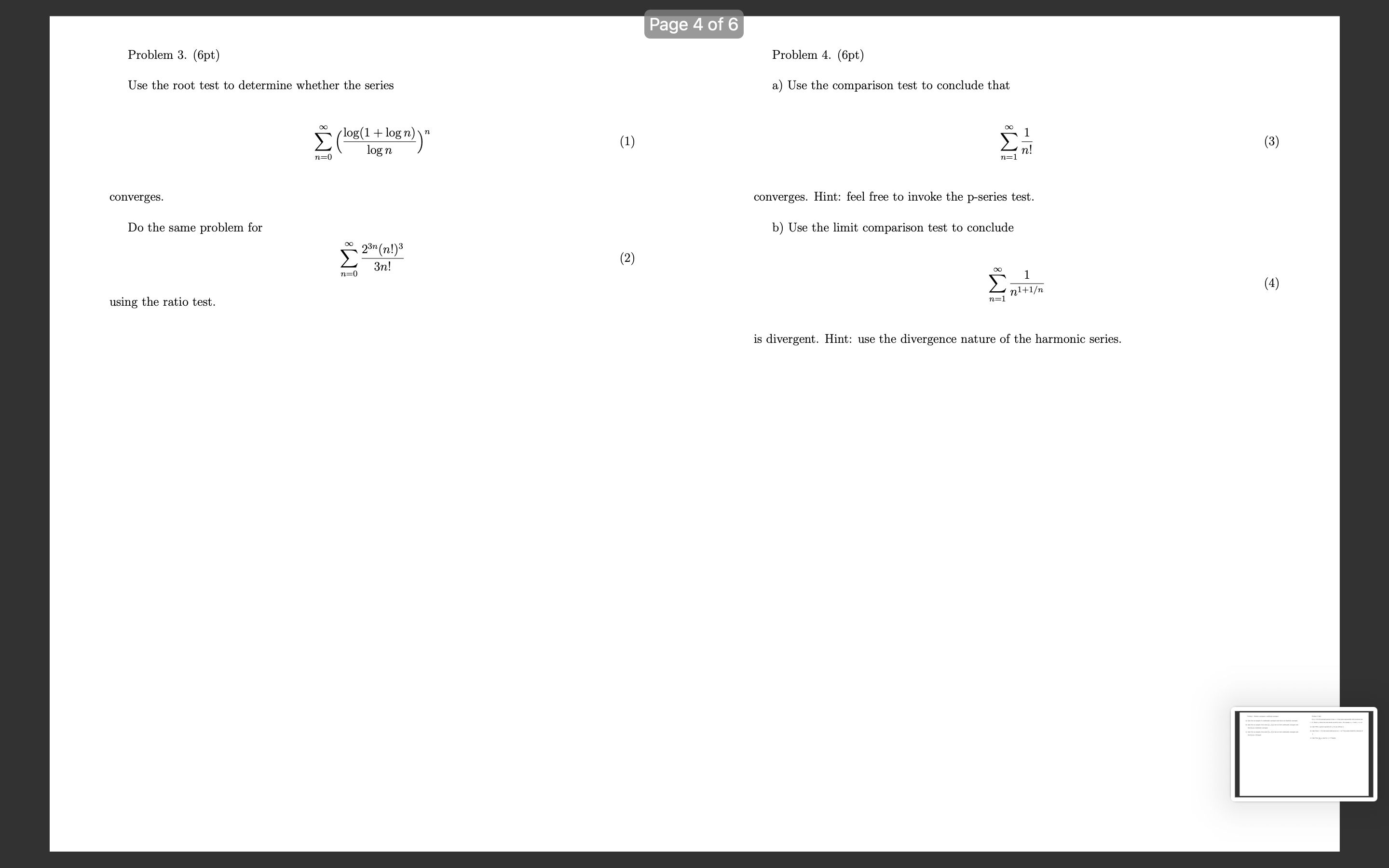
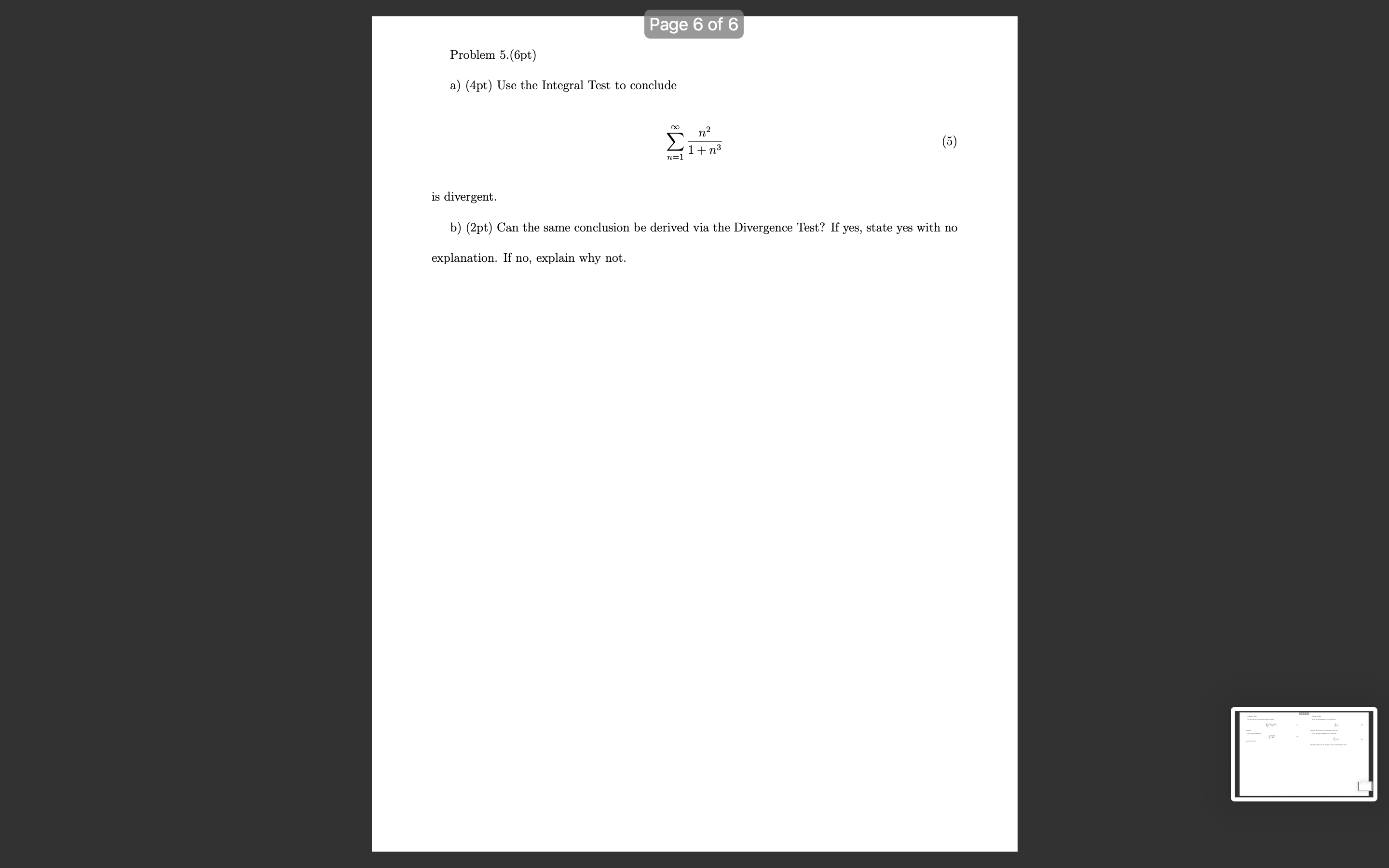
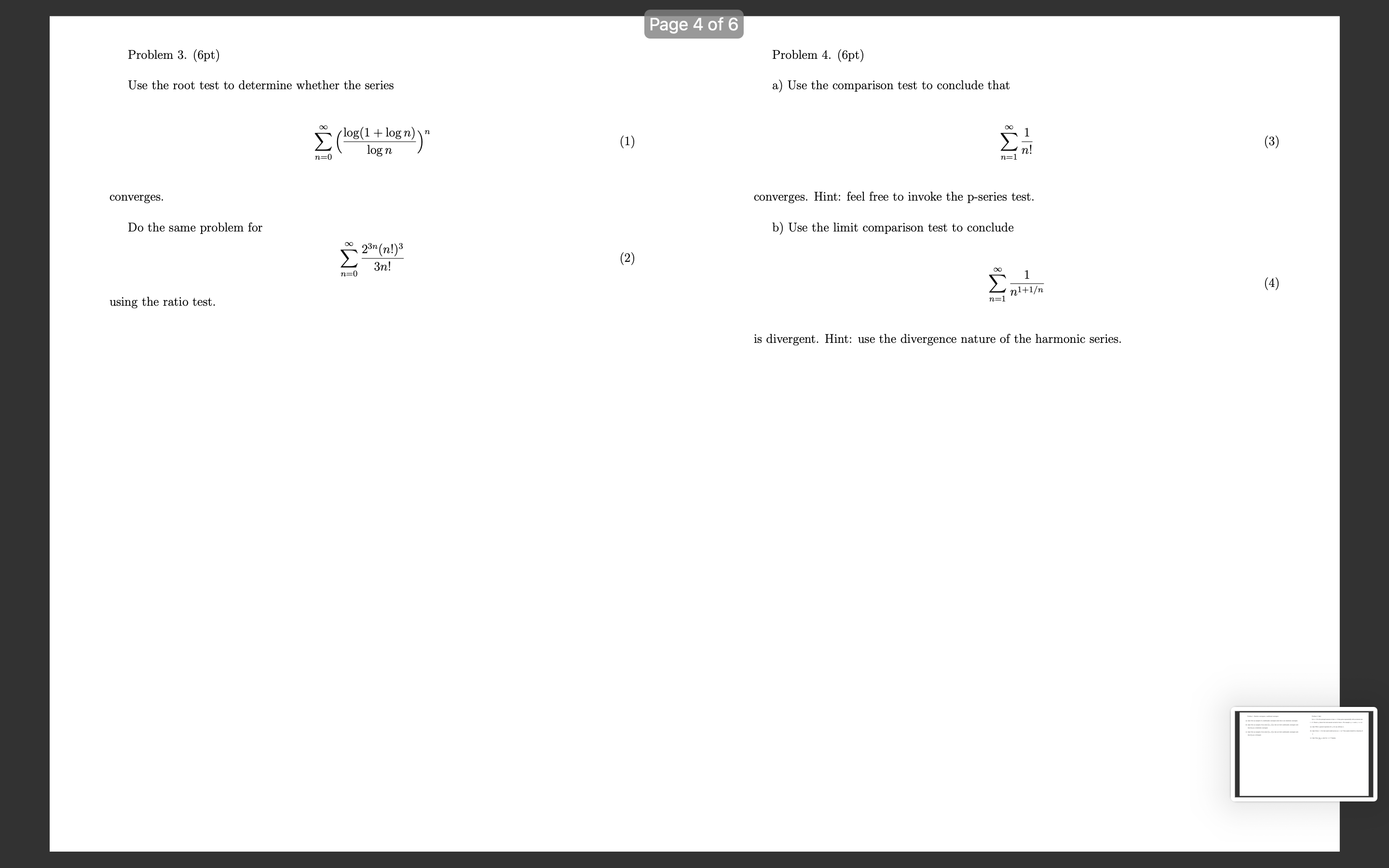
Problem 1. Absolute convergence, conditional convergece. Problem 2. (6pt) Let a > 0 be the principal amount at time n = 0 that grows exponentially with an interest rate (a) (2pt) Give an example of a conditionally convergent series that is not absolutely convergent. r > 0. Denote 3,, denote the total amount accrued at time 12' For example, so = a and s] = a+ar. (b) (2pt) Give an example of two series 2am 217,. that are both conditionally oonvergent such that 2 sub is absolutely convergent (a) (Zpt) Write a general expression for 5,, for any arbitrary n. y. l b t Given 7 = 0.2, how much would accrue as n > 00? Your answer should be a function of (c) (3pt) Give an example of two series 241\Page 4 of 6 Problem 3. (6pt) Problem 4. (6pt) Use the root test to determine whether the series a) Use the comparison test to conclude that (los (1 + log n) ) " log n (1) 2n ! (3) converges. converges. Hint: feel free to invoke the p-series test. Do the same problem for b) Use the limit comparison test to conclude 23n (n!)3 3n ! (2) 1 using the ratio test. n=initi ( 4) is divergent. Hint: use the divergence nature of the harmonic series.Page 6 of 6 Problem 5.(6pt) a) (4pt) Use the Integral Test to conclude 21 + n 3 (5) is divergent. b) (2pt) Can the same conclusion be derived via the Divergence Test? If yes, state yes with no explanation. If no, explain why not
Step by Step Solution
There are 3 Steps involved in it

Get step-by-step solutions from verified subject matter experts
 Study Help