



Question: Problem 1 An elephant is 15.0 m away from the camera and is 4.00 m tall. The distance q between the converging lens in the
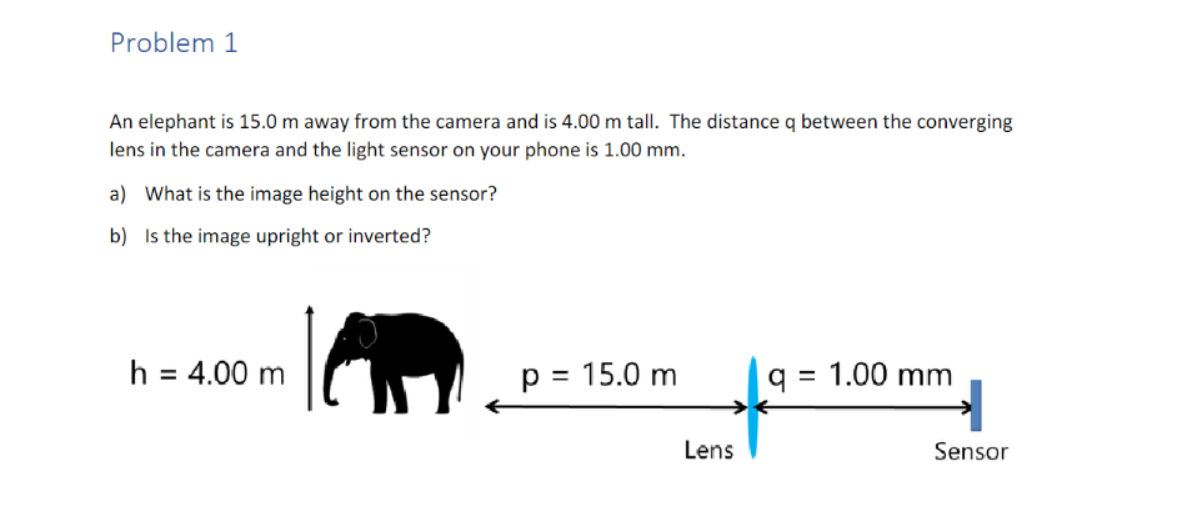
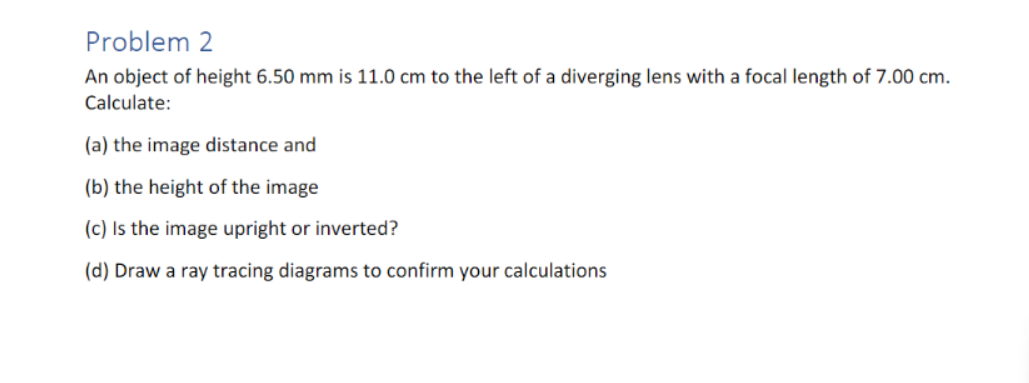
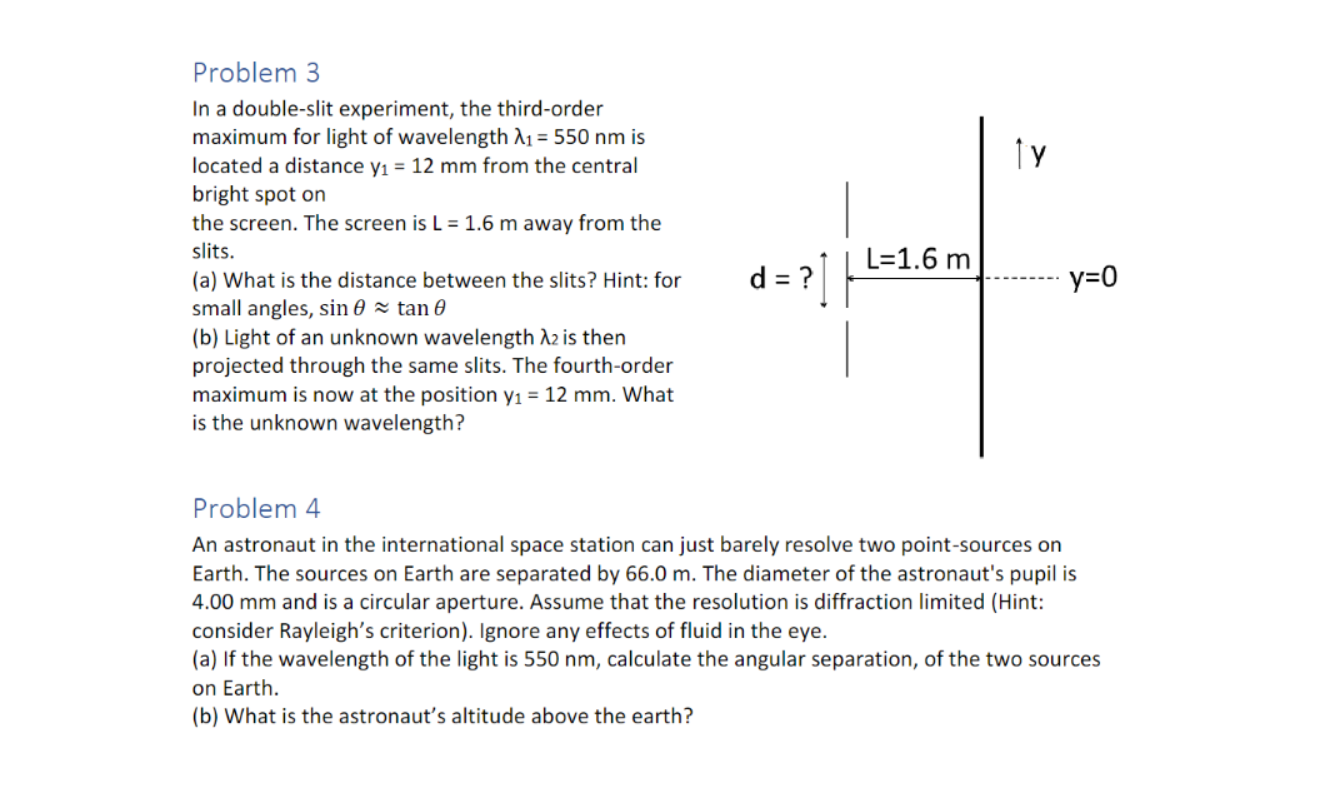
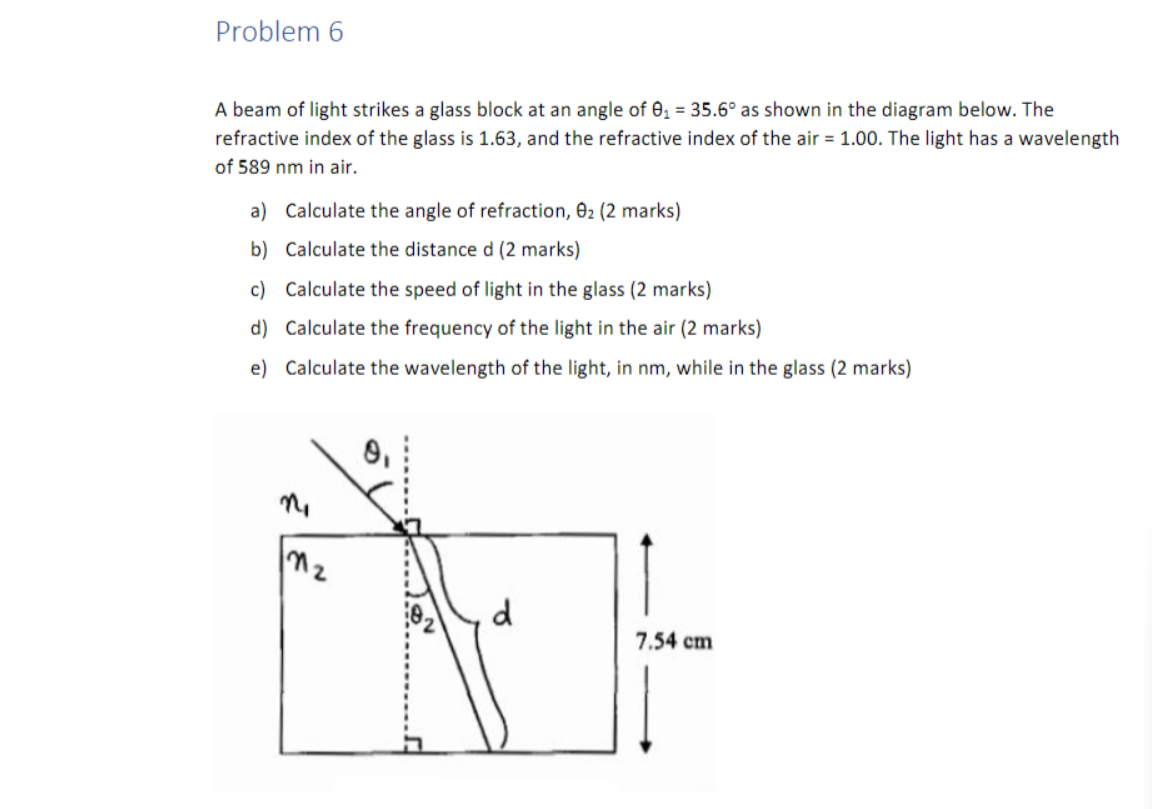
Problem 1 An elephant is 15.0 m away from the camera and is 4.00 m tall. The distance q between the converging lens in the camera and the light sensor on your phone is 1.00 mm. a) What is the image height on the sensor? b} Is the image upright or inverted? mm Problem 2 An object of height 6.50 mm is 11.0 cm to the left of a diverging lens with a focal length of 7.00 cm. Calculate: (a) the image distance and (b) the height of the image (c) Is the image upright or inverted? (d) Draw a ray tracing diagrams to confirm your calculationsProblem 3 In a double-slit experiment, the third-order maximum for light of wavelength 7n = 550 nm is located a distance y; = 12 mm from the central bright spot on the screen. The screen is L = 1.6 m away from the slits. (a) What is the distance between the slits? Hint: for small angles, sin 6 2 tan 6 lb) Light of an unknown wavelength 112 is then ' projected through the same slits. The fourth-order maximum is now at the position Y1: 12 mm. What is the unknown wavelength? Problem 4 An astronaut in the international space station can just barely resolve two point-sources on Earth. The sources on Earth are separated by 66.0 m. The diameter of the astronaut's pupil is 4.00 mm and is a circular aperture. Assume that the resolution is diffraction limited (Hint: consider Rayleigh's criterion). Ignore any effects of fluid in the eye. (a) If the wavelength of the light is 550 nm. calculate the angular separation. of the two sources on Earth. lb) What is the astronaut's altitude above the earth? Problem 5 A converging lens and a diverging lens are used in combination. They are separated by a distance of d = 45.0 cm. The first {converging} lens has a focal length of f1 = 10.0 cm The second (diverging) lens is placed to the right of the first lens and the magnitude of its focal length is f2 = 12.0 cm. An object is placed 15.0 cm to the left of the first lens. The object has a height ho = 4.0 cm. (a) Where is the nal image located? (b) What is the height of the final image? (c) Is the image real or virtual? Upright or inverted? Problem 6 A beam of light strikes a glass block at an angle of B: = 35.6\" as shown in the diagram below. The refractive index of the glass is 1.63, and the refractive index of the air = 1.00. The light has a wavelength of 589 nm In air. a) Calculate the angle of refraction, 62 (2 marks) b) Calculate the distance d (2 marks) c) Calculate the speed of light in the glass (2 marks) d) Calculate the frequency of the light in the air {2 marks) e) Calculate the wavelength of the light, in nm, while In the glass (2 marks)
Step by Step Solution
There are 3 Steps involved in it

Get step-by-step solutions from verified subject matter experts