







Question: Problem 1 Consider the device intended to measure the speed of a hockey puck. It consists of a glove attached to a rod that can
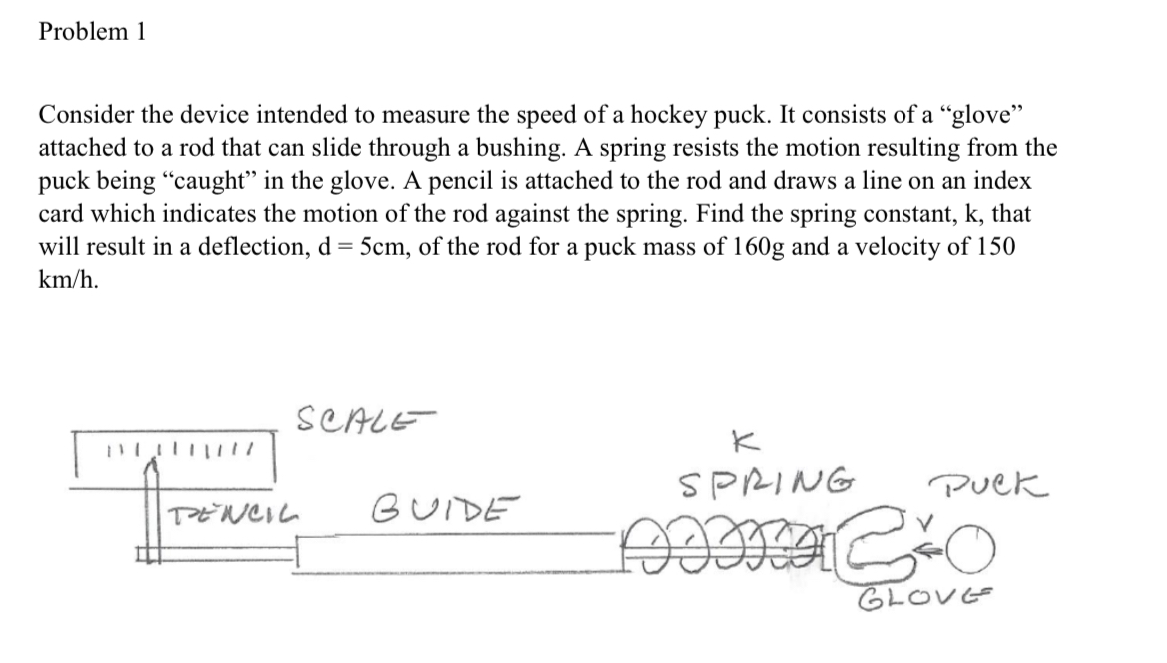
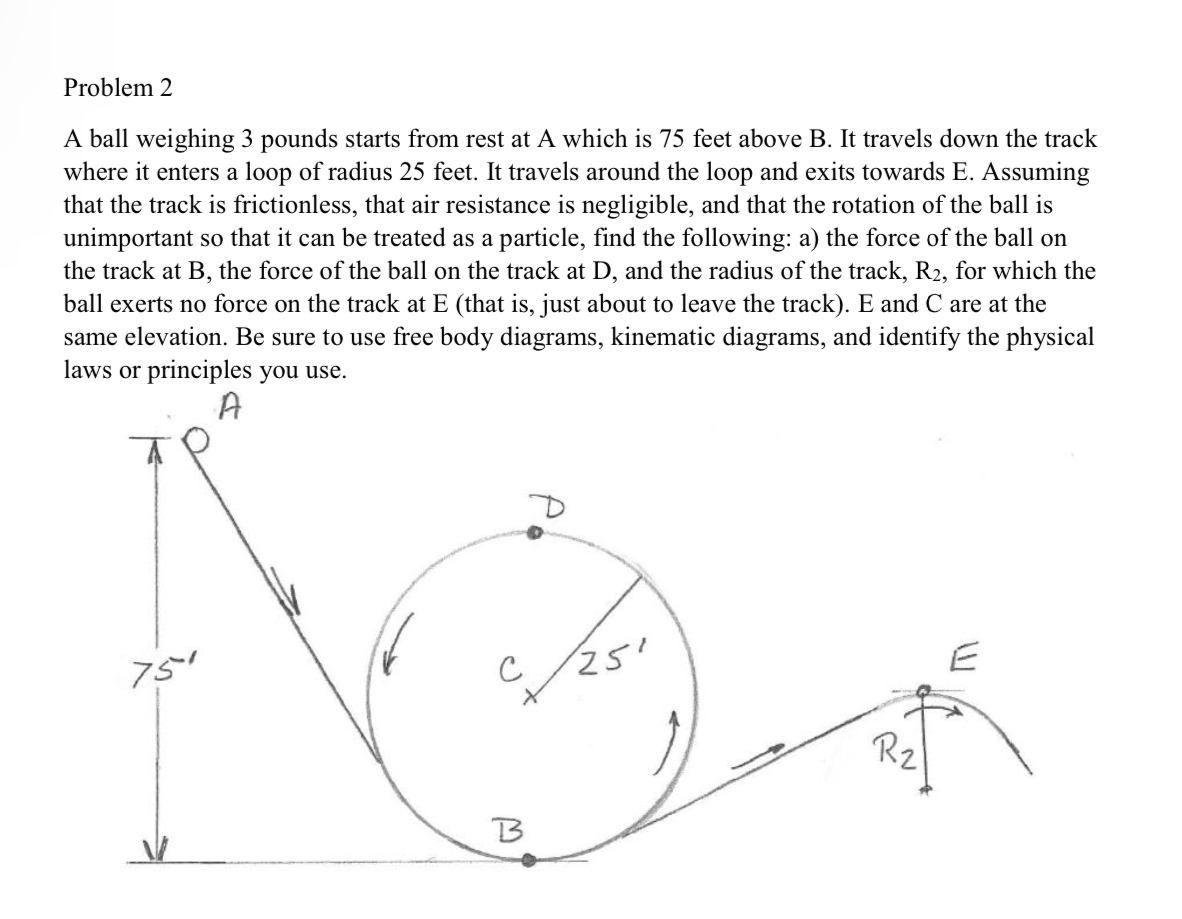
Problem 1 Consider the device intended to measure the speed of a hockey puck. It consists of a "glove" attached to a rod that can slide through a bushing. A spring resists the motion resulting from the puck being "caught" in the glove. A pencil is attached to the rod and draws a line on an index card which indicates the motion of the rod against the spring. Find the spring constant, k, that will result in a deflection, d = 5cm, of the rod for a puck mass of 160g and a velocity of 150 km/h. SCALE K SPRING PUCK BUIDE GLOVESProblem 2 A ball weighing 3 pounds starts from rest at A which is 75 feet above B. It travels down the track where it enters a loop of radius 25 feet. It travels around the loop and exits towards E. Assuming that the track is frictionless, that air resistance is negligible, and that the rotation of the ball is unimportant so that it can be treated as a particle, find the following: a) the force of the ball on the track at B, the force of the ball on the track at D, and the radius of the track, R, for which the ball exerts no force on the track at E (that is, just about to leave the track). E and C are at the same elevation. Be sure to use free body diagrams, kinematic diagrams, and identify the physical laws or principles you use. A
Step by Step Solution
There are 3 Steps involved in it

Get step-by-step solutions from verified subject matter experts
 Study Help