Question: Problem 1. Let n E Z. be a fixed element. 1.1. Let [m] E ZZ. Use Bezout's Identity to prove that there is [k] E
Problem 1. Let n E Z. be a fixed element. 1.1.Problem 1. Let n E Z. be a fixed element. 1.1.Problem 1. Let n E Z. be a fixed element. 1.1.Problem 1. Let n E Z. be a fixed element. 1.1.Problem 1. Let n E Z. be a fixed element. 1.1.
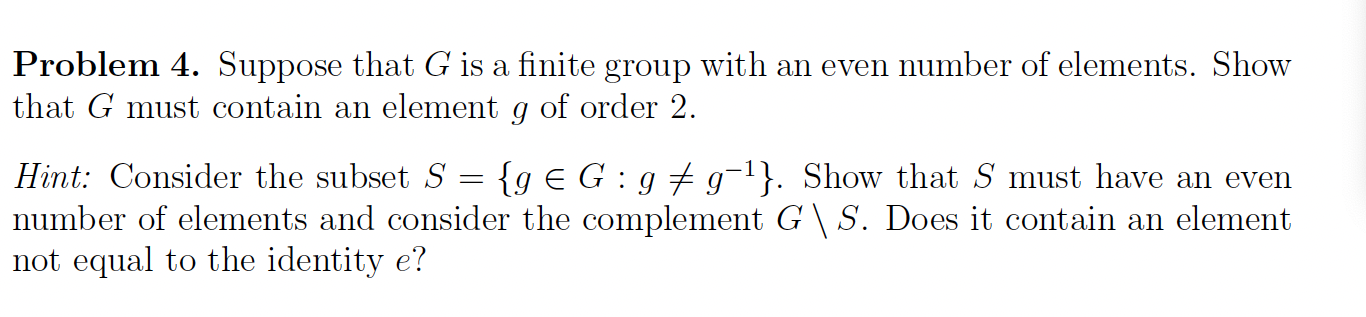
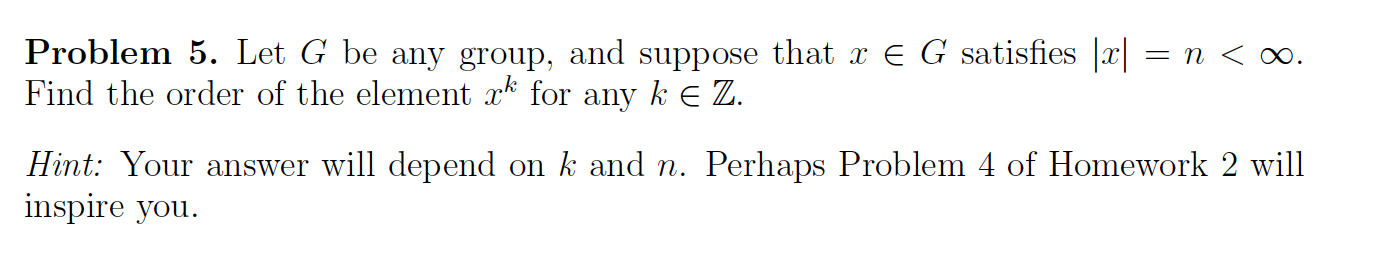
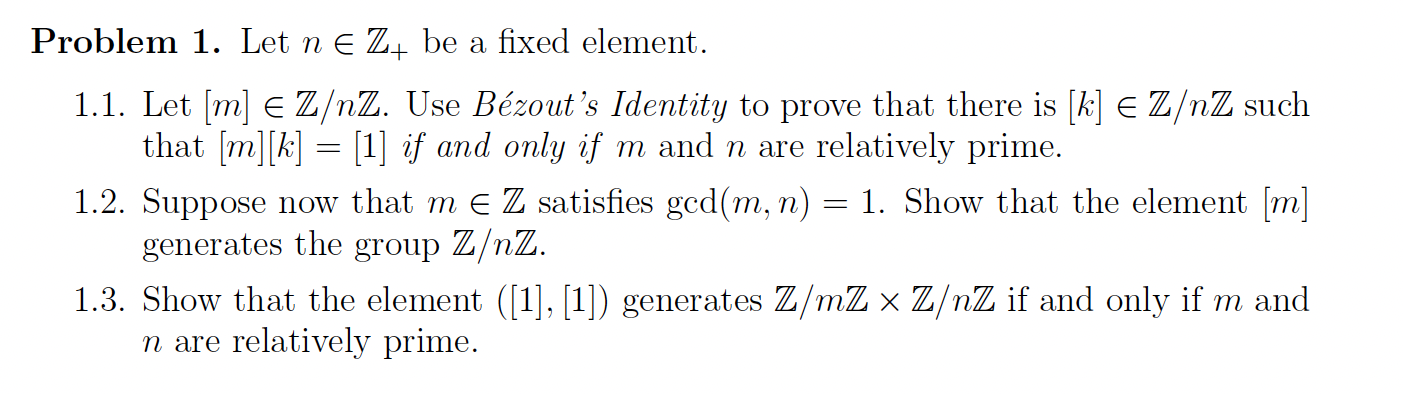
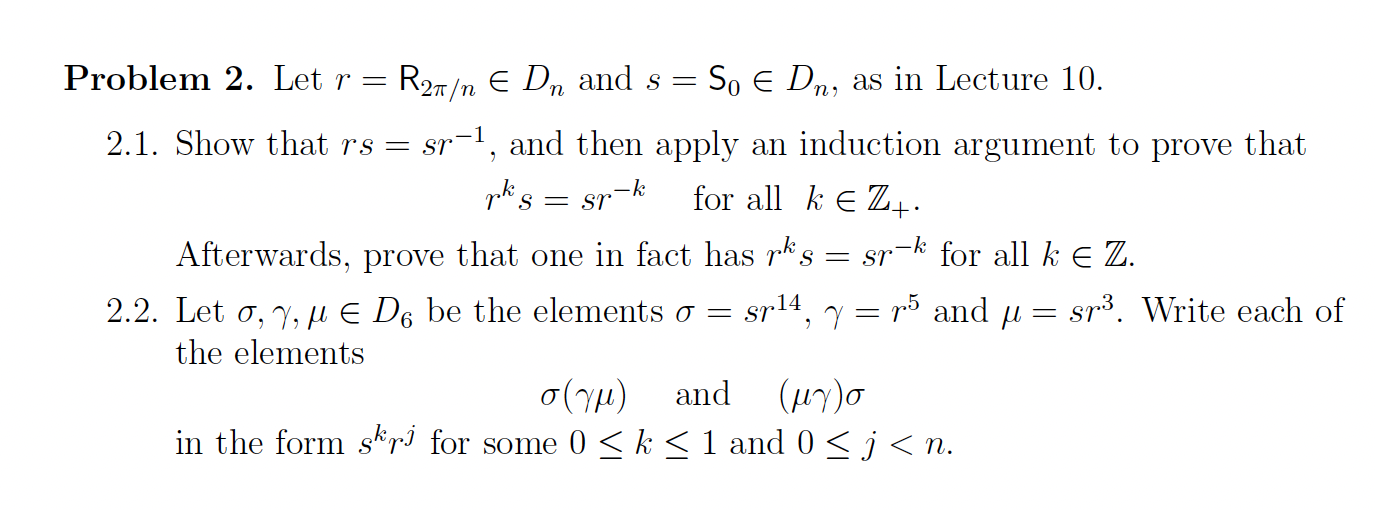
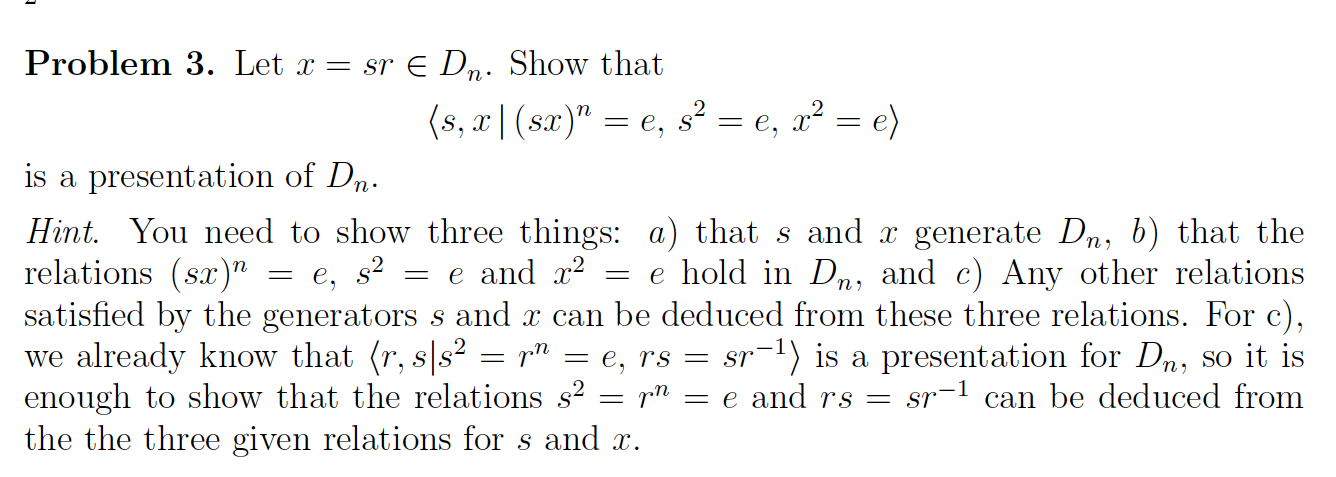
Problem 1. Let n E Z. be a fixed element. 1.1. Let [m] E ZZ. Use Bezout's Identity to prove that there is [k] E ZZ such that [m] [k] = [1] if and only if m and n are relatively prime. 1.2. Suppose now that m E Z satisfies god(m, n) = 1. Show that the element [m] generates the group ZZ. 1.3. Show that the element ([1], [1]) generates Z/mZ x ZZ if and only if m and n are relatively prime.Problem 2. Let r : Rg 6 Da and 3 : SO 6 D\1.4 Problem 3. Let 1'. : S?\" E D\". Show that (3,1?| (313)\" : e, 32 : e, :32 : e) is a presentation of D\". Hint. You need to show three things: a) that .9 and :I: generate D\Problem 4. Suppose that G is a nite group with an even number of elements. Show that G must contain an element 9 of order 2. Hint: Consider the subset S : {g E G : 9 7E gl}. Show that 8 must have an even number of elements and consider the complement G \\ S . Does it contain an element not equal to the identity 6? Problem 5. Let G be any group, and suppose that x E G satisfies x = n
Step by Step Solution

There are 3 Steps involved in it

1 Expert Approved Answer
Step: 1 Unlock blur-text-image

Question Has Been Solved by an Expert!

Get step-by-step solutions from verified subject matter experts

Step: 2 Unlock
Step: 3 Unlock

Students Have Also Explored These Related Mathematics Questions!