





Question: Problem 10-17 (Algorithmic) A manager of an inventory system believes that inventory models are important decision-making aids. The manager has experience with the EOQ policy,
Problem 10-17 (Algorithmic) A manager of an

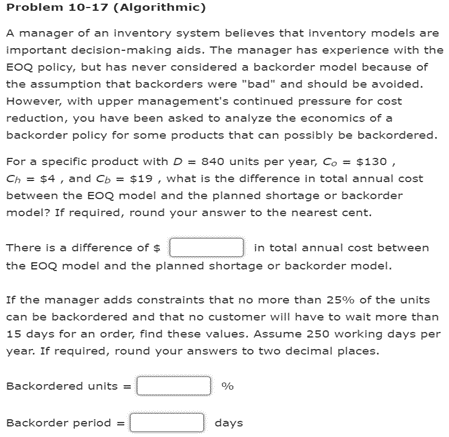
Problem 10-17 (Algorithmic) A manager of an inventory system believes that inventory models are important decision-making aids. The manager has experience with the EOQ policy, but has never considered a backorder model because of the assumption that backorders were "bad" and should be avoided. However, with upper management's continued pressure for cost reduction, you have been asked to analyze the economics of a backorder policy for some products that can possibly be backordered. For a specific product with D = 840 units per year, Co = $130, Ch = $4, and cb = $19, what is the difference in total annual cost between the EOQ model and the planned shortage or backorder model? If required, round your answer to the nearest cent. There is a difference of $ in total annual cost between the EOQ model and the planned shortage or backorder model. If the manager adds constraints that no more than 25% of the units can be backordered and that no customer will have to wait more than 15 days for an order, find these values. Assume 250 working days per year. If required, round your answers to two decimal places. Backordered units = % Backorder period = days

Step by Step Solution

There are 3 Steps involved in it

1 Expert Approved Answer
Step: 1 Unlock blur-text-image

Question Has Been Solved by an Expert!

Get step-by-step solutions from verified subject matter experts

Step: 2 Unlock
Step: 3 Unlock

Students Have Also Explored These Related General Management Questions!