







Question: Problem 10-49 (LO. 3, 7, 9, 12) Bryan and Cody each contributed $120,000 to the newly formed BC Partnership in exchange for a 50% interest.
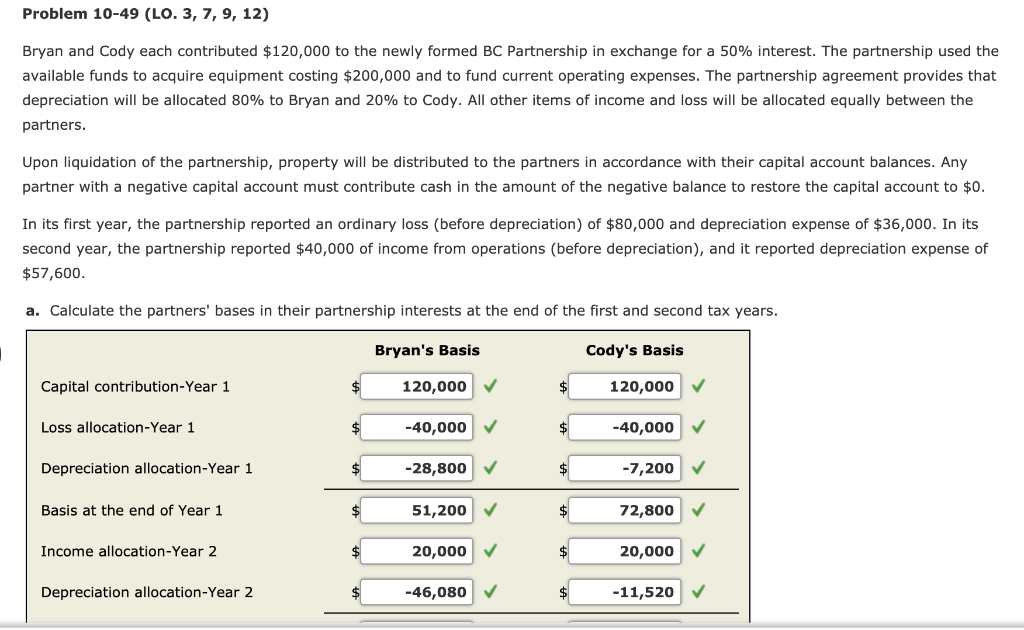
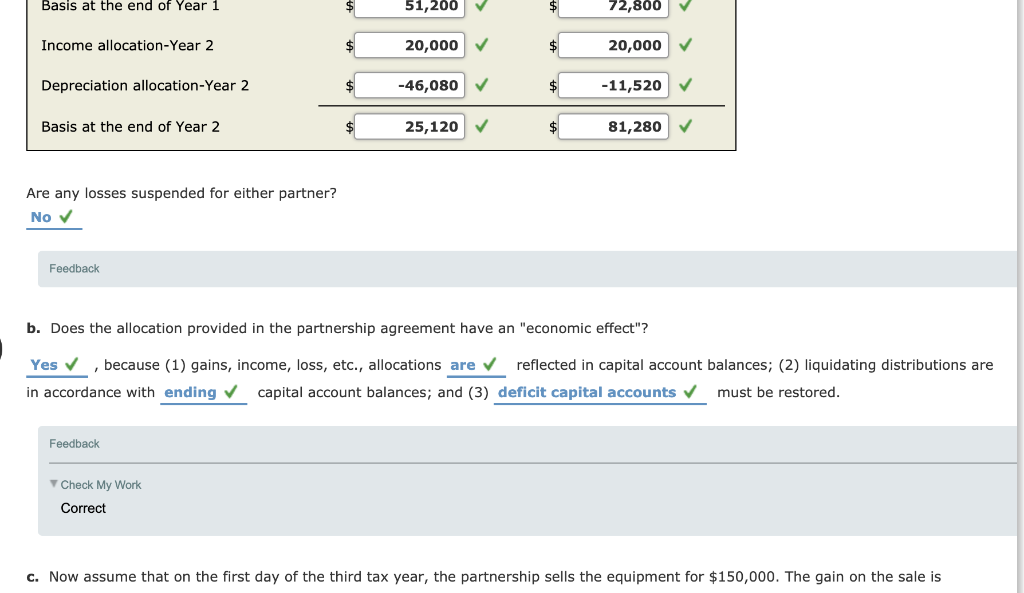
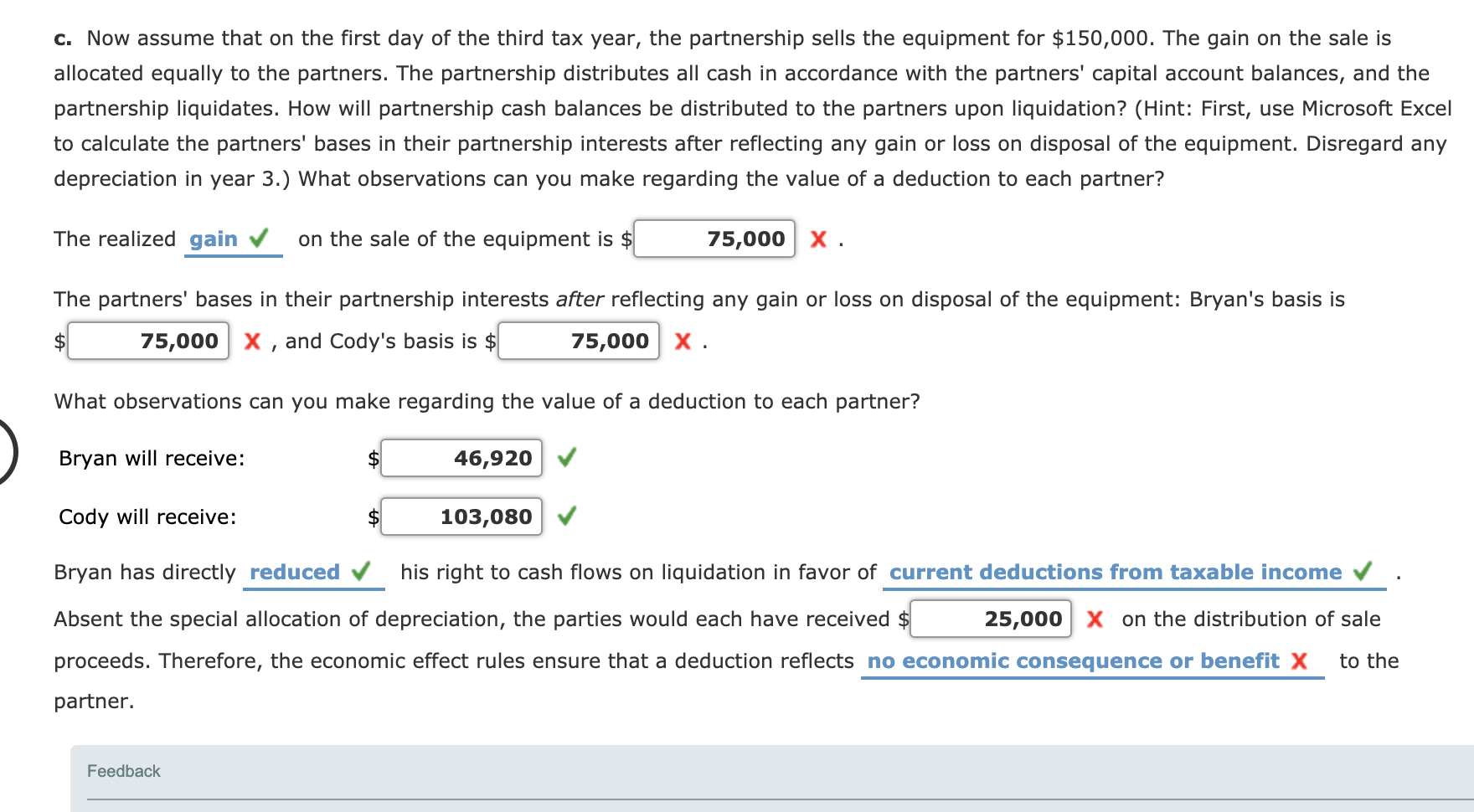
Problem 10-49 (LO. 3, 7, 9, 12) Bryan and Cody each contributed $120,000 to the newly formed BC Partnership in exchange for a 50% interest. The partnership used the available funds to acquire equipment costing $200,000 and to fund current operating expenses. The partnership agreement provides that depreciation will be allocated 80% to Bryan and 20% to Cody. All other items of income and loss will be allocated equally between the partners. Upon liquidation of the partnership, property will be distributed to the partners in accordance with their capital account balances. Any partner with a negative capital account must contribute cash in the amount of the negative balance to restore the capital account to $0. In its first year, the partnership reported an ordinary loss (before depreciation) of $80,000 and depreciation expense of $36,000. In its second year, the partnership reported $40,000 of income from operations (before depreciation), and it reported depreciation expense of $57,600. a. Calculate the partners' bases in their partnership interests at the end of the first and second tax years. Bryan's Basis Cody's Basis Capital contribution-Year 1 $ 120,000 $ 120,000 Loss allocation-Year 1 $ -40,000 $ -40,000 Depreciation allocation-Year 1 -28,800 $ -7,200 | Basis at the end of Year 1 51,200 $ 72,800 Income allocation-Year 2 $ 20,000 20,000 Depreciation allocation-Year 2 -46,080 -11,520 Basis at the end of Year 1 $ 51,200 $ 72,800 Income allocation-Year 2 20,000 Depreciation allocation-Year 2 -46,080 $ $ $ 20,000 -11,520 81,280 Basis at the end of Year 2 25,120 Are any losses suspended for either partner? No Feedback b. Does the allocation provided in the partnership agreement have an "economic effect"? Yes , because (1) gains, income, loss, etc., allocations are reflected in capital account balances; (2) liquidating distributions are in accordance with ending capital account balances; and (3) deficit capital accounts must be restored. Feedback Check My Work Correct c. Now assume that on the first day of the third tax year, the partnership sells the equipment for $150,000. The gain on the sale is C. Now assume that on the first day of the third tax year, the partnership sells the equipment for $150,000. The gain on the sale is allocated equally to the partners. The partnership distributes all cash in accordance with the partners' capital account balances, and the partnership liquidates. How will partnership cash balances be distributed to the partners upon liquidation? (Hint: First, use Microsoft Excel to calculate the partners' bases in their partnership interests after reflecting any gain or loss on disposal of the equipment. Disregard any depreciation in year 3.) What observations can you make regarding the value of a deduction to each partner? The realized gain on the sale of the equipment is $ 75,000 X.. The partners' bases in their partnership interests after reflecting any gain or loss on disposal of the equipment: Bryan's basis is $ 75,000 x, and Cody's basis is $ 75,000 X. What observations can you make regarding the value of a deduction to each partner? Bryan will receive: TA $ 46,920 Cody will receive: $ A 103,080 Bryan has directly reduced his right to cash flows on liquidation in favor of current deductions from taxable income . Absent the special allocation of depreciation, the parties would each have received $ 25,000 X on the distribution of sale proceeds. Therefore, the economic effect rules ensure that a deduction reflects no economic consequence or benefit x to the partner. Feedback
Step by Step Solution
There are 3 Steps involved in it

Get step-by-step solutions from verified subject matter experts
 Study Help