







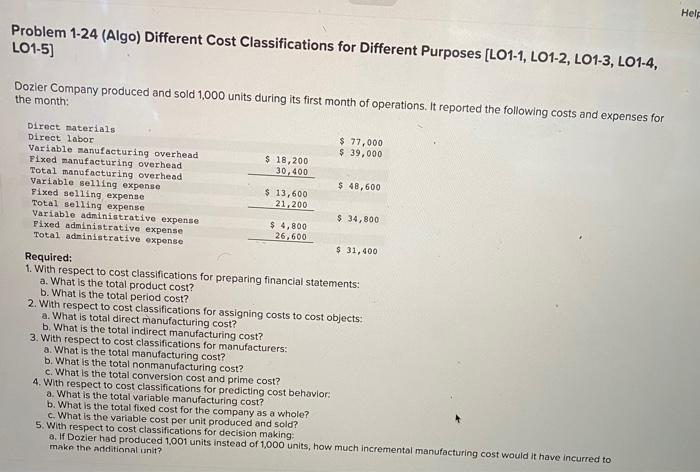
Question: Problem 1-24 (Algo) Different Cost Classifications for Different Purposes [LO1-1, LO1-2, LO1-3, LO1-4, L01-5] Dozier Company produced and sold 1,000 units during its first month
![LO1-3, LO1-4, L01-5] Dozier Company produced and sold 1,000 units during its](https://s3.amazonaws.com/si.experts.images/answers/2024/08/66d1ba8e0d929_81366d1ba8d9c2a9.jpg)
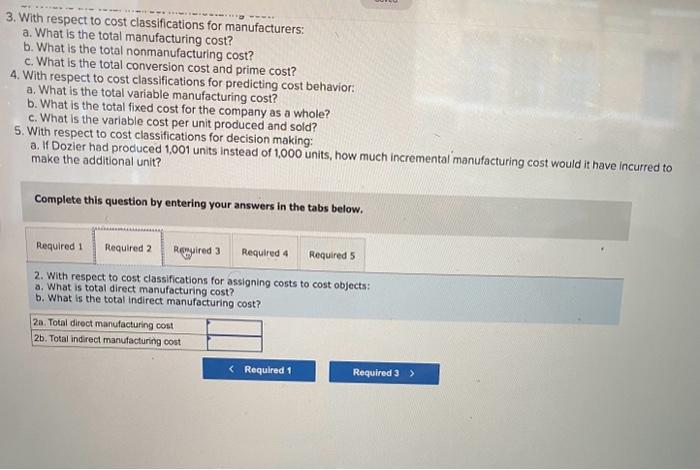
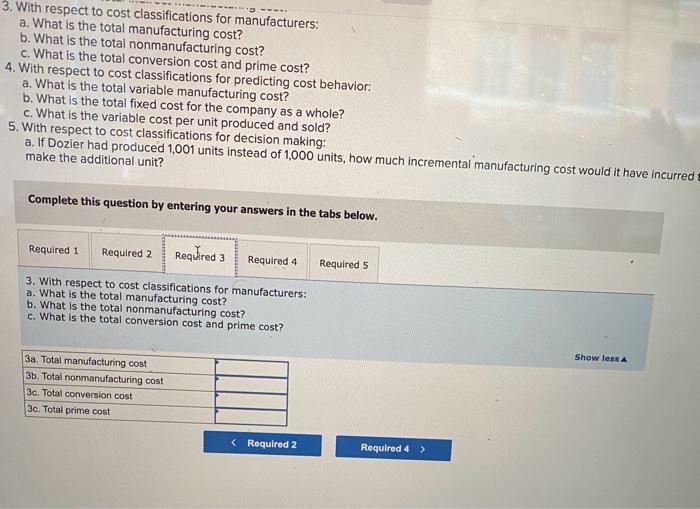
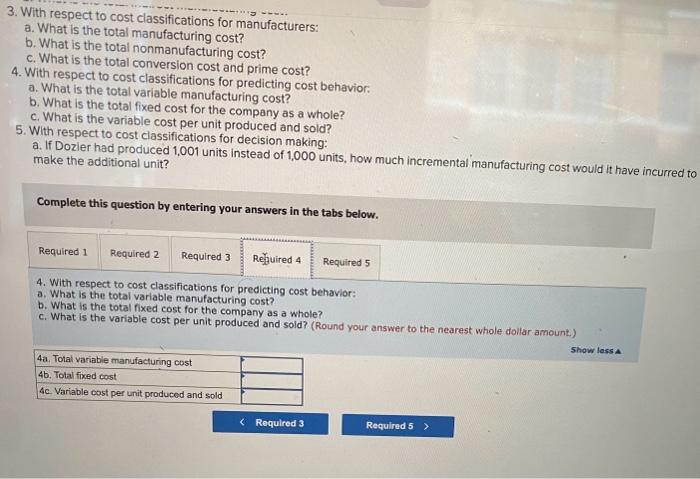
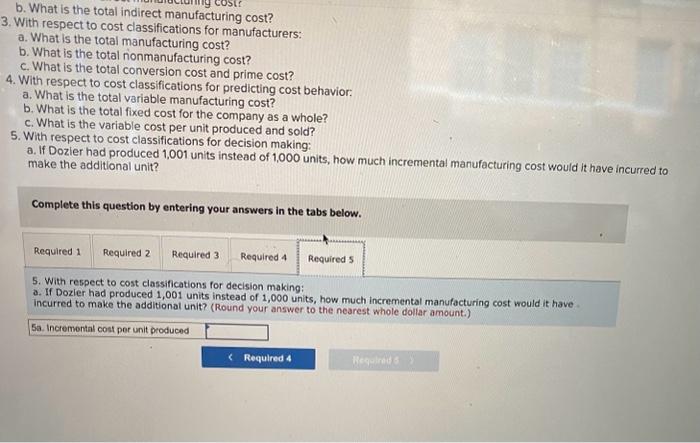
Problem 1-24 (Algo) Different Cost Classifications for Different Purposes [LO1-1, LO1-2, LO1-3, LO1-4, L01-5] Dozier Company produced and sold 1,000 units during its first month of operations. It reported the following costs and expenses for the month: required: 1. With respect to cost classifications for preparing financial statements: a. What is the total product cost? b. What is the total period cost? 2. With respect to cost classifications for assigning costs to cost objects: a. What is total direct manufacturing cost? b. What is the total indirect manufacturing cost? 3. With respect to cost classifications for manufacturers: a. What is the total manufacturing cost? b. What is the total nonmanufacturing cost? c. What is the total conversion cost and prime cost? 4. With respect to cost classifications for predicting cost behavior: a. What is the total variable manufacturing cost? b. What is the total fixed cost for the company as a whole? c. What is the variable cost per unit produced and sold? 5. With respect to cost classifications for decision making: a. If Dozier had produced 1,001 units instead of 1,000 units, how much incremental manufacturing cost would it have incurred to make the additional unit? 3. With respect to cost classifications for manufacturers: a. What is the total manufacturing cost? b. What is the total nonmanufacturing cost? c. What is the total conversion cost and prime cost? 4. With respect to cost classifications for predicting cost behavior: a. What is the total variable manufacturing cost? b. What is the total fixed cost for the company as a whole? c. What is the variable cost per unit produced and sold? 5. With respect to cost classifications for decision making: a. If Dozier had produced 1,001 units instead of 1,000 units, how much incremental manufacturing cost would it have incurred to make the additional unit? Complete this question by entering your answers in the tabs below. 1. With respect to cost classifications for preparing financial statements: a. What is the total product cost? b. What is the total period cost? 3. With respect to cost classifications for manufacturers: a. What is the total manufacturing cost? b. What is the total nonmanufacturing cost? c. What is the total conversion cost and prime cost? 4. With respect to cost classifications for predicting cost behavior: a. What is the total variable manufacturing cost? b. What is the total fixed cost for the company as a whole? c. What is the variable cost per unit produced and sold? 5. With respect to cost classifications for decision making: a. If Dozier had produced 1,001 units instead of 1,000 units, how much incremental manufacturing cost would it have incurred to make the additional unit? Complete this question by entering your answers in the tabs below. 2. With respect to cost classifications for assigning costs to cost objects: a. What is total direct manufacturing cost? b. What is the total indirect manufacturing cost? 3. With respect to cost classifications for manufacturers: a. What is the total manufacturing cost? b. What is the total nonmanufacturing cost? c. What is the total conversion cost and prime cost? 4. With respect to cost classifications for predicting cost behavior: a. What is the total variable manufacturing cost? b. What is the total fixed cost for the company as a whole? c. What is the variable cost per unit produced and sold? 5. With respect to cost classifications for decision making: a. If Dozier had produced 1,001 units instead of 1,000 units, how much incremental manufacturing cost would it have incurred make the additional unit? Complete this question by entering your answers in the tabs below. 3. With respect to cost classifications for manufacturers: a. What is the total manufacturing cost? b. What is the total nonmanufacturing cost? c. What is the total conversion cost and prime cost? 3. With respect to cost classifications for manufacturers: a. What is the total manufacturing cost? b. What is the total nonmanufacturing cost? c. What is the total conversion cost and prime cost? 4. With respect to cost classifications for predicting cost behavior: a. What is the total variable manufacturing cost? b. What is the total fixed cost for the company as a whole? c. What is the variable cost per unit produced and sold? 5. With respect to cost classifications for decision making: a. If Dozler had produced 1,001 units instead of 1,000 units, how much incremental manufacturing cost would it have incurred to make the additional unit? Complete this question by entering your answers in the tabs below. 4. With respect to cost classifications for predicting cost behavior: a. What is the total variable manufacturing cost? b. What is the total fixed cost for the company as a whole? c. What is the variable cost per unit produced and sold? (Round your answer to the nearest whole dollar amount.) b. What is the total indirect manufacturing cost? 3. With respect to cost classifications for manufacturers: a. What is the total manufacturing cost? b. What is the total nonmanufacturing cost? c. What is the total conversion cost and prime cost? 4. With respect to cost classifications for predicting cost behavior: a. What is the total variable manufacturing cost? b. What is the total fixed cost for the company as a whole? c. What is the variable cost per unit produced and sold? 5. With respect to cost classifications for decision making: a. If Dozier had produced 1,001 units instead of 1,000 units, how much incremental manufacturing cost would it have incurred to make the additional unit? Complete this question by entering your answers in the tabs below. 5. With respect to cost classifications for decision making: a. If Dozler had produced 1,001 units instead of 1,000 units, how much incremental manufacturing cost would it have incurred to make the additional unit? (Round your answer to the nearest whole dollar amount.)
Step by Step Solution
There are 3 Steps involved in it

Get step-by-step solutions from verified subject matter experts
 Study Help