







Question: Problem 13-5A (Algo) Comparative ratio analysis Part 1 Required information Problem 13-5A (Algo) Comparative ratio analysis LO P3 (The following information applies to the questions
Problem 13-5A (Algo) Comparative ratio analysis Part 1
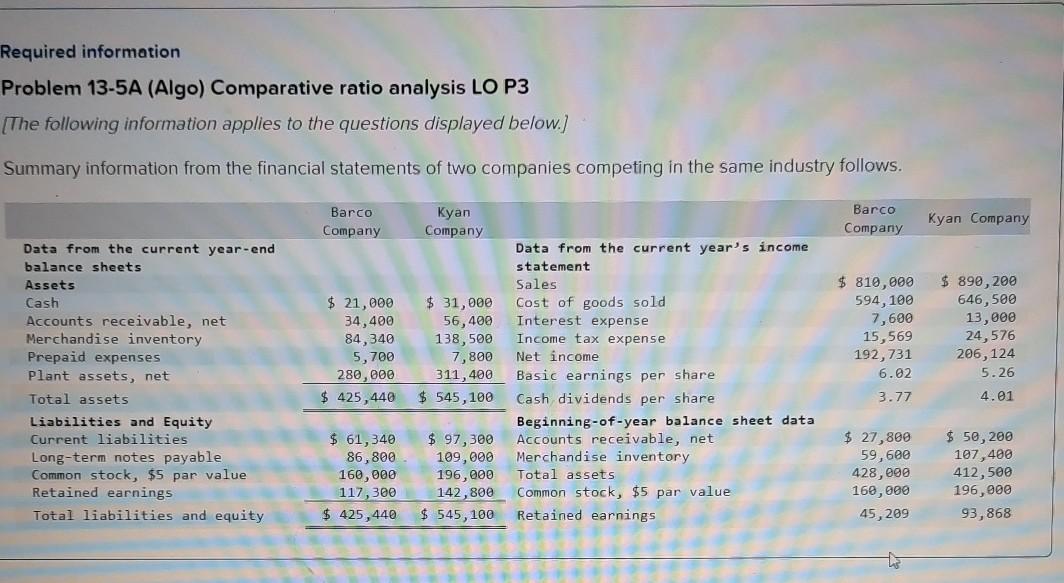
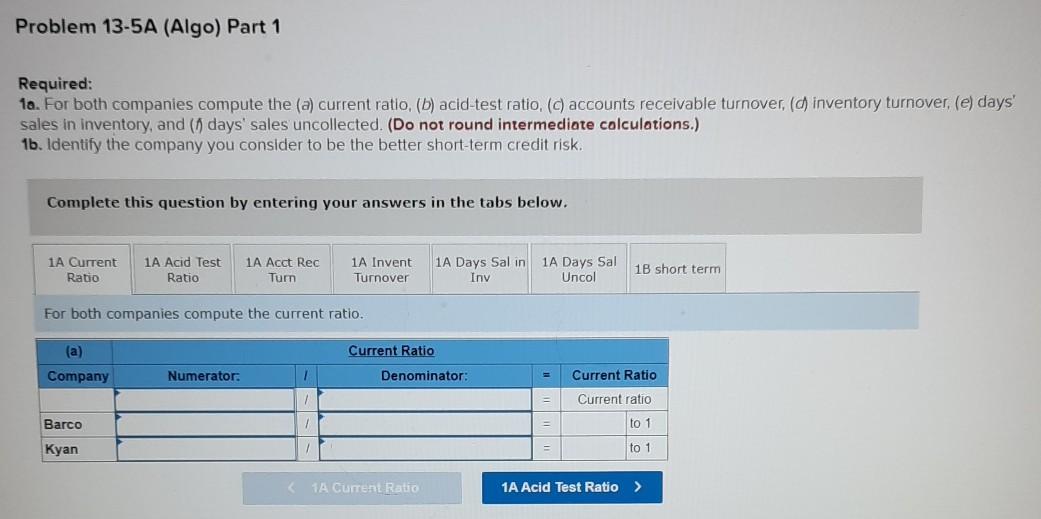
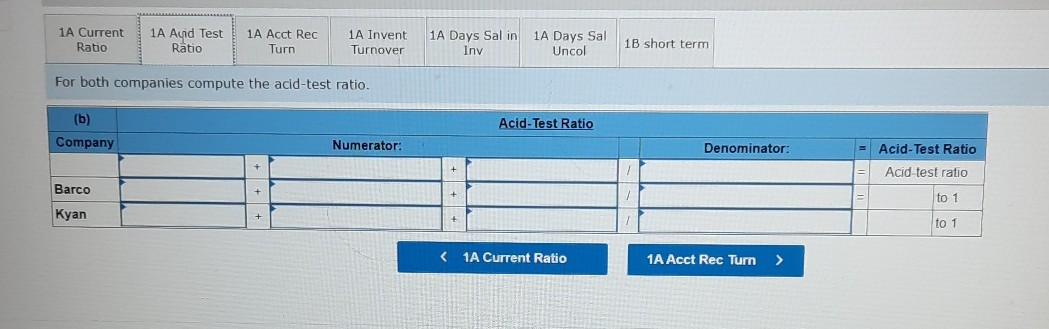
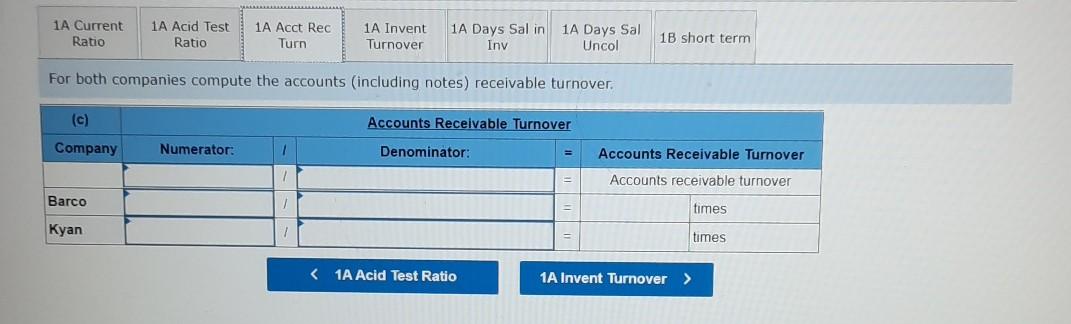
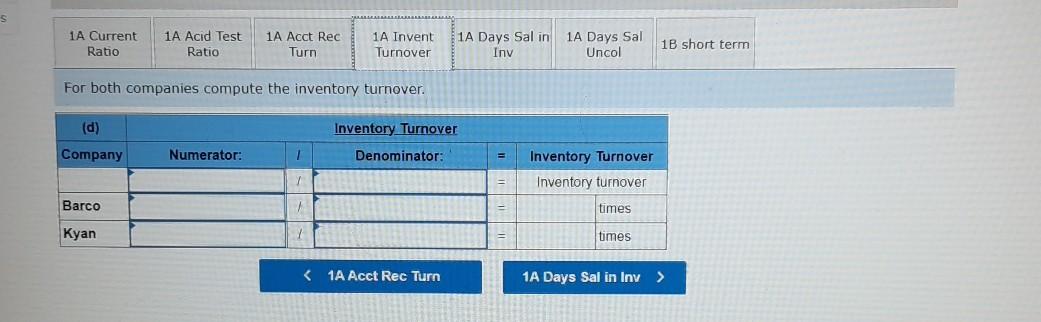
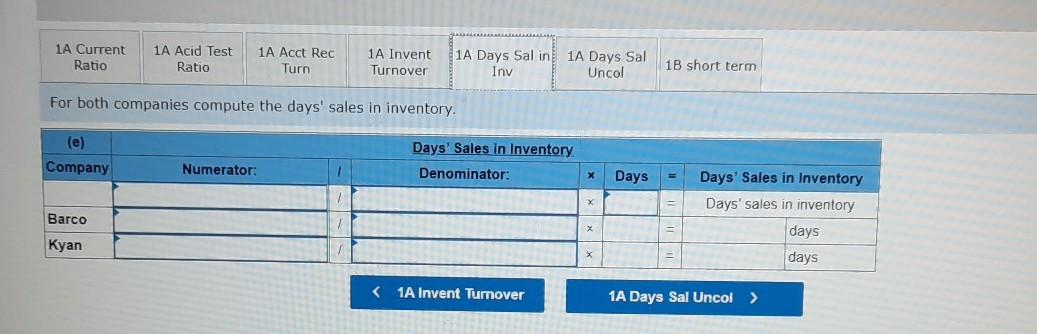
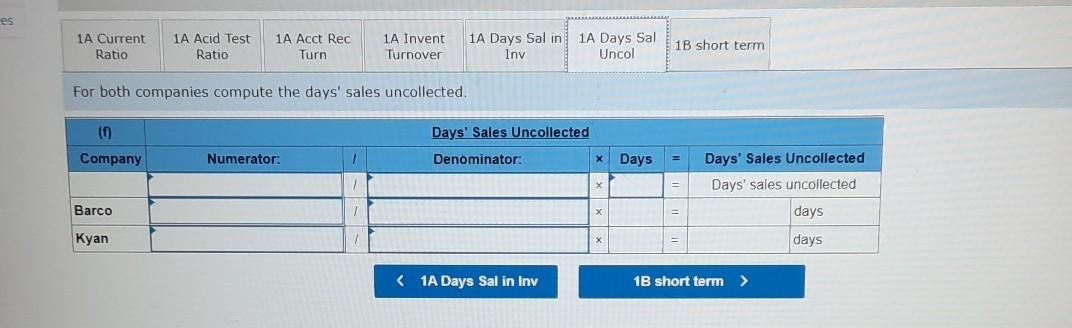
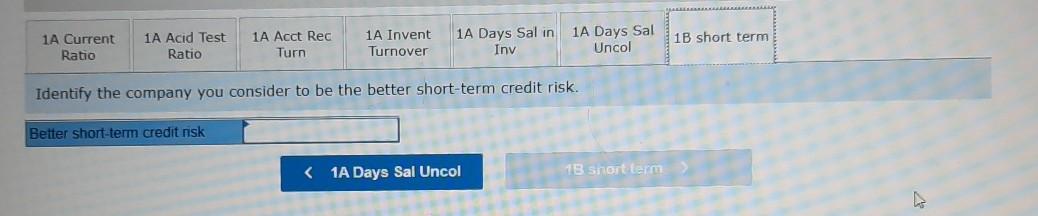
Required information Problem 13-5A (Algo) Comparative ratio analysis LO P3 (The following information applies to the questions displayed below.) Summary information from the financial statements of two companies competing in the same industry follows. Barco Company Kyan Company Barco Company Kyan Company Data from the current year-end balance sheets Assets Cash Accounts receivable, net Merchandise inventory Prepaid expenses Plant assets, net Total assets Liabilities and Equity Current liabilities Long-term notes payable Common stock, $5 par value Retained earnings Total liabilities and equity $ 21,000 34,400 84,340 5,700 280,000 $ 425,440 $ 31,000 56,400 138,500 7,800 311,400 $ 545, 100 $ 890,200 646,500 13,000 24,576 206,124 5.26 Data from the current year's income statement Sales Cost of goods sold Interest expense Income tax expense Net income Basic earnings per share Cash dividends per share Beginning-of-year balance sheet data Accounts receivable, net Merchandise inventory Total assets Common stock, $5 par value Retained earnings $ 810,000 594, 100 7,600 15,569 192,731 6.02. 3.77 4.01 $ 61,340 86,800 160,000 117, 300 $ 425,440 $ 97,300 109,000 196,000 142,800 $ 545, 100 $ 27,800 59,680 428,000 160,000 45,209 $ 50,200 107,400 412,500 196,000 93,868 to Problem 13-5A (Algo) Part 1 Required: 1a. For both companies compute the (a) current ratio, (b) acid-test ratio, (c) accounts receivable turnover, (d) inventory turnover, (e) days' sales in inventory, and days' sales uncollected. (Do not round intermediate colculations.) 1b. Identify the company you consider to be the better short-term credit risk. Complete this question by entering your answers in the tabs below. 1A Current Ratio 1A Acid Test Ratio 1A Acct Rec Tum 1A Invent Turnover 1A Days Sal in Inv 1A Days Sal Uncol 1B short term For both companies compute the current ratio. (a) Current Ratio Company Numerator. Denominator: Current Ratio Current ratio / to 1 Barco Kyan to 1 1A Current Ratio 1A Ayid Test Ratio 1A Acct Rec Turn 1A Invent Turnover 1A Days Sal in Inv 1A Days Sal Uncol 1B short term For both companies compute the acid-test ratio. (b) Company Acid-Test Ratio Numerator: Denominator Acid-Test Ratio Acid test ratio Barco + to 1 Kyan to 1 1A Current Ratio 1A Acid Test Ratio 1A Acct Rec Turn 1A Invent Turnover 1A Days Sal in 1A Days Sal Inv Uncol 1B short term For both companies compute the accounts (including notes) receivable turnover. (c) Accounts Receivable Turnover Company Numerator: 1 Denominator: Accounts Receivable Turnover Accounts receivable turnover Barco times Kyan times s 1A Current Ratio 1A Acid Test Ratio 1A Acct Rec Turn 1A Invent Turnover 1A Days Sal in Inv 1A Days Sal Uncol 1B short term For both companies compute the inventory turnover. (d) Company Inventory Turnover Denominator: Numerator: 1 = Inventory Turnover Inventory turnover Barco times Kyan 7 times 1A Current Ratio 1A Acid Test Ratio 1A Acct Rec Turn 1A Invent Turnover 1A Days Salin Inv 1A Days Sal Uncol 1B short term For both companies compute the days' sales in inventory. (e) Company Numerator: Days' Sales in Inventory Denominator: Days / X Days' Sales in Inventory Days' sales in inventory days Barco X Kyan x days ( 1A Invent Tumover 1A Days Sal Uncol > es 1A Current Ratio 1A Acid Test Ratio 1A Acct Rec Turn 1A Invent Turnover 1A Days Sal in Inv 1A Days Sal Uncol 1B short term For both companies compute the days' sales uncollected. Days' Sales Uncollected (0) Company Numerator: 1 Denominator x Days Days' Sales Uncollected Days' sales uncollected Barco X days Kyan X days 1A Current Ratio 1A Acid Test Ratio 1A Acct Rec Turn 1A Invent Turnover 1 A Days Sal in Inv 1B short term 1A Days Sal Uncol Identify the company you consider to be the better short-term credit risk. Better short-term credit risk
Step by Step Solution
There are 3 Steps involved in it

Get step-by-step solutions from verified subject matter experts
 Study Help