



Question: Problem 2. Assume two rms compete in Cournot competition, but compete for an innite amount of time. The oneshot payoffs are listed below and the
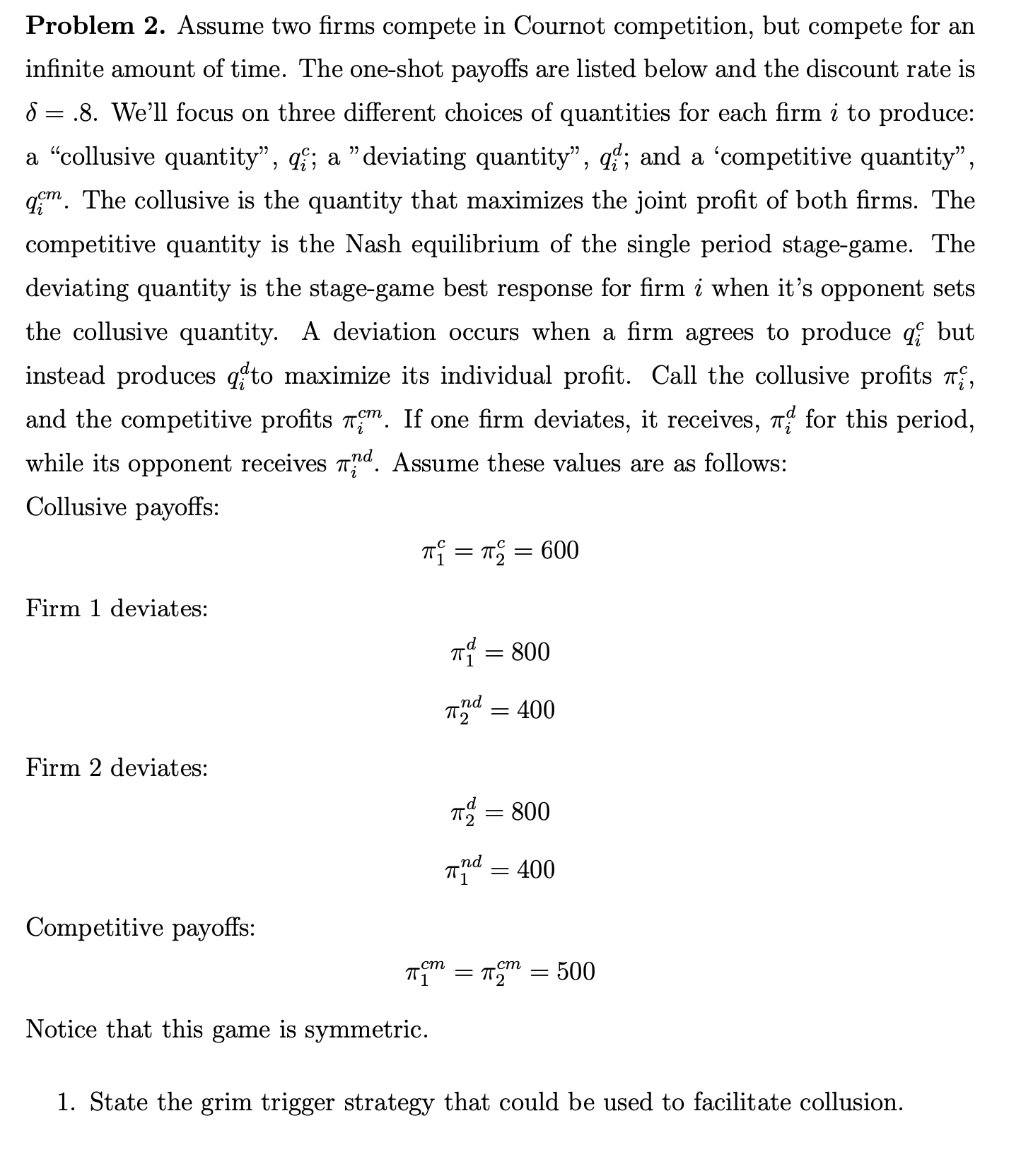
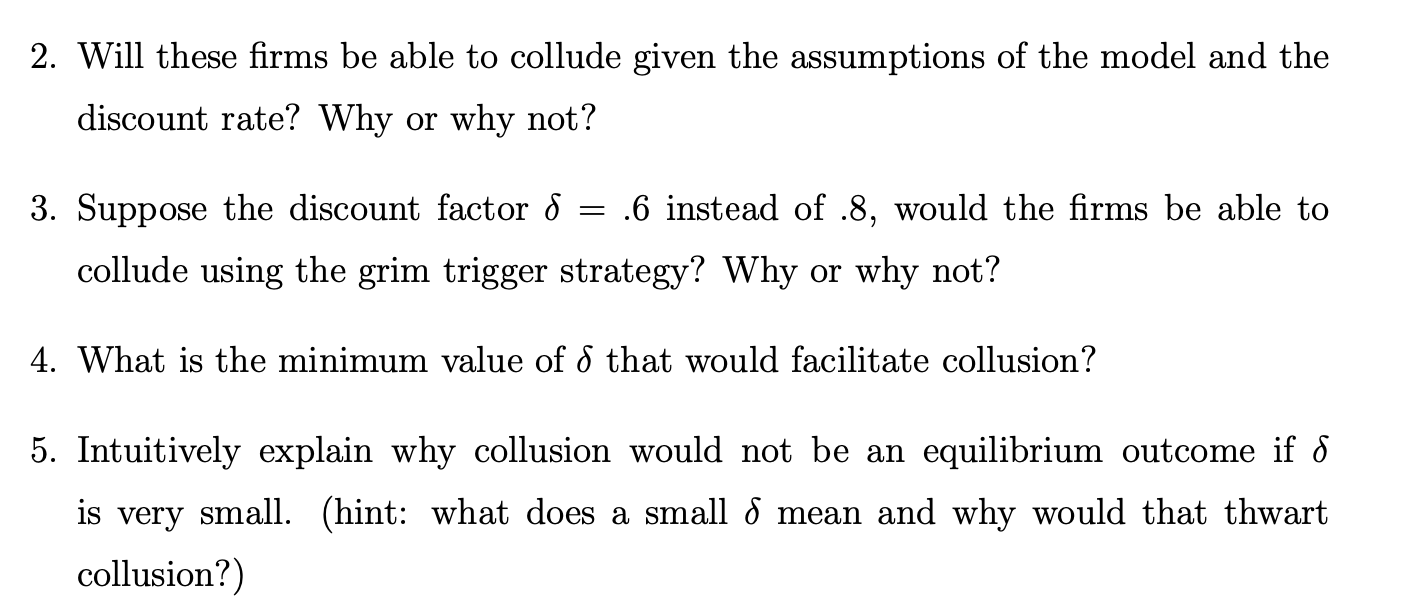

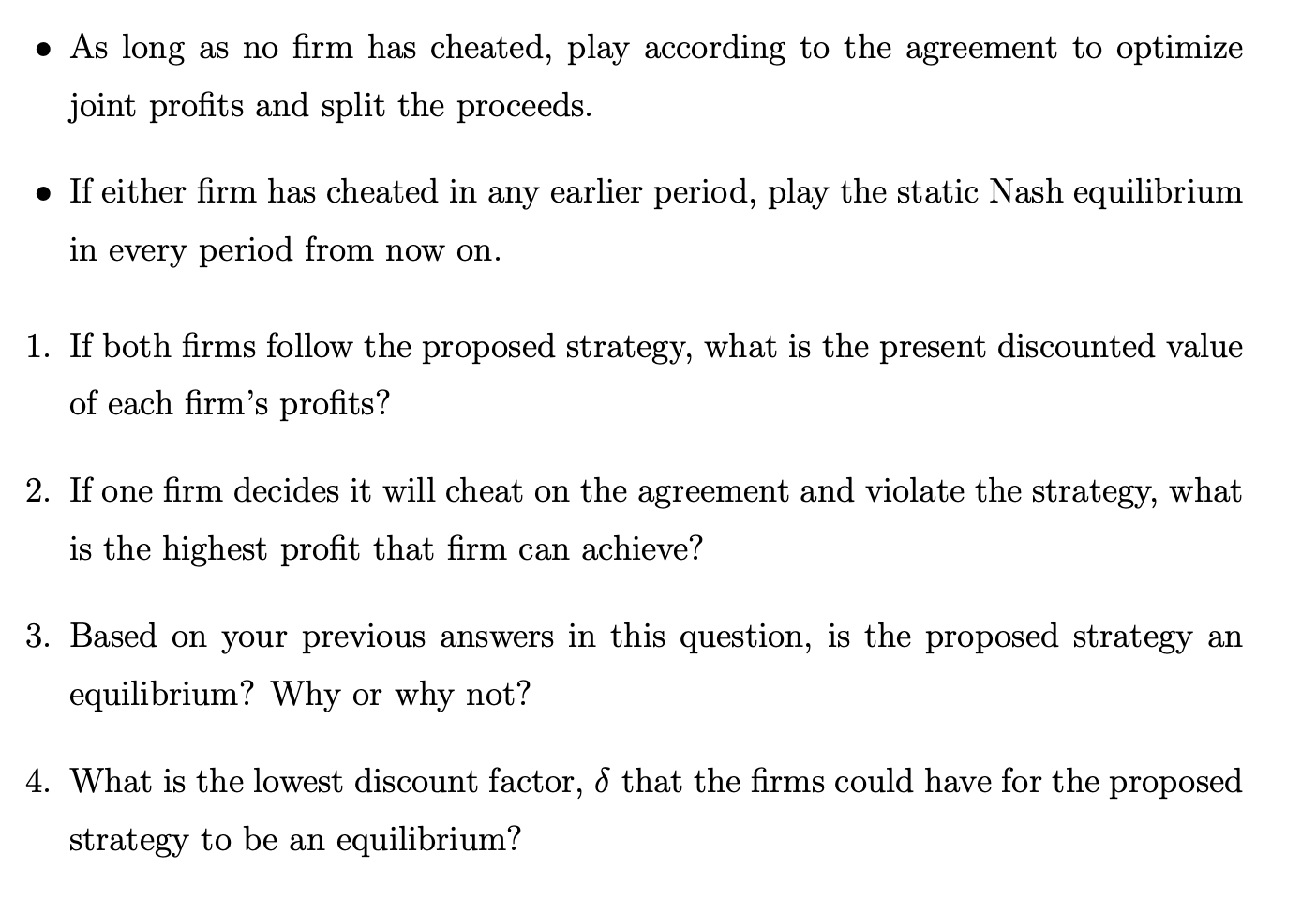
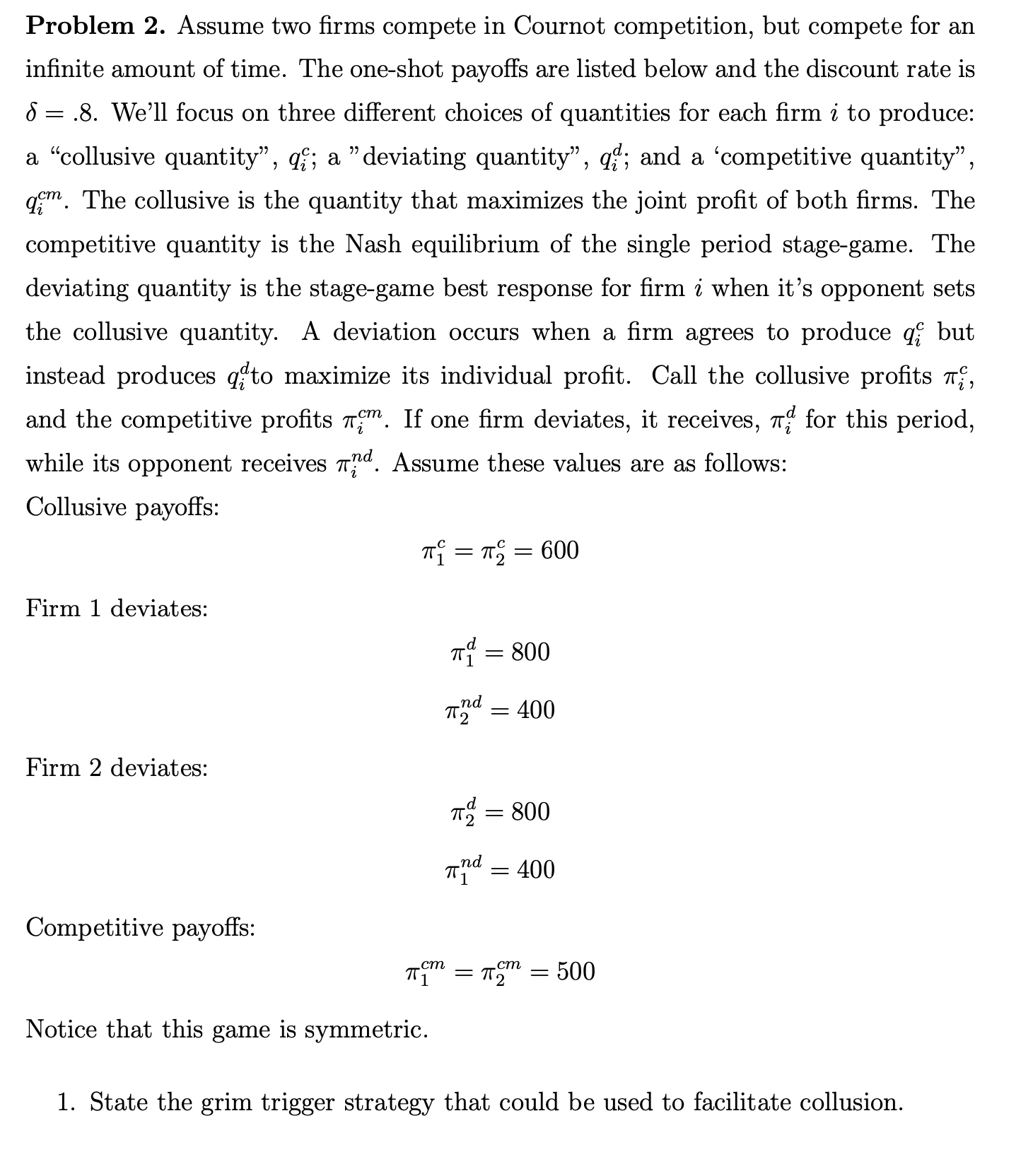
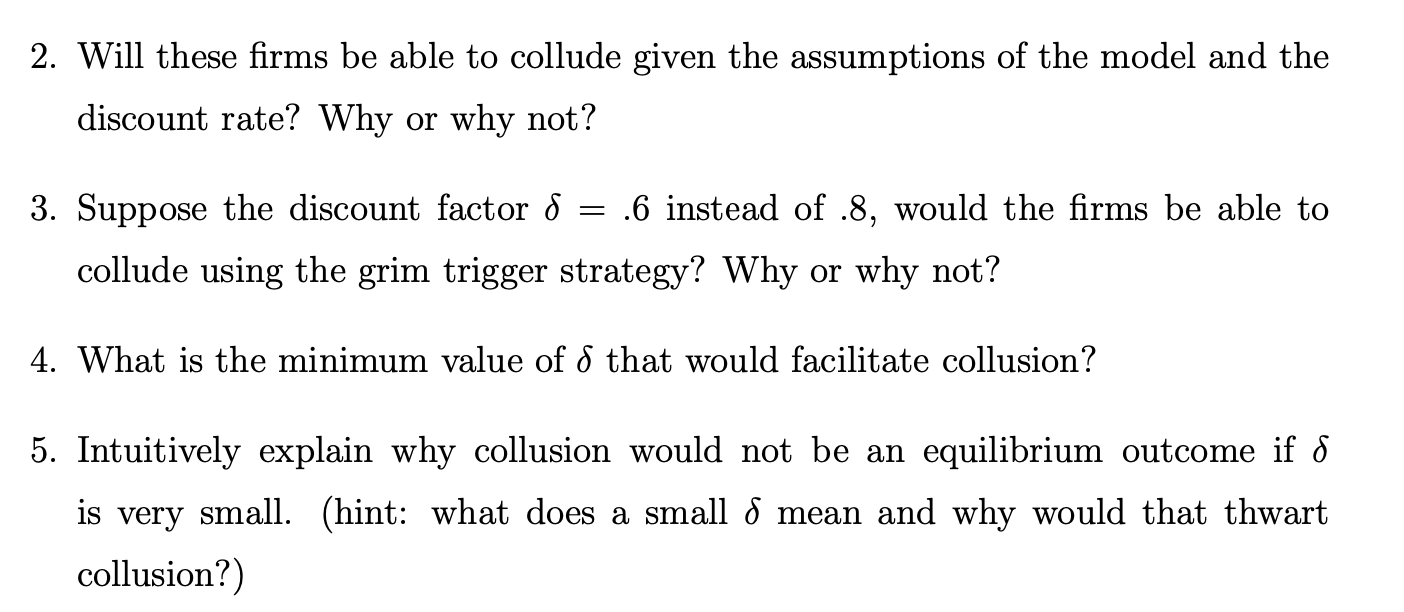

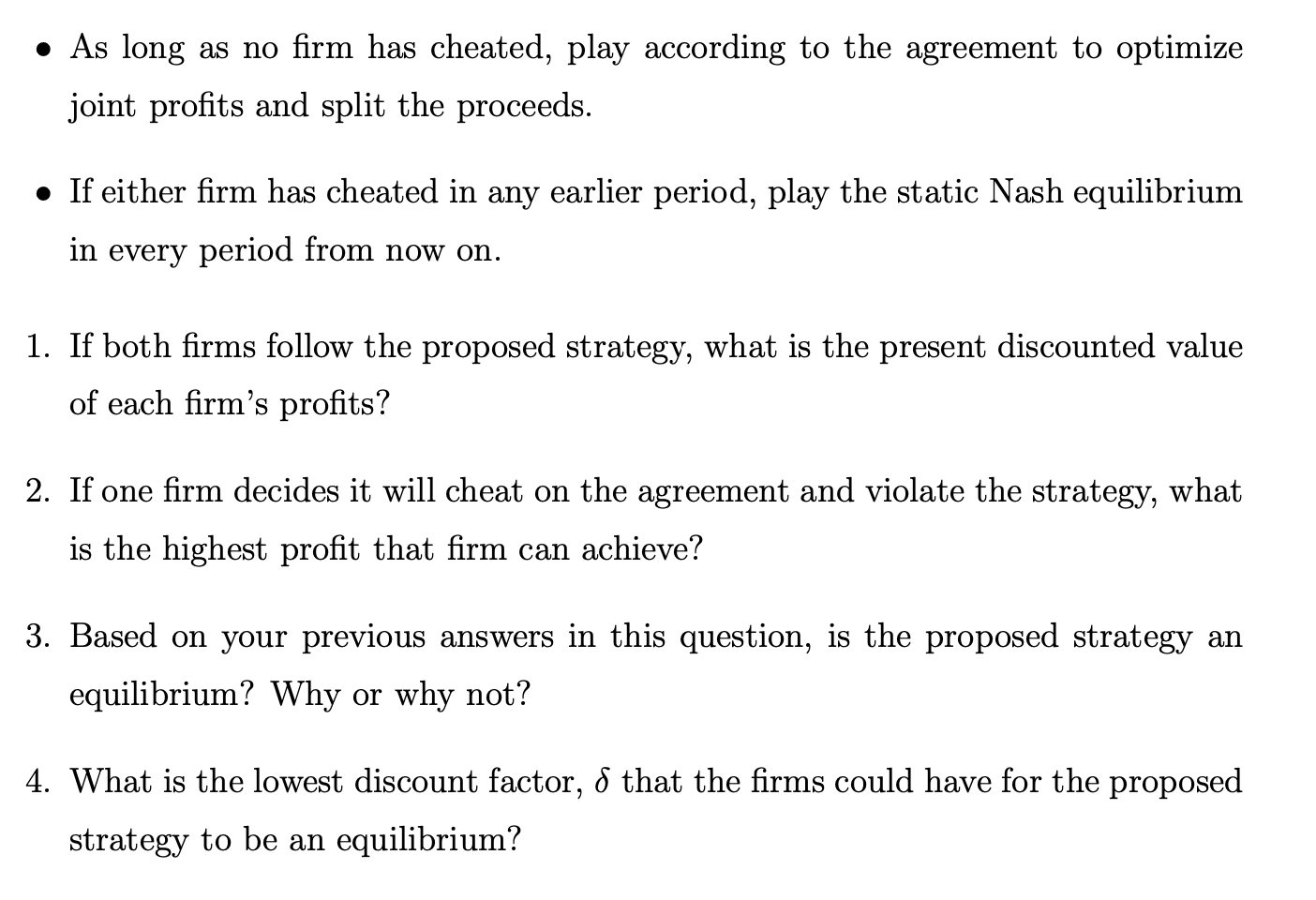
Problem 2. Assume two rms compete in Cournot competition, but compete for an innite amount of time. The oneshot payoffs are listed below and the discount rate is 6 = .8. We'll focus on three different choices of quantities for each rm 7; to produce: a \"collusive quantity\. Will these rms be able to collude given the assumptions of the model and the discount rate? Why or why not? . Suppose the discount factor 6 = .6 instead of .8, would the rms be able to collude using the grim trigger strategy? Why or why not? . What is the minimum value of 5 that would facilitate collusion? . Intuitively explain why collusion would not be an equilibrium outcome if (5 is very small. (hint: what does a small 5 mean and why would that thwart collusion?) Problem 4. Continue to consider the market described in Problem 2, however make the following change: Suppose the same industry exists for an innite number of periods, the discount factor for prots is still 6 = .9. Firms are considering the following strategy: 0 As long as no rm has cheated, play according to the agreement to optimize joint prots and split the proceeds. o If either rm has cheated in any earlier period, play the static Nash equilibrium in every period from now on. 1. If both rms follow the proposed strategy, What is the present discounted value of each rm's prots? 2. If one rm decides it will cheat on the agreement and violate the strategy, What is the highest prot that rm can achieve? 3. Based on your previous answers in this question, is the proposed strategy an equilibrium? Why or Why not? 4. What is the lowest discount factor, 6 that the rms could have for the proposed strategy to be an equilibrium
Step by Step Solution
There are 3 Steps involved in it

Get step-by-step solutions from verified subject matter experts