







Question: Problem 2 . Scheduling Processes with Different Ready Times: 4 2 points There are 7 jobs to be processed, each with a different ready time,
Problem Scheduling Processes with Different Ready Times: points
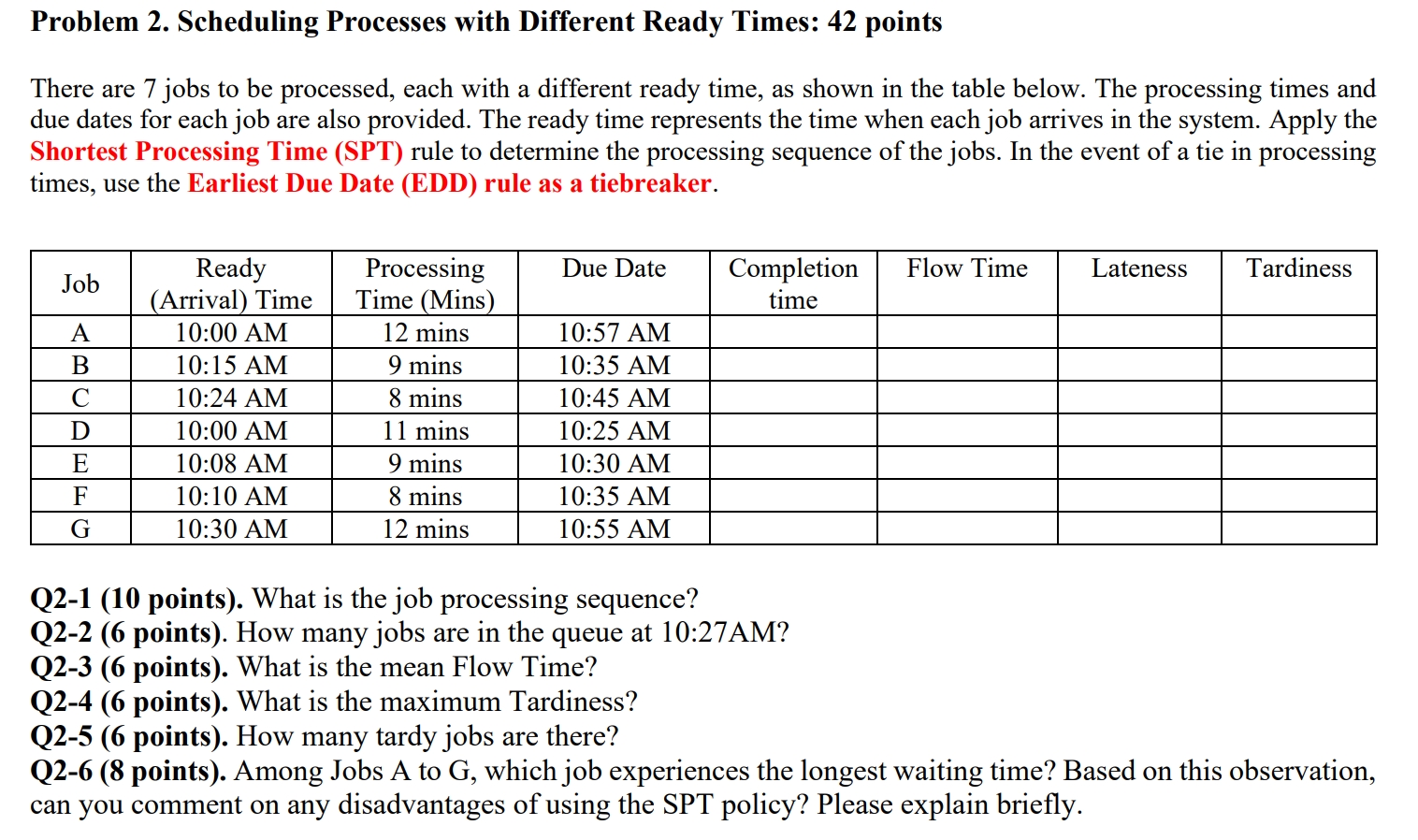
There are jobs to be processed, each with a different ready time, as shown in the table below. The processing times and due dates for each job are also provided. The ready time represents the time when each job arrives in the system. Apply the Shortest Processing Time SPT rule to determine the processing sequence of the jobs. In the event of a tie in processing times, use the Earliest Due Date EDD rule as a tiebreaker.
Q points What is the job processing sequence?
Q points How many jobs are in the queue at :AM
Q points What is the mean Flow Time?
Q points What is the maximum Tardiness?
Q points How many tardy jobs are there?
Q points Among Jobs A to G which job experiences the longest waiting time? Based on this observation, can you comment on any disadvantages of using the SPT policy? Please explain briefly.
Step by Step Solution
There are 3 Steps involved in it
1 Expert Approved Answer
Step: 1 Unlock

Question Has Been Solved by an Expert!
Get step-by-step solutions from verified subject matter experts
Step: 2 Unlock
Step: 3 Unlock
 Study Help