







Question: Problem 2 (Structs and Unions) (20 points) Matt wanted to flex his C programming skills by playing with structs and unions. He devised the following
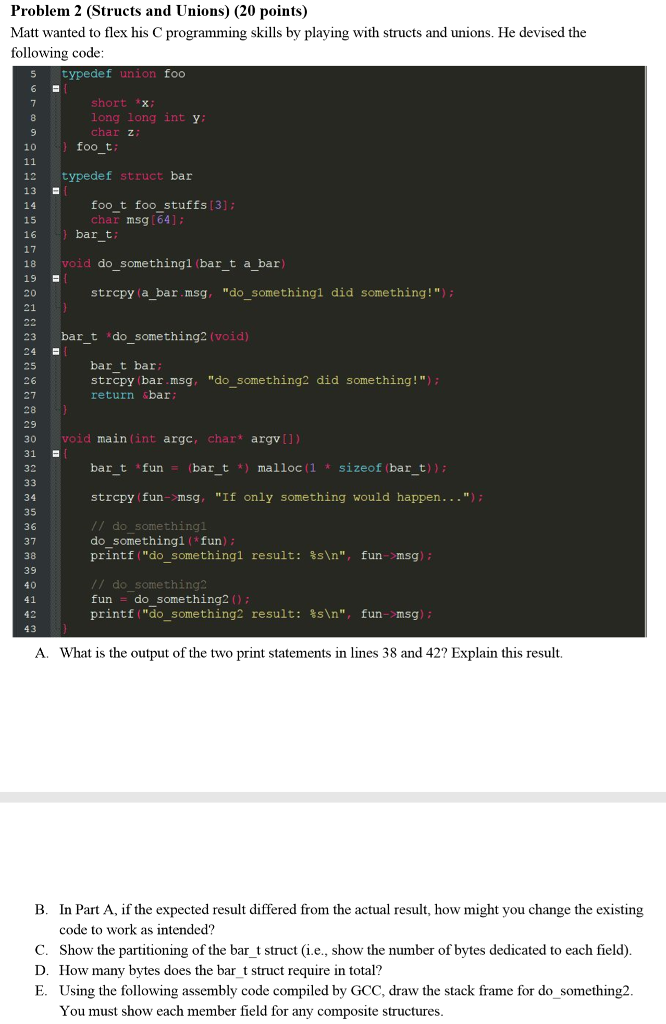
Problem 2 (Structs and Unions) (20 points) Matt wanted to flex his C programming skills by playing with structs and unions. He devised the following code 5 typedef union foo short x long long int y char z 10foo t 12 typedef struct bar 13 14 15 16 bart; 17 18 Vvoid do somethingl (bar t a bar) 19 E 20 21 foo t foo stuffs [3]: char msg [64]: strcpy (a bar msg, "do somethingl did something! ") 23 bar t do something2 (void) 24 E 25 26 27 28 bar t bar strcpy bar .msg, "do_something2 did something!"): return &bar 30 void main (int argc, char argv) 31 E 32 bar t fun(bar tmalloc (1 sizeof (bar t)); strcpy (fun-msg, "If only something would happen. ) 34 35 36 37 38 39 40 // do somethingl do_something1 (*fun) : printf("do-something! result: %s ", fun >msg); // do_something? fun do something2() ; printf("do-something2 result: %s ", fun->msg); 43 A. What is the output of the two print statements in lines 38 and 42? Explain this result. B. In Part A, if the expected result differed from the actual result, how might you change the existing code to work as intended? C. Show the partitioning of the bar_t struct (i.e., show the number of bytes dedicated to each field) D. How many bytes does the bar t struct require in total? E. Using the following assembly code compiled by GCC, draw the stack frame for do_something2. You must show each member field for any composite structures
Step by Step Solution
There are 3 Steps involved in it

Get step-by-step solutions from verified subject matter experts
 Study Help