







Question: Problem 24-1A (Algo) Payback period, net present value, and net cash flow calculation LO P1, P3 Factor Company is planning to add a new product
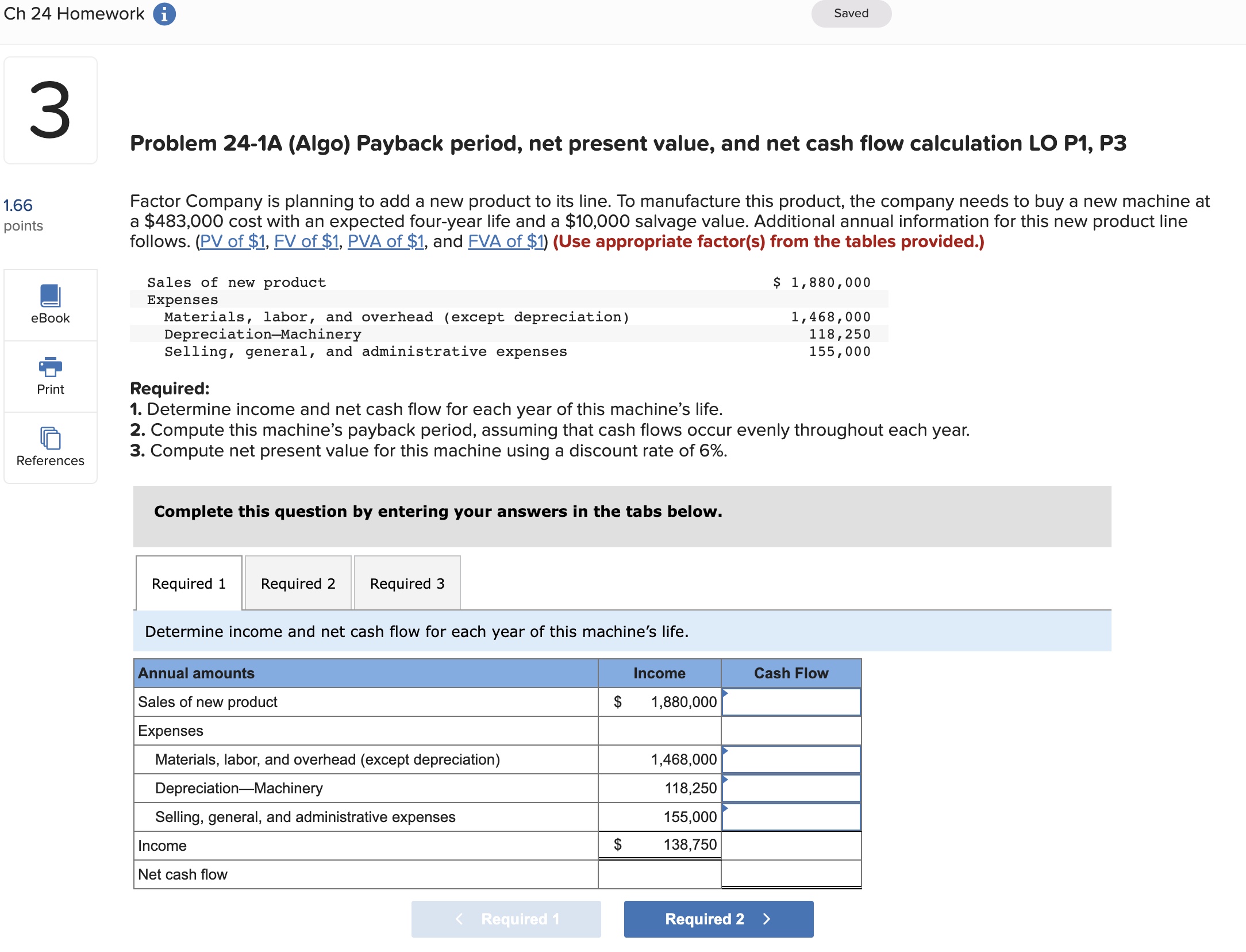
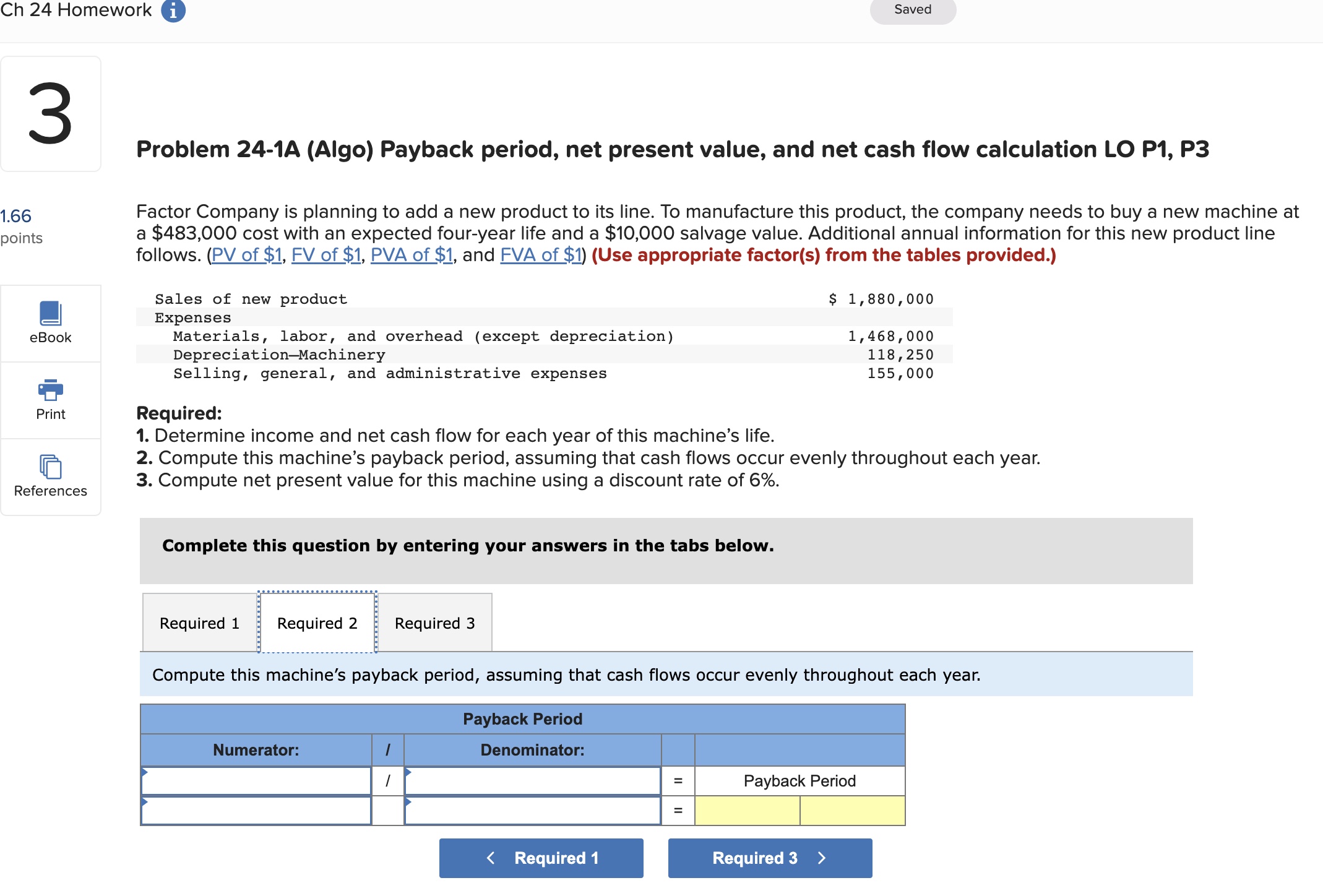
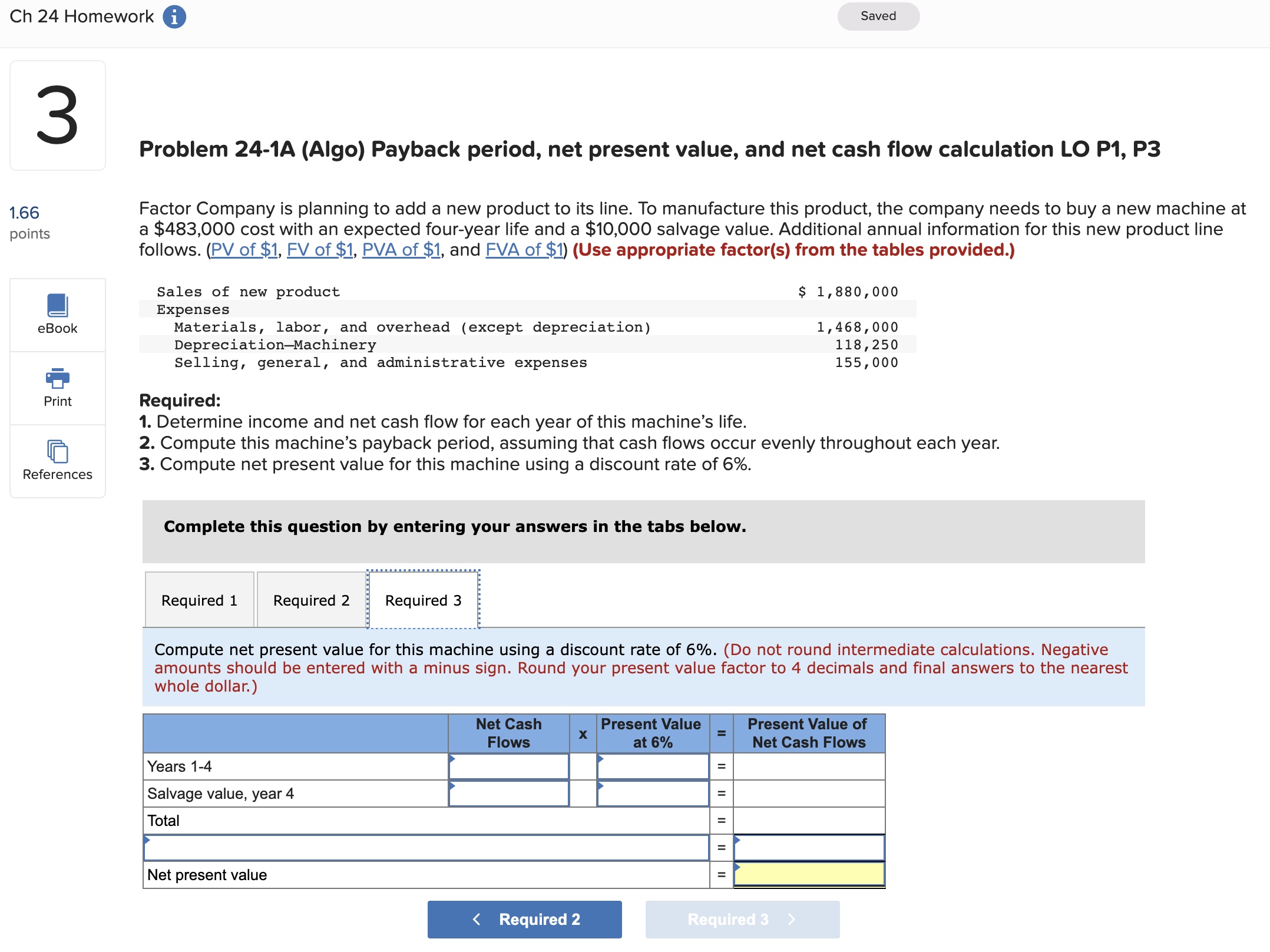
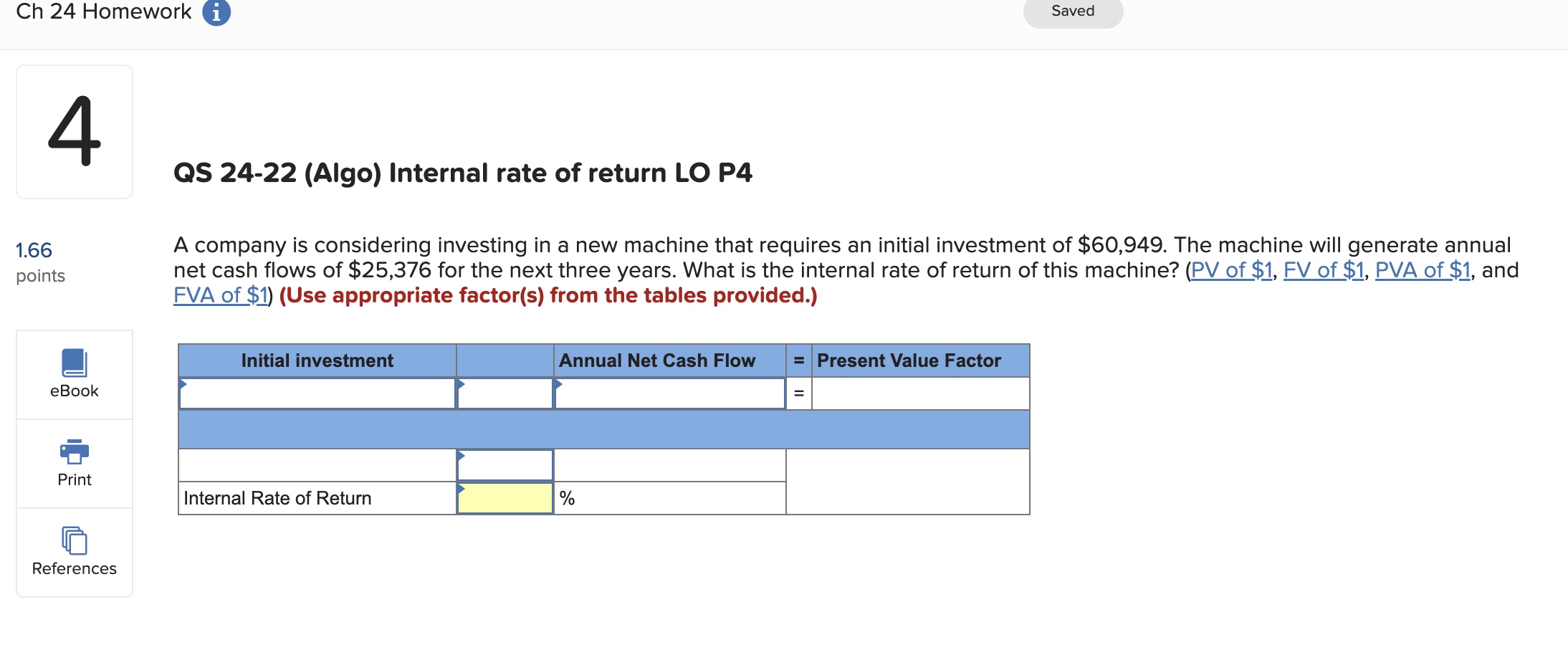
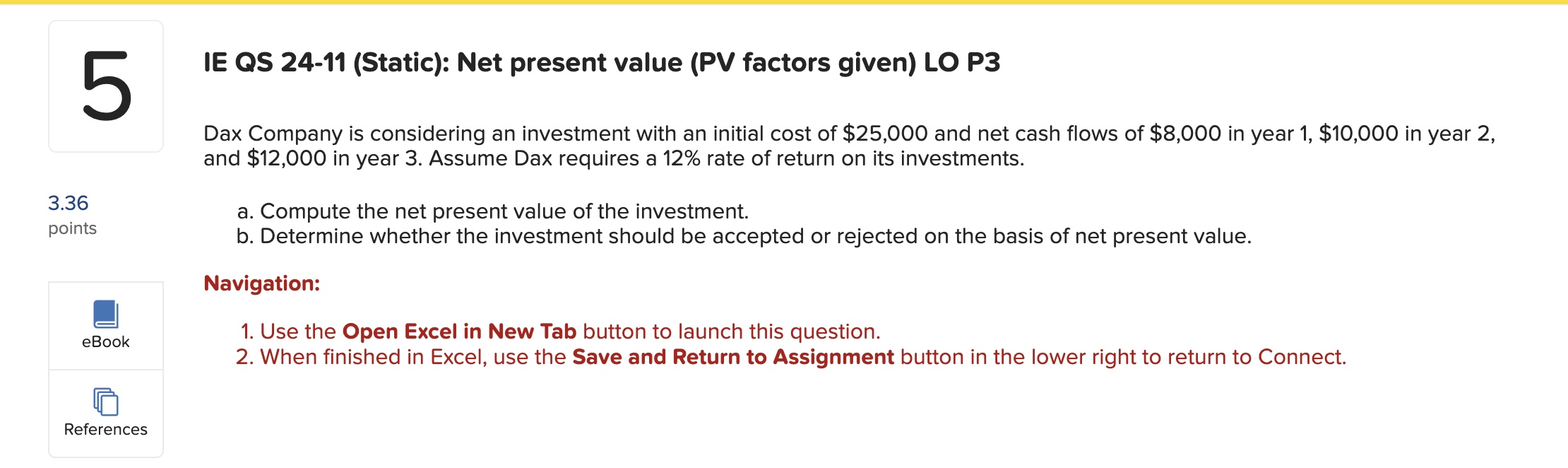
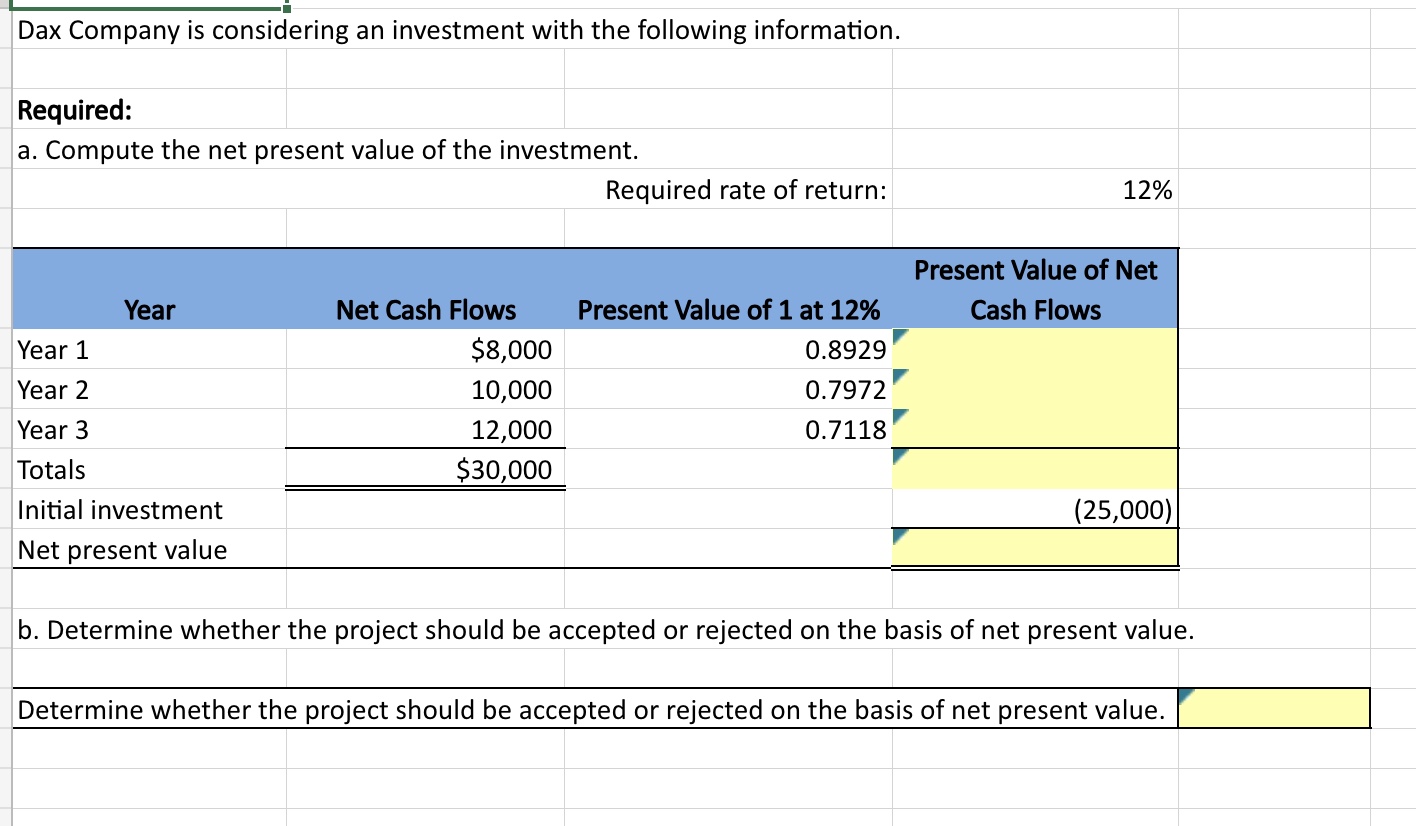
Problem 24-1A (Algo) Payback period, net present value, and net cash flow calculation LO P1, P3 Factor Company is planning to add a new product to its line. To manufacture this product, the company needs to buy a new machine a $483,000 cost with an expected four-year life and a $10,000 salvage value. Additional annual information for this new product line follows. (PV of $1, FV of $1, PVA of $1, and FVA of $1 ) (Use appropriate factor(s) from the tables provided.) Required: 1. Determine income and net cash flow for each year of this machine's life. 2. Compute this machine's payback period, assuming that cash flows occur evenly throughout each year. 3. Compute net present value for this machine using a discount rate of 6%. Complete this question by entering your answers in the tabs below. Determine income and net cash flow for each year of this machine's life. Problem 24-1A (Algo) Payback period, net present value, and net cash flow calculation LO P1, P3 Factor Company is planning to add a new product to its line. To manufacture this product, the company needs to buy a new machine a $483,000 cost with an expected four-year life and a $10,000 salvage value. Additional annual information for this new product line follows. (PV of $1,FV of $1, PVA of $1, and FVA of $1 ) (Use appropriate factor(s) from the tables provided.) Required: 1. Determine income and net cash flow for each year of this machine's life. 2. Compute this machine's payback period, assuming that cash flows occur evenly throughout each year. 3. Compute net present value for this machine using a discount rate of 6%. Complete this question by entering your answers in the tabs below. Compute this machine's payback period, assuming that cash flows occur evenly throughout each year. Problem 24-1A (Algo) Payback period, net present value, and net cash flow calculation LO P1, P3 Factor Company is planning to add a new product to its line. To manufacture this product, the company needs to buy a new machine a $483,000 cost with an expected four-year life and a $10,000 salvage value. Additional annual information for this new product line follows. (PV of $1, FV of $1, PVA of $1, and FVA of $1 ) (Use appropriate factor(s) from the tables provided.) Required: 1. Determine income and net cash flow for each year of this machine's life. 2. Compute this machine's payback period, assuming that cash flows occur evenly throughout each year. 3. Compute net present value for this machine using a discount rate of 6%. Complete this question by entering your answers in the tabs below. Compute net present value for this machine using a discount rate of 6%. (Do not round intermediate calculations. Negative amounts should be entered with a minus sign. Round your present value factor to 4 decimals and final answers to the nearest whole dollar.) A company is considering investing in a new machine that requires an initial investment of $60,949. The machine will generate annual net cash flows of $25,376 for the next three years. What is the internal rate of return of this machine? (PV of $1, FV of $1, PVA of $1, and FVA of \$1) (Use appropriate factor(s) from the tables provided.) IE QS 24-11 (Static): Net present value (PV factors given) LO P3 Dax Company is considering an investment with an initial cost of $25,000 and net cash flows of $8,000 in year 1,$10,000 in year 2 , and $12,000 in year 3 . Assume Dax requires a 12% rate of return on its investments. a. Compute the net present value of the investment. b. Determine whether the investment should be accepted or rejected on the basis of net present value. Navigation: 1. Use the Open Excel in New Tab button to launch this question. 2. When finished in Excel, use the Save and Return to Assignment button in the lower right to return to Connect. Dax Company is considering an investment with the following information. Required: a. Compute the net present value of the investment. Required rate of return: 12% b. Determine whether the project should be accepted or rejected on the basis of net present value. Determine whether the project should be accepted or rejected on the basis of net present value
Step by Step Solution
There are 3 Steps involved in it

Get step-by-step solutions from verified subject matter experts
 Study Help