Question: Problem # 3 - Part A: This problem is a multi-step (two parts) problem. Part A: At i=0, you purchase a four-year, 5 percent coupon
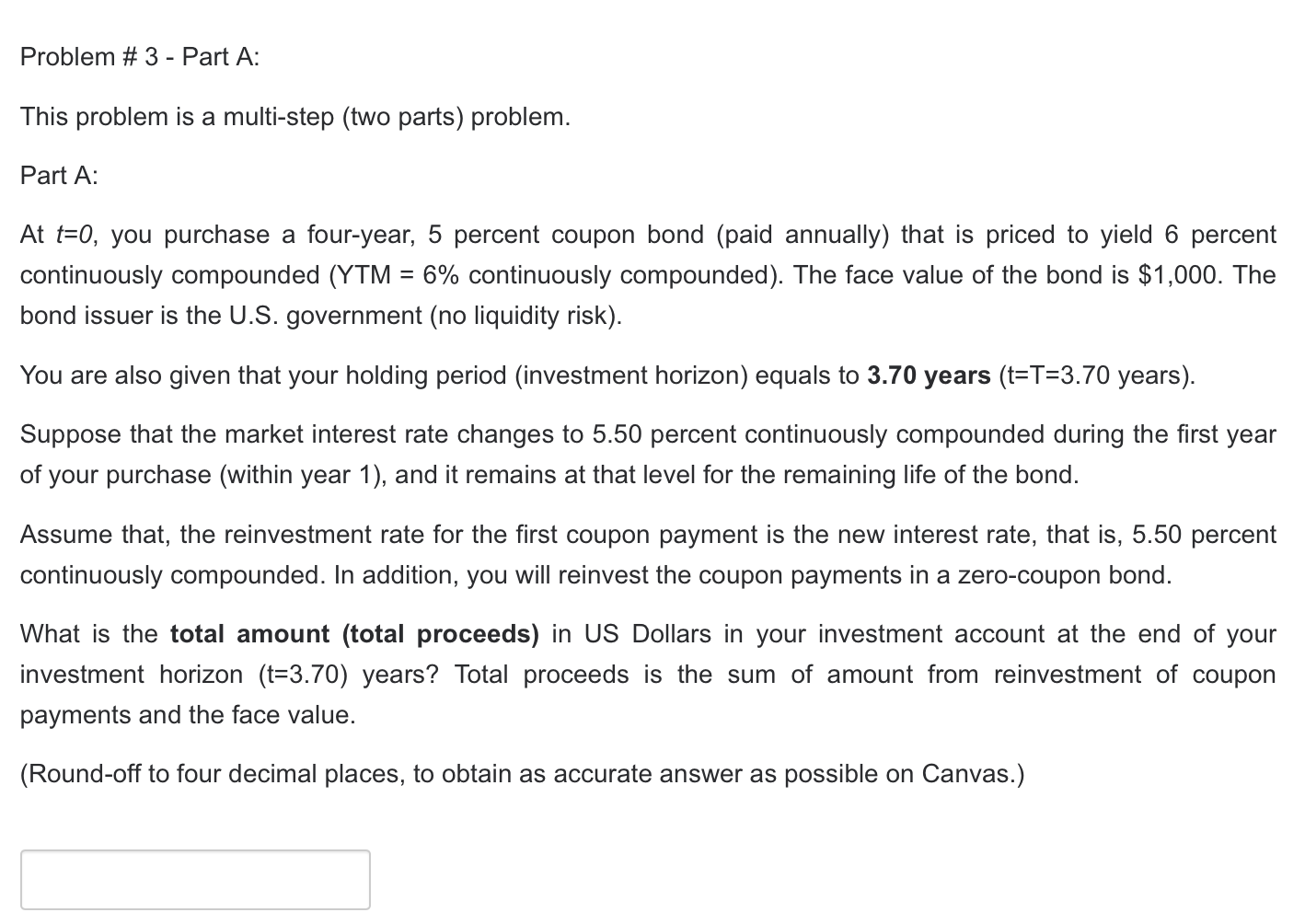
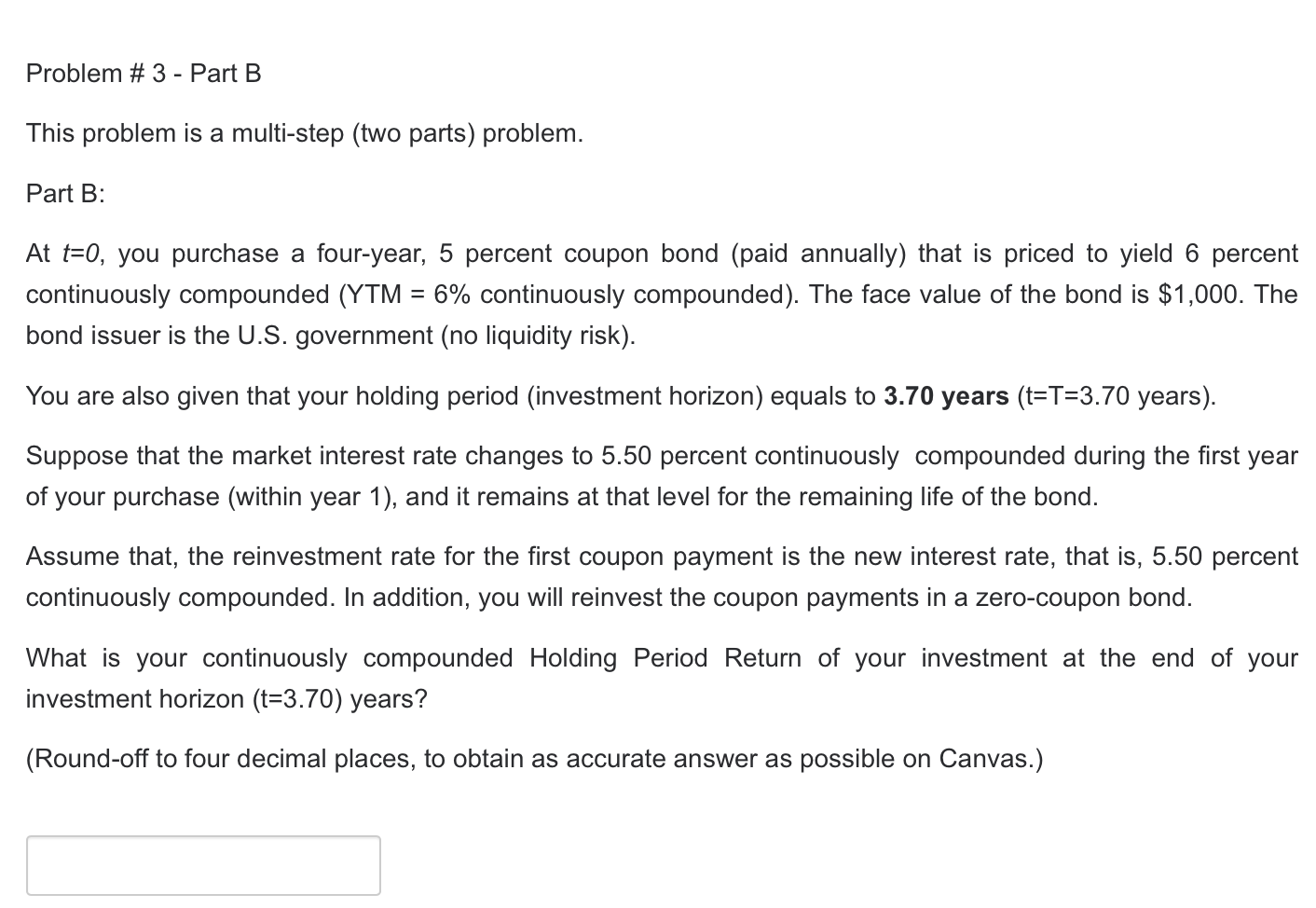
Problem # 3 - Part A: This problem is a multi-step (two parts) problem. Part A: At i=0, you purchase a four-year, 5 percent coupon bond (paid annually) that is priced to yield 6 percent continuously compounded (YTM = 6% continuously compounded). The face value of the bond is $1 ,000. The bond issuer is the US. government (no liquidity risk). You are also given that your holding period (investment horizon) equals to 3.70 years (t=T=3.70 years). Suppose that the market interest rate changes to 5.50 percent continuously compounded during the rst year of your purchase (within year 1), and it remains at that level for the remaining life of the bond. Assume that, the reinvestment rate for the first coupon payment is the new interest rate, that is, 5.50 percent continuously compounded. In addition, you will reinvest the coupon payments in a zero-coupon bond. What is the total amount (total proceeds) in US Dollars in your investment account at the end of your investment horizon (t=3.70) years? Total proceeds is the sum of amount from reinvestment of coupon payments and the face value. (Round-off to four decimal places, to obtain as accurate answer as possible on Canvas.) Problem # 3 - Part B This problem is a multi-step (two parts) problem. Part B: At i=0, you purchase a four-year, 5 percent coupon bond (paid annually) that is priced to yield 6 percent continuously compounded (YTM = 6% continuously compounded). The face value of the bond is $1,000. The bond issuer is the U.S. government (no liquidity risk). You are also given that your holding period (investment horizon) equals to 3.70 years (t=T=3.70 years). Suppose that the market interest rate changes to 5.50 percent continuously compounded during the first year of your purchase (within year 1), and it remains at that level for the remaining life of the bond. Assume that, the reinvestment rate for the first coupon payment is the new interest rate, that is, 5.50 percent continuously compounded. In addition, you will reinvest the coupon payments in a zero-coupon bond. What is your continuously compounded Holding Period Return of your investment at the end of your investment horizon (t=3.70) years? (Round-off to four decimal places, to obtain as accurate answer as possible on Canvas.)
Step by Step Solution
There are 3 Steps involved in it
1 Expert Approved Answer
Step: 1 Unlock
Question Has Been Solved by an Expert!
Get step-by-step solutions from verified subject matter experts
Step: 2 Unlock
Step: 3 Unlock
Students Have Also Explored These Related Finance Questions!









 Study Help