







Question: Problem 3: Runtime Analysis In Big- notation, analyze the running time of the following four pieces of code/pseudo-code. Describe it as a function of the
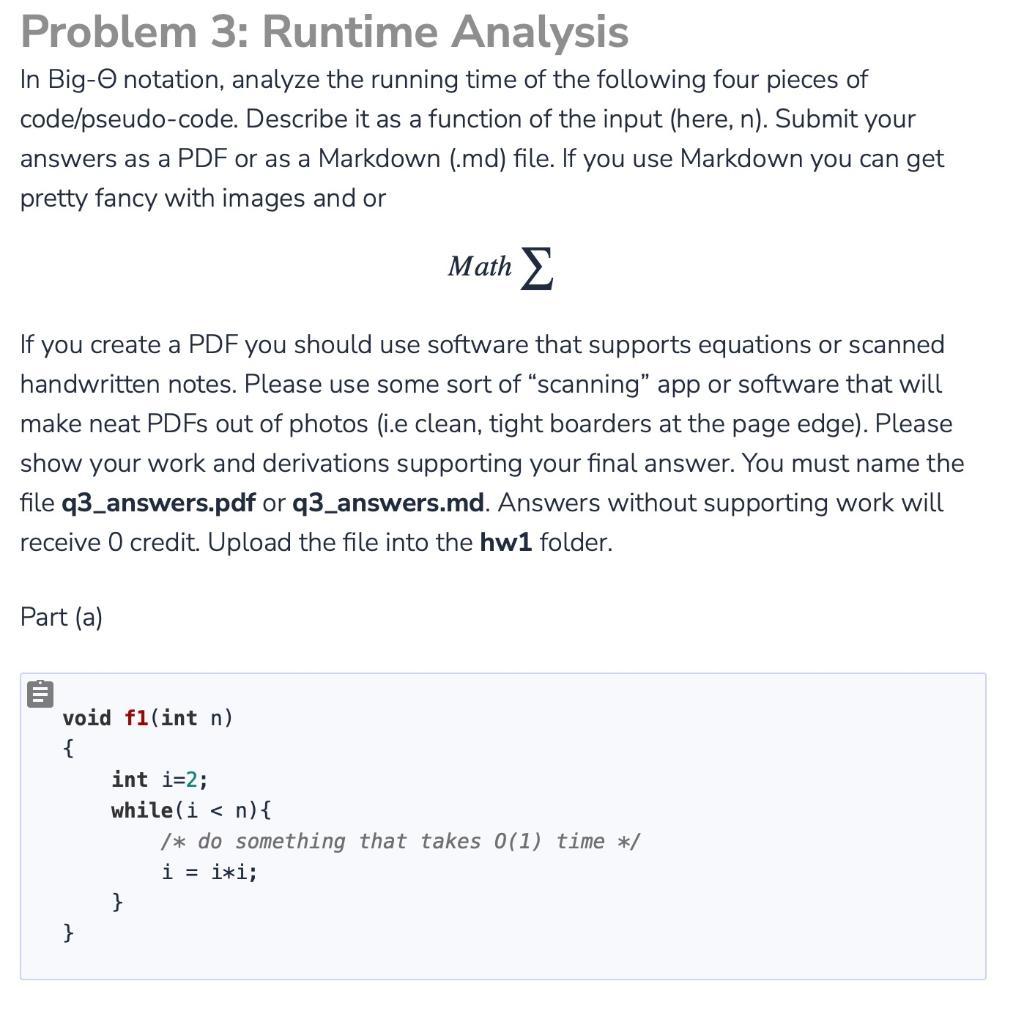
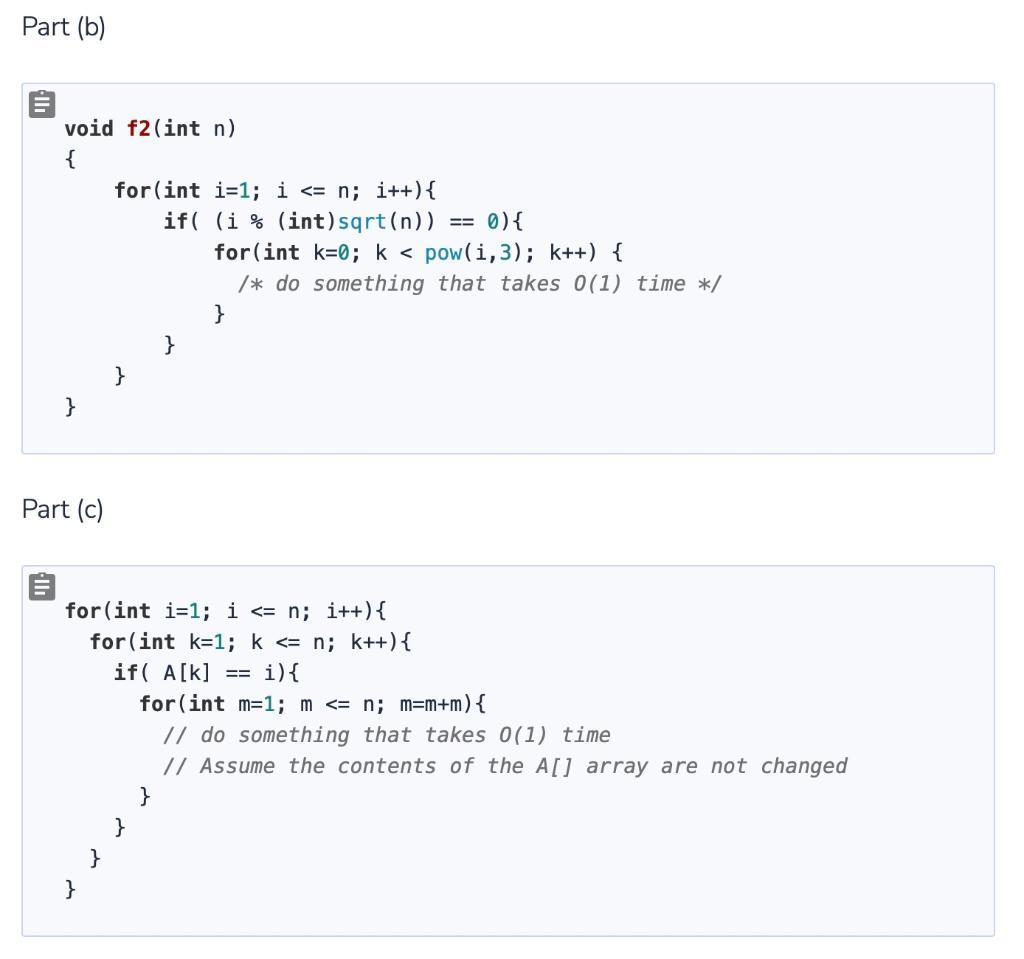
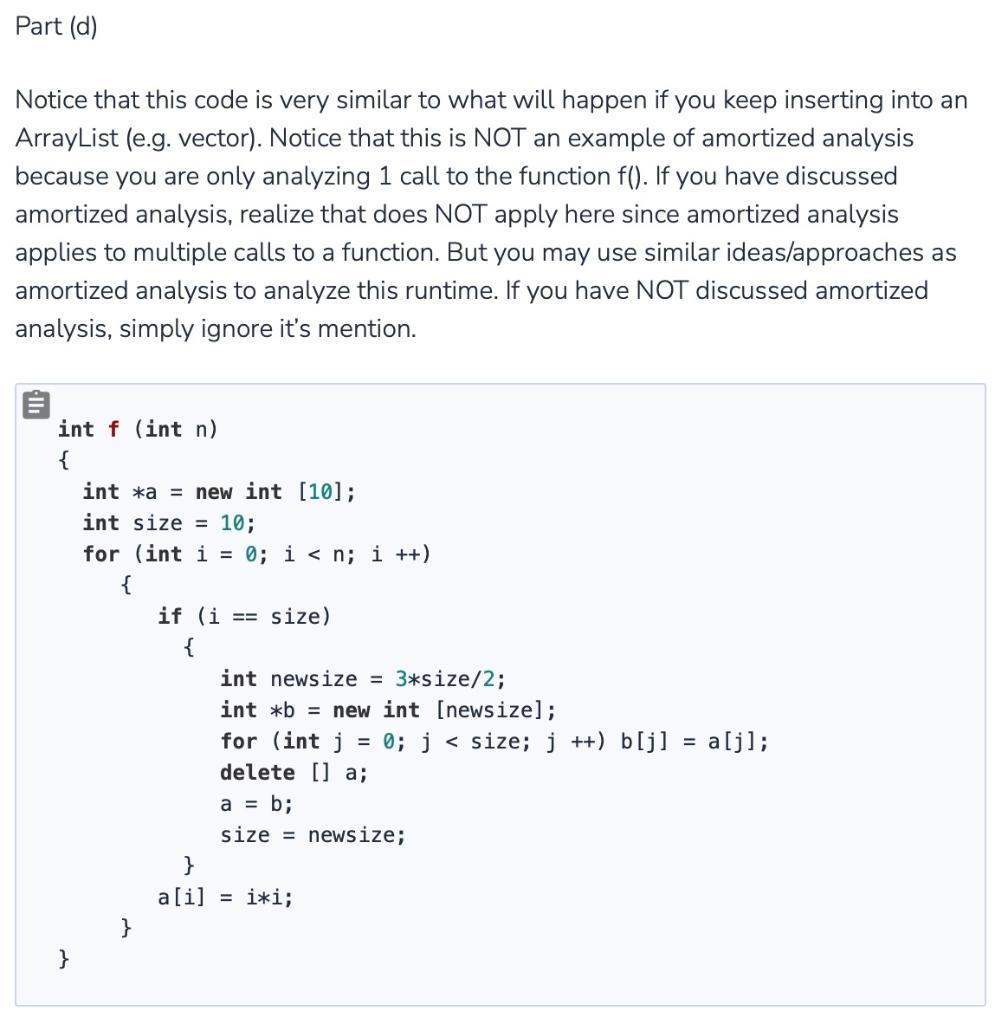
Problem 3: Runtime Analysis In Big- notation, analyze the running time of the following four pieces of code/pseudo-code. Describe it as a function of the input (here, n ). Submit your answers as a PDF or as a Markdown (.md) file. If you use Markdown you can get pretty fancy with images and or Math If you create a PDF you should use software that supports equations or scanned handwritten notes. Please use some sort of "scanning" app or software that will make neat PDFs out of photos (i.e clean, tight boarders at the page edge). Please show your work and derivations supporting your final answer. You must name the file q3_answers.pdf or q3_answers.md. Answers without supporting work will receive 0 credit. Upload the file into the hw1 folder. Part (a) Part (c) Part (d) Votice that this code is very similar to what will happen if you keep inserting into an ArrayList (e.g. vector). Notice that this is NOT an example of amortized analysis pecause you are only analyzing 1 call to the function f(). If you have discussed amortized analysis, realize that does NOT apply here since amortized analysis applies to multiple calls to a function. But you may use similar ideas/approaches as amortized analysis to analyze this runtime. If you have NOT discussed amortized analysis, simply ignore it's mention
Step by Step Solution
There are 3 Steps involved in it

Get step-by-step solutions from verified subject matter experts
 Study Help