



Question: Problem 3. Suppose a flower shop has a monopoly in the market for a new type of orchid, which no other flower shop is able
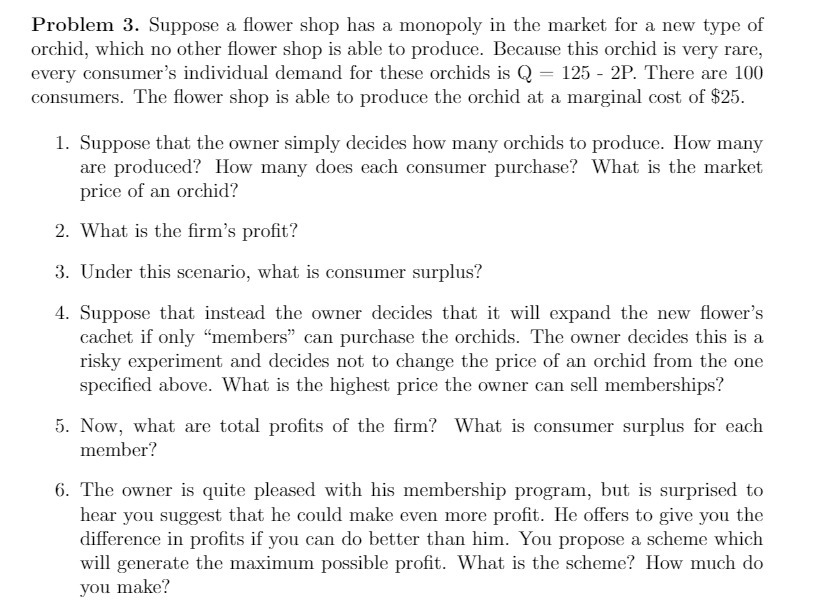
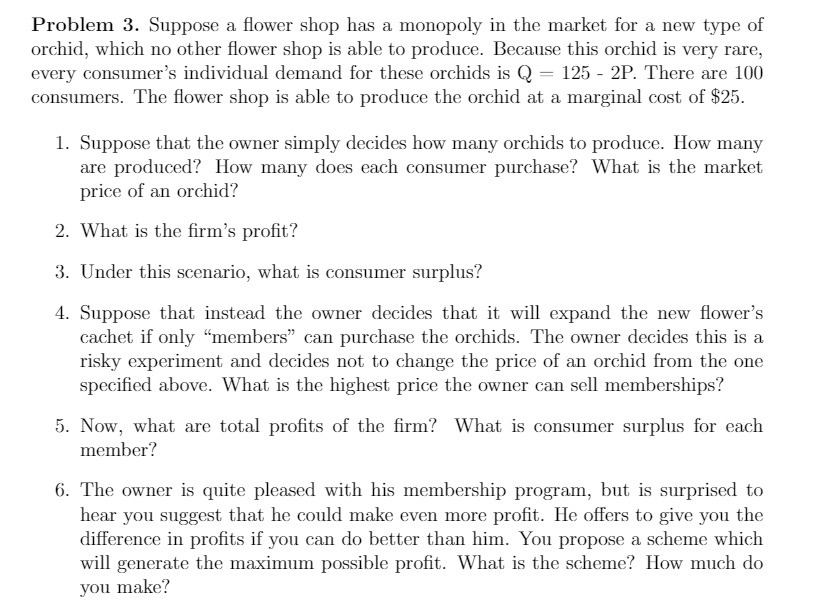
Problem 3. Suppose a flower shop has a monopoly in the market for a new type of orchid, which no other flower shop is able to produce. Because this orchid is very rare, every consumer's individual demand for these orchids is Q = 125 - 2P. There are 100 consumers. The flower shop is able to produce the orchid at a marginal cost of $25. 1. Suppose that the owner simply decides how many orchids to produce. How many are produced? How many does each consumer purchase? What is the market price of an orchid? 2. What is the firm's profit? 3. Under this scenario, what is consumer surplus? 4. Suppose that instead the owner decides that it will expand the new flower's cachet if only "members" can purchase the orchids. The owner decides this is a risky experiment and decides not to change the price of an orchid from the one specified above. What is the highest price the owner can sell memberships? 5. Now, what are total profits of the firm? What is consumer surplus for each member? 6. The owner is quite pleased with his membership program, but is surprised to hear you suggest that he could make even more profit. He offers to give you the difference in profits if you can do better than him. You propose a scheme which will generate the maximum possible profit. What is the scheme? How much do you make
Step by Step Solution
There are 3 Steps involved in it

Get step-by-step solutions from verified subject matter experts