







Question: Problem 3-39 (Algorithmic) (LO. 5, 6,9) Toby and Nancy are engaged and plan to get married. Toby is a full-time student and earns $9,400 from
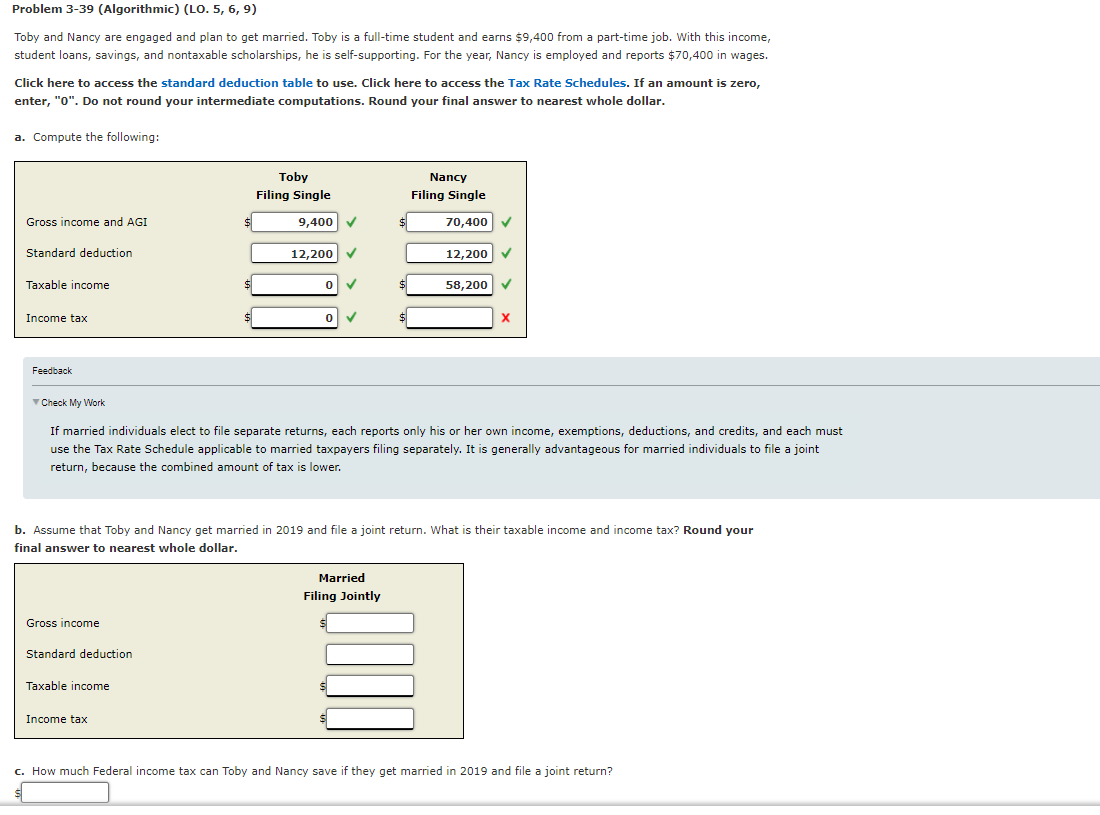
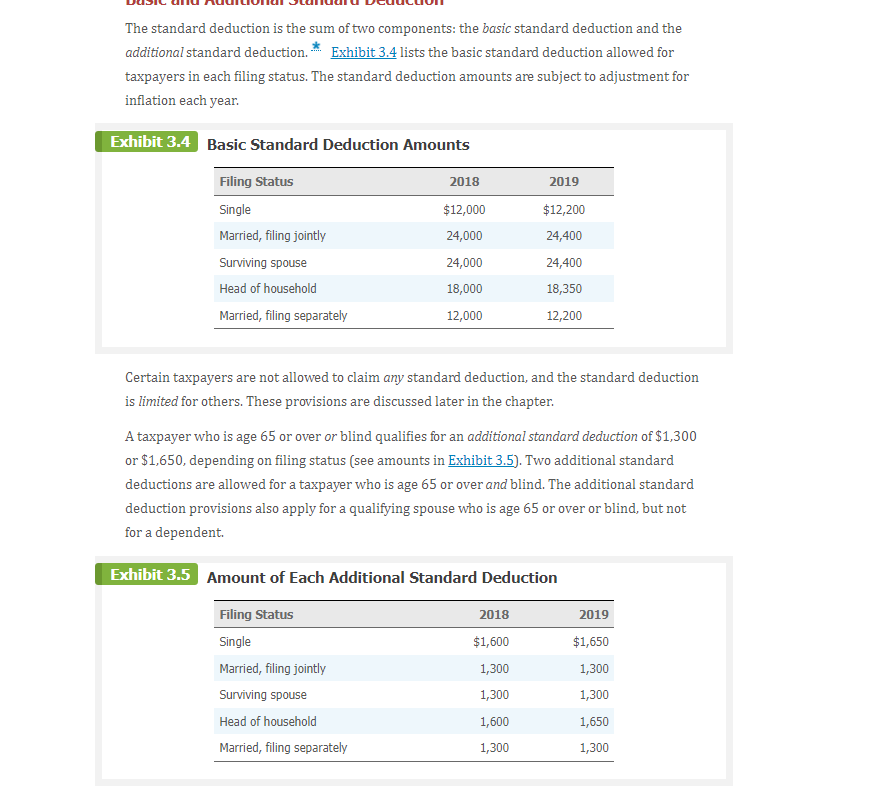
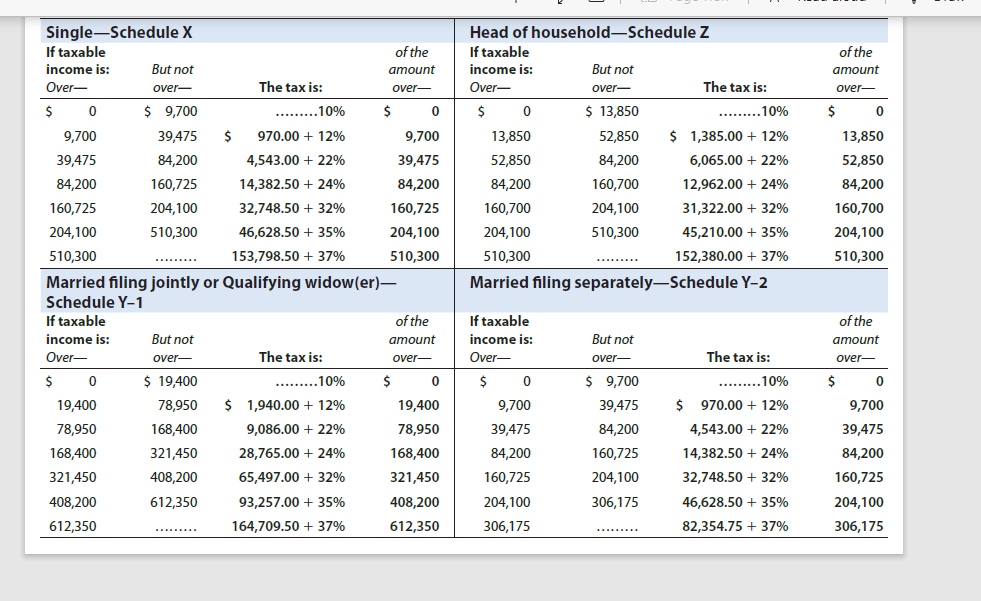
Problem 3-39 (Algorithmic) (LO. 5, 6,9) Toby and Nancy are engaged and plan to get married. Toby is a full-time student and earns $9,400 from a part-time job. With this income, student loans, savings, and nontaxable scholarships, he is self-supporting. For the year, Nancy is employed and reports $70,400 in wages. Click here to access the standard deduction table to use. Click here to access the Tax Rate Schedules. If an amount is zero, enter, "0". Do not round your intermediate computations. Round your final answer to nearest whole dollar. a. Compute the following: Toby Filing Single Nancy Filing Single Gross income and AGI 9,400 70,400 Standard deduction 12,200 12,200 Taxable income $ 0 58,200 Income tax $ 0 Feedback Check My Work If married individuals elect to file separate returns, each reports only his or her own income, exemptions, deductions, and credits, and each must use the Tax Rate Schedule applicable to married taxpayers filing separately. It is generally advantageous for married individuals to file a joint return, because the combined amount of tax is lower. b. Assume that Toby and Nancy get married in 2019 and file a joint return. What is their taxable income and income tax? Round your final answer to nearest whole dollar. Married Filing Jointly Gross income Standard deduction Taxable income Income tax C. How much Federal income tax can Toby and Nancy save if they get married in 2019 and file a joint return? The standard deduction is the sum of two components: the basic standard deduction and the additional standard deduction. * Exhibit 3.4 lists the basic standard deduction allowed for taxpayers in each filing status. The standard deduction amounts are subject to adjustment for inflation each year. Exhibit 3.4 Basic Standard Deduction Amounts 2018 2019 $12,000 24,000 Filing Status Single Married, filing jointly Surviving spouse Head of household Married, filing separately $12,200 24,400 24,400 24,000 18,000 18,350 12,000 12,200 Certain taxpayers are not allowed to claim any standard deduction, and the standard deduction is limited for others. These provisions are discussed later in the chapter. A taxpayer who is age 65 or over or blind qualifies for an additional standard deduction of $1,300 or $1,650, depending on filing status (see amounts in Exhibit 3.5). Two additional standard deductions are allowed for a taxpayer who is age 65 or over and blind. The additional standard deduction provisions also apply for a qualifying spouse who is age 65 or over or blind, but not for a dependent. Exhibit 3.5 Amount of Each Additional Standard Deduction 2018 2019 $1,600 $1,650 1,300 1,300 Filing Status Single Married, filing jointly Surviving spouse Head of household Married, filing separately 1,300 1,300 1,600 1,650 1,300 1,300 Single-Schedule X If taxable income is: But not Over- over- $ 0 $ 9,700 The tax is: of the amount over- $ 0 of the amount over- $ 0 ......... 10% Head of householdSchedule Z If taxable income is: But not Over- over- The tax is: $ 0 $ 13,850 ......... 10% 13,850 52,850 $ 1,385.00 + 12% 52,850 84,200 6,065.00 + 22% 84,200 160,700 12,962.00 + 24% 160,700 204,100 31,322.00 + 32% 204,100 510,300 45,210.00 + 35% 510,300 152,380.00 + 37% Married filing separatelySchedule Y-2 13,850 52,850 84,200 160,700 204,100 510,300 9,700 39,475 $ 970.00 + 12% 9,700 39,475 84,200 4,543.00 + 22% 39,475 84,200 160,725 14,382.50 + 24% 84,200 160,725 204,100 32,748.50 + 32% 160,725 204,100 510,300 46,628.50 + 35% 204,100 510,300 153,798.50 + 37% 510,300 Married filing jointly or Qualifying widow(er) - Schedule Y-1 If taxable of the income is: But not amount Over- over- The tax is: over- $ 0 $ 19,400 $ 0 19,400 78,950 $ 1,940.00 + 12% 19,400 78,950 168,400 9,086.00 + 22% 78,950 168,400 321,450 28,765.00 + 24% 168,400 321,450 408,200 65,497.00 + 32% 321,450 408,200 612,350 93,257.00 + 35% 408,200 612,350 164,709.50 + 37% 612,350 If taxable income is: Over- But not over- of the amount over- The tax is: ......... 10% ........ 10% $ 0 $ 9,700 39,475 84,200 9,700 39,475 $ 0 9,700 39,475 84,200 160,725 204,100 $ 970.00 + 12% 4,543.00 + 22% 14,382.50 + 24% 32,748.50 + 32% 160,725 204,100 306,175 84,200 160,725 204,100 306,175 46,628.50 + 35% 82,354.75 + 37% 306,175
Step by Step Solution
There are 3 Steps involved in it

Get step-by-step solutions from verified subject matter experts
 Study Help