Question: Problem 4-23 (Algorithmic) EZ-Windows, Inc., manufactures replacement windows for the home remodeling business. In January, the company produced 13,500 windows and ended the month with
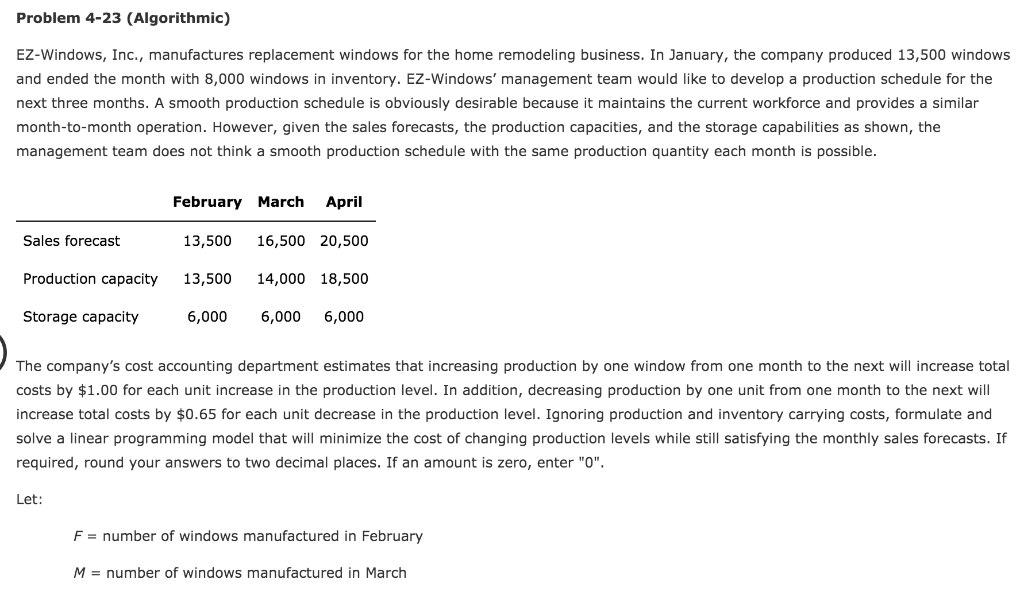
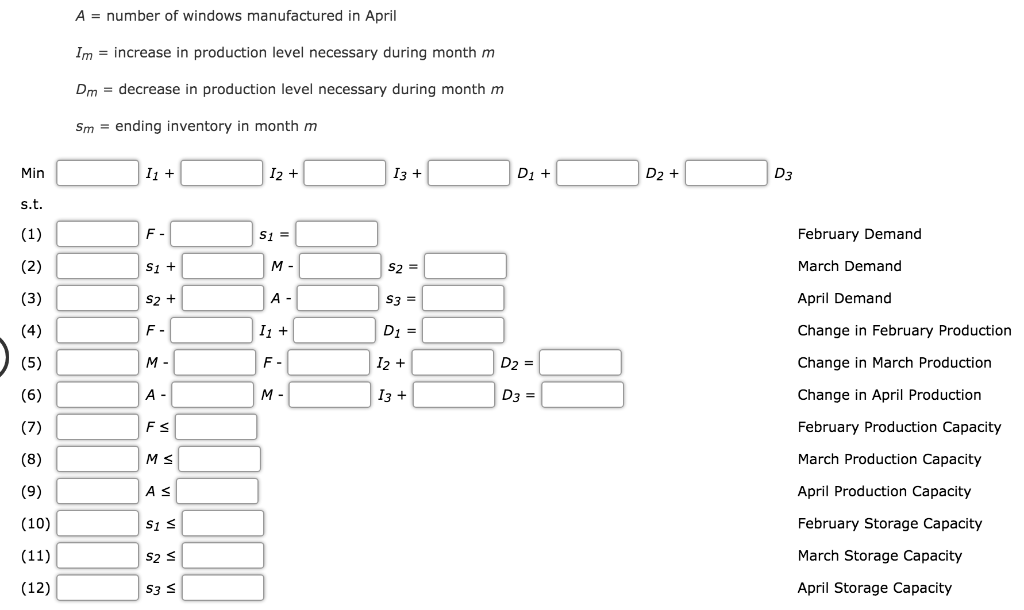
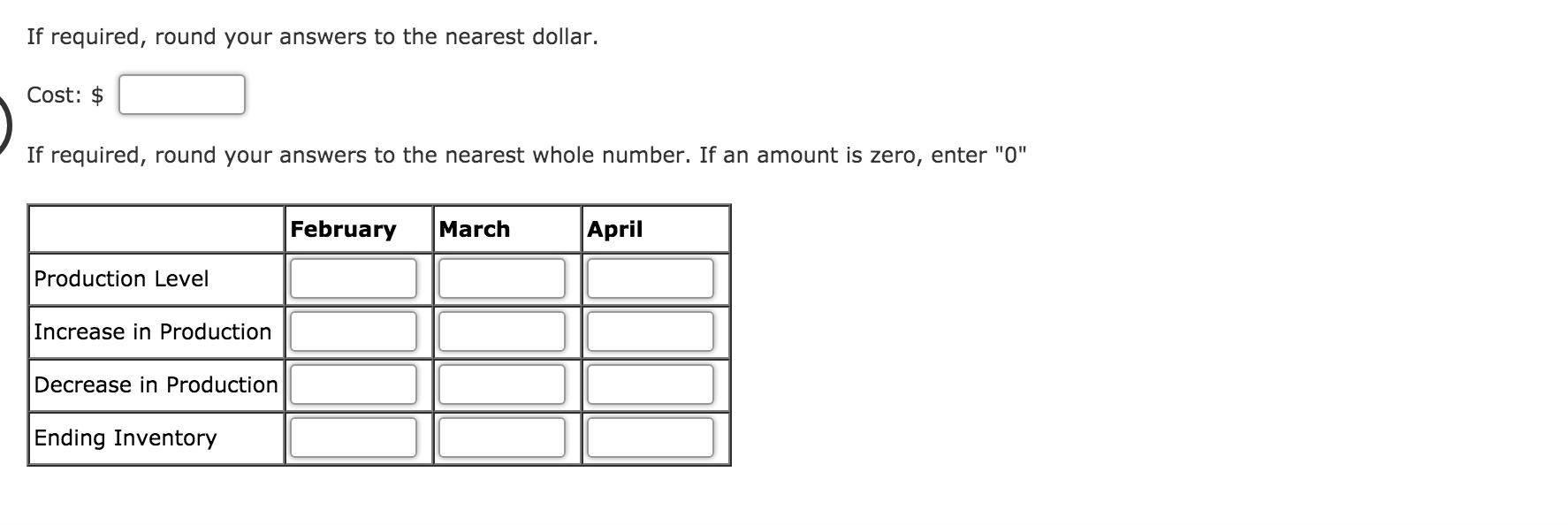
Problem 4-23 (Algorithmic) EZ-Windows, Inc., manufactures replacement windows for the home remodeling business. In January, the company produced 13,500 windows and ended the month with 8,000 windows in inventory. EZ-Windows' management team would like to develop a production schedule for the next three months. A smooth production schedule is obviously desirable because it maintains the current workforce and provides a similar month-to-month operation. However, given the sales forecasts, the production capacities, and the storage capabilities as shown, the management team does not think a smooth production schedule with the same production quantity each month is possible. February March April Sales forecast 13,500 16,500 20,500 Production capacity 13,500 14,000 18,500 Storage capacity 6,000 6,000 6,000 The company's cost accounting department estimates that increasing production by one window from one month to the next will increase total costs by $1.00 for each unit increase in the production level. In addition, decreasing production by one unit from one month to the next will increase total costs by $0.65 for each unit decrease in the production level. Ignoring production and inventory carrying costs, formulate and solve a linear programming model that will minimize the cost of changing production levels while still satisfying the monthly sales forecasts. If required, roun your answers to decimal places. amount is zero, enter "0". Let: F = number of windows manufactured in February M = number of windows manufactured in March A = number of windows manufactured in April Im = increase in production level necessary during month m Dm = decrease in production level necessary during month m Sm = ending inventory in month m Min 11 + I2 + 13 + D1 + D2 + D3 s.t. (1) F S1 = February Demand (2) S1 + M- S2 = March Demand (3) S2 + A- S3 = April Demand (4) F- 11 + D1 = Change in February Production (5) M- F- 12 + D2 = Change in March Production I (6) A- M- 13 + D3 = Change in April Production (7) Fs February Production Capacity (8) Ms March Production Capacity (9) As April Production Capacity (10) S1s (11) S2s February Storage Capacity March Storage Capacity April Storage Capacity (12) S35 If required, round your answers to the nearest dollar. Cost: $ If required, round your answers to the nearest whole number. If an amount is zero, enter "0" February March April Production Level Increase in Production Decrease in Production Ending Inventory









 Study Help