



Question: Problem 4-6 (LO 3) 80%, equity, fixed asset sales by subsidiary and parent. On September 1, 2015, Parcel Corporation purchased 80% of the outstanding common
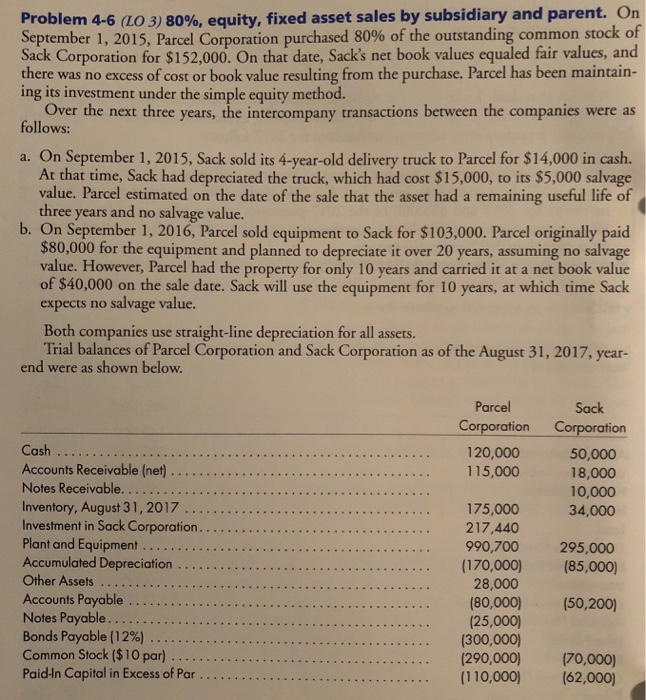
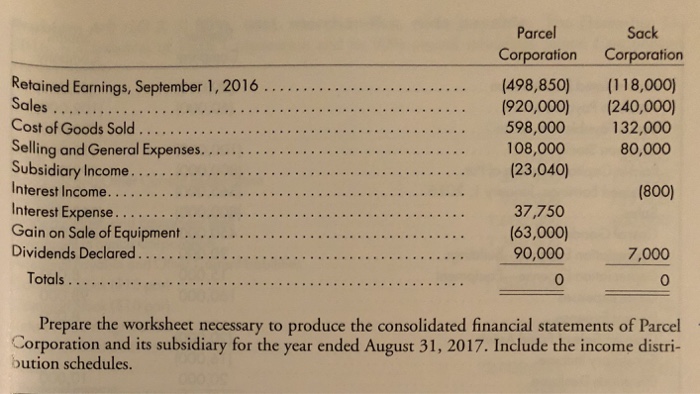
Problem 4-6 (LO 3) 80%, equity, fixed asset sales by subsidiary and parent. On September 1, 2015, Parcel Corporation purchased 80% of the outstanding common stock of Sack Corporation for $152,000. On that date, Sack's net book values equaled fair values, and there was no excess of cost or book value resulting from the purchase. Parcel has been maintain- ing its investment under the simple equity method. Over the next three years, the intercompany transactions between the companies were as ollows: a. On September 1, 2015, Sack Parcel for $14,000 in cash At that time, Sack had depreciated the truck, which had cost $15,000, to its $5,000 salvage value. Parcel estimated on the date of the sale that the asset had a remaining useful life sold its 4-year-old delivery truck to three years and no salvage value. b. On September 1, 2016, Parcel sold equipment to Sack for $103,000. Parcel originally paid $80,000 for the equipment and planned to depreciate it over 20 years, assuming no salvage value. However, Parcel had the property for only 10 years and carried it at a net book value of $40,000 on the sale date. Sack will use the equipment for 10 years, at which time Saclk expects no salvage value. Both companies use straight-line depreciation for all assets Trial balances of Parcel Corporation and Sack Corporation as of the August 31, 2017, year end were as shown below. Parcel Corporation Corporation Sack Cash Accounts Receivable (net) Notes Receivable. Inventory, August 31, 2017 120,000 115,000 50,000 18,000 10,000 34,000 Plant and Equipment Accumulated Depreciation Other Assets Accounts Payable Notes Payable Bonds Payable ( 12%) Common Stock ($10 par) Paid-In Capital in Excess of Par 175,000 217,440 990,700 (170,000) (85,000) 28,000 (80,000) (50,200] (25,000) (300,000 295,000 (290,000 (70,000 (110,000 (62,000)
Step by Step Solution
There are 3 Steps involved in it

Get step-by-step solutions from verified subject matter experts