







Question: Problem 5. Consider the following packed bed, where the diameter of each particle is 234m. The density is 2500kg/m3. The diameter of the column is
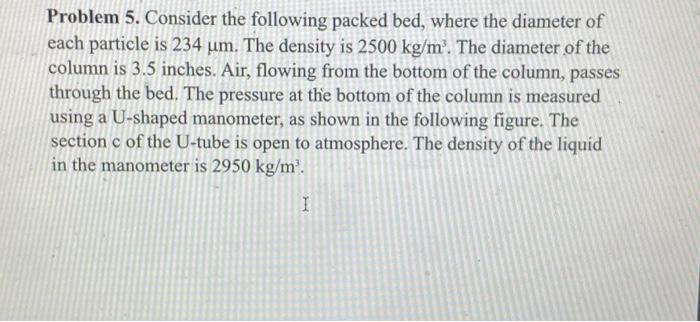
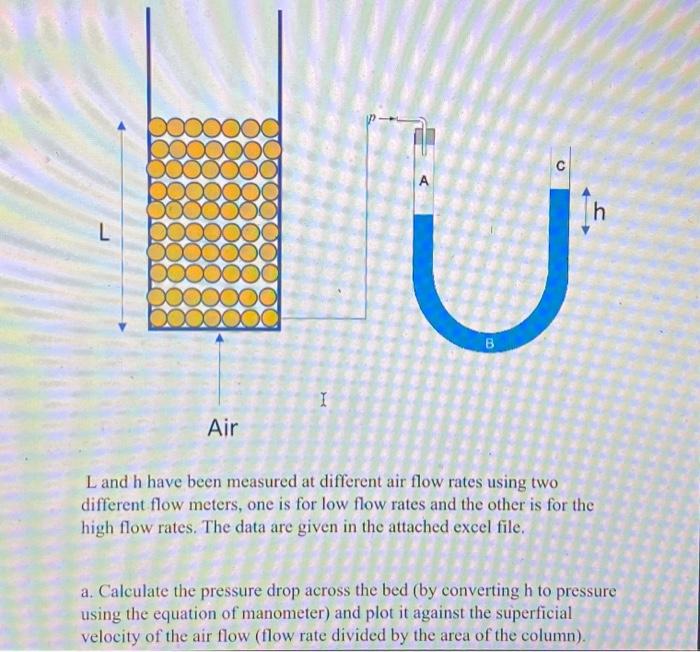
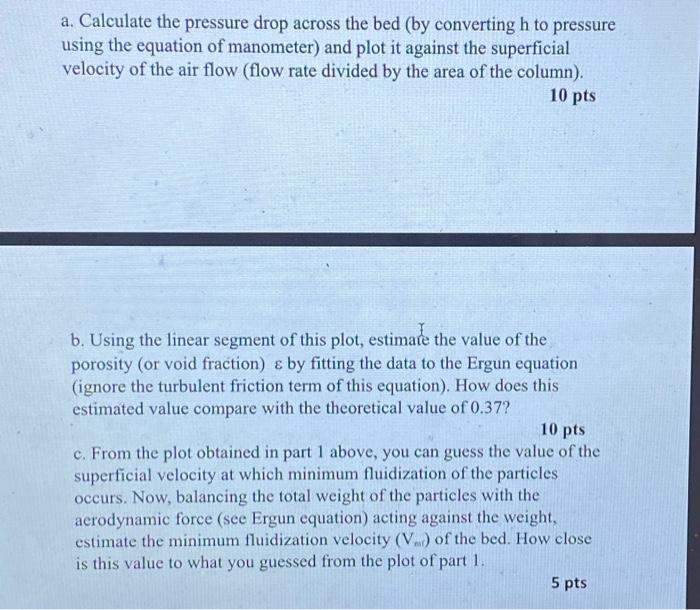
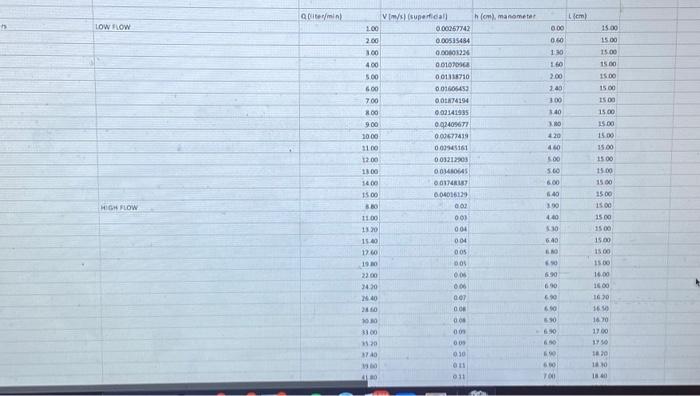
Problem 5. Consider the following packed bed, where the diameter of each particle is 234m. The density is 2500kg/m3. The diameter of the column is 3.5 inches. Air, flowing from the bottom of the column, passes through the bed. The pressure at the bottom of the column is measured using a U-shaped manometer, as shown in the following figure. The section c of the U-tube is open to atmosphere. The density of the liquid in the manometer is 2950kg/m3. L and h have been measured at different air flow rates using two different flow meters, one is for low flow rates and the other is for the high flow rates. The data are given in the attached excel file. a. Calculate the pressure drop across the bed (by converting h to pressure using the equation of manometer) and plot it against the superficial velocity of the air flow (flow rate divided by the area of the column). a. Calculate the pressure drop across the bed (by converting h to pressure using the equation of manometer) and plot it against the superficial velocity of the air flow (flow rate divided by the area of the column). 10pts b. Using the linear segment of this plot, estimate the value of the porosity (or void fraction) by fitting the data to the Ergun equation (ignore the turbulent friction term of this equation). How does this estimated value compare with the theoretical value of 0.37 ? 10pts c. From the plot obtained in part 1 above, you can guess the value of the superficial velocity at which minimum fluidization of the particles occurs. Now, balancing the total weight of the particles with the aerodynamic force (see Ergun equation) acting against the weight, estimate the minimum fluidization velocity (Vmit) of the bed. How close is this value to what you guessed from the plot of part 1 . 5 pts
Step by Step Solution
There are 3 Steps involved in it

Get step-by-step solutions from verified subject matter experts
 Study Help