







Question: Problem 5-35 (LO 5-1, 5-2, 5-3, 5-4, 5-5, 5-6, 5-7) The individual financial statements for Gibson Company and Keller Company for the year ending December
Problem 5-35 (LO 5-1, 5-2, 5-3, 5-4, 5-5, 5-6, 5-7)
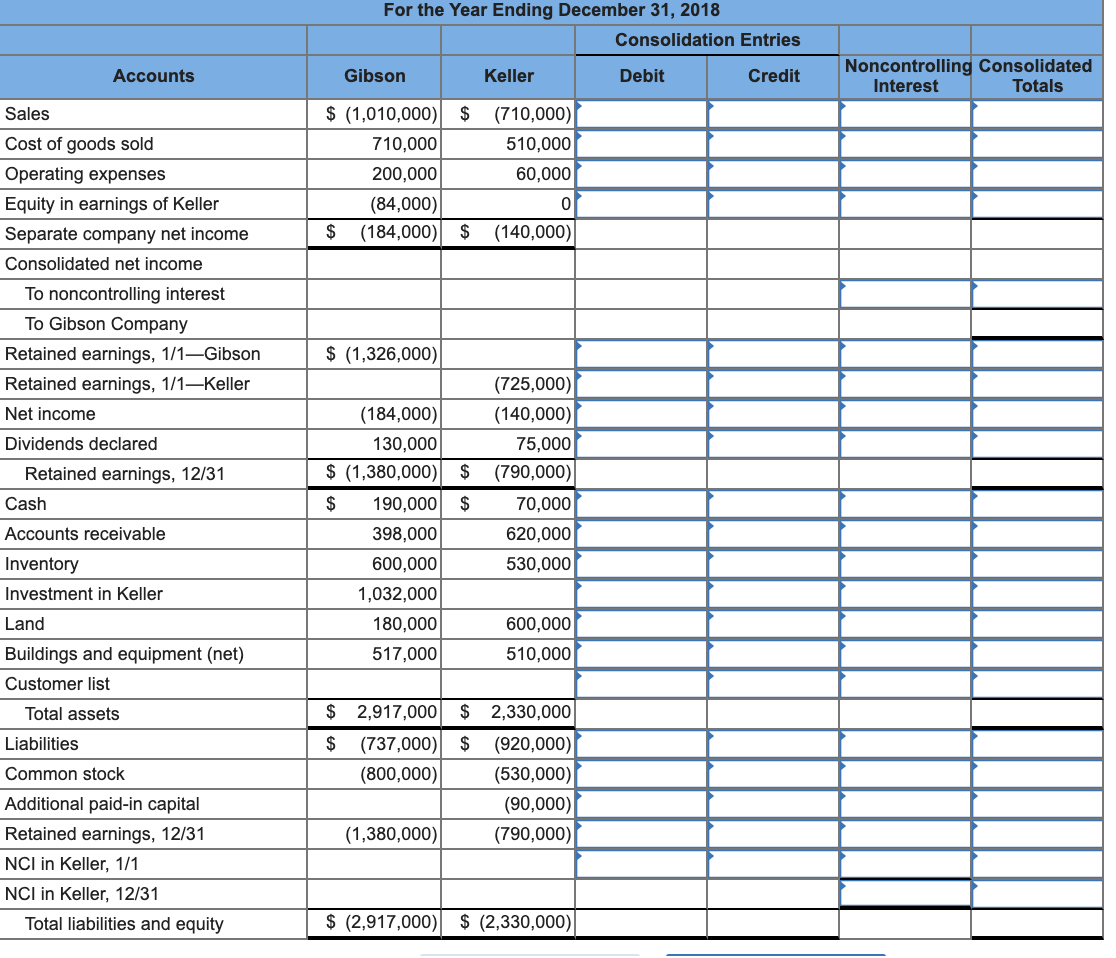
The individual financial statements for Gibson Company and Keller Company for the year ending December 31, 2018, follow. Gibson acquired a 60 percent interest in Keller on January 1, 2017, in exchange for various considerations totaling $930,000. At the acquisition date, the fair value of the noncontrolling interest was $620,000 and Kellers book value was $1,240,000. Keller had developed internally a customer list that was not recorded on its books but had an acquisition-date fair value of $310,000. This intangible asset is being amortized over 20 years.
Gibson sold Keller land with a book value of $60,000 on January 2, 2017, for $140,000. Keller still holds this land at the end of the current year.
Keller regularly transfers inventory to Gibson. In 2017, it shipped inventory costing $216,000 to Gibson at a price of $360,000. During 2018, intra-entity shipments totaled $410,000, although the original cost to Keller was only $287,000. In each of these years, 20 percent of the merchandise was not resold to outside parties until the period following the transfer. Gibson owes Keller $65,000 at the end of 2018.
| Gibson Company | Keller Company | ||||||
| Sales | $ | (1,010,000 | ) | $ | (710,000 | ) | |
| Cost of goods sold | 710,000 | 510,000 | |||||
| Operating expenses | 200,000 | 60,000 | |||||
| Equity in earnings of Keller | (84,000 | ) | 0 | ||||
| Net income | $ | (184,000 | ) | $ | (140,000 | ) | |
| Retained earnings, 1/1/18 | $ | (1,326,000 | ) | $ | (725,000 | ) | |
| Net income (above) | (184,000 | ) | (140,000 | ) | |||
| Dividends declared | 130,000 | 75,000 | |||||
| Retained earnings, 12/31/18 | $ | (1,380,000 | ) | $ | (790,000 | ) | |
| Cash | $ | 190,000 | $ | 70,000 | |||
| Accounts receivable | 398,000 | 620,000 | |||||
| Inventory | 600,000 | 530,000 | |||||
| Investment in Keller | 1,032,000 | 0 | |||||
| Land | 180,000 | 600,000 | |||||
| Buildings and equipment (net) | 517,000 | 510,000 | |||||
| Total assets | $ | 2,917,000 | $ | 2,330,000 | |||
| Liabilities | $ | (737,000 | ) | $ | (920,000 | ) | |
| Common stock | (800,000 | ) | (530,000 | ) | |||
| Additional paid-in capital | 0 | (90,000 | ) | ||||
| Retained earnings, 12/31/18 | (1,380,000 | ) | (790,000 | ) | |||
| Total liabilities and equities | $ | (2,917,000 | ) | $ | (2,330,000 | ) | |
(Note: Parentheses indicate a credit balance.)
-
Prepare a worksheet to consolidate the separate 2018 financial statements for Gibson and Keller.
-
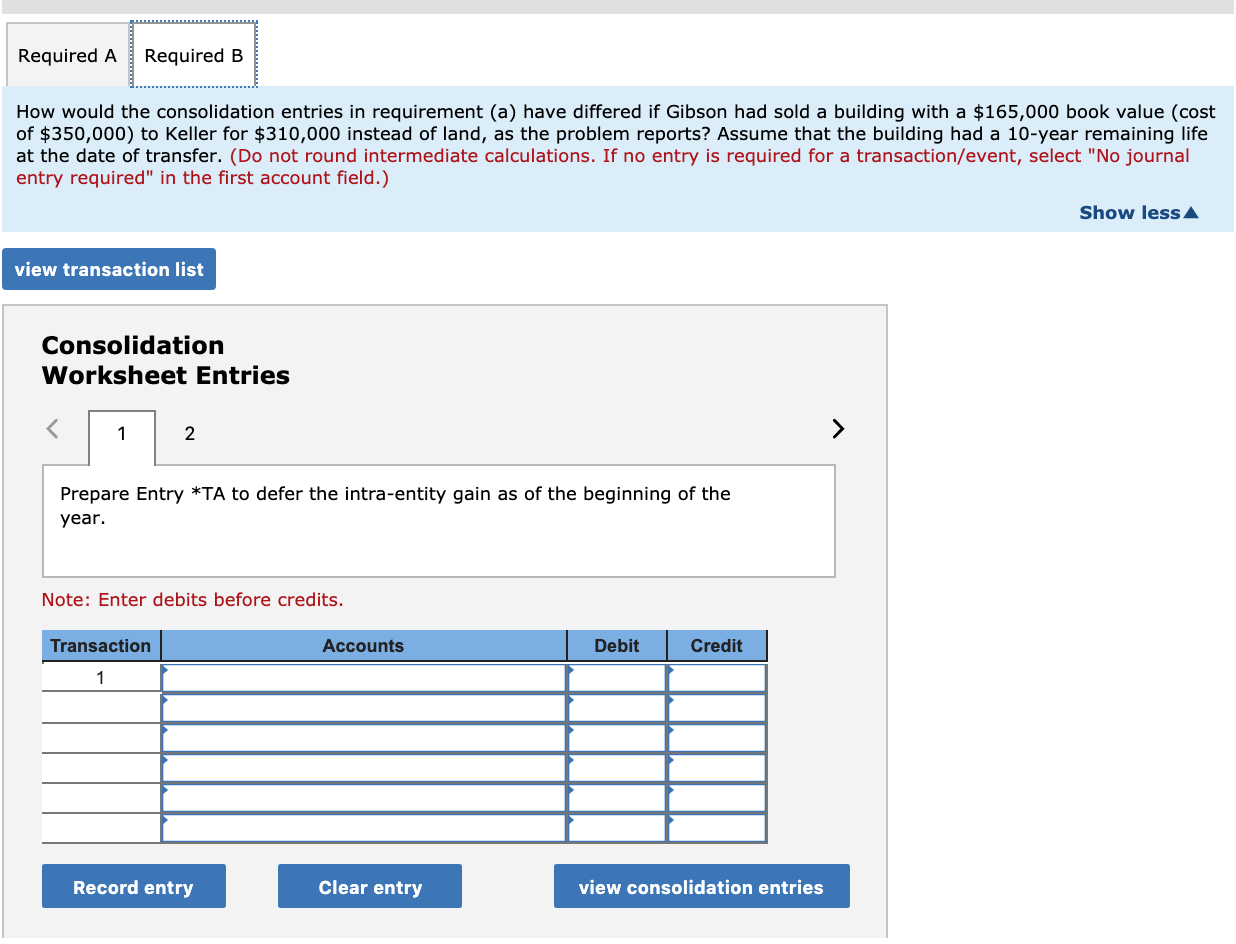
How would the consolidation entries in requirement (a) have differed if Gibson had sold a building with a $165,000 book value (cost of $350,000) to Keller for $310,000 instead of land, as the problem reports? Assume that the building had a 10-year remaining life at the date of transfer.
For the Year Ending December 31, 2018 Consolidation Entries Accounts Gibson Keller Debit Credit Noncontrolling Consolidated Interest Totals $ $ (1,010,000) 710,000 200,000 (84,000)| $ (184,000) (710,000) 510,000 60,000 0 (140,000) $ $ (1,326,000) ( 1 ) $ $ Sales Cost of goods sold Operating expenses Equity in earnings of Keller Separate company net income Consolidated net income To noncontrolling interest To Gibson Company Retained earnings, 1/1-Gibson Retained earnings, 1/1-Keller Net income Dividends declared Retained earnings, 12/31 Cash Accounts receivable Inventory Investment in Keller Land Buildings and equipment (net) Customer list Total assets Liabilities Common stock Additional paid-in capital Retained earnings, 12/31 NCI in Keller, 1/1 NCI in Keller, 12/31 Total liabilities and equity (184,000) 130.000 $ (1,380,000) $ 190,000 398,000 600,000 1,032,000 180,000 517,000 (725,000) (140,000) 75,000 (790,000) 70,000 620,000 530,000 600,000 510,000 $ $ 2,917,000 (737,000) (800,000) $ $ 2,330,000 (920,000) (530,000) (90,000) (790,000) (1,380,000) $ (2,917,000) $ (2,330,000) Required A Required B How would the consolidation entries in requirement (a) have differed if Gibson had sold a building with a $165,000 book value (cost of $350,000 to Keller for $310,000 instead of land, as the problem reports? Assume that the building had a 10-year remaining life at the date of transfer. (Do not round intermediate calculations. If no entry is required for a transaction/event, select "No journal entry required" in the first account field.) Show less A view transaction list Consolidation Worksheet Entries Prepare Entry *TA to defer the intra-entity gain as of the beginning of the year. Note: Enter debits before credits. Transaction Accounts Debit Credit Record entry Clear entry view consolidation entries
Step by Step Solution
There are 3 Steps involved in it

Get step-by-step solutions from verified subject matter experts
 Study Help