







Question: Problem 6: A soap bubble is 95 nm thick and illuminated by White light incident perpendicular to its surface. @thcexperttu.com - tracking id: 9N69-4E-C3-45-84AD-31957. In
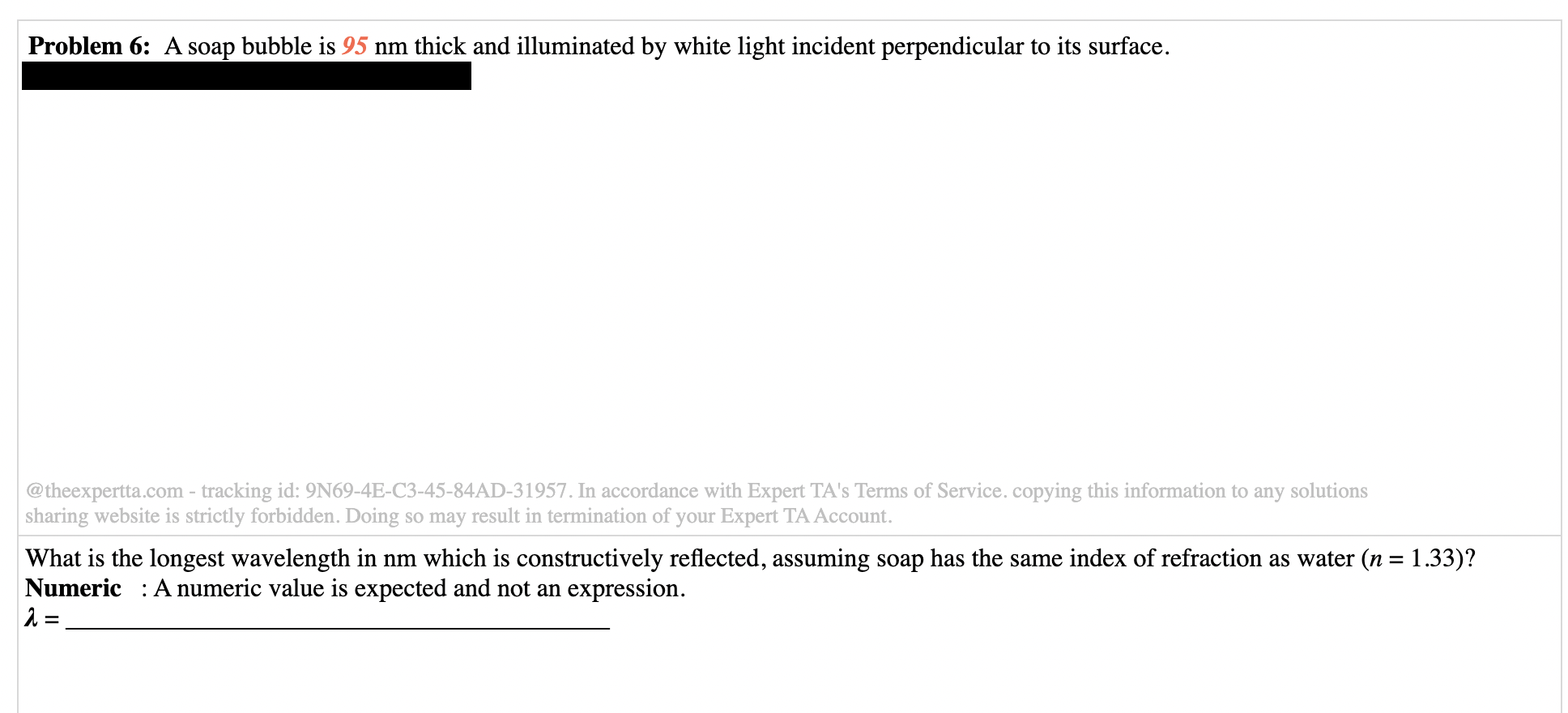
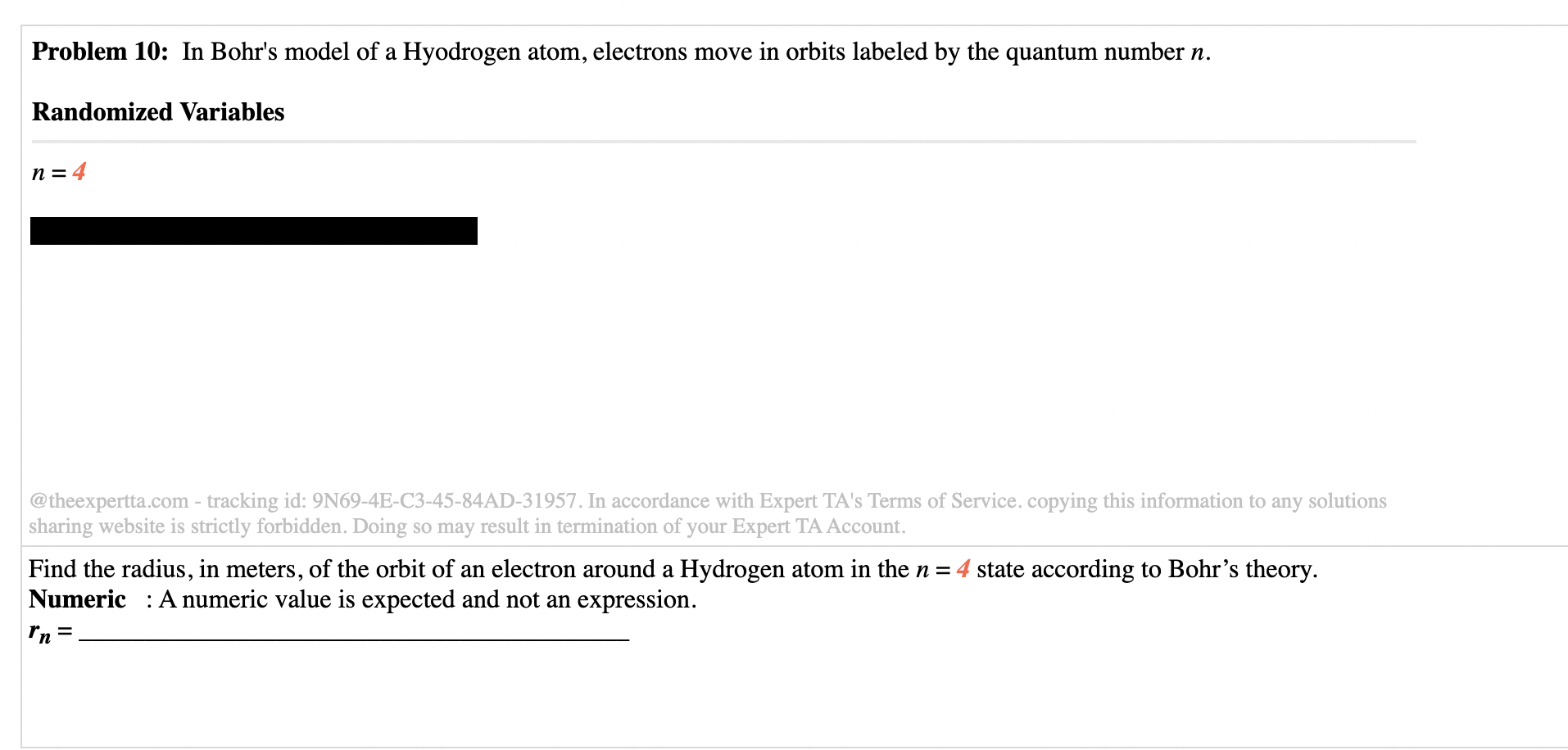
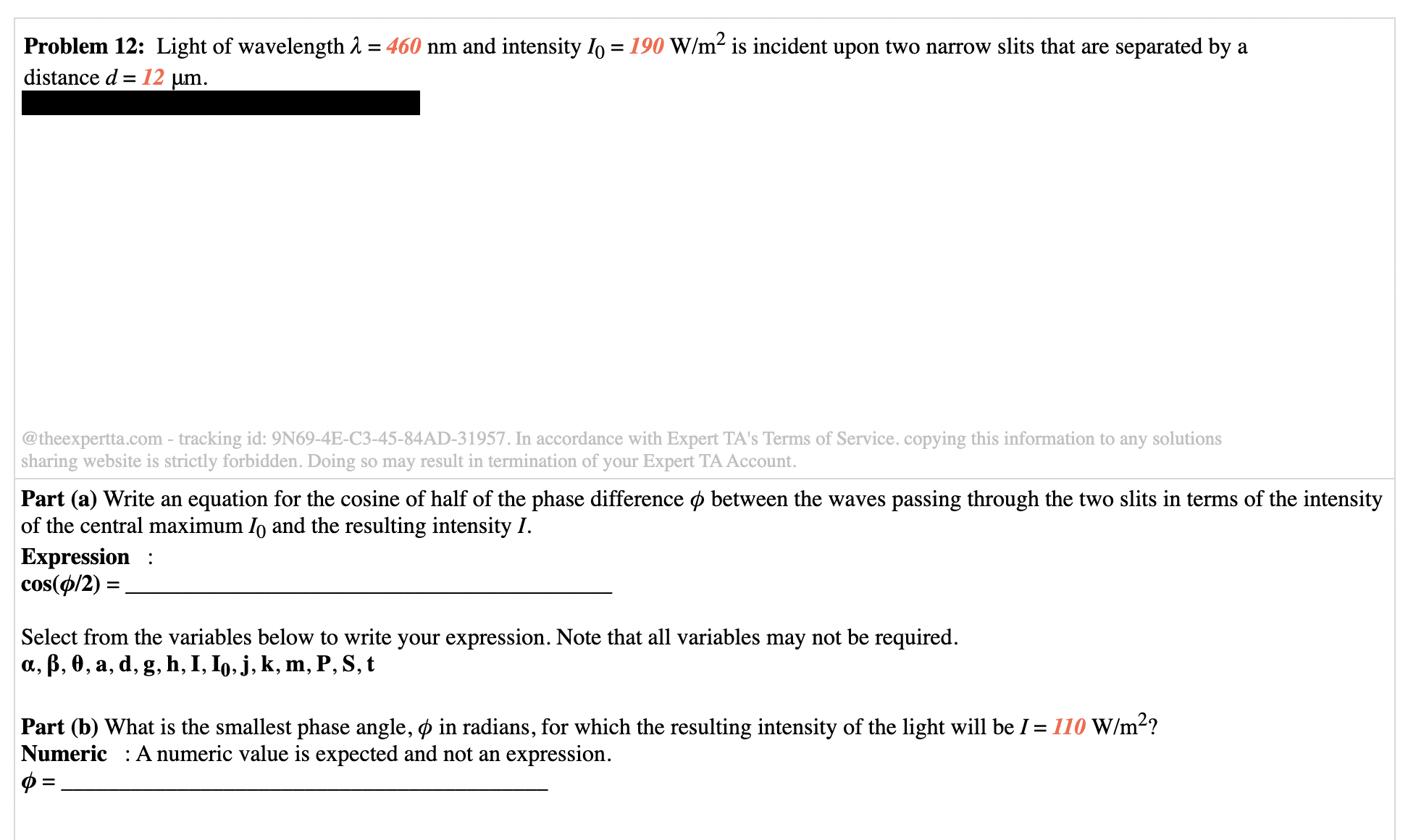
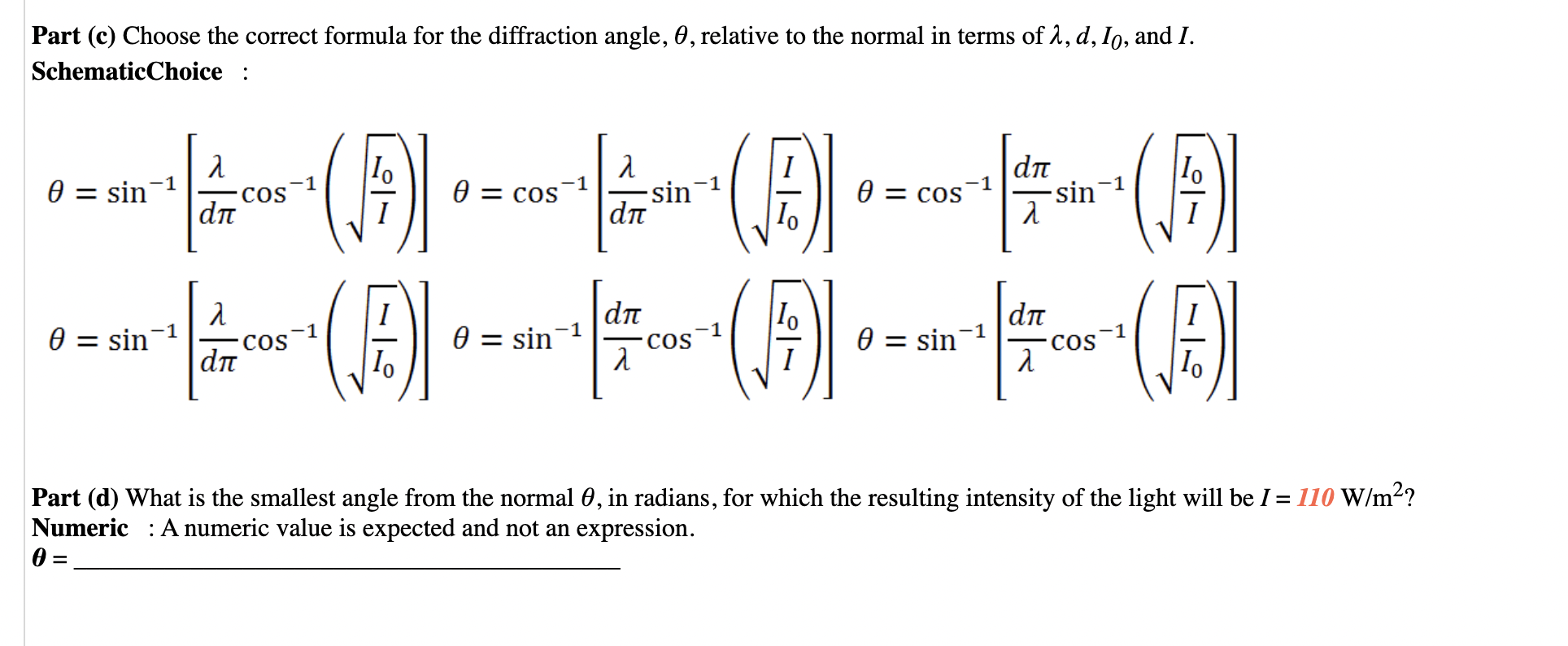
Problem 6: A soap bubble is 95 nm thick and illuminated by White light incident perpendicular to its surface. @thcexperttu.com - tracking id: 9N69-4E-C3-45-84AD-31957. In accordance with Expert TA's Terms of Service. copying this information to any solutions sharing website is strictly forbidden. Doing so may result in termination of your Expert TA Account. What is the longest wavelength in nm which is constructively reected, assuming soap has the same index of refraction as water (n = 1.33)? Numeric : A numeric value is expected and not an expression. A = Problem 10: In Bohr's model of a Hyodrogen atom, electrons move in orbits labeled by the quantum number n. Randomized Variables n=4 @thccxpcrttacom - tracking id; 9N69-4EC3-45-84AD3 1957' In accordance with Expcn TA's Terms of Service, copying this information to any solutions sharing website is strictly forbidden Doing so may result in termination of your Expert TA Account. Find the radius, in meters, of the orbit of an electron around a Hydrogen atom in the n = 4 state according to Bohr 's theory. Numeric 1A numeric value is expected and not an expression. Tn Problem 12: Light of wavelength A = 460 nm and intensity IO = 190 W/m2 is incident upon two narrow slits that are separated by a distance d: 12 g. @theexpertta.com tracking id: 9N69-4EC345-84AD-31957. In accordance with Expert TA's Terms of Service. copying this information to any solutions sharing website is strictly forbidden. Doing so may result in termination of your Expert TA Account. Part (a) Write an equation for the cosine of half of the phase difference 45 between the waves passing through the two slits in terms of the intensity of the central maximum [0 and the resulting intensity I . Expression cos(/2) = Select from the variables below to write your expression. Note that all variables may not be required. a, 65 0: a, d! g5 ha 15 IOsjs k m, P: S't Part (b) What is the smallest phase angle, in radians, for which the resulting intensity of the light will be I = 110 W/mz? Numeric : A numeric value is expected and not an expression. = Part (c) Choose the correct formula for the diffraction angle, 0, relative to the normal in terms of 2, d, Io, and I. SchematicChoice : 0 = sin -1 -1 0 = cos -1 dn COS dn -sin ~1 0 = cos -1 a sin -1 I 0 = sin 1 COS 1 0 = sin -1 dn COS -1 0 = sin -1 Cos 1 Part (d) What is the smallest angle from the normal 0, in radians, for which the resulting intensity of the light will be I = 110 W/m? Numeric : A numeric value is expected and not an expression. 0 =
Step by Step Solution
There are 3 Steps involved in it

Get step-by-step solutions from verified subject matter experts
 Study Help