



Question: Problem 7-70A (Algorithmic) Depreciation Methods Hansen Supermarkets purchased a radio frequency identification (RFID) system for one of its stores at a cost of $150,000. Hansen
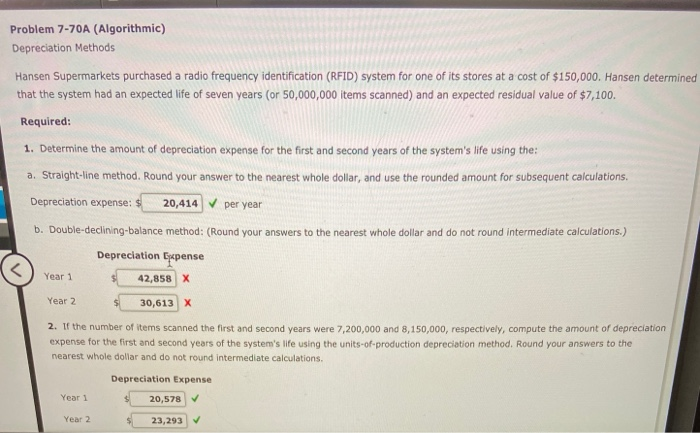
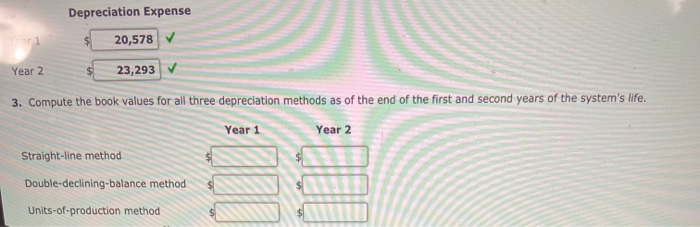
Problem 7-70A (Algorithmic) Depreciation Methods Hansen Supermarkets purchased a radio frequency identification (RFID) system for one of its stores at a cost of $150,000. Hansen determined that the system had an expected life of seven years (or 50,000,000 items scanned) and an expected residual value of $7,100. Required: 1. Determine the amount of depreciation expense for the first and second years of the system's life using the: a. Straight-line method. Round your answer to the nearest whole dollar, and use the rounded amount for subsequent calculations. Depreciation expense: $ 20,414 per year B. Double-declining balance method: (Round your answers to the nearest whole dollar and do not round Intermediate calculations.) Depreciation Expense $ 42,858 X Year 1 Year 2 $ 30,613 X 2. If the number of items scanned the first and second years were 7,200,000 and 8,150,000, respectively, compute the amount of depreciation expense for the first and second years of the system's life using the units-of-production depreciation method. Round your answers to the nearest whole dollar and do not round intermediate calculations. Depreciation Expense Year 1 $ 20,578 Year 2 $ 23,293 Depreciation Expense $ 20,578 Year 2 $ 23,293 3. Compute the book values for all three depreciation methods as of the end of the first and second years of the system's life. Year 1 Year 2 Straight-line method Double-declining-balance method Units-of-production method
Step by Step Solution
There are 3 Steps involved in it

Get step-by-step solutions from verified subject matter experts