







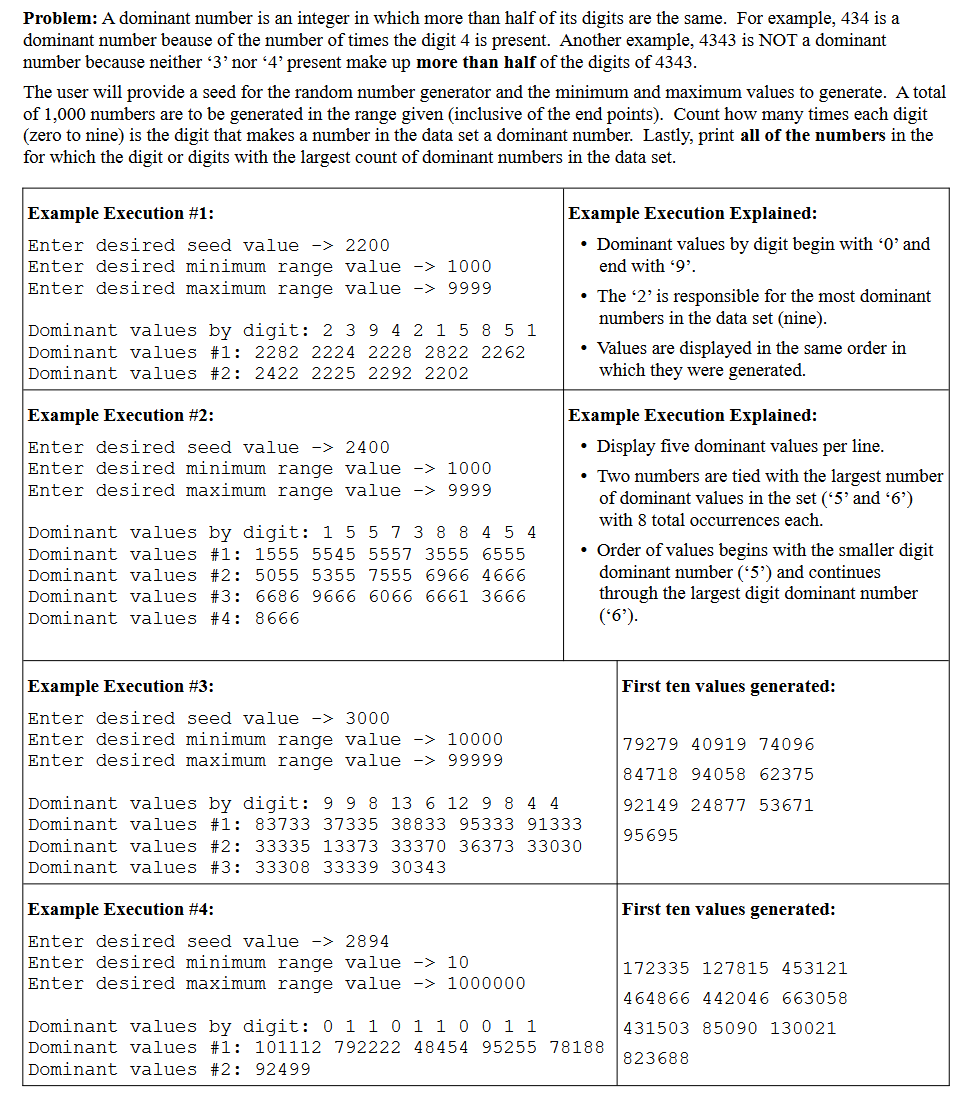
Question: Problem: A dominant number is an integer in which more than half of its digits are the same. For example, 4 3 4 is a
Problem: A dominant number is an integer in which more than half of its digits are the same. For example, is a
dominant number beause of the number of times the digit is present. Another example, is NOT a dominant
number because neither nor present make up more than half of the digits of
The user will provide a seed for the random number generator and the minimum and maximum values to generate. A total
of numbers are to be generated in the range given inclusive of the end points Count how many times each digit
zero to nine is the digit that makes a number in the data set a dominant number. Lastly, print all of the numbers in the
for which the digit or digits with the largest count of dominant numbers in the data set. Problem: A dominant number is an integer in which more than half of its digits are the same. For example, is a dominant number because of the number of times the digit is present. Another example, is NOT a dominant number because neither nor present make up more than half of the digits of The user will provide a seed for the random number generator and the minimum and maximum values to generate. A total of numbers are to be generated in the range given inclusive of the end points Count how many times each digit zero to nine is the digit that makes a number in the data set a dominant number. Lastly, print all of the numbers in the for which the digit or digits with the largest count of dominant numbers in the data set. The output by the code should exactly match the example executions. A single large array needs to be used rather than multiple arrays. The main function should come first then other functions. And need to make the calculations done in the main function into separate functions. Additional Requirements: Each of the example executions provided for reference represents a single execution of the program. The program must accept input and produce output exactly as demonstrated in the example executions. Do not add any bonus features not demonstrated in the example executions. The program will be tested with the data seen in the example executions and an unknown number of additional tests making use of meaningful data. See the final example execution provided for input validation expectations. No values given as input will exceed what an int data type variable is capable of storing. For this assignment, will be required to implement userdefined functions from chapter Failing to follow course standards as they relate to good userdefined function use will result in a zero. Revisit course standards as it relates what makes for good use of userdefined functions, what is acceptable to retain in the main function, and when passing parameters by address is appropriate. In many cases user defined function use should result in a main function that only declares variables and makes function calls. This problem can be solved using only single dimension fixedlength arrays. The use of any dynamic memory allocation, strings, bitwise operators, or unions would violate the requirements of this assignment and would result in no credit being awarded for your effort. Course Programming and Documentation Standards Reminders: It is common to make use of a symbolicdefined constant when the size of the array is known prior to the start of a program. The course standards expect all arrays to be of a fixed size. Variablesize arrays, would violate course standards. Code found inside the body of relevant selection and repetition constructs must be indented two additional spaces. Make use of and with all relevant selection and repetition constructs. List and comment all parameters to a function, one per line, in the course function header. All function declarations will appear in the global declaration section of program. The userdefined function definitions will appear in program after the main function. Indent all code found within the main function exactly two spaces. Place a single space between all operators and operands. Comment all variables to the right of each declaration. Declare only one variable per line. Maximize your use of symbolicdefined constants and minimize your use of literal constants. Example Execution #input validation expectations demonstrated:
Enter desired seed value
Error! Seed value must be positive!
Enter desired seed value
Enter desired minimum range value
Error! Minimum range value must be positive!
Enter desired minimum range value
Enter desired maximum range value
Error! Maximum range value must be greater than minimum range value of
Enter desired maximum range value
Dominant values by digit:
Dominant values #:
Dominant values #:
Dominant values #:
Dominant values #:
Dominant values
Step by Step Solution
There are 3 Steps involved in it
1 Expert Approved Answer
Step: 1 Unlock

Question Has Been Solved by an Expert!
Get step-by-step solutions from verified subject matter experts
Step: 2 Unlock
Step: 3 Unlock
 Study Help