







Question: Problem One (see Task, top of Page 2): Note the following code based upon the Accumulator pattern: sport turtle turtle.Turtle for list: .T.Forward() forordt) m.right
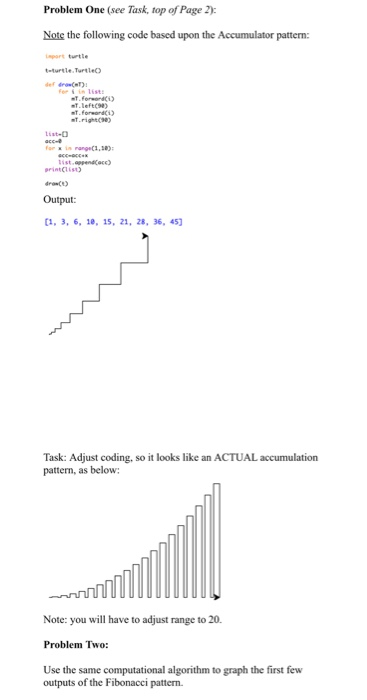
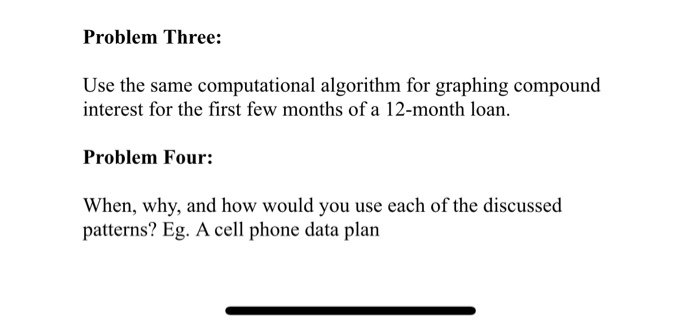
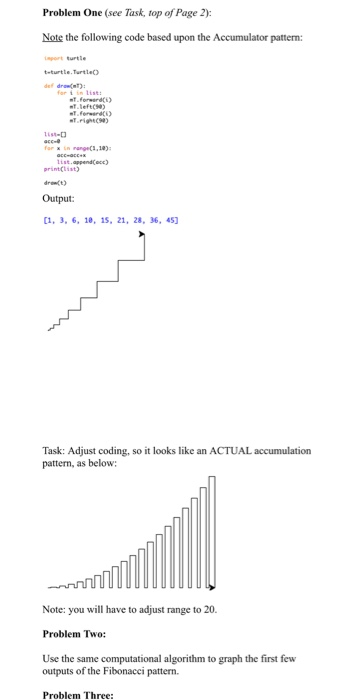
Problem One (see Task, top of Page 2): Note the following code based upon the Accumulator pattern: sport turtle turtle.Turtle for list: .T.Forward() forordt) m.right ) ut foring (1.10) tist.append(ecc) drast) Output: (1, 3, 6, 10, 15, 21, 28, 36, 45) Task: Adjust coding, so it looks like an ACTUAL accumulation pattern, as below: il Note: you will have to adjust range to 20. Problem Two: Use the same computational algorithm to graph the first few outputs of the Fibonacci pattern. Problem Three: Use the same computational algorithm for graphing compound interest for the first few months of a 12-month loan. Problem Four: When, why, and how would you use each of the discussed patterns? Eg. A cell phone data plan Problem One (see Task, top of Page 2): Note the following code based upon the Accumulator pattern: Import turtle turtle.Turtle for i in list: le -T.right90) list- for xin range(1,1) GCCCCX list.append(e) print(list) Output: [1, 3, 6, 10, 15, 21, 28, 36, 45] Task: Adjust coding, so it looks like an ACTUAL accumulation pattern, as below: un Note: you will have to adjust range to 20. Problem Two: Use the same computational algorithm to graph the first few outputs of the Fibonacci pattern. Problem Three
Step by Step Solution
There are 3 Steps involved in it

Get step-by-step solutions from verified subject matter experts
 Study Help